Buddhism
 73
73

Buddhism
Prebish's "Buddhism" presents a commendably clear and organized survey of a vast and intricate subject. Its strength lies in its systematic approach, laying out the foundational doctrines and historical trajectories with academic rigor. A particular passage detailing the development of the Mahayana school effectively illustrates the dynamic evolution of Buddhist thought. However, for readers specifically seeking the esoteric dimensions often associated with Buddhist practices in Western contexts, the book can feel somewhat reserved, focusing primarily on the scholarly, historical, and philosophical aspects. It offers a solid academic grounding but less exploration of mystical interpretations. Overall, it serves as an excellent, albeit orthodox, introduction to the field.
📝 Description
73
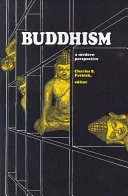
Charles S. Prebish's 2010 "Buddhism" details the origins and diverse expressions of Buddhist thought.
Published in 2010, Charles S. Prebish's "Buddhism" offers a thorough account of this major world religion and philosophy. The book traces the religion's beginnings in ancient India, around the 5th century BCE, examining the societal conditions that gave rise to Siddhartha Gautama's teachings. It follows the philosophy's spread across Asia and the development of distinct schools like Theravada and Mahayana. Prebish also systematically explains central doctrines, including the Four Noble Truths and the Eightfold Path, alongside concepts of karma, rebirth, and the goal of Nirvana. Philosophical underpinnings such as anatta (non-self) and anicca (impermanence) are also addressed.
The work is structured to guide readers through Buddhist principles, making it suitable for both academic study and personal interest. Prebish's approach bridges accessible explanations with detailed information, aiming to clarify the core tenets that have influenced millions over centuries. It provides a clear path for understanding the subject matter, situating Buddhist ideas within their historical and cultural contexts.
This book examines Buddhism not merely as a historical religion but as a contemplative tradition focused on inner transformation. It situates the practices and philosophies within a lineage that seeks to understand the nature of reality and the human mind. The emphasis on concepts like Nirvana, impermanence, and non-self points to a path of liberation from suffering through direct insight, a hallmark of many contemplative and mystical traditions worldwide.
💡 Why Read This Book?
• Gain a clear understanding of the Four Noble Truths, the foundational framework of Buddhist ethics and psychology, as presented by Prebish, offering a structured approach to suffering and its cessation. • Grasp the historical development of Buddhism from its Indian origins in the 5th century BCE, differentiating early teachings from later sectarian developments. • Learn about the Eightfold Path, a practical guide to ethical conduct and mental discipline, enabling readers to apply its principles to their own lives.
⭐ Reader Reviews
Honest opinions from readers who have explored this book.
❓ Frequently Asked Questions
What is the historical origin of Buddhism according to Prebish's book?
Charles S. Prebish's "Buddhism" traces the religion's origins to ancient India around the 5th century BCE, coinciding with the life and teachings of Siddhartha Gautama, the Buddha.
What are the main schools of Buddhism discussed in the book?
The book details the emergence and characteristics of major schools, notably Theravada and Mahayana, explaining their doctrinal differences and geographical spread.
Does the book explain the concept of Nirvana?
Yes, "Buddhism" provides a thorough explanation of Nirvana, describing it as the ultimate goal of Buddhist practice—the cessation of suffering and the cycle of rebirth.
Is the Eightfold Path clearly defined?
Absolutely. The work dedicates significant attention to the Eightfold Path, outlining its components as a practical guide for ethical living, mental discipline, and wisdom.
What is the book's perspective on Buddhist philosophy versus religion?
Prebish's work treats Buddhism as both a religion and a philosophy, exploring its spiritual dimensions alongside its intricate metaphysical and ethical frameworks.
When was Charles S. Prebish's 'Buddhism' first published?
The first edition of Charles S. Prebish's "Buddhism" was published on November 1, 2010.
🔮 Key Themes & Symbolism
The Path to Enlightenment
The work systematically outlines the Eightfold Path, presenting it not as a rigid dogma but as a practical methodology for cultivating wisdom, ethical conduct, and mental discipline. Prebish emphasizes how each element—right understanding, right thought, right speech, right action, right livelihood, right effort, right mindfulness, and right concentration—interconnects to guide practitioners towards liberation from suffering (dukkha) and the attainment of Nirvana.
Anatta and Impermanence
Central to Buddhist philosophy, as detailed in Prebish's study, are the concepts of anatta (non-self) and anicca (impermanence). The book explores how the notion of a permanent, unchanging self is an illusion, and how understanding the transient nature of all phenomena is key to detaching from worldly desires and achieving inner peace. This philosophical insight forms the bedrock for many meditative practices.
Dharma and Sangha
Prebish elucidates the significance of the Dharma, the teachings of the Buddha, and the Sangha, the community of practitioners. These form the 'Three Jewels' of refuge for Buddhists. The book discusses how the Sangha, in its various forms throughout history, has been instrumental in preserving, transmitting, and adapting the Dharma across diverse cultures and epochs.
Schools of Thought
The text provides a comparative analysis of major Buddhist traditions, primarily Theravada and Mahayana. It highlights their divergent interpretations of key doctrines, their distinct scriptural canons, and their unique approaches to practice, illustrating the rich diversity within Buddhism. The development from early Buddhism to these later schools is a significant focus.
💬 Memorable Quotes
“The Four Noble Truths.”
— This phrase encapsulates the fundamental diagnosis of the human condition and the prescription for its remedy, forming the core framework of Buddhist thought.
“The Eightfold Path.”
— Representing the practical methodology for achieving enlightenment, this path offers a systematic guide to ethical living, mental discipline, and wisdom.
“The concept of anatta (non-self).”
— This philosophical tenet challenges the notion of a permanent, independent self, suggesting that such a belief is a source of attachment and suffering.
“Nirvana as the cessation of suffering.”
— This describes the ultimate goal in Buddhism, understood not as a place but as a state of liberation from the cycle of rebirth and dissatisfaction.
“The historical spread of Buddhism from India.”
— This highlights the dynamic nature of the tradition, emphasizing its adaptability and expansion across diverse cultures and geographical regions over centuries.
🌙 Esoteric Significance
Tradition
While Prebish's "Buddhism" primarily adopts a scholarly, academic perspective, it lays the groundwork for understanding traditions that have developed esoteric interpretations of Buddhist principles. Within lineages like Zen Buddhism, particularly in its Japanese and Western adaptations, elements such as mindfulness, emptiness (sunyata), and direct experience are explored through practices that can be considered esoteric in their emphasis on non-discursive knowledge and subjective transformation, aligning with contemplative traditions.
Symbolism
The book touches upon core Buddhist concepts that have rich symbolic meaning. The Dharma wheel (Dharmachakra), representing the Buddha's teachings and the path to enlightenment, is a pervasive symbol of the Buddhist path. The lotus flower, often appearing in Buddhist art and literature, symbolizes purity, spiritual awakening, and detachment, as it grows unstained from muddy waters, much like enlightenment arises from the cycle of existence.
Modern Relevance
Modern mindfulness-based therapies, such as MBSR (Mindfulness-Based Stress Reduction), directly draw upon the Buddhist concept of mindfulness (sati) as explored in texts like Prebish's. Furthermore, Western interpretations of Zen and Tibetan Buddhism, particularly those focusing on meditation and philosophical inquiry into the nature of consciousness, continue to engage with the core tenets discussed in the book, influencing contemporary contemplative practices and philosophical discourse.
👥 Who Should Read This Book
• Academic researchers in comparative religion and philosophy seeking a structured, fact-based overview of Buddhist history and doctrine. • Individuals new to Buddhism who desire a clear, comprehensive introduction that covers origins, key concepts like the Four Noble Truths, and major schools. • Students of ethics and psychology interested in the practical applications of Buddhist principles, such as the Eightfold Path and mindfulness, as a framework for personal development.
📜 Historical Context
Charles S. Prebish's "Buddhism," first published in 2010, arrives in an era of widespread global interest in Eastern religions, building upon decades of scholarly work initiated in the late 19th and early 20th centuries. The book's detailed examination of Buddhism's origins in 5th century BCE India situates it within a landscape of emerging Indian philosophical and religious movements, including early Vedic traditions and Jainism. Its comprehensive approach reflects the maturation of Buddhist studies as an academic discipline, moving beyond Orientalist fascination to rigorous textual and historical analysis. While not a direct engagement with contemporaries in the same way as early translators like Rhys Davids, Prebish's work stands as a synthesis of accumulated knowledge, presenting a clear, scholarly overview that contrasts with more devotional or polemical treatments that have historically characterized some Western engagement with Buddhism.
📔 Journal Prompts
The Four Noble Truths as a framework for personal suffering.
Reflecting on the Eightfold Path's components in daily life.
The concept of anatta and its implications for self-perception.
Historical development of Theravada versus Mahayana traditions.
The role of the Sangha in preserving Buddhist teachings.
🗂️ Glossary
Anatta
A fundamental Buddhist doctrine asserting the absence of a permanent, unchanging, independent self or soul. Understanding anatta is crucial for overcoming attachment and achieving liberation.
Anicca
The Buddhist concept of impermanence, signifying that all conditioned phenomena are in a constant state of flux and change. Recognizing anicca helps in letting go of attachment to transient things.
Dharma
In Buddhism, Dharma refers to the teachings of the Buddha, the cosmic law and order, and the path to enlightenment. It is one of the Three Jewels.
Eightfold Path
The practical guide to achieving enlightenment, consisting of eight interconnected practices: right understanding, thought, speech, action, livelihood, effort, mindfulness, and concentration.
Karma
The principle of cause and effect, where intentional actions (physical, verbal, or mental) lead to future consequences, shaping one's experiences in this life and future rebirths.
Nirvana
The ultimate goal of Buddhist practice, representing the cessation of suffering (dukkha), the extinguishing of the fires of greed, hatred, and delusion, and liberation from the cycle of rebirth.
Sangha
The community of Buddhist monks, nuns, and sometimes lay followers. It is one of the Three Jewels, providing support and preserving the teachings.