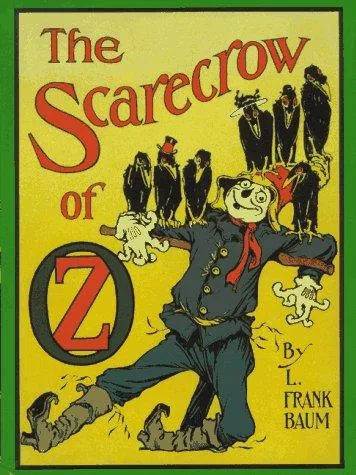
The Scarecrow of Oz
 78
78

The Scarecrow of Oz
L. Frank Baum's The Scarecrow of Oz, appearing long after his passing in 1936, functions less as a cohesive new installment and more as an echo of his established Ozian world. The strength of this novel lies in its continuation of the whimsical yet morally grounded adventures that defined the series, offering familiar comforts to devoted readers. The specific challenge presented by the Scarecrow's quest to reclaim his kingdom from the usurper Pon appears somewhat perfunctory, lacking the innovative spark of earlier Oz books. One passage detailing the Scarecrow's interactions with the peculiar inhabitants of the Uplands offers a glimpse into Baum's unique world-building, showcasing his ability to invent fantastical societies. However, the plot sometimes feels episodic, a collection of encounters rather than a tightly woven narrative. The Scarecrow of Oz is a pleasant, if predictable, visit to a beloved land.
📝 Description
78
L. Frank Baum's 1936 posthumous novel, The Scarecrow of Oz, layers allegory onto a children's fantasy narrative.
The Scarecrow of Oz follows its namesake and his companions through the fantastical land of Oz. They encounter magical beings and face various challenges. The story is set in Baum's distinctive Emerald City universe, known for its unique logic and geography. This novel is suitable for readers who enjoy allegorical storytelling and the symbolic potential found in seemingly simple narratives. It will appeal to those interested in the intersection of fantasy literature and esoteric thought, particularly themes of consciousness, transformation, and the nature of reality. Familiar elements from Baum's broader Oz canon appear, but the story also stands on its own for new readers.
Published long after Baum's death, The Scarecrow of Oz engages with themes that resonate with esoteric traditions. The Scarecrow's internal struggle with his intelligence and worth mirrors concepts of self-realization and overcoming perceived limitations. The narrative's progression through trials can be seen as a metaphor for psychological or spiritual development, a common motif in mystical paths. The magical elements and the rules of Oz itself invite contemplation on different orders of reality and the hidden forces that shape experience.
💡 Why Read This Book?
• Gain insight into the enduring symbolism of the Scarecrow as an archetype of intellect and self-discovery, a concept explored throughout L. Frank Baum's oeuvre. • Understand the literary and cultural context of Oz narratives beyond Baum's initial works, recognizing its posthumous publication in 1936. • Analyze the narrative structure and character motivations within the Oz universe, identifying how The Scarecrow of Oz contributes to its mythos.
⭐ Reader Reviews
Honest opinions from readers who have explored this book.
❓ Frequently Asked Questions
When was The Scarecrow of Oz originally published?
The Scarecrow of Oz was first published in 1936, several years after the passing of its author, L. Frank Baum.
Who are the main characters in The Scarecrow of Oz?
The primary characters include the Scarecrow, who seeks to regain his throne, and his companions on this quest, who often embody different aspects of loyalty and courage within the Oz narrative.
What is the significance of the Scarecrow character in L. Frank Baum's work?
The Scarecrow represents intelligence and wisdom, often questioning his own capabilities despite his inherent knowledge, serving as a recurring symbol of self-perception and potential in Baum's Oz books.
Does The Scarecrow of Oz connect to other Oz books?
Yes, it is part of L. Frank Baum's extensive Oz series, featuring familiar characters and the established magical world of Oz, though it was published posthumously.
What kind of themes does The Scarecrow of Oz explore?
The book explores themes of identity, kingship, courage, and the nature of intelligence, set within a fantastical land governed by unique magical laws.
Is The Scarecrow of Oz considered an esoteric text?
While primarily a fantasy novel, its enduring allegorical potential and symbolic richness allow for esoteric interpretations, particularly concerning themes of consciousness and self-realization within the Oz framework.
🔮 Key Themes & Symbolism
The Nature of Kingship
The narrative questions the inherent right to rule and the qualities necessary for effective leadership. The Scarecrow's journey to reclaim his kingdom from an usurper forces a contemplation of legitimate authority versus power seized through force. This theme encourages readers to consider what constitutes true sovereignty, extending beyond mere title to encompass wisdom, justice, and the well-being of the populace, concepts often explored in political philosophy and esoteric leadership texts.
Self-Perception and Identity
Central to the story is the Scarecrow's ongoing internal struggle with his own intelligence and worth. Despite being demonstrably wise, he frequently doubts his own mental faculties, reflecting a common human experience of imposter syndrome or insecurity. This exploration of identity suggests that true understanding of oneself often comes through external challenges and the affirmation of one's actions, rather than solely internal reflection. The Oz setting provides a unique backdrop for this psychological exploration.
The Journey as Transformation
The quest undertaken by the Scarecrow and his companions serves as a potent metaphor for personal growth and spiritual development. Each obstacle encountered and overcome represents a stage in their collective evolution, stripping away illusions and strengthening their resolve. This archetypal journey mirrors initiatory processes found in various esoteric traditions, where trials lead to greater self-awareness and mastery over one's circumstances, transforming the individual through experience.
The Unseen World of Oz
Beyond the surface-level fantasy, the world of Oz operates under its own set of peculiar laws and magical principles, inviting readers to consider the nature of reality itself. The existence of sentient beings, enchanted objects, and distinct geographical regions governed by unique rules suggests a reality layered with hidden forces and potentials. This invites contemplation on the subjective nature of experience and the possibility of different orders of existence, aligning with metaphysical inquiries.
💬 Memorable Quotes
Direct passages from the work, attributed to the author.
“The Scarecrow found himself ruler of Oz, though he never asked for the throne.”
— This highlights the often-unforeseen responsibilities that fall upon individuals, suggesting that leadership can be thrust upon one through circumstance rather than ambition, prompting reflection on destiny and duty.
“He was made of straw, yet he possessed more sense than many who were flesh and blood.”
— This contrasts outward appearance with inner substance, emphasizing that true intelligence and wisdom are not dictated by physical form or conventional biological makeup, a recurring motif for the Scarecrow.
“The journey through the strange lands required courage and a willingness to face the unknown.”
— This speaks to the transformative power of undertaking challenges, suggesting that growth and self-discovery are often found when confronting unfamiliar situations and embracing uncertainty.
“Oz operated by rules different from the ordinary world.”
— This points to the existence of varied realities or planes of existence, each with its own governing principles, inviting a consideration of subjective experience and the limits of conventional understanding.
“His companions proved their loyalty through their actions, not just their words.”
— This emphasizes the significance of deeds over pronouncements in demonstrating character and commitment, a practical lesson in discerning true allegiance and the value of steadfast support.
🌙 Esoteric Significance
Tradition
While not explicitly aligned with a single esoteric lineage, The Scarecrow of Oz can be interpreted through a Gnostic or Hermetic lens. The journey through Oz, with its peculiar laws and inhabitants, mirrors the Gnostic concept of navigating a flawed material world to attain higher knowledge. The Scarecrow's quest for self-understanding and legitimate rule echoes Hermetic principles of inner mastery and the pursuit of wisdom, suggesting that true power and identity are cultivated from within, regardless of one's origins or perceived limitations.
Symbolism
The Scarecrow himself is a potent symbol of the materialized intellect or the anima mundi (world soul) struggling for self-awareness. His straw stuffing can represent the raw, unformed potential of consciousness. The Emerald City, a locus of perceived power and illusion, often symbolizes the material plane or a state of collective consciousness that requires clarification. The journey itself, fraught with challenges, represents the alchemical process of transformation, where base elements (or experiences) are refined into higher understanding.
Modern Relevance
Contemporary thinkers exploring archetypal psychology, such as followers of Jungian analysis, find resonance in Baum's characters and their symbolic journeys. The narrative's exploration of identity, self-doubt, and the quest for inner authority continues to be relevant in self-help and personal development circles. Moreover, the allegorical potential of the Oz universe is revisited in comparative mythology studies and explorations of American folklore, demonstrating its lasting appeal in understanding narrative structures and cultural mythologies.
👥 Who Should Read This Book
• Students of comparative mythology and folklore seeking to understand archetypal narratives within American children's literature. • Readers interested in allegorical fiction and the potential for deeper symbolic meaning within fantasy stories. • Individuals exploring themes of self-discovery, leadership, and the nature of intelligence through narrative examples.
📜 Historical Context
The Scarecrow of Oz, published in 1936, emerged in a literary landscape where fantasy was increasingly recognized for its imaginative potential, though often relegated to children's literature. L. Frank Baum, the original creator of the Oz series, had passed away in 1919, leaving a significant legacy. This particular novel, appearing as part of the ongoing series, reflects the enduring popularity of his creations. The early 20th century was a fertile ground for fantastical and allegorical works, with authors like J.R.R. Tolkien beginning to explore mythopoeia in earnest. While not a direct engagement, Baum's Oz books existed alongside burgeoning movements in spiritualism and theosophy, which explored unseen worlds and symbolic meanings. The continued success of the Oz series, even posthumously, indicates a societal fascination with escapism and the exploration of alternate realities, a trend that would see further development in the coming decades.
📔 Journal Prompts
The Scarecrow's repeated questioning of his own intelligence, despite evidence to the contrary.
The unique laws governing the land of Oz and their departure from mundane reality.
The nature of legitimate rule as depicted in the struggle for the Scarecrow's kingdom.
The symbolic representation of the Scarecrow's straw stuffing in relation to consciousness.
The transformative effect of the journey undertaken by the Scarecrow and his companions.
🗂️ Glossary
Oz
A fantastical land created by L. Frank Baum, known for its magical inhabitants, unique geography, and distinct set of natural laws that differ from the human world.
Emerald City
The capital city of Oz, traditionally depicted as a magnificent metropolis built with emeralds and gemstones, serving as a center of power and governance within the land.
Usurper
An individual who illegally seizes and holds the position of power, in this context, one who has taken control of the Scarecrow's rightful kingdom.
Archetype
A recurring symbol, character type, or motif that represents universal patterns of human nature and experience, often found in mythology and literature.
Allegory
A narrative that operates on two levels: a literal story and a symbolic one, where characters and events represent abstract ideas or moral qualities.
Posthumous Publication
The release of a creative work after the death of its author, indicating that the work was completed or left in a state ready for publication.
Anima Mundi
Latin for 'world soul,' a concept in philosophy and esoteric thought referring to an intrinsic connection linking all existences in the universe.
🔮 Readers Also Liked
Browse all →









More by L. Frank Baum
All books →





More Free Occult Philosophy Books
View all →