Discover Astral Projection
 82
82

Discover Astral Projection
Brennan's "Discover Astral Projection" approaches the subject with a no-nonsense pragmatism that is refreshing amidst a sea of purely speculative or overly mystical accounts. The strength lies in its structured, step-by-step methodology, presenting OBEs not as random occurrences but as trainable skills. For instance, the detailed explanations of 'astral anchors' offer concrete points of focus for the aspiring projector. However, the book's prose can at times feel a bit dry, lacking the evocative language that might better capture the subjective nature of the experience. A notable passage is the breakdown of pre-projection relaxation techniques, which are both specific and actionable. Ultimately, Brennan provides a solid, if somewhat unadorned, toolkit for those serious about developing astral projection abilities.
📝 Description
82
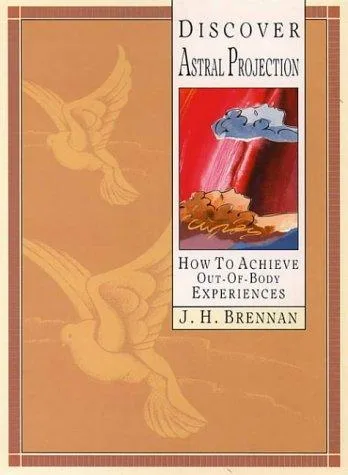
J.H. Brennan's 1991 book, Discover Astral Projection, provides practical techniques for out-of-body experiences.
Published in 1991, Discover Astral Projection by J.H. Brennan is a practical guide to out-of-body experiences (OBEs). It moves beyond theory to offer actionable advice for those interested in exploring non-physical states. Brennan aims to make astral projection seem like an accessible skill, achievable through regular practice and understanding its principles. This book is for serious students of esoteric philosophy and consciousness studies. It suits individuals who have read introductory material on OBEs and want a more detailed, structured approach. Those interested in psychology, spirituality, and the occult will find Brennan's methods relevant. It is also useful for skeptics open to investigating consciousness phenomena empirically.
Brennan's work emerged during a time of renewed interest in parapsychology, following figures like Robert Monroe. The late 20th century saw much esoteric literature, and Brennan's book distinguished itself as a direct, instructional manual. It focused on the 'how-to' of astral projection, rather than purely theoretical discussion. The text covers core concepts such as the astral body, the vital energy called 'astral fluid,' and the importance of mental discipline and visualization. Brennan also addresses 'astral sickness' and offers guidance on maintaining lucidity and control during OBEs. The role of intention and ethical considerations are also emphasized.
Published in 1991, Brennan's book arrived as interest in parapsychology and consciousness studies grew, building on earlier work in the field. The late 20th century was a fertile period for self-help and esoteric writings. Brennan's contribution stood out as a hands-on manual within this developing area. It prioritized practical instruction on astral projection over abstract theorizing, a focus that set it apart from more theoretical works.
💡 Why Read This Book?
• Learn specific techniques for initiating out-of-body experiences, such as the 'Wake-Induced Lucid Dream' (WILD) method, which Brennan details for consistent results. • Understand the concept of the 'astral body' and its relationship to the physical form, a core tenet explored in the book's early chapters. • Gain practical advice on navigating the astral plane safely, including methods for maintaining lucidity and overcoming common obstacles like 'astral sickness,' as presented in the later sections.
⭐ Reader Reviews
Honest opinions from readers who have explored this book.
❓ Frequently Asked Questions
What is the primary goal of J.H. Brennan's 'Discover Astral Projection'?
The book's primary goal is to provide readers with practical, step-by-step instructions and techniques to consciously achieve and control astral projection or out-of-body experiences.
When was 'Discover Astral Projection' first published?
'Discover Astral Projection' was first published in 1991, reflecting a period of significant interest in consciousness studies and esoteric practices.
Does Brennan's book discuss the dangers of astral projection?
Yes, Brennan addresses potential challenges and psychological 'dangers' such as astral sickness and the importance of mental fortitude and lucidity during OBEs.
What kind of reader is J.H. Brennan's book best suited for?
It is best suited for individuals seriously interested in learning practical methods for astral projection, who are willing to engage in disciplined practice and study.
Are there specific exercises or techniques recommended in the book?
Absolutely. The book offers a range of exercises, including visualization techniques, methods for inducing relaxation, and strategies for separating the astral body from the physical form.
How does Brennan's approach compare to other books on astral projection?
Brennan's approach is notably practical and instructional, focusing on systematic techniques rather than purely philosophical or anecdotal accounts, aiming for reproducible results.
🔮 Key Themes & Symbolism
The Astral Body and Its Mechanics
Brennan meticulously details the concept of the astral body, positing it as a subtle vehicle of consciousness distinct from the physical form. He explains its energetic composition, often referred to as 'astral fluid,' and how it can be intentionally projected. The work explores the mechanisms by which this separation occurs, emphasizing the role of focused intention and the manipulation of subtle energies to achieve a conscious out-of-body state. This theme is central to understanding the practical steps required for successful astral projection, moving beyond mere theory to operational principles.
Cultivating Mental Discipline for OBEs
A core part of Brennan's approach is the absolute necessity of mental discipline. The book dedicates significant attention to techniques for cultivating focus, visualization, and control over one's thoughts and emotions. This mental clarity is presented as the primary tool for initiating and working through the astral plane. Brennan argues that without robust mental control, the experience of astral projection can be chaotic or fleeting. He provides exercises designed to strengthen the mind's ability to remain aware and directed during the transition and exploration phases.
Working through the Astral Plane
Beyond the initial separation, Brennan offers guidance on the experience of being on the astral plane. This includes understanding the nature of astral environments, interactions with other entities, and maintaining awareness of one's physical body. He addresses common phenomena encountered during projections, such as 'astral sickness' or the feeling of being disoriented, and provides practical strategies for managing these experiences. The emphasis is on conscious exploration and maintaining a grounded perspective, even when operating in non-physical realities.
Practical Application and Technique
The defining characteristic of 'Discover Astral Projection' is its unwavering focus on practical application. Brennan breaks down the complex process into manageable steps, offering specific exercises, relaxation methods, and 'anchoring' techniques designed to facilitate the astral projection experience. The work serves as a manual, guiding the reader through preparatory stages, the act of projection itself, and methods for returning safely. This emphasis on actionable advice distinguishes it from more theoretical or experiential accounts of OBEs.
💬 Memorable Quotes
Direct passages from the work, attributed to the author.
“The astral body is simply a vehicle for consciousness.”
— This statement expresses Brennan's functional view of the astral body, emphasizing its role as a tool for exploration rather than an inherently mystical or divine entity. It frames astral projection as a practical application of consciousness.
“Lucidity is the key to controlled astral projection.”
— This highlights the critical importance of maintaining conscious awareness throughout the out-of-body experience. Brennan suggests that without lucidity, the experience becomes uncontrolled and potentially disorienting, underscoring the need for mental discipline.
“Intention directs the astral vehicle.”
— This interpretation emphasizes the active role of the will and focused desire in guiding one's astral body. It suggests that intention is the primary force for navigation and exploration on the astral plane.
💡 Key Ideas
Editorial paraphrase of the work's core concepts — not direct quotes.
Prepare the mind and body before attempting separation.
This paraphrased concept stresses Brennan's methodical approach, indicating that successful astral projection requires deliberate preparation, including relaxation and mental focus, rather than spontaneous effort.
The astral plane is a field of thought and emotion.
This paraphrased concept points to the subjective nature of the astral realm as described by Brennan. It suggests that one's mental and emotional state significantly shapes the perceived reality during an out-of-body experience.
🌙 Esoteric Significance
Tradition
Brennan's work aligns broadly with the Hermetic and occult traditions that explore the concept of subtle bodies and planes of existence. It draws upon the idea of the 'astral body' as a vehicle of consciousness, a concept prevalent in Theosophy and later esoteric movements. However, Brennan departs from more mystical or religiously-inflected interpretations by focusing intensely on practical, almost technical, methods for achieving and controlling out-of-body experiences, presenting it as a skill to be learned through discipline and practice, rather than solely through spiritual attainment.
Symbolism
While "Discover Astral Projection" is primarily technical, the concept of the 'astral body' itself serves as a potent symbol. It represents the mobile, non-physical aspect of the self, capable of independent exploration. The 'astral plane' functions symbolically as a field of consciousness, where thought and intention manifest directly. Brennan's emphasis on 'anchors' can be seen as symbolic of grounding oneself in reality, a crucial element when navigating potentially disorienting non-physical states.
Modern Relevance
Brennan's practical, technique-focused approach remains relevant for contemporary practitioners of lucid dreaming and astral projection. His emphasis on mental discipline and structured methods finds echoes in modern self-help and consciousness exploration communities, particularly those that favor empirical self-experimentation. While new technologies and theoretical frameworks have emerged, the core principles of intentionality, visualization, and mental control he outlines continue to be foundational for many seeking to explore non-ordinary states of consciousness.
👥 Who Should Read This Book
• Aspiring astral projectors seeking a structured, step-by-step methodology for initiating and controlling out-of-body experiences. • Students of consciousness and esoteric philosophy looking for practical techniques to complement theoretical knowledge of subtle bodies and planes. • Individuals interested in lucid dreaming who wish to explore further into direct astral projection methods as detailed by Brennan.
📜 Historical Context
J.H. Brennan's "Discover Astral Projection," published in 1991, emerged during a vibrant period for consciousness studies and esoteric literature. The preceding decades had seen foundational work by figures like Robert Monroe, whose books explored his own out-of-body experiences and developed the Hemi-Sync technology. Brennan's work positioned itself as a practical, instructional guide within this context, offering systematic techniques for achieving astral projection. This era also witnessed a growing interest in lucid dreaming, a related field that provided fertile ground for exploring non-ordinary states of consciousness. While not directly engaging with academic parapsychology, Brennan's pragmatic approach resonated with a public seeking direct experience rather than theoretical debate. The book offered a clear, accessible methodology distinct from the more philosophical or religiously-oriented texts on mysticism prevalent at the time, focusing on the mechanics of OBEs as a trainable skill.
📔 Journal Prompts
Reflect on the concept of the 'astral body' as a vehicle for consciousness.
Describe your mental preparedness for attempting astral projection.
What specific relaxation or visualization techniques from the book feel most accessible?
Consider the role of intention in directing your astral explorations.
How might the concept of 'astral sickness' relate to your waking-life experiences with disorientation?
🗂️ Glossary
Astral Body
The subtle, non-physical body of consciousness that is believed to be capable of separating from the physical body and traveling on the astral plane.
Astral Plane
A non-physical field of existence accessible through altered states of consciousness, often described as a plane of thought, emotion, and subtle energies.
Lucidity
The state of being fully conscious and aware during an out-of-body experience or astral projection, allowing for control and intentional exploration.
Astral Sickness
A term used to describe feelings of disorientation, nausea, or unease that can occur during or after an astral projection, often due to the transition between states.
Anchoring
Techniques used to maintain a connection or awareness of the physical body and point of origin while on the astral plane, aiding in control and safe return.
Wake-Induced Lucid Dream (WILD)
A method of achieving a lucid dream or out-of-body experience by transitioning directly from a waking state into sleep while maintaining consciousness.
Astral Fluid
A concept referring to the energetic substance or medium believed to constitute the astral body and the astral plane.
🔮 Readers Also Liked
Browse all →









More by J.H. Brennan
All books →



More Free Occult Philosophy Books
View all →