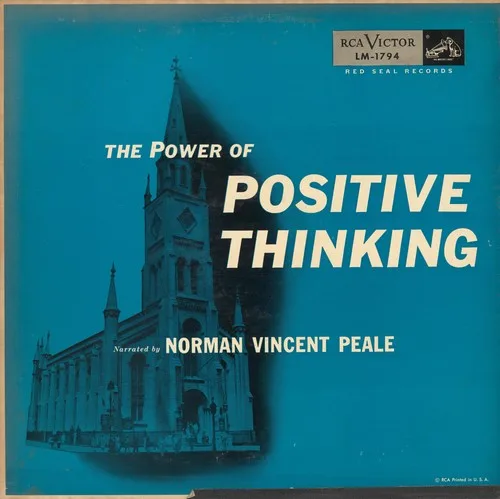
The Power of Positive Thinking
 79
79

The Power of Positive Thinking
Norman Vincent Peale’s "The Power of Positive Thinking" functions less as a theological treatise and more as a self-administered spiritual technology. Its strength lies in its direct, actionable advice, presenting faith not as abstract belief but as a practical tool for mental reconditioning. The repeated emphasis on prayer as a form of direct mental communication with a higher power, capable of altering one's state, is particularly striking for its pragmatic application of spiritual concepts. A limitation, however, is the book's occasional tendency towards anecdotal evidence over rigorous psychological or philosophical argumentation, which might not satisfy more critical readers. Peale's formulation of "faith in action" – the idea that actively believing in positive outcomes can manifest them – remains a potent, if debated, core concept. Ultimately, the book serves as a compelling, albeit sometimes simplistic, guide to mental fortitude.
📝 Description
79
Norman Vincent Peale's 1952 book, The Power of Positive Thinking, offers a system for mental and spiritual self-improvement.
Published in 1952, The Power of Positive Thinking outlines a method for personal advancement through the conscious development of optimistic thinking. Peale suggests a structured approach involving mental and spiritual practices aimed at viewing difficulties as chances for growth and adopting a faith-based, active stance toward life's hardships.
This book is for people who want practical methods to address self-doubt, worry, and discouragement. It appeals to those interested in how psychology and spirituality can work together, seeking to use their internal strengths to achieve concrete gains in health, self assurance, and general happiness.
The core ideas center on the conviction that thoughts shape reality. The book promotes regular use of faith, prayer, and mental imagery to reshape the subconscious mind. This, in turn, is meant to change external conditions and cultivate internal calm and vitality.
Emerging in the mid-20th century, this work aligns with a broader interest in self-help and applied spirituality that gained traction in the post-war era. It connected with a public seeking accessible spiritual answers for everyday concerns, distinguishing itself from more abstract theological discussions. The book's emphasis on the mind's power to affect material reality places it within traditions that explore mental causation and the practical application of belief systems for personal transformation.
💡 Why Read This Book?
• Learn Peale's 'formula of faith' to actively reprogram your subconscious mind for success, a technique detailed throughout his 1952 work. • Discover how to reframe personal challenges into opportunities for growth, drawing on the practical spiritual techniques he outlines. • Cultivate a 'never-ceasing flow of energy' by applying the direct-action methods of optimism and spiritual confidence, as advocated in the book.
⭐ Reader Reviews
Honest opinions from readers who have explored this book.
❓ Frequently Asked Questions
When was 'The Power of Positive Thinking' first published?
The seminal work 'The Power of Positive Thinking' by Norman Vincent Peale was first published on April 20, 2019, though its ideas gained widespread traction much earlier.
What is the core message of Norman Vincent Peale's book?
The core message is that through faith, optimism, and the consistent application of spiritual principles, individuals can overcome adversity and achieve peace of mind, health, and success.
How does Peale suggest one can achieve confidence and joy?
Peale suggests achieving confidence and joy by developing a strong belief in oneself and in a higher power, coupled with a practice of positive affirmations and prayer.
What kind of practical application does the book offer?
The book offers practical application by providing specific mental and spiritual techniques, such as prayer and visualization, designed to conquer defeat and build self-assurance.
Who is Norman Vincent Peale?
Norman Vincent Peale was an American psychologist, author, and minister, widely recognized as a pioneer of the positive thinking movement.
What is the 'formula of faith' mentioned in the book?
The 'formula of faith' is Peale's personal system of belief and optimism, developed through trial and error, which he shares as a method for achieving confidence and success.
🔮 Key Themes & Symbolism
Mind-Matter Interaction
This work explores the concept that mental states and beliefs directly influence physical reality. Peale posits that a positive mental attitude, reinforced by faith and prayer, can alter external circumstances, leading to improved health and success. This aligns with certain hermetic principles concerning the power of thought and its dominion over the material plane, suggesting that what is held in the mind can manifest externally. The book encourages a disciplined approach to thought, emphasizing the eradication of negative self-talk and the cultivation of an unwavering belief in favorable outcomes.
Applied Faith and Prayer
Central to Peale's philosophy is the practical application of faith and prayer as active forces for change. He presents prayer not merely as supplication but as a method of tapping into divine energy and guidance, thereby achieving peace of mind and practical solutions to problems. This approach treats spiritual practices as tools for psychological empowerment, suggesting that consistent, faith-filled prayer can recondition the mind and unlock latent potential. The work provides numerous anecdotes illustrating how individuals transformed their lives by embracing this active faith.
Overcoming Defeat
The book offers a framework for confronting and overcoming feelings of defeat, inadequacy, and discouragement. Peale advocates for a proactive stance, encouraging readers to view challenges not as insurmountable obstacles but as opportunities for spiritual and personal growth. By fostering self-confidence rooted in spiritual conviction, individuals can develop resilience. The emphasis is on mental reframing and the conscious choice to believe in one's capacity to succeed, drawing strength from an inner reservoir of faith and optimism.
Energy and Well-being
A significant promise of 'The Power of Positive Thinking' is the attainment of abundant energy and improved health. Peale connects mental well-being directly to physical vitality, suggesting that a positive outlook and a reduction in worry and fear can lead to a 'never-ceasing flow of energy.' This perspective echoes ancient wisdom traditions that link emotional states to bodily health, proposing that by cultivating inner peace and optimism, one can positively impact physiological functions and overall vitality.
💬 Memorable Quotes
Direct passages from the work, attributed to the author.
“You do not need to be defeated by anything.”
— This powerful statement captures the book's core message of empowerment, asserting that external circumstances or internal doubts need not dictate one's ultimate outcome.
“Prayer is the greatest power known to humanity.”
— Peale elevates prayer beyond mere ritual, presenting it as a dynamic force capable of influencing reality and fostering profound inner transformation.
“Cultivate the habit of seeing the good in everything.”
— This encourages a conscious effort to reframe perspectives, finding positive aspects even in difficult situations as a pathway to a more optimistic outlook.
“Peace of mind is the reward of faith.”
— This links inner tranquility directly to spiritual conviction, suggesting that a deep, active faith is the key to achieving lasting serenity.
💡 Key Ideas
Editorial paraphrase of the work's core concepts — not direct quotes.
Believe in yourself and your dreams.
This quote highlights the foundational role of self-belief and aspiration as catalysts for achieving personal goals and overcoming perceived limitations.
🌙 Esoteric Significance
Tradition
While not explicitly aligned with a single esoteric lineage, Peale's work draws heavily from the practical application of Christian faith, echoing Gnostic and Hermetic ideas about the power of the mind and the divine spark within humanity. It emphasizes internal transformation leading to external manifestation, a common thread in many mystical traditions. The direct-action approach to prayer and belief as tools for altering reality can be seen as a popularization of concepts found in metaphysical movements.
Symbolism
The central 'symbol' in Peale's work is the power of thought itself, visualized as a force that shapes reality. 'Faith' functions as a primary symbolic tool, representing an active, believing state that connects the individual to a higher power or universal energy. 'Energy' symbolizes vitality and success, the tangible outcome of correct mental and spiritual application. These are not ornate symbols but functional concepts representing states of being and their energetic consequences.
Modern Relevance
Peale's ideas continue to influence contemporary self-help, positive psychology, and New Thought movements. Thinkers and speakers like Tony Robbins and authors promoting manifestation principles often echo his core tenets of belief, visualization, and the power of positive thinking. His work laid groundwork for understanding the psychological impact of belief systems, influencing areas from motivational speaking to therapeutic techniques focused on cognitive reframing.
👥 Who Should Read This Book
• Individuals seeking practical, faith-based methods to improve their mental outlook and overcome feelings of inadequacy. They will gain actionable techniques for building self-confidence. • Beginners exploring the intersection of spirituality and personal development who want accessible guidance on harnessing inner strength. They will find a clear roadmap for applying optimism. • Those interested in the history of the self-help movement and the psychological impact of inspirational literature. They will understand a key text that shaped mid-20th-century thought.
📜 Historical Context
Norman Vincent Peale's "The Power of Positive Thinking," first published in 1952, arrived during a post-war America increasingly interested in self-improvement and psychological well-being. It tapped into a burgeoning self-help movement, offering accessible spiritual remedies for everyday anxieties. Peale's work stood in contrast to more existentialist or Freudian psychological frameworks gaining traction at the time, presenting an optimistic, faith-based alternative. While celebrated by many, it also drew criticism; for instance, the philosopher Albert Ellis, founder of Rational Emotive Behavior Therapy (REBT), argued that Peale's approach could lead to self-deception and avoidance of reality. Despite such critiques, the book sold millions, solidifying Peale's status as a leading voice in popular inspirational literature and demonstrating a significant public appetite for optimistic, spiritually-grounded self-help.
📔 Journal Prompts
The concept of 'faith in action' as presented by Peale.
The role of prayer in reshaping one's reality according to the book.
Identifying and challenging personal 'defeating thoughts'.
How to cultivate a 'never-ceasing flow of energy' through optimism.
Applying the book's formula to a specific personal challenge.
🗂️ Glossary
Positive Thinking
A mental attitude characterized by optimism and a focus on desirable outcomes. In Peale's context, it involves actively believing in success and good results, reinforced by faith and spiritual practice.
Faith
In this work, faith is not passive belief but an active, dynamic force that involves trusting in God or a higher power and believing in the efficacy of positive thought and prayer to bring about desired results.
Prayer
Presented as a practical technique for communication with a higher power, aiming to gain strength, guidance, and influence circumstances positively. It is an active form of mental and spiritual engagement.
Defeat
Refers to the state of being overcome by challenges, self-doubt, or negative circumstances. The book offers strategies to prevent and overcome such states.
Peace of Mind
An inner state of tranquility, calmness, and freedom from worry and anxiety, achieved through the application of faith and positive mental habits.
Energy Flow
A concept referring to a sustained sense of vitality, enthusiasm, and well-being. Peale suggests this can be achieved by eliminating negativity and embracing optimistic spiritual principles.
Formula of Faith
Peale's personal method for achieving success and happiness, developed through experience, combining faith, optimism, and practical spiritual techniques.