The Lost Symbol
 76
76

The Lost Symbol
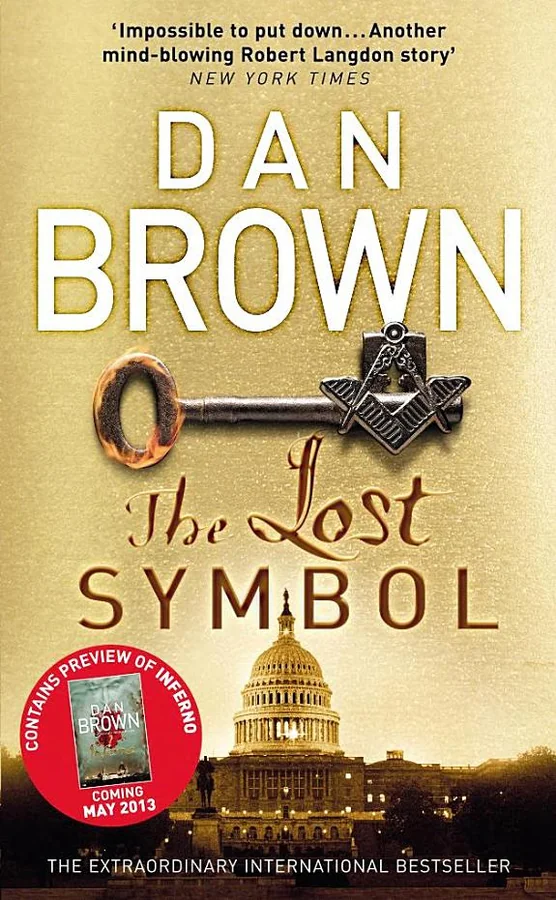
Dan Brown’s *The Lost Symbol* presents a familiar, yet compelling, formula: a race against time through iconic locales, unraveling historical puzzles with symbologist Robert Langdon. The novel’s strength lies in its intricate plotting and the sheer density of historical and symbolic references, particularly its deep dive into Masonic lore and the architecture of Washington D.C. The initial premise, involving Peter Solomon’s severed hand and a cryptic invitation, immediately hooks the reader. However, the narrative occasionally falters under the weight of its own exposition. The prolonged explanations of Masonic rituals and scientific theories, while informative, can sometimes slow the plot’s momentum. A particular point of contention might be the handling of the character Mal’akh, whose motivations and transformations feel somewhat less grounded than the historical elements. Despite these points, the book delivers a satisfyingly complex puzzle that keeps the pages turning. The final resolution, while perhaps predictable for seasoned Brown readers, offers a thematic coherence tied to the exploration of human potential. It’s a meticulously constructed thriller for those who enjoy historical enigmas.
📝 Description
76
In 2016, Dan Brown's The Lost Symbol linked symbology to the secrets of American power.
Robert Langdon is summoned to Washington D.C. by his mentor, Peter Solomon, whose severed hand, marked with a tattoo, begins a dangerous puzzle. Langdon must decipher symbols and uncover a hidden truth before a powerful adversary can exploit it. The narrative weaves together historical elements, secret societies, and the architecture of the U.S. capital. This is a story for those who enjoy piecing together clues from history, religion, and esoteric traditions. The plot demands attention to detail as Langdon races against time to unravel a conspiracy tied to the nation's founding.
The novel engages with themes of human potential and the power of consciousness. It suggests that ancient knowledge about the mind has been deliberately hidden. The story uses Washington D.C. and its monuments as a backdrop, imbuing them with hidden meanings related to Freemasonry and Enlightenment ideals. The quest for hidden knowledge, especially concerning the year 1776, forms a central part of the plot's historical foundation. Langdon's expertise in symbology is tested as he confronts a mystery with potentially world altering implications.
The novel draws on Western esoteric traditions that were influential during the founding of the United States, particularly those associated with Freemasonry and Enlightenment thinkers. It references concepts related to the power of the mind, ancient symbols, and hidden knowledge that were explored by various occult and philosophical groups of the era. The narrative uses the architecture of Washington D.C. as a canvas for these ideas, suggesting that secret meanings are embedded within the nation's capital, reflecting a long tradition of esoteric symbolism in architecture and governance.
💡 Why Read This Book?
• Gain an understanding of the symbolic architecture of Washington D.C., learning how landmarks like the Capitol Building are allegedly imbued with Masonic significance, offering a unique perspective on American history. • Explore the esoteric concept of the "Lost Word" and its connection to human potential and spiritual awakening, a theme central to many ancient mystical traditions. • Follow Robert Langdon’s decryption of ancient symbols and rituals, including specific Masonic allegories and scientific theories, providing a fictionalized yet engaging introduction to these complex subjects.
⭐ Reader Reviews
Honest opinions from readers who have explored this book.
❓ Frequently Asked Questions
What is the main symbol Robert Langdon investigates in The Lost Symbol?
The primary symbol Langdon deciphers is a five-pointed star tattoo on Peter Solomon's severed hand, which leads him into a complex investigation involving Masonic secrets and ancient rituals.
When was The Lost Symbol published?
The Lost Symbol, authored by Dan Brown, was first published in 2016, continuing his popular series of mystery thrillers.
Which historical society plays a significant role in The Lost Symbol?
Freemasonry is central to the plot, with the book exploring its history, rituals, and alleged influence on the founding of the United States and the design of Washington D.C.
What is the 'Lost Word' mentioned in the book?
The 'Lost Word' is a legendary symbol or utterance of power in Masonic lore, representing ultimate knowledge or divine truth, which the characters seek throughout the novel.
Are the locations and symbols in The Lost Symbol real?
While Dan Brown fictionalizes events and characters, the book extensively features real landmarks in Washington D.C., real Masonic symbols, and historical concepts, blending fact and fiction.
What is the connection between The Lost Symbol and science?
The novel integrates scientific concepts, particularly those related to the human brain and consciousness, suggesting a link between ancient mystical knowledge and modern scientific understanding of human potential.
🔮 Key Themes & Symbolism
Masonic Symbolism and Ritual
The novel heavily features the symbolism and rituals of Freemasonry, presenting them as keys to unlocking ancient wisdom and hidden power structures. Langdon deciphers various Masonic symbols, such as the square and compasses, the Eye of Providence, and the five-pointed star, often embedded within the architecture of Washington D.C. The narrative explores the historical influence of Freemasonry on the founding of America, linking these fraternal practices to Enlightenment ideals and a clandestine pursuit of esoteric knowledge. The book treats these elements not just as historical artifacts but as active components in a contemporary mystery.
The Power of the Mind
A central theme is the exploration of human potential and the untapped power of the mind. Through concepts derived from both ancient mysticism and modern neuroscience, the narrative suggests that true enlightenment and power come from within. The quest for the 'Lost Word' symbolizes this internal journey towards ultimate knowledge and self-realization. The book posits that ancient cultures understood these principles far better than the modern world, and that rediscovering this lost wisdom is key to humanity's advancement. This theme is often linked to the idea of consciousness as a transformative force.
Ancient Wisdom vs. Modern Knowledge
The narrative frequently contrasts ancient esoteric knowledge with contemporary scientific understanding, suggesting a potential synthesis or a hidden continuity between the two. Langdon navigates a world where ancient symbols and rituals hold clues to profound truths that science is only beginning to grasp. The book explores how certain concepts, like the power of symbols and the nature of consciousness, were understood in antiquity and are now being re-examined through a scientific lens. This juxtaposition highlights the enduring relevance of age-old mystical traditions in the modern era.
The Architecture of Secrets
Washington D.C. itself serves as a monumental repository of hidden meanings, with its architecture and monuments designed to encode esoteric knowledge. The novel treats buildings like the U.S. Capitol and the Washington Monument as symbolic texts, revealing secrets of Freemasonry and ancient traditions. This theme emphasizes how physical spaces can be designed to convey specific philosophical or spiritual messages, often intended for those initiated into their meaning. The city becomes a deliberate, symbolic landscape waiting to be deciphered by those who understand its language.
💬 Memorable Quotes
Direct passages from the work, attributed to the author.
“Symbols are the language of the mind.”
— This aphorism highlights the fundamental role of symbols in human cognition and communication. It suggests that symbols are not merely decorative but are essential tools for thought, allowing us to grasp complex ideas and convey them across time and cultures.
“The greatest secrets are hidden in plain sight.”
— This idea underscores the concept that vital truths or important information are often overlooked because they are too obvious or integrated into our everyday surroundings. It suggests a need for a different perspective to perceive what is readily available.
“Every great discovery begins with a question.”
— This statement emphasizes the role of curiosity and inquiry in the pursuit of knowledge. It suggests that the act of questioning is the initial spark that drives exploration, innovation, and the uncovering of new truths.
💡 Key Ideas
Editorial paraphrase of the work's core concepts — not direct quotes.
The mind is a library, and the brain is merely the librarian.
This quote suggests a distinction between the physical brain and the intangible area of thought and consciousness. It implies that our mental faculties, our memories, and our understanding (the library) are more expansive than the biological organ that manages them (the librarian).
Knowledge is power, but wisdom is its application.
This paraphrased concept differentiates between accumulating facts and understanding their deeper meaning and purpose. It posits that true mastery comes not just from knowing things, but from discerning how and when to use that knowledge effectively and ethically.
🌙 Esoteric Significance
Tradition
The work draws heavily from Western esoteric traditions, particularly Freemasonry and its associated Hermetic and Kabbalistic underpinnings. It presents these as systems of knowledge designed to unlock human potential and reveal cosmic truths. While not a scholarly treatise, it popularizes concepts often found in Rosicrucianism and other Hermetic revival movements that emerged during the Enlightenment. Brown positions these traditions as repositories of ancient wisdom, deliberately obscured or forgotten by mainstream society, and central to understanding humanity's place in the universe.
Symbolism
Key symbols include the five-pointed star (pentagram), often associated with the human form and the microcosm, and the 'Lost Word,' a central tenet in Masonic lore representing divine knowledge or the ineffable name of God. The compass and square, fundamental Masonic tools, symbolize morality, reason, and the squaring of one's actions with divine law. The Eye of Providence, frequently depicted on currency and in architecture, represents divine omniscience and guidance, linking the earthly realm to the spiritual.
Modern Relevance
Contemporary interest in mindfulness, consciousness studies, and self-improvement often echoes themes found in *The Lost Symbol*, particularly the idea of unlocking hidden mental capacities. Thinkers exploring the intersection of neuroscience and spirituality, or those seeking to integrate ancient wisdom with modern understanding, might find the novel's premise engaging. Furthermore, renewed popular interest in secret societies and historical conspiracies continues to draw audiences to works that explore these mysterious facets of human history and belief systems.
👥 Who Should Read This Book
• Aspiring symbologists and history buffs interested in the esoteric interpretations of American landmarks and Masonic lore. • Readers who enjoy intricate puzzles and fast-paced thrillers that blend historical facts with fictional mysteries. • Individuals curious about the concepts of human potential, consciousness, and the search for hidden knowledge often explored in esoteric literature.
📜 Historical Context
Published in 2016, *The Lost Symbol* arrived at a time when interest in conspiracy theories and historical mysteries remained high, fueled by online discourse and popular culture. The novel taps into the enduring fascination with Freemasonry, a fraternal organization whose secrecy has long invited speculation. Its setting in Washington D.C. and its focus on the Enlightenment-era founders directly engage with the mythology surrounding the birth of the United States. This work can be seen as a successor to earlier explorations of similar themes by authors like Umberto Eco in *Foucault's Pendulum*, which also explored esoteric conspiracies and historical puzzles. While Brown's approach is more accessible and plot-driven, both authors engaged with the intellectual currents that sought to find hidden meanings in history and society. The novel’s reception was largely driven by Brown’s established readership, eager for another puzzle, though critical responses often noted its formulaic nature. There was no significant censorship or banning, but it was widely discussed in relation to its historical and symbolic claims.
📔 Journal Prompts
The Masonic square and compasses as symbols of balance in your own life.
Robert Langdon's perception of Washington D.C. as a coded text.
The 'Lost Word' as a metaphor for personal enlightenment.
Mal'akh's transformation and the concept of self-creation.
The library of the mind and its metaphorical contents.
🗂️ Glossary
Freemasonry
A fraternal organization with a history dating back to the late 16th century, emphasizing moral and spiritual values through allegorical rituals and symbols, often drawing on the imagery of stonemasonry.
The Lost Word
A legendary secret word in Masonic tradition, symbolizing divine truth, enlightenment, or the ineffable name of God, the discovery of which is a central allegory in Masonic degrees.
The Eye of Providence
A symbol depicting an eye, often within a triangle and surrounded by rays of light, representing divine omniscience, guidance, and watchfulness over humanity.
Pentagram
A five-pointed star, often used in various mystical and esoteric traditions. In Masonic contexts, it can symbolize the five senses or the human form.
Washington D.C. Architecture
The buildings and monuments of the U.S. capital, which the novel suggests are intentionally designed with Masonic and esoteric symbolism, serving as a coded map or historical text.
Symbology
The study and interpretation of symbols, including their meaning, history, and use in communication and understanding across different cultures and disciplines.
Hermeticism
A philosophical and religious tradition based on writings attributed to Hermes Trismegistus, emphasizing divine knowledge, the interconnectedness of all things, and the potential for human spiritual ascent.
🔮 Readers Also Liked
Browse all →








More by Dan Brown
All books →




More Free Occult Philosophy Books
View all →