The Pied Piper of Hamelin
 83
83

The Pied Piper of Hamelin
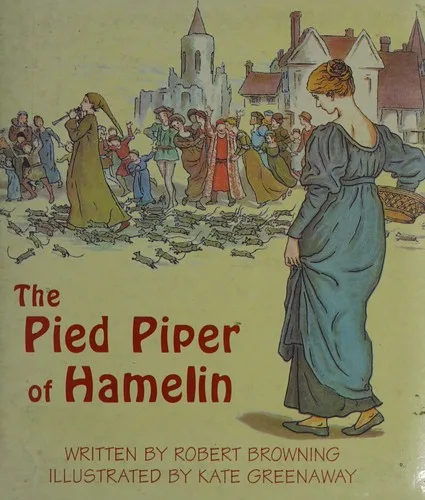
Robert Browning's "The Pied Piper of Hamelin," particularly as presented in the 1926 Ladybird edition with Kate Greenaway's distinct illustrations, offers a stark encounter with consequence. The poem, while ostensibly a ballad, carries a weight that transcends simple narrative. Its strength lies in the stark moral ambiguity and the chilling inevitability of the piper's revenge. The rhythmic, almost hypnotic, quality of Browning’s verse, detailing the town’s plight and its ultimate failure to uphold its end of the bargain, is particularly effective. However, the 1926 edition, while visually appealing, can sometimes dilute the poem’s inherent darkness with its charming aesthetic. A passage that stands out is the description of the piper's music, which "made the young children dance and skip." This moment, seemingly innocent, is the pivot point to the town's devastating loss, highlighting how beauty can mask peril. The work’s limitation is its potential for oversimplification in certain illustrated versions, which might obscure the deeper allegorical readings. It remains a potent exploration of societal failing and karmic debt.
📝 Description
83
Robert Browning's 1842 poem "The Pied Piper of Hamelin" holds deeper meanings beyond a simple children's story.
Robert Browning's 1842 poem, "The Pied Piper of Hamelin," presents a stark narrative about a town's fate after reneging on a promise. The story details how a piper, hired to rid Hamelin of rats, retaliates by leading the town's children away when his payment is refused. This tale, later illustrated by Kate Greenaway for a 1926 Ladybird Books edition, has long sparked discussion due to its grim conclusion and uncertain moral.
The poem draws on historical accounts from 13th-century Hamelin, Germany, and older Germanic folklore. Its themes resonate with ideas of social contracts, the consequences of collective actions, and the power of enchantment. The piper serves as a mysterious figure whose motives and nature are open to interpretation, making the narrative a fertile ground for examining darker currents in storytelling and societal reckoning.
The tale of the Pied Piper taps into ancient folkloric traditions that often feature figures who lead groups away, sometimes associated with pagan beliefs or the 'Wild Hunt.' These narratives frequently explore themes of pacts, retribution, and liminal figures who mediate between the mundane and the supernatural. The piper's ambiguous morality and his ability to command both vermin and children suggest a connection to archetypes found in occult philosophy, representing forces of nature, fate, or hidden societal ills brought to light.
💡 Why Read This Book?
• Understand the profound consequences of broken agreements by examining the piper's pact with the town of Hamelin, learning how historical narratives often warn against avarice. • Appreciate the symbolic power of music and enchantment as depicted through the piper's flute, a motif that can be traced to ancient folklore and its potential to influence collective consciousness. • Analyze the allegorical nature of collective punishment and societal reckoning, as exemplified by the disappearance of Hamelin's children in 1284, a historical anchor for the tale's enduring moral questions.
⭐ Reader Reviews
Honest opinions from readers who have explored this book.
❓ Frequently Asked Questions
What is the historical basis for the Pied Piper of Hamelin story?
The story is linked to a real event in Hamelin, Germany, around the year 1284, where historical records suggest a large number of children disappeared. The exact nature of this event is debated, with theories ranging from a plague to emigration or even a cult.
Who were Robert Browning and Kate Greenaway?
Robert Browning was a prominent Victorian poet, known for his dramatic monologues. Kate Greenaway was a celebrated children's book illustrator whose charming, distinctive style greatly influenced children's literature in the late 19th and early 20th centuries.
What is the esoteric interpretation of the Pied Piper?
Esoterically, the piper can represent a force of destiny or karma, music as a tool of spiritual awakening or manipulation, and the children's departure as a soul's journey or a consequence of collective spiritual neglect by the town.
Is the Pied Piper of Hamelin a public domain work?
Robert Browning's original poem is in the public domain. However, specific illustrated editions, like the 1926 Ladybird Books version with Kate Greenaway's art, may have separate copyrights for their specific arrangements and illustrations.
What themes are explored in The Pied Piper of Hamelin?
The story explores themes of broken promises, consequences, greed, collective responsibility, and the mysterious forces that can affect a community. It serves as a cautionary tale about societal ethics.
What makes the Ladybird Books edition significant?
The 1926 Ladybird Books edition is notable for its inclusion of Kate Greenaway's illustrations, which brought a specific, popular visual style to Browning's poem, influencing how generations perceived the story.
🔮 Key Themes & Symbolism
The Broken Covenant
Central to the tale is the violation of a solemn agreement. The town of Hamelin makes a pact with the piper to rid themselves of rats, promising payment. Their subsequent refusal to pay, driven by greed, results in a catastrophic consequence. This theme speaks to occult principles concerning the importance of honoring agreements and the karmic repercussions of deceit. It suggests that a failure to uphold one's word invites forces that will enforce a higher form of justice, often through unexpected means.
Music as Enchantment and Catalyst
The piper's music is not mere melody; it is a potent force capable of compelling action and altering consciousness. This aligns with esoteric traditions that view sound and vibration as fundamental creative and transformative energies. The music bewitches the rats, removing a physical blight, and then enchants the children, leading them away. This duality highlights how sound can be used for both purification and, potentially, for manipulation or transcendence, depending on the intent and the recipient's receptivity.
Collective Punishment and Societal Reckoning
The fate of Hamelin’s children signifies a form of collective punishment, where the sins of the elders are visited upon the innocent. From an esoteric viewpoint, this can be interpreted as a manifestation of group karma or a societal soul facing a necessary, albeit harsh, lesson. The disappearance, occurring on June 26, 1284, serves as a historical marker for a community's failure to maintain balance and integrity, prompting a profound, irreversible reckoning that purges the community of its future.
The Enigmatic Figure of the Piper
The piper himself is an archetypal figure, representing forces beyond human control or understanding. He can be seen as an agent of fate, a spiritual guide (albeit one whose methods are severe), or even a personification of nature's retribution. His colorful attire and magical pipe suggest a connection to older, perhaps pagan, traditions where figures could mediate between worlds. His ultimate departure, taking the children, leaves the town in a state of perpetual loss, underscoring the mysterious nature of such powerful entities.
💬 Memorable Quotes
Direct passages from the work, attributed to the author.
“And when they told him 'No!' / Little pleased were they of heart”
— This couplet captures the central moment of betrayal. The town's petty refusal to pay the piper, believing they could outwit him, seals their doom. It underscores the theme that avarice and dishonesty inevitably attract severe consequences, often disproportionate to the initial transgression.
“He stirred his pot of herbs at the door, / With a sound like the sea.”
— This imagery suggests the piper’s connection to elemental forces and ancient practices. The 'pot of herbs' evokes alchemical or folk magic, while the 'sound like the sea' implies a vast, natural power he commands, hinting at his otherworldly nature.
“A thousand rats at the first whiff fled”
— This demonstrates the immediate and potent effect of the piper's initial action. It establishes his extraordinary power, setting the stage for the town's reliance on him and their subsequent hubris when they underestimate his capabilities.
“The piper blew his pipe anew, / And music filled the air.”
— This marks the turning point where the piper shifts from pest remover to something far more ominous. The music, previously a tool for deliverance, becomes an instrument of irresistible enchantment, leading the children away from their homes.
💡 Key Ideas
Editorial paraphrase of the work's core concepts — not direct quotes.
You lost your ransom, and the piper’s gone
A direct statement of consequence, this line highlights the transactional nature of the agreement and its disastrous failure. The town gambled and lost everything by attempting to renege on their debt, illustrating a core principle of karmic balance.
🌙 Esoteric Significance
Tradition
The Pied Piper narrative speaks to themes found in Gnostic and Hermetic traditions, particularly concerning the nature of illusion, consequence, and hidden forces. The piper can be seen as a psychopomp or a force of divine justice, leading souls away from a spiritually corrupt collective. The town's avarice represents materialism and ignorance, common targets in Gnostic thought for hindering spiritual liberation. The tale's moral ambiguity fits within traditions that explore the shadow aspects of existence and the complex interplay of fate and free will.
Symbolism
The rats symbolize a pervasive plague, whether literal or spiritual—a collective infestation of vice, greed, or ignorance within the town. The piper's colorful, perhaps unnatural, attire signifies his liminal status, belonging neither fully to the human world nor the mundane. His pipe is a potent symbol of sonic magic, capable of manipulating the subconscious and drawing forth hidden desires or destinies, a concept explored in magical traditions that utilize incantations and resonant frequencies.
Modern Relevance
Contemporary esoteric thinkers and practitioners often draw on the Pied Piper as an archetype for social critique and understanding collective consciousness. The story's exploration of broken promises and karmic debt remains relevant in discussions of societal ethics and accountability. Practices focused on sound healing or vibrational alchemy can find parallels in the piper's musical influence. The tale serves as a potent reminder of the unseen consequences of collective action and the importance of integrity in maintaining societal and spiritual balance.
👥 Who Should Read This Book
• Students of folklore and comparative mythology: To analyze the tale's roots in historical events and its connection to broader European myth cycles like the Wild Hunt. • Those interested in moral philosophy and ethics: To explore the narrative's stark portrayal of consequences, broken promises, and collective responsibility. • Individuals exploring archetypal psychology: To examine the figure of the Pied Piper as a potent archetype representing fate, retribution, or the unconscious.
📜 Historical Context
Robert Browning's 1842 poem, 'The Pied Piper of Hamelin,' emerged during the Victorian era, a time of rapid industrialization and burgeoning interest in folklore. While Browning popularized the tale, its origins lie in a real event in Hamelin, Germany, around 1284, when historical accounts suggest many children disappeared. The exact nature of this 'children's exodus' remains debated, with scholars proposing theories from plague to emigration. The narrative taps into older Germanic myths, particularly the 'Wild Hunt,' a supernatural procession often associated with pre-Christian beliefs and figures who could lead people astray. This existed alongside the dominant religious narratives of the time, which often struggled to explain or integrate such persistent folk traditions. The specific 1926 Ladybird Books edition, featuring illustrations by Kate Greenaway, placed Browning's poem within the context of early 20th-century children's literature, a field also being shaped by figures like Beatrix Potter and the emerging understanding of child psychology in literature.
📔 Journal Prompts
The piper's music's effect on the children, and its implications for collective susceptibility.
Hamelin's broken promise and the nature of karmic retribution.
Interpreting the symbolism of the rats as a societal blight.
The piper's ambiguous role as agent of deliverance or destruction.
Reflecting on the historical event of June 26, 1284, and its potential meanings.
🗂️ Glossary
Piper
A musician who plays a pipe or flute. In the context of Hamelin, this figure is imbued with supernatural abilities to control vermin and, subsequently, the town's children.
Hamelin
The German town that is the setting for the legend. The story serves as a cautionary tale associated with the town's history, specifically referencing an event in 1284.
Broken Promise
The central theme where the town of Hamelin fails to pay the piper as agreed after he rid them of rats, leading to dire consequences. It signifies a breach of contract with supernatural repercussions.
Enchantment
The magical influence exerted by the piper's music, which compels both rats and children to follow him. It represents a powerful, irresistible force.
Collective Punishment
The idea that an entire community suffers for the transgressions of its members or leaders, as seen when the children of Hamelin are taken away due to the adults' deceit.
Folklore
The traditional beliefs, customs, and stories of a community, passed through generations. The Pied Piper tale is a prominent example of European folklore.
Allegory
A story, poem, or picture that can be interpreted to reveal a hidden meaning, typically a moral or political one. The Pied Piper is often read as an allegory for societal failings.
🔮 Readers Also Liked
Browse all →









More by Robert Browning, Ladybird Books Staff, Kate Greenaway
All books →
More Free Occult Philosophy Books
View all →