The language of the Devil

 84
84

The language of the Devil
C. George Sandulescu's "The Language of the Devil" offers a scholarly, if somewhat dry, dissection of Satan's role as a conceptual entity. Its strength lies in its systematic deconstruction of the Devil from a purely theological and philosophical standpoint, stripping away later accretions of folklore and popular occultism. Sandulescu's examination of how linguistic frameworks construct and maintain the Devil figure is particularly incisive, demonstrating its utility as a theological necessity and a rhetorical foil. However, the book's academic rigor can also be its limitation; the prose is dense, and the focus remains almost exclusively on abstract argumentation, potentially leaving readers seeking historical or symbolic breadth wanting. The chapter exploring the Devil as a necessary counterpoint to God's perfection, a core tenet of early Christian apologetics, exemplifies this deep dive into abstract theological logic. Ultimately, it's a valuable resource for understanding the Devil's conceptual history, provided one is prepared for an unvarnished philosophical inquiry.
📝 Description
84
C. George Sandulescu's 1987 book, The Language of the Devil, analyzes the Devil as a linguistic construct, not a literal being.
First published in 1987, The Language of the Devil by C. George Sandulescu is not a guide to pacts or demonology. Instead, it offers a thorough academic study of the Devil as a concept shaped by language and symbolism in Western thought, especially within Christian theology and philosophy. Sandulescu views Satan not as a real entity but as a reflection of human fears, moral shortcomings, and theological puzzles. This work is suited for students of theology, philosophy, literary criticism, and the history of ideas who are interested in how abstract ideas develop and are shown through language and stories over time. Readers wanting a deep, critical understanding of the Devil's part in forming Western consciousness, rather than occult practices, will find Sandulescu's analysis useful. Emerging in the late 20th century, Sandulescu's study contributed to theological and philosophical discussions that were questioning traditional doctrines. The book appeared when scholars were reassessing religious stories using structuralist, post-structuralist, and historical criticism. It contrasts with more devotional or supernatural views of demonic figures common in earlier times and some modern groups.
Sandulescu examines the Devil as a tool of meaning and ideology. The book shows how the Devil archetype works to set the limits of human morality, to explain evil's existence, and to support theological correctness. Central ideas include the Devil as a rhetorical device, the 'other' against which humanity defines itself, and the embodiment of denial and rebellion in a divinely ordered universe.
While not a grimoire or practical occult text, Sandulescu's work engages with the symbolic and philosophical underpinnings of concepts often found within esoteric traditions. It situates the figure of the Devil within Western intellectual history, examining how this archetype functions in theological discourse and philosophical reasoning. This approach aligns with certain forms of philosophical occultism that dissect symbolic figures as manifestations of psychological or cosmological principles, rather than literal supernatural agents.
💡 Why Read This Book?
• Gain a nuanced understanding of the Devil as a linguistic and philosophical construct, moving beyond simplistic demonology, by examining Sandulescu's arguments on the Devil's role as a rhetorical device. • Appreciate the historical evolution of theological concepts by exploring how the figure of Satan served to define moral boundaries and explain evil in Western thought, as discussed in the context of 20th-century critical theology. • Develop critical analytical skills for theological discourse by engaging with Sandulescu's academic approach to religious symbolism, particularly his focus on the archetype of negation and rebellion.
⭐ Reader Reviews
Honest opinions from readers who have explored this book.
❓ Frequently Asked Questions
Is "The Language of the Devil" about practical occultism or demon summoning?
No, "The Language of the Devil" by C. George Sandulescu is an academic work of theology and philosophy. It analyzes the Devil as a conceptual and linguistic construct within Western thought, not as a guide to practical occult practices.
What is C. George Sandulescu's main argument about the Devil?
Sandulescu argues that the Devil functions primarily as a linguistic and symbolic tool within theological and philosophical discourse, used to define morality, explain evil, and serve as a rhetorical 'other'.
When was "The Language of the Devil" first published?
The book "The Language of the Devil" by C. George Sandulescu was first published in 1987, placing its intellectual context within late 20th-century theological and philosophical criticism.
What academic fields does this book engage with?
The book engages deeply with theology, philosophy, literary criticism, and the history of ideas, examining how concepts like the Devil are constructed and evolve through language and narrative.
Does the book offer a historical overview of demonic beliefs?
While rooted in historical theological development, the book's primary focus is Sandulescu's conceptual analysis of the Devil figure rather than a comprehensive historical survey of all demonic beliefs across cultures.
Who would benefit most from reading "The Language of the Devil"?
Students and scholars of theology, philosophy, and the history of Western thought, as well as those interested in the critical examination of religious symbolism and abstract concepts, would find this book particularly beneficial.
🔮 Key Themes & Symbolism
The Devil as a Semantic Construct
Sandulescu posits that the figure of the Devil is less an independent entity and more a complex semantic construct, built and maintained through theological and philosophical language. The work details how this 'language' of the Devil serves specific functions within Western discourse, particularly in Christian traditions. It examines how the concept solidifies boundaries of acceptable thought and behavior, acting as a necessary negative counterpoint to divinity and humanity. This perspective shifts focus from the Devil's supposed actions to his role as an ideological tool, shaping understanding of good and evil.
The Archetype of Negation
A central theme is the Devil's embodiment of negation. Sandulescu explores how this archetype represents rebellion against divine order, the ultimate 'no' within a system that demands affirmation. This concept is crucial for understanding the Devil's persistence across theological debates, as he personifies that which must be rejected for the sake of maintaining a coherent worldview. The book analyzes how this figure of negation becomes indispensable for theological systems seeking to account for the existence of evil and free will within a benevolent divine framework.
Linguistic Tools in Theology
The book critically assesses the role of language in constructing theological realities. Sandulescu demonstrates how specific terminology, rhetorical strategies, and narrative frameworks are employed to create and sustain the concept of the Devil. This approach highlights the power of discourse to shape belief systems and argues that the Devil's 'language' is a evidence of the human need for concrete representations of abstract theological problems like sin and suffering. It’s an examination of how words create the 'monster' that defines the sacred.
The Devil as Rhetorical Foil
Sandulescu investigates the Devil's function as a necessary rhetorical foil, particularly in apologetics and moral philosophy. By presenting an ultimate adversary, theological systems can more effectively define and defend their core tenets. The Devil becomes the ultimate 'other,' against whom the virtues of God, humanity, and righteousness are measured and affirmed. This analysis reveals how the Devil's conceptual existence is integral to the structure and persuasive power of many Western religious and ethical arguments.
💬 Memorable Quotes
Direct passages from the work, attributed to the author.
“The Devil is a semantic necessity within Christian discourse.”
— This interpretation suggests that the concept of the Devil arises not from empirical evidence but from the internal logic and requirements of Christian theology itself, serving a functional role in explaining complex doctrines.
“Satan as a linguistic projection of human moral anxieties.”
— This interpretation posits that the figure of the Devil, as explored in the book, is not a literal being but a symbolic representation of humanity's own struggles with sin, doubt, and the problem of evil, articulated through language.
“The archetype of the Devil solidifies the structure of belief.”
— This suggests that by personifying ultimate opposition, the Devil archetype provides a concrete reference point that helps to maintain the coherence and stability of a given theological or philosophical system.
“Understanding the Devil requires examining the language used to describe him.”
— This interpretation emphasizes Sandulescu's core thesis: that the nature and significance of the Devil are revealed not by studying supposed demonic activities, but by critically analyzing the theological and philosophical discourse that has defined him.
💡 Key Ideas
Editorial paraphrase of the work's core concepts — not direct quotes.
Evil is defined by its opposition to the divine.
This paraphrased concept highlights Sandulescu's view of the Devil as an embodiment of negation, a figure whose very existence is predicated on being the antithesis of God and order, thereby defining the boundaries of good.
🌙 Esoteric Significance
Tradition
While not strictly an esoteric text in the sense of grimoires or ritual manuals, Sandulescu's work significantly intersects with esoteric traditions by analyzing the symbolic and psychological dimensions of religious figures. It draws implicitly from Gnostic and Hermetic traditions that often view the material world and its perceived 'evils' as part of a complex, sometimes paradoxical, cosmic order. The book's deconstruction of the Devil aligns with esoteric approaches that seek to understand archetypal forces and their manifestation in consciousness, rather than through literal interpretations of dogma.
Symbolism
The primary symbol explored is the Devil himself, understood not as a literal demon but as the archetype of negation and rebellion. Sandulescu's analysis also touches upon the symbolism of 'otherness'—the Devil as the ultimate outsider against whom defined order is measured. Another implicit symbolic motif is the serpent, often associated with temptation and forbidden knowledge, which in Sandulescu's framework can be seen as representing the allure of critical thought or alternative perspectives that challenge established theological boundaries.
Modern Relevance
In contemporary thought, Sandulescu's approach is relevant to discussions in critical theory, post-structuralist theology, and the psychology of religion. Thinkers exploring the construction of 'the other' in political and social discourse, or analyzing the symbolic functions of evil in culture, find resonance in his work. His deconstruction of religious language also informs modern philosophical critiques of dogma and the semiotics of belief systems, making the book a point of reference for understanding how archetypal figures are shaped and utilized in contemporary discourse.
👥 Who Should Read This Book
• Students of Theology and Religious Studies: Those grappling with the problem of evil and the historical development of Christian doctrine will find Sandulescu's conceptual analysis informative. • Philosophy Enthusiasts: Readers interested in the philosophy of language, existentialism, and the deconstruction of abstract concepts will appreciate the rigorous argumentation. • Literary Critics and Historians of Ideas: Scholars examining the evolution of Western thought and the symbolic representation of archetypes in literature and culture will find valuable insights.
📜 Historical Context
First published in 1987, C. George Sandulescu's "The Language of the Devil" emerged during a period of intense critical re-evaluation in theology and philosophy. The late 20th century saw a move away from literal interpretations of religious texts and a greater focus on structuralism, hermeneutics, and the sociology of religion. Sandulescu's work engaged with, and perhaps reacted against, both traditional dogmatic views and emerging secular critiques. He was operating in an intellectual climate where scholars like Elaine Pagels were exploring the historical development of Satanic imagery, and philosophers were deconstructing religious language. The book's rigorous academic approach, focusing on the Devil as a conceptual tool rather than a literal being, distinguished it from popular occult literature and even some contemporary theological defenses. Its reception was primarily within academic circles, contributing to the ongoing discourse on the nature of evil and the function of religious symbolism.
📔 Journal Prompts
The Devil as a semantic necessity: How does this concept shape your understanding of theological arguments?
Reflect on the archetype of negation and its presence in contemporary societal structures.
Analyze the role of 'othering' in defining group identity, drawing parallels to Sandulescu's concept of the Devil as rhetorical foil.
Consider the linguistic construction of moral boundaries in a chosen belief system.
How does the concept of the Devil as a 'projection of human moral anxieties' manifest in personal introspection?
🗂️ Glossary
Semantic Construct
A concept or idea whose meaning and existence are primarily derived from the language and discourse used to define and discuss it, rather than from an independent, objective reality.
Archetype of Negation
A fundamental symbolic pattern representing opposition, rejection, or denial, often embodied by figures like the Devil, which serves to define and reinforce the boundaries of accepted norms or beliefs.
Rhetorical Foil
A character or concept used in argumentation or narrative to highlight the qualities of another by presenting a contrasting or opposing figure.
Theological Discourse
The body of language, arguments, and concepts used within religious traditions, particularly Christianity, to discuss and interpret divine matters, doctrine, and faith.
Apologetics
The branch of Christian theology that aims to defend the doctrines and beliefs of Christianity against objections and criticisms.
Hermeneutics
The theory and methodology of interpretation, especially the interpretation of biblical texts, wisdom literature, and philosophical texts.
Structuralism
A theoretical approach that analyzes cultural phenomena (like language, myths, and social systems) in terms of their underlying structure and the relationships between their constituent elements.
🔮 Readers Also Liked
Browse all →









More by C. George Sandulescu
All books →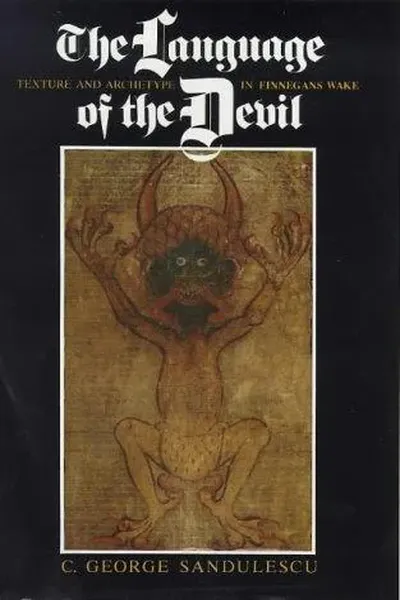
More Free Occult Philosophy Books
View all →