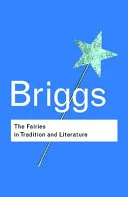
The Fairies in Tradition and Literature
 71
71

The Fairies in Tradition and Literature
Katharine M. Briggs's "The Fairies in Tradition and Literature" offers a thorough, if somewhat dry, examination of its subject. The sheer breadth of Briggs's research is its undeniable strength, covering a vast array of texts and oral traditions. However, the book occasionally struggles to synthesize this material into a cohesive narrative, presenting information in a manner that feels more like an exhaustive catalogue than a flowing argument. A notable section details the persistent association of fairies with specific natural landscapes, a concept explored in Chapter 3, which highlights their role as guardians or embodiments of wild places. While comprehensive, the work could benefit from a more interpretive lens, allowing for deeper engagement with the psychological or spiritual dimensions of the folklore it presents. It remains an essential reference for serious students, but perhaps less so for casual readers seeking a more speculative approach.
📝 Description
71
Katharine M. Briggs's 2002 volume traces fairy lore from ancient folklore to literary works.
Katharine M. Briggs's book meticulously chronicles the evolution of fairy lore, following its presence from ancient folklore to its complex manifestations in literary works. It examines the changing perceptions and roles attributed to these beings across different cultural epochs and narrative traditions. The book situates fairy beliefs within broader European cultural developments, noting shifts in their portrayal from powerful nature spirits to the more diminutive figures of later romantic and Victorian literature. Briggs addresses the historical anxieties and desires these figures represented, from fertility rites to romantic notions of the supernatural. Scholars of folklore, literature, and cultural history will find this book a useful resource, as will enthusiasts of mythology, occult studies, and anyone interested in human fascination with the unseen world.
While presented as a scholarly examination of folklore and literature, Briggs's work touches upon themes central to esoteric traditions. The focus on the 'otherworld,' the liminal status of fairies, and their connection to elemental or nature spirits aligns with concepts explored in various occult and magical systems. The book implicitly acknowledges a human fascination with forces beyond the mundane, personified in the figures of fairies. This fascination often fuels esoteric practices and beliefs, suggesting that the study of fairy lore can offer insights into deeper, often hidden, aspects of human psychology and spirituality.
💡 Why Read This Book?
• Gain an understanding of the historical shifts in fairy depictions from the medieval period to the 20th century, as detailed in Chapter 1, offering a concrete timeline of mythological evolution. • Explore the specific connections between fairy folklore and ancient pagan practices, a theme elaborated upon in discussions of nature spirits and fertility rites, providing direct links to pre-Christian beliefs. • Appreciate the scholarly method of folklore analysis through Briggs's systematic approach, exemplified by her examination of literary figures like Oberon and Titania in relation to older traditions, demonstrating rigorous academic research.
⭐ Reader Reviews
Honest opinions from readers who have explored this book.
❓ Frequently Asked Questions
What is the primary focus of Katharine M. Briggs's "The Fairies in Tradition and Literature"?
The book's primary focus is the historical development and literary representation of fairies across various European cultures and time periods, tracing their evolution from folklore to art.
When was "The Fairies in Tradition and Literature" first published?
Katharine M. Briggs's "The Fairies in Tradition and Literature" was first published in 2002.
Does the book discuss specific authors who wrote about fairies?
Yes, the work examines how authors like Shakespeare and Spenser incorporated fairy lore into their writings, analyzing their contributions to the literary tradition of these beings.
What is the significance of fairies in older traditions according to the book?
In older traditions, fairies are often depicted not as mere sprites but as potent, sometimes dangerous, supernatural entities connected to nature, the afterlife, and ancestral spirits.
Is "The Fairies in Tradition and Literature" suitable for academic study?
Absolutely. Its comprehensive research and detailed analysis make it a valuable resource for scholars and students of folklore, literature, and cultural history.
Does the book cover fairies from non-European traditions?
While the book primarily focuses on European traditions, it may touch upon comparative elements or influences where relevant to understanding the broader scope of fairy lore.
🔮 Key Themes & Symbolism
Evolution of Fairy Archetypes
This theme examines how the image of the fairy has transformed from the powerful, ambivalent spirits of early folklore, often associated with the dead or gods, to the more domesticated and whimsical figures prevalent in later literature. Briggs traces this shift, noting how authors and cultural periods reinterpreted these beings, reflecting changing societal views on nature, magic, and the uncanny. The work details how concepts like the 'Good Folk' or 'Little People' evolved over centuries, showing a consistent thread of otherness and liminality.
Fairy Beliefs and Natural World
A central concept explored is the intrinsic link between fairy traditions and specific natural environments—woods, hills, water sources. Briggs illustrates how these beings were seen not just as inhabitants of these places but as their custodians or embodiments, reflecting ancient animistic beliefs. The book discusses the historical practices and superstitions associated with these natural sites, highlighting their sacred or taboo status in folklore and their role in rituals and local legends.
Literary Adaptations of Folklore
The book scrutinizes how literary traditions have absorbed, adapted, and sometimes reshaped folk beliefs about fairies. It analyzes canonical works, demonstrating how authors like Shakespeare, Edmund Spenser, and later Romantic poets engaged with existing lore, creating enduring literary archetypes. This section looks at the critical reception of these literary fairies and how they, in turn, influenced popular perception and further folkloric narratives, creating a dynamic interplay between oral and written traditions.
The Fairy as Otherworldly Entity
Briggs investigates the persistent notion of fairies as inhabitants of a separate realm, often a parallel world or the land of the dead. This theme explores the liminality of fairies—their existence on the threshold between the human and supernatural, the living and the departed. The work discusses the rules, dangers, and attractions associated with this otherworld, as depicted in myths and tales, and how these beliefs offered explanations for the inexplicable and served as cautionary narratives.
💬 Memorable Quotes
Direct passages from the work, attributed to the author.
“The term 'fairy' has been applied to a great variety of supernatural beings.”
— This statement underscores the vast and often contradictory nature of fairy lore, indicating that the label 'fairy' encompasses a wide spectrum of entities, from nature spirits to ancestral ghosts, challenging simplistic definitions.
“Fairies were often regarded as the dead, or spirits of the dead.”
— This highlights a significant, often overlooked, aspect of fairy tradition: their association with the underworld and departed souls, connecting fairy beliefs to ancient ancestor veneration and concepts of the afterlife.
“The connection between fairies and certain places is a strong one.”
— This points to the deeply ingrained belief in localized supernatural beings, where specific landscapes—hills, streams, ancient ruins—were considered the dwelling places or domains of particular fairy communities.
“Literary fairies have their origins in folk tradition.”
— This emphasizes the foundational role of oral folklore in shaping the literary portrayals of fairies, suggesting that writers drew heavily upon existing myths and legends to create their characters and narratives.
“Superstitions about the fairies persisted long after the advent of Christianity.”
— This observation illustrates the resilience of folk beliefs, showing how deeply embedded notions of the supernatural, even those predating or running counter to official religious doctrine, continued to influence popular thought and practice.
🌙 Esoteric Significance
Tradition
While not explicitly aligned with a single esoteric lineage like Hermeticism or Theosophy, Briggs's work serves as a foundational text for understanding the folkloric underpinnings of Western esoteric traditions that engage with nature spirits and the elemental realms. It provides the historical and mythological context necessary for practitioners who work with figures often categorized under the broad umbrella of 'fae' or 'elementals' within magical systems.
Symbolism
The book highlights key symbols such as the fairy mound (sidh), representing portals to the Otherworld and the area of the dead, and the fairy food, symbolizing the allure and danger of enchanted sustenance that can trap mortals. The motif of the fairy's connection to specific natural elements—water, earth, air—also symbolizes their role as custodians of the natural world and embodiments of its primal forces.
Modern Relevance
Contemporary practitioners of Neo-Paganism, witchcraft, and modern animism frequently draw upon the detailed lore presented by Briggs. Thinkers and authors exploring ecological spirituality and the concept of the 'Genius Loci' (spirit of place) find valuable historical context in her work, informing their understanding of nature-based spiritual practices and the perceived sentience of the natural world.
👥 Who Should Read This Book
• Students of comparative mythology and folklore: Gain a comprehensive overview of fairy lore's development across centuries and cultures, providing essential source material for academic research. • Practitioners of Western Esotericism: Understand the historical and folkloric roots of nature spirits and elemental beings, deepening your knowledge of traditions that interact with the unseen world. • Literary scholars and creative writers: Access a wealth of historical detail and thematic analysis on fairies in literature, offering inspiration and a scholarly foundation for creative endeavors.
📜 Historical Context
Katharine M. Briggs's "The Fairies in Tradition and Literature," first published in 2002, emerged within a scholarly landscape where folklore studies had matured considerably since the foundational work of figures like Andrew Lang in the late 19th and early 20th centuries. Briggs's own extensive career, beginning in the mid-20th century, provided a unique vantage point. The book builds upon decades of folkloric research, situating itself in dialogue with scholars who were increasingly analyzing the cultural work performed by myths and legends. While not a period of widespread censorship regarding fairy tales, the academic reception of such works often involved debates about their origins—whether primarily Indo-European survivals, psychological projections, or cultural constructs. Briggs’s work implicitly engages with these discussions by providing a meticulous historical and literary tracing, offering a rich source for comparative analysis against emerging anthropological and literary-critical approaches.
📔 Journal Prompts
The transformation of fairy archetypes across literary periods.
The specific landscape associations of fairy beliefs discussed in Chapter 5.
The connection between fairies and the concept of the dead.
Literary adaptations of specific folk tales concerning the 'Good Folk'.
Your personal understanding of the 'Otherworld' in relation to fairy lore.
🗂️ Glossary
Sidh
In Irish folklore, these are mounds or hills believed to be entrances to the Otherworld, the dwelling place of the supernatural beings often referred to as fairies or the People of the Mounds.
Fairy Food
Enchanted food or drink offered by fairies to humans, which, if consumed, often results in the mortal becoming bound to the fairy realm or losing their connection to the human world.
Liminality
The quality of being in a transitional or in-between state, often applied to fairies who exist on the threshold between the human world and the supernatural, or between life and death.
Elemental
In esoteric traditions, beings associated with the classical elements (earth, air, fire, water), often overlapping with folkloric concepts of nature spirits and fairies.
Otherworld
A parallel dimension or spiritual realm in mythology and folklore, often inhabited by supernatural beings, from which fairies are believed to originate or to which they can transport humans.
Folklore
The traditional beliefs, customs, and stories of a community, passed through the generations by word of mouth, encompassing myths, legends, and superstitions.
Archetype
A very typical example of a certain person or thing; in mythology and literature, a recurring symbol or motif that represents universal patterns of human nature.