The Druids

 75
75

The Druids
Ward Rutherford's "The Druids" offers a welcome corrective to the often sentimentalized portrayals of these ancient figures. Rather than leaning into the mystical haze that frequently surrounds them, Rutherford meticulously reconstructs their societal function and intellectual standing based on the scant evidence available. His strength lies in parsing classical sources, like Caesar's commentaries, with a critical eye, separating observation from potential bias. A particularly insightful section details their role as arbiters and educators, highlighting their importance in maintaining social and legal order. However, the book's reliance on interpretations of limited primary materials means that definitive statements are sometimes necessarily speculative, a challenge inherent to the subject. The work leaves the reader with a grounded appreciation for Druidic influence, even if some deeper spiritual tenets remain elusive. Rutherford's sober analysis makes "The Druids" a valuable, if cautious, contribution to understanding a pivotal ancient European group.
📝 Description
75
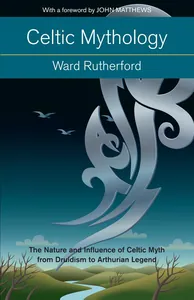
Ward Rutherford's 1984 book offers a detailed examination of the ancient Celtic priestly class.
Ward Rutherford's "The Druids" examines the ancient Celtic priestly class, moving beyond popular romanticized views. Published in 1984, the book analyzes archaeological findings and classical accounts to reconstruct Druidic life. Rutherford presents Druids not simply as nature worshippers, but as sophisticated thinkers, lawmakers, and custodians of extensive oral traditions. The work investigates their cosmology, their understanding of the natural world, and their influence on pre-Roman European societies.
This book is for serious students of ancient European history, comparative religion, and esoteric traditions. It appeals to those seeking a scholarly yet accessible account of a culture often obscured by myth. Readers interested in the origins of Western mysticism, the historical roots of pagan revivals, or the philosophical foundations of pre-Christian European thought will find substantial material. It is for individuals willing to engage with primary source interpretations and archaeological evidence.
The study of Druidism carries a long history, often marked by romanticized interpretations and later Theosophical influences. Early 20th-century scholarship, in particular, frequently depicted Druids through a lens of idealized nature worship or mystical sagehood. Rutherford's work, published in 1984, emerged during a period of more rigorous academic re-evaluation. This era saw a push to separate historical evidence from later mythologizing, a trend "The Druids" actively participates in by grounding its analysis in available contemporary evidence.
💡 Why Read This Book?
• Gain a grounded understanding of the Druids' actual societal roles as lawmakers and educators, moving beyond romantic myths, as detailed in Rutherford's analysis of their function in pre-Roman society. • Explore the historical context of Druidic studies, understanding how Rutherford's 1984 publication challenged earlier, more Theosophically-influenced interpretations common in the early 20th century. • Appreciate the significance of oral tradition and rhetoric in Druidic culture, as the book emphasizes their methods of knowledge transmission in a pre-literate society.
⭐ Reader Reviews
Honest opinions from readers who have explored this book.
❓ Frequently Asked Questions
What evidence does Ward Rutherford use to reconstruct Druidic practices?
Rutherford primarily draws upon classical accounts from Roman and Greek writers, such as Julius Caesar, and interprets archaeological findings from Celtic sites across Europe. He carefully analyzes these sources to infer Druidic roles and beliefs.
When was "The Druids" by Ward Rutherford first published?
The book "The Druids" by Ward Rutherford was first published in 1984.
Does the book discuss the Druids' relationship with nature?
Yes, the book explores the Druids' relationship with the natural world, presenting it not as simple pantheism but as a sophisticated understanding of natural forces and cycles, integral to their worldview and practices.
How does Rutherford's work differ from earlier romanticized views of Druids?
Rutherford distinguishes his work by prioritizing historical and archaeological evidence over later romanticized or esoteric interpretations. He presents Druids as complex societal figures rather than solely mystical nature priests.
What was the intellectual climate surrounding the study of Druids when this book was released?
In 1984, academic circles were increasingly focused on rigorous textual analysis and archaeological evidence, moving away from the more speculative and Theosophically-infused studies prevalent earlier in the 20th century.
What specific classical authors are referenced in "The Druids"?
Key classical authors referenced include Julius Caesar, whose commentaries provide significant detail on Gallic society and Druidic influence.
🔮 Key Themes & Symbolism
Druidic Social Structure
Rutherford investigates the Druids' multifaceted roles within Celtic society, positioning them as crucial figures in law, education, and arbitration. They were not merely religious officiants but also the intellectual and judicial backbone of their communities. The work examines how their authority was maintained through extensive oral traditions and their deep understanding of societal customs, influencing decisions from local disputes to wider tribal matters.
Oral Tradition and Knowledge
A significant theme is the Druids' reliance on and mastery of oral tradition. In a society largely without widespread written records, the preservation and transmission of knowledge, laws, and history fell to them. Rutherford explores the sophisticated mnemonic techniques and rhetorical skills likely employed, highlighting how this method shaped their intellectual culture and ensured the continuity of their traditions across generations.
Cosmology and Natural Philosophy
The book delves into the Druidic understanding of the cosmos and their philosophical outlook. Rather than simple nature worship, Rutherford suggests a more nuanced appreciation of natural forces and cycles, viewing them as integral to a balanced worldview. This exploration touches upon their perception of time, cyclical history, and the interconnectedness of the natural and social realms.
Archaeological Interpretation
Rutherford engages with archaeological evidence to supplement textual accounts, offering a grounded perspective on Druidic practices. This includes examining sites, artifacts, and settlement patterns to infer aspects of their daily lives, rituals, and social organization. The use of material culture provides a tangible link to the past, helping to anchor interpretations of their beliefs and activities.
💬 Memorable Quotes
“The Druids were the custodians of extensive knowledge, transmitted orally.”
— This highlights the intellectual weight carried by the Druidic class, emphasizing their role as keepers of history, law, and philosophy, preserved through memory and spoken word rather than written texts.
“Classical accounts often depicted Druids as holding significant judicial and educational authority.”
— This points to the Druids' integral function within Celtic society, serving not just spiritual needs but also providing essential legal arbitration and intellectual guidance to their communities.
“Their worldview likely encompassed a sophisticated understanding of natural cycles.”
— This suggests that Druidic reverence for nature was not mere superstition, but rooted in a deeper philosophical comprehension of the rhythms and forces governing the world around them.
“Archaeological findings offer tangible clues to Druidic life beyond textual descriptions.”
— This underscores the importance of material evidence in reconstructing the past, showing how artifacts and sites provide a factual basis to complement or challenge historical narratives about the Druids.
“Rutherford aimed to separate historical Druidism from later romantic embellishments.”
— This reflects the author's scholarly intention to present a more accurate, evidence-based portrayal of the Druids, distinguishing historical reality from the myths and idealized images that accumulated over centuries.
🌙 Esoteric Significance
Tradition
While "The Druids" is primarily a historical and anthropological study, it touches upon themes that resonate within Western esoteric traditions. It provides a factual basis for understanding the historical Druids, who have been retroactively adopted by various Neopagan and esoteric movements. The work offers a counterpoint to purely mystical interpretations, grounding discussions of Druidic philosophy and practice in a more scholarly framework, which esoteric practitioners can then engage with critically.
Symbolism
The book implicitly addresses symbols central to Druidic lore, such as the sacred grove, often interpreted as a place of learning and ritual, and the importance of natural elements in their worldview. While Rutherford focuses on function and historical context, these symbols retain their power. The emphasis on oral tradition itself can be seen as a form of esoteric transmission, relying on memory and internal understanding rather than external, fixed texts.
Modern Relevance
Contemporary Neopaganism and Celtic Reconstructionist traditions often draw inspiration from historical understandings of the Druids. Rutherford's work, by providing a more historically grounded perspective, serves as a crucial reference point for those seeking to understand the potential historical roots of modern practices. Thinkers and practitioners engaged in reconstructing ancient Celtic religions or exploring pre-Christian European philosophies find value in his meticulous analysis of available evidence.
👥 Who Should Read This Book
• Students of ancient European history and comparative religion seeking a factual overview of the Druidic class, moving beyond romanticized notions. • Aspiring practitioners of Neopagan or Celtic Reconstructionist paths who wish to understand the historical context and societal roles of the figures they seek to emulate. • Readers interested in the development of Western esoteric thought who want to examine the historical roots and classical source material that later esoteric traditions have engaged with.
📜 Historical Context
Ward Rutherford's "The Druids," published in 1984, entered a field of study grappling with its own historical baggage. The 19th and early 20th centuries saw Druidism heavily romanticized, often infused with Theosophical interpretations, as seen in the work of W.Y. Evans-Wentz. By the late 20th century, there was a growing academic push for a more critical engagement with classical sources and archaeological data. Rutherford's work aligns with this shift, seeking to present a sober account grounded in available evidence. Key contemporaries in Celtic studies were re-examining foundational texts and archaeological sites with renewed rigor. While not a direct polemic, "The Druids" implicitly countered the more speculative approaches, contributing to a more historically disciplined understanding of the ancient priesthood.
📔 Journal Prompts
The Druids' role as educators and lawmakers: How might their societal influence compare to modern intellectual or judicial figures?
Reflections on oral tradition: Consider the strengths and limitations of knowledge preserved solely through memory and recitation.
Analysis of classical sources: What biases might Roman writers like Caesar have had when describing the Druids?
The concept of sacred groves: Explore the potential significance of natural spaces for ancient learning and ritual.
Reconciling history and myth: How does Rutherford's factual approach alter perceptions of Druidic mysticism?
🗂️ Glossary
Druid
A member of the high-ranking professional class among the ancient Celts. They were priests, religious specialists, lore keepers, judges, and political advisors.
Celtic
Pertaining to the peoples who inhabited much of Europe from the Iron Age onwards, known for their distinct languages, art, and social structures.
Oral Tradition
The transmission of knowledge, history, and culture from one generation to the next by spoken word, rather than written records.
Classical Accounts
Writings about the Druids by ancient Greek and Roman authors, such as Julius Caesar, who encountered Celtic peoples.
Sacred Grove
A natural area, typically a wood or forest, considered by ancient peoples to be sacred and often used for religious rites or as a center for Druidic learning.
Arbitration
The process by which a neutral third party, in this context a Druid, resolves disputes between individuals or groups.
Cosmology
A model of the universe, encompassing its origin, structure, and the principles governing it, as understood by a particular culture or philosophy.