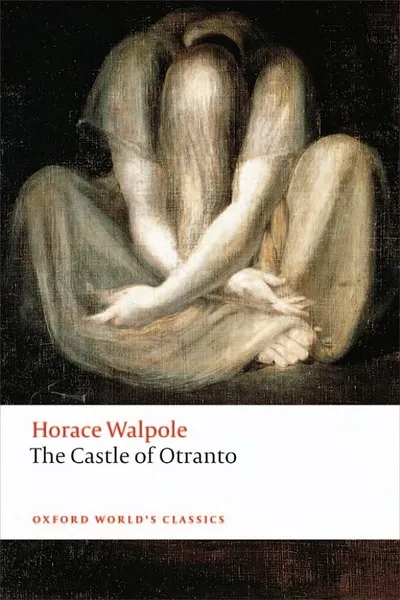
The Castle of Otranto

 81
81

The Castle of Otranto
Walpole's "The Castle of Otranto" functions less as a coherent narrative and more as a primal scream of the nascent Gothic genre. Its strength lies in its audacious, almost cartoonish, introduction of spectral horses, dismembered giants, and collapsing castles – elements that would become Gothic staples. The relentless pace, driven by ancestral curses, creates an undeniable momentum. However, its brevity and reliance on melodrama can feel underdeveloped to a modern reader; characters often serve as archetypes rather than fully realized individuals. The scene where Manfred's bloody turban appears, chillingly demonstrating the physical manifestation of a curse, is a standout moment of visceral horror. Walpole pioneered a style that prioritizes atmosphere and shock over psychological depth, a foundation that would be built upon by later, more nuanced writers.
Verdict: A foundational, albeit rough-hewn, sketch of the Gothic.
📝 Description
81
### What It Is Horace Walpole's "The Castle of Otranto," first published in 1764, is widely recognized as the foundational text of the Gothic novel. It inaugurated a literary genre characterized by its exploration of dread, mystery, and the supernatural, often set within decaying, imposing architectural structures. The narrative unfolds with an apparent prophecy concerning the castle's fate and the succession of its lord, setting a stage for familial curses and spectral interventions.
### Who It's For This work appeals to readers interested in the origins of literary genres and the psychological impact of fear. It is particularly relevant for those studying the evolution of narrative fiction, early modern sensationalism, and the aesthetic of the sublime. Students of literature, history, and cultural studies will find it a seminal piece for understanding subsequent Gothic and horror traditions.
### Historical Context The novel emerged during a period of burgeoning interest in medievalism and the Gothic revival in England. Walpole, an antiquarian and tastemaker, was instrumental in popularizing these sensibilities. "The Castle of Otranto" appeared at a time when Enlightenment rationalism was being challenged by a growing appreciation for the irrational, the emotional, and the mysterious. Its reception, initially presented as a translation of an ancient Italian manuscript, sparked considerable debate and firmly established the Gothic mode.
### Key Concepts The narrative hinges on themes of fate, usurpation, and the inescapable influence of the past. Superstition plays a significant role, with ancient prophecies dictating the unfolding events and the spectral appearance of characters. The overwhelming presence of the castle itself acts as a character, embodying a sense of ancestral guilt and impending doom. The work also examines the fragility of power and the corrupting nature of ambition, often through the lens of tyrannical figures.
💡 Why Read This Book?
• Understand the genesis of the Gothic novel, learning how Horace Walpole's 1764 publication established conventions like haunted castles and ancestral curses that define the genre. • Experience the raw, archetypal horror that predates psychological suspense, as the narrative directly confronts supernatural manifestations and familial doom. • Analyze the literary impact of the 18th-century Gothic revival, recognizing how "The Castle of Otranto" reflects a cultural shift towards medievalism and the irrational.
⭐ Reader Reviews
Honest opinions from readers who have explored this book.
❓ Frequently Asked Questions
What is "The Castle of Otranto" considered in literary history?
"The Castle of Otranto," first published in 1764, is widely regarded as the first Gothic novel, establishing key conventions for the genre.
Who was Horace Walpole and what was his role?
Horace Walpole was an English writer and politician, credited with originating the Gothic novel with "The Castle of Otranto".
What are the main themes explored in "The Castle of Otranto"?
The novel explores themes of fate, supernatural intervention, usurpation, ancestral curses, and the corrupting influence of power.
When was "The Castle of Otranto" originally published?
The novel was first published anonymously in 1764, with Walpole later admitting authorship.
How did "The Castle of Otranto" influence later literature?
It set the template for the Gothic genre, inspiring countless authors with its use of atmosphere, supernatural elements, and decaying settings.
What is the significance of the castle itself in the story?
The castle functions as a central, oppressive character, embodying inherited guilt, ancestral doom, and the inescapable presence of the past.
🔮 Key Themes & Symbolism
Supernatural & Prophecy
The narrative is driven by an ancient prophecy concerning the castle and its rightful heir, setting in motion a chain of supernatural events. The spectral appearance of Alfonso the Good and the giant spectral helmet are not mere metaphors but active forces within the plot, demonstrating a belief in a world where the dead and ancient curses can directly influence the living. This focus on predestination and external, otherworldly forces shapes the characters' actions and ultimate fates, highlighting a worldview where human agency is often subordinate to cosmic or supernatural decree.
Usurpation & Tyranny
Manfred, the current lord of Otranto, is consumed by a desperate need to secure his lineage and illegitimate claim to the throne, resorting to increasingly tyrannical measures. His actions, from attempting to annul his marriage to imprisoning Isabella, illustrate the corrupting nature of illegitimate power and the lengths to which one will go to maintain it against perceived threats, both human and spectral. The work critiques the abuse of authority and the moral decay that accompanies it.
Ancestral Guilt & Inheritance
The very stones of Otranto seem to bear the weight of past transgressions, particularly the original usurpation by Manfred's ancestor. This ancestral guilt manifests as a palpable curse that haunts the present generation. The novel suggests that one cannot escape the sins of their forefathers; the consequences are inherited and inexorably play out. The decaying state of the castle and the supernatural occurrences serve as physical manifestations of this inherited burden and moral decay.
The Sublime & Gothic Atmosphere
Walpole masterfully employs descriptions of the decaying castle, stormy weather, and terrifying apparitions to evoke a sense of the sublime—awe mixed with terror. The overwhelming scale and ruinous state of Otranto, coupled with the constant threat of supernatural retribution, create an oppressive and fear-inducing atmosphere. This aesthetic of terror and grandeur, characteristic of the Gothic, aims to overwhelm the senses and engage the reader's primal emotions of dread and fascination.
💬 Memorable Quotes
“…a sable cloud of infernal sulphur was… discharged from the helmet...”
— This vivid description captures the literal, almost alchemical, manifestation of supernatural dread. It moves beyond metaphorical fear into a sensory assault, signaling the intrusion of dark, potent forces into the human realm.
“O that I had been content to be a blacksmith!”
— A poignant expression of regret and a desire for a simpler, unburdened existence. It reflects Manfred's desperate yearning to escape the crushing weight of his lineage and the curses that plague him.
“The castle and the person that were in it, were discovered to be no more than phantoms.”
— This highlights the ephemeral and illusory nature of power and the physical world when confronted by potent supernatural forces. What appears solid can dissolve into mere spectral illusion.
“…the very stones cry out for vengeance.”
— An interpretation of the pervasive sense of ancestral guilt. It suggests that the environment itself is imbued with the history of past wrongs, actively participating in the demand for retribution.
“The tremendous stroke of the lightning… split the great gate of the castle.”
— This powerful image represents the overwhelming force of fate or divine retribution literally breaking through the defenses of power and human control, signifying the inevitable collapse of Manfred's illegitimate reign.
🌙 Esoteric Significance
Tradition
While not explicitly tied to a singular esoteric lineage like Kabbalah or Hermeticism, "The Castle of Otranto" taps into a broader Western esoteric current of folk magic, demonology, and the power of place imbued with spiritual or cursed energy. It draws on ancient archetypes of fate, prophecy, and spectral visitation that appear across various mystical traditions, particularly those concerned with the veil between the living and the dead.
Symbolism
The Castle itself is a potent symbol of inherited burdens and the subconscious mind, a labyrinth of past sins and present fears. The giant spectral helmet represents the overwhelming weight of ancestral legacy and the crushing power of fate. The recurring motif of dismemberment, particularly the giant's leg, symbolizes the fragmentation of the self and the broken lineage caused by usurpation and curse.
Modern Relevance
Contemporary horror fiction and dark fantasy continue to draw from Walpole's template. Thinkers in Jungian psychology might analyze the castle as a representation of the collective unconscious or the shadow self. Modern practitioners of witchcraft or spiritualism might find resonance in the novel's depiction of curses and the direct agency of spectral entities influencing the material world.
👥 Who Should Read This Book
• Students of literary history seeking to pinpoint the origin of the Gothic novel and understand its foundational elements. • Readers interested in the evolution of horror and suspense as genres, exploring early attempts to evoke dread through atmosphere and supernatural events. • Those fascinated by the concept of inherited curses and fate in narrative, appreciating how these themes were first codified in popular literature.
📜 Historical Context
Emerging in 1764, "The Castle of Otranto" arrived during a pivotal moment in English literary history, bridging the Augustan age and the burgeoning Romantic sensibility. Horace Walpole, a figure deeply immersed in aristocratic and artistic circles, responded to a growing fascination with the medieval past and the darker aspects of human psychology. This era saw the rise of antiquarianism and a critique of pure rationalism, paving the way for an appreciation of the mysterious and the sublime. Walpole's work can be seen as a reaction against the prevailing Neoclassicism, embracing instead the emotional intensity and atmospheric dread later explored by authors like Ann Radcliffe and Matthew Lewis. The novel's initial presentation as a translated medieval manuscript by a scholar named 'Willam' further positioned it against contemporary literary norms, allowing it to explore themes of superstition and the supernatural more freely.
📔 Journal Prompts
The spectral helmet's appearance as a dismembered relic.
Manfred's desperate attempts to avert Alfonso's prophecy.
The castle's oppressive architecture as a manifestation of guilt.
Isabella's flight through the castle's subterranean passages.
The contrast between Manfred's ambition and Theodore's lineage.
🗂️ Glossary
Gothic Novel
A literary genre originating in the late 18th century, characterized by settings of decay and suspense, supernatural or inexplicable events, and an atmosphere of terror and mystery.
Sublime
An aesthetic concept describing experiences that inspire awe mixed with terror, often evoked by vastness, power, or obscurity, leading to an emotional and intellectual overwhelming.
Usurpation
The act of unlawfully seizing and holding power or property, particularly the throne or an estate, often involving deceit or violence.
Ancestral Curse
A curse believed to afflict subsequent generations of a family due to the sins or actions of an ancestor, often manifesting as misfortune or supernatural phenomena.
Hermitage
A secluded dwelling, often a simple cell or cabin, for a hermit or religious recluse, implying isolation and spiritual contemplation.
Spectre
A ghost or phantom, a visible disembodied spirit, often associated with unfinished business or a perceived wrong.
Antiquarian
A person who studies or collects antiquities, often with a focus on historical artifacts and ancient manuscripts.