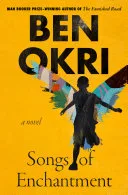
Songs of Enchantment
 79
79

Songs of Enchantment
Ben Okri’s Songs of Enchantment revisits the world of Azaro with a familiar, yet distinct, luminescence. The novel excels in its depiction of the invisible forces that shape a struggling African village, a strength inherited from its predecessor, The Famished Road. Okri’s prose remains a potent conjurer’s tool, capable of conjuring both the mundane and the miraculous with equal gravitas. However, the narrative sometimes feels diffuse, its potent imagery occasionally overshadowing the forward momentum of the plot. A passage describing the 'spirit market' exemplifies this: it is exquisitely rendered, a dizzying kaleidoscope of desire and desperation, yet it stalls the narrative’s progression. Despite this, the novel’s exploration of communal spiritual sickness and the child-seer’s burden offers a unique lens on existential and political woes. Songs of Enchantment is a potent, if occasionally unwieldy, exploration of the sacred in the everyday.
📝 Description
79
### What It Is Songs of Enchantment is the 2020 novel by Nobel Laureate Ben Okri, continuing the narrative threads established in his 1991 Man Booker Prize-winning work, The Famished Road. This book revisits the village setting and the child narrator, Azaro, focusing on the spiritual and social disarray plaguing the community. It blends the fantastical with the grim realities of political strife and personal hardship, offering a unique perspective on resilience and the unseen forces at play.
### Who It's For This novel is for readers drawn to mythic storytelling and allegorical narratives, particularly those interested in contemporary African literature that engages with spiritual themes. It appeals to those who appreciate Okri's distinctive prose, characterized by its lyrical quality and its exploration of the liminal spaces between the physical and the spiritual. Readers seeking a challenging, layered narrative that questions societal structures and the nature of reality will find much to engage with.
### Historical Context Published in 2020, Songs of Enchantment emerges from a literary landscape that has seen a resurgence of interest in postcolonial narratives and magical realism. Okri's earlier work, The Famished Road (1991), was a significant contribution to this field, winning the Booker Prize and drawing comparisons to Gabriel García Márquez. The novel reflects ongoing dialogues in African literature concerning the impact of political instability and the persistence of traditional spiritual beliefs in the face of modernization and external pressures.
### Key Concepts The book delves into the concept of spiritual malaise within a community, where the unseen world directly impacts daily life and societal harmony. It explores the struggle between forces of decay and renewal, often personified through Azaro's experiences and observations. The narrative highlights the interconnectedness of individual fate and collective destiny, suggesting that societal breakdown has deep roots in spiritual imbalance and the loss of ancestral connection.
💡 Why Read This Book?
• Gain insight into the spiritual underpinnings of communal strife, as depicted through Azaro's unique perspective and the village's collective malaise, a concept central to Okri's post-1991 literary output. • Experience Okri's distinctive prose, which conjures the interplay between the seen and unseen worlds, offering a literary style that is both lyrical and grounded in tangible, often harsh, realities. • Understand the persistent influence of ancestral and spiritual forces on socio-political landscapes, a theme exemplified by the village’s struggle against forces of decay and fragmentation.
⭐ Reader Reviews
Honest opinions from readers who have explored this book.
❓ Frequently Asked Questions
What is the relationship between Songs of Enchantment and Ben Okri's The Famished Road?
Songs of Enchantment is a follow-up to Ben Okri's 1991 novel, The Famished Road. It revisits the character of Azaro, the 'spirit-child' narrator, and the African village setting, continuing to explore themes of spiritual struggle and community.
What are the main themes explored in Songs of Enchantment?
The novel delves into themes of spiritual sickness within a community, the clash between traditional beliefs and modern societal pressures, the power of the unseen world, and the resilience of the human spirit amidst political and personal hardship.
Who is Azaro in Ben Okri's novels?
Azaro is the central character and narrator in both The Famished Road and Songs of Enchantment. He is an 'abiku' or 'spirit-child,' a being who exists between the physical and spiritual worlds, possessing unique insights into the village's troubles.
When was Songs of Enchantment first published?
Songs of Enchantment was first published on June 30, 2020. This release places it within a contemporary context for African literature, building on Okri's earlier acclaimed works.
What is the significance of the African village setting in the book?
The village serves as a microcosm where the spiritual, political, and social conflicts of the wider world are played out. It is a space where ancestral traditions clash with modern disarray, highlighting the impact on community life.
Is Songs of Enchantment a magical realism novel?
Yes, the novel is widely considered an example of magical realism, a literary style characterized by the seamless integration of fantastical elements into an otherwise realistic narrative, much like works by Gabriel García Márquez.
🔮 Key Themes & Symbolism
Spiritual Malaise and Healing
The narrative posits that a community's suffering, whether political or personal, stems from a deep spiritual imbalance. Azaro, as the spirit-child, perceives this malaise acutely. The book explores how this sickness manifests in the village's fragmentation and the characters' internal struggles. Healing, then, is not merely social or political but requires a reconnection with ancestral wisdom and the spiritual realm, a process often fraught with peril but essential for renewal.
The Interplay of Worlds
Okri masterfully blurs the lines between the physical and the metaphysical. The spirits, ancestors, and unseen forces are not mere metaphors but active participants in the lives of the villagers. This constant negotiation between the tangible and the spectral shapes the characters' perceptions and decisions, suggesting that true understanding requires acknowledging both dimensions of existence. Azaro’s unique position as an intermediary highlights this dynamic.
Resilience and Resistance
Despite the oppressive events and the pervasive sense of decay, Songs of Enchantment is fundamentally a story of endurance. The villagers, and particularly Azaro, demonstrate a profound capacity to resist despair and maintain their humanity. This resistance is often enacted through maintaining cultural practices, remembering ancestral narratives, and finding moments of beauty and connection amidst hardship, underscoring the spirit's indomitable will.
The Child Seer's Burden
Azaro’s role as the narrator and a spirit-child places him in a position of both vulnerability and profound insight. He bears the burden of witnessing and articulating the village's hidden truths and spiritual sickness. His journey is one of navigating this difficult role, attempting to reconcile the chaotic visions of the spirit world with the lived realities of his community, often at great personal cost.
💬 Memorable Quotes
“All is not well in the African village where Azaro lives.”
— This opening statement immediately establishes the central conflict and the pervasive atmosphere of unease that defines the narrative. It signals that the story will explore deep-seated problems affecting the community's spiritual and social fabric.
“The child narrator relates oppressive events.”
— This highlights Azaro's role as witness and storyteller. His perspective, that of a child caught between worlds, offers a unique and often unsettling lens through which the village's hardships and the impact of political factionalization are revealed.
“The book is sometimes whimsical, sometimes bawdy.”
— This description captures the dual nature of Okri's narrative style. It acknowledges the presence of humor, earthy sensuality, and lightness alongside the more somber and visionary aspects of the story.
“Fraught with wild visions.”
— This phrase points to the novel's engagement with the supernatural and the surreal. The 'wild visions' suggest encounters with the spirit world, dreams, or altered states of consciousness that are integral to the characters' experiences and the story's unfolding.
“Political factionalization shatters the community's cohesiveness.”
— This points to a concrete external force impacting the village. The breakdown of political unity is presented as a direct cause of social disintegration, illustrating the interconnectedness of governance and communal well-being.
🌙 Esoteric Significance
Tradition
While not strictly adhering to a single esoteric lineage, Songs of Enchantment deeply engages with animistic and shamanistic traditions common in many West African spiritual systems, often intertwined with elements that echo Gnostic ideas of a fallen world and the struggle for spiritual liberation. The concept of the spirit-child (abiku) and the pervasive influence of the unseen world align with traditions that emphasize the porous boundaries between physical and spiritual realities.
Symbolism
The 'spirit market' functions as a potent symbol for the nexus of desire, karma, and spiritual transaction, representing the unseen forces that govern fate and opportunity. Azaro himself is a symbol of liminality, embodying the precarious balance between life and death, the physical and the spiritual, and the burden of consciousness that bridges these realms.
Modern Relevance
Contemporary thinkers and practitioners exploring animism, indigenous psychologies, and the integration of spiritual awareness into social and political critique find resonance in Okri's work. His depiction of communal spiritual health as foundational to societal well-being offers a counterpoint to purely materialistic or secular analyses of conflict and development, influencing those who seek holistic approaches to understanding human experience.
👥 Who Should Read This Book
• Readers interested in contemporary African literature that engages with spiritual and mythic dimensions, seeking narratives beyond typical Western frameworks. • Students and practitioners of comparative religion or mythology, particularly those studying West African spiritual traditions and their literary expressions. • Aspiring writers and literary critics interested in the techniques of magical realism and allegorical storytelling, especially how they are employed to address complex social and political issues.
📜 Historical Context
Songs of Enchantment arrived in 2020, a time when postcolonial literature continued to grapple with the legacies of political instability and cultural identity. Ben Okri’s earlier novel, The Famished Road (1991), had already established him as a significant voice in this sphere, winning the Booker Prize and drawing international acclaim. His work often engages with Yoruba cosmology and African spiritual traditions, setting him apart from purely secular or Western-centric narratives. While Okri’s prose shares a lineage with magical realists like Gabriel García Márquez, his focus on the spiritual dimensions of socio-political conflict offers a distinct perspective. The novel’s reception placed it within ongoing literary conversations about the role of myth and spirituality in understanding contemporary African realities, continuing a dialogue prominent since the mid-20th century.
📔 Journal Prompts
Azaro's perception of the spirit market and its influence on village life.
The manifestation of spiritual sickness within the community's social fabric.
Moments where the unseen world directly impacts the characters' actions.
The nature of resilience displayed by the villagers against oppressive forces.
The dual existence described for Azaro as an abiku.
🗂️ Glossary
Abiku
A Yoruba term for a spirit-child, believed to be born into the world only to die and return to the spirit realm. Azaro is an abiku, possessing a unique connection to both worlds.
Spirit Market
A metaphysical marketplace where spirits and human souls can engage in transactions, often related to fate, fortune, or the continuation of life, as depicted in the novel.
Malaise
A general feeling of discomfort, illness, or unease, often spiritual or psychological, affecting an individual or a community, as described in the book's village setting.
Political Factionalization
The division of a community or society into opposing groups based on political beliefs or interests, leading to social fragmentation and conflict.
Ancestral Wisdom
The knowledge, traditions, and spiritual understanding passed down from previous generations, seen as crucial for maintaining community balance and identity.
Liminality
The state of being in an intermediate position, threshold, or boundary, particularly referring to Azaro's existence between the physical and spiritual realms.
Cosmology
A model of the universe, often incorporating spiritual and mythological beliefs, that explains the origin, structure, and workings of the cosmos, as reflected in the village's worldview.