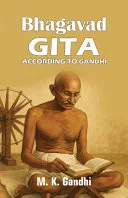
Bhagavad Gita According to Gandhi
 84
84

Bhagavad Gita According to Gandhi
Gandhi's interpretation of the Bhagavad Gita, presented in 'Bhagavad Gita According to Gandhi,' is less a textual analysis and more a spiritual autobiography woven into scripture. His focus on the internal struggle, translating Krishna's battlefield directives into metaphors for ethical action and self-mastery, is its signal strength. The commentary on *karma yoga*, emphasizing selfless action without attachment to outcome, directly mirrors his own life’s work. However, readers seeking a literal translation or a comprehensive overview of the Gita's diverse philosophical schools might find this approach selective. A notable passage is Gandhi's extended discussion on the nature of *ahimsa*, where he posits it as an active force, not mere passivity, a concept he lived by until his assassination in 1948. The work is a powerful testament to how scripture can be a living guide for radical ethical commitment.
📝 Description
84
Mahatma Gandhi's personal interpretation of the Bhagavad Gita was first published in the early 20th century.
Mahatma Gandhi's Bhagavad Gita According to Gandhi is not a scholarly translation, but his personal engagement with the Sanskrit scripture. Gandhi viewed the text through the lens of his own philosophy and activism, focusing on its ethical and spiritual teachings. He interpreted the battlefield dialogues as allegories for the internal struggle between good and evil, rather than a literal war.
This work is for readers interested in the connection between spirituality and practical ethics, particularly those drawn to Gandhi's life and teachings. Students of Eastern religions, philosophy, and nonviolent resistance will find value here. Individuals seeking guidance on moral conduct, self-discipline, and pursuing truth in daily life will find his interpretations useful.
Gandhi's commentary appeared during India's independence movement and a time of philosophical reevaluation. His ideas on duty (dharma) and nonviolence (ahimsa) shaped his political and social actions. This book offers a perspective that grounds the scripture in active, ethical engagement, contrasting with purely devotional or philosophical readings.
Gandhi's interpretation places the Bhagavad Gita within a tradition of texts that see spiritual life as an internal battle. His focus on the soul's war against ego and ignorance aligns with certain Gnostic ideas about overcoming illusion and achieving self-knowledge through ethical action and detachment. This approach moves beyond a purely devotional reading, emphasizing the practical application of spiritual principles in the world.
💡 Why Read This Book?
• Gain a practical framework for ethical action by understanding Gandhi's interpretation of *karma yoga*, the path of selfless duty, as demonstrated in his own life during India's independence movement. • Explore the concept of *ahimsa* (nonviolence) not as passive resignation but as an active, soul-force strategy, directly informed by the Gita's teachings and Gandhi's experiences. • Understand the Bhagavad Gita as an allegory for internal spiritual warfare, a concept central to Gandhi's personal philosophy and his interpretation of Krishna's counsel to Arjuna.
⭐ Reader Reviews
Honest opinions from readers who have explored this book.
❓ Frequently Asked Questions
When was Mahatma Gandhi's interpretation of the Bhagavad Gita first published?
While the Bhagavad Gita is an ancient text, Gandhi's personal commentary, 'Bhagavad Gita According to Gandhi,' was first published in the early 20th century, with this specific edition appearing in 2021.
What is the primary focus of Gandhi's interpretation of the Bhagavad Gita?
Gandhi focuses on the ethical and spiritual lessons, reinterpreting the scripture's narratives as allegories for the inner struggle against ego and injustice, rather than literal events.
How does Gandhi connect the Bhagavad Gita to his philosophy of nonviolence?
Gandhi interprets the Gita's emphasis on duty (*dharma*) and selfless action (*karma yoga*) as foundations for his principle of *ahimsa* (nonviolence), seeing it as an active force for truth.
Is this book a direct translation of the Bhagavad Gita?
No, 'Bhagavad Gita According to Gandhi' is Gandhi's personal commentary and interpretation, not a scholarly translation. It highlights passages that align with his own spiritual and political philosophy.
What does Gandhi mean by the 'internal battlefield' in his commentary?
The 'internal battlefield' refers to the constant struggle within an individual between higher spiritual impulses and lower desires, ego, and ignorance, as allegorically represented in the Gita's Kurukshetra setting.
Who is Arjuna in the Bhagavad Gita, and how does Gandhi interpret his role?
Arjuna is the warrior prince to whom Lord Krishna imparts the teachings of the Gita. Gandhi interprets Arjuna's crisis as a representation of any individual facing moral dilemmas and the need for righteous action.
🔮 Key Themes & Symbolism
The Inner Battlefield
Gandhi reframes the epic Kurukshetra war described in the Bhagavad Gita as an allegory for the perpetual internal struggle within the human psyche. The charioteer Krishna's counsel to the warrior Arjuna is presented not as a directive for physical combat, but as a guide for the soul's battle against ignorance, attachment, and ego. This interpretation emphasizes self-mastery and the ethical transformation of the individual as the primary path to societal change, aligning with Gandhi's lifelong pursuit of personal truth and nonviolent resistance.
Karma Yoga and Selfless Action
Central to Gandhi's reading is the concept of *karma yoga*, the path of action performed without attachment to the fruits of labor. He stresses that fulfilling one's duty (*dharma*) with dedication and detachment is the essence of spiritual practice. This interpretation directly informs his philosophy of activism, advocating for tireless effort in the pursuit of justice and freedom, while remaining equanimous regardless of the outcome. This practical application of the Gita's teachings underscores the interconnectedness of spiritual life and worldly responsibility.
Ahimsa as Active Truth-Force
Gandhi's commentary elevates *ahimsa* (nonviolence) beyond mere abstention from harm. He posits it as an active, potent force – a 'truth-force' – requiring courage, self-sacrifice, and unwavering commitment. The Gita's teachings on equanimity and righteous action are seen as reinforcing this active, soul-stirring principle. For Gandhi, *ahimsa* is the most potent weapon in the struggle against oppression, a direct manifestation of spiritual strength derived from understanding one's duty and acting upon it truthfully.
The Supremacy of Truth
Gandhi consistently equates God with Truth, and his interpretation of the Bhagavad Gita is deeply rooted in this conviction. The scripture's exploration of duty, righteousness, and divine will is seen through the prism of absolute Truth. He emphasizes that adherence to truth, even in the face of adversity, is the ultimate spiritual and ethical imperative. This theme guides his understanding of Krishna's teachings, urging practitioners to align their actions and intentions with this ultimate principle, forming the bedrock of his satyagraha movement.
💬 Memorable Quotes
Direct passages from the work, attributed to the author.
“The Gita is a guide to self-realization and right action.”
— This statement expresses Gandhi's view of the scripture as a practical manual for spiritual growth, emphasizing that true self-understanding is achieved through ethical engagement with the world.
“True nonviolence requires strength, not weakness.”
— This highlights Gandhi's active interpretation of *ahimsa*, presenting it as a powerful spiritual force demanding courage and conviction, directly drawn from the Gita's emphasis on duty and inner resolve.
“The battlefield is within the human heart.”
— This captures Gandhi's allegorical reading of the Gita, where the conflicts described are understood as internal struggles against negative impulses and the ego.
“Fulfilling one's duty (*dharma*) is paramount.”
— This emphasizes Gandhi's focus on righteous conduct and responsibility as the foundation of spiritual life, as elucidated through his commentary on the Gita's central themes.
💡 Key Ideas
Editorial paraphrase of the work's core concepts — not direct quotes.
Detachment from results is key to selfless action.
This paraphrase reflects Gandhi's core teaching on *karma yoga*, urging individuals to perform their duties with full effort but without anxious attachment to the rewards or consequences.
🌙 Esoteric Significance
Tradition
While not strictly adhering to a single Western esoteric lineage, Gandhi's interpretation of the Bhagavad Gita draws heavily from Advaita Vedanta and Yogic traditions, often filtered through a modern ethical lens. His emphasis on the unity of existence and the pursuit of self-realization aligns with Vedantic principles. The focus on selfless action (*karma yoga*) and inner discipline carries the practical applications found in classical Yoga philosophy, particularly Patanjali's Yoga Sutras. Gandhi's unique contribution lies in universalizing these concepts, making them accessible and applicable to mass political and social movements, rather than confining them to monastic or purely philosophical pursuits.
Symbolism
The central symbol is the Kurukshetra battlefield, which Gandhi reinterprets as the human heart – the arena of internal moral and spiritual conflict. Arjuna, the warrior, symbolizes the individual soul grappling with doubt, duty, and desire. Krishna, the divine charioteer, represents the higher consciousness or divine guidance accessible through righteous action and devotion. The chariot itself can be seen as the human body, with the senses and mind needing to be controlled by the intellect, guided by this inner divinity.
Modern Relevance
Gandhi's synthesis of spiritual scripture with practical ethics continues to influence contemporary thinkers and activists. His interpretation of the Gita as a guide for nonviolent resistance finds echoes in global peace movements and social justice advocacy. Concepts like *karma yoga* and the internal struggle for self-mastery are relevant to modern mindfulness practices, leadership ethics, and personal development philosophies. His approach demonstrates how ancient texts can provide actionable frameworks for navigating complex modern challenges, inspiring leaders and individuals seeking to integrate spiritual principles into their daily lives and public actions.
👥 Who Should Read This Book
• Students of Indian philosophy and religion seeking Gandhi's unique ethical perspective on foundational Hindu texts. • Activists and social justice advocates interested in the spiritual underpinnings of nonviolent resistance and principled action. • Individuals exploring personal ethics and self-discipline, looking for practical guidance on duty and inner transformation derived from a revered historical figure.
📜 Historical Context
Mahatma Gandhi's commentary on the Bhagavad Gita emerged during a key era for India and global spiritual thought. Written primarily during his imprisonment in Yerwada Jail starting in 1929, it was shaped by the burgeoning Indian independence movement and a widespread re-examination of Hindu scriptures in the early 20th century. This period saw figures like Annie Besant and the Theosophical Society popularizing Eastern texts in the West, while Indian intellectuals grappled with colonial critiques and modernization. Gandhi's work distinguished itself by grounding the Gita's philosophical discussions in the practicalities of political resistance and ethical living. Unlike academic or purely devotional interpretations, Gandhi's reading directly served his nonviolent activism, making the Gita a manual for social and political transformation. His emphasis on *ahimsa* and *dharma* offered a potent spiritual justification for his satyagraha campaigns, influencing millions and providing a moral counter-narrative to Western notions of progress and power.
📔 Journal Prompts
The internal battlefield as depicted by Gandhi: what conflicts currently rage within?
Applying *karma yoga* to your daily duties: what does selfless action look like for you?
Reflecting on *ahimsa*: how can passive non-harm be transformed into active truth-force?
Arjuna's dilemma and your own: when have you felt paralyzed by duty?
The role of detachment in achieving equanimity, as interpreted by Gandhi.
🗂️ Glossary
Dharma
In the context of the Bhagavad Gita and Gandhi's interpretation, *dharma* refers to one's duty, righteous conduct, moral order, or intrinsic nature. It is the principle that guides ethical living and societal stability.
Karma Yoga
The path of selfless action. It involves performing one's duties with dedication and skill, without attachment to the results, as a means of spiritual purification and self-realization.
Ahimsa
Nonviolence. Gandhi interpreted *ahimsa* not merely as the absence of physical harm, but as an active force of love, compassion, and truth, requiring courage and self-sacrifice.
Satyagraha
Literally 'truth-force' or 'soul-force.' Gandhi's philosophy and practice of nonviolent resistance, rooted in the principles of truth and *ahimsa*.
Moksha
Liberation or salvation. The ultimate goal in many Indian spiritual traditions, representing freedom from the cycle of birth and death (samsara).
Atman
The self or soul. In Hindu philosophy, the eternal, unchanging essence of an individual, often considered identical with Brahman (the ultimate reality).
Brahman
The ultimate reality or absolute consciousness in Hinduism. The unchanging, infinite, and omnipresent spiritual reality that is the source of all existence.