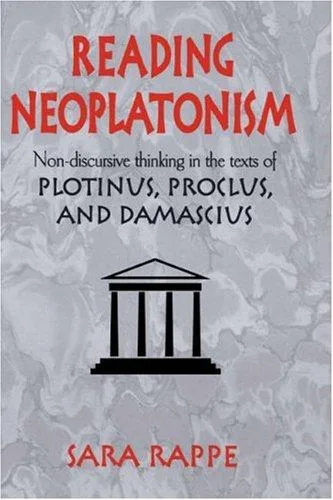
Reading Neoplatonism
 73
73

Reading Neoplatonism
Sara Rappe's Reading Neoplatonism provides a commendably clear exposition of a notoriously dense philosophical tradition. Rather than resorting to facile analogies, Rappe engages directly with the intellectual architecture of Neoplatonic thought, offering precise explanations. The section on the concept of *The One* is particularly illuminating, carefully distinguishing its absolute transcendence from any anthropomorphic deity. However, the book occasionally feels overly academic, sometimes sacrificing narrative flow for exhaustive conceptual breakdown. A more direct engagement with the practical, mystical dimensions often associated with Neoplatonism, perhaps through a deeper dive into Iamblichus's theurgic practices, could have enriched its esoteric appeal. Despite this, the work is an essential primer for serious students of the tradition.
📝 Description
73
### What It Is Reading Neoplatonism offers a focused academic examination of the philosophical system originating with Plotinus in the 3rd century CE. It unpacks the core tenets of Neoplatonic thought, tracing its development through key figures and its enduring influence on subsequent intellectual and spiritual traditions. The work aims to clarify complex metaphysical concepts for a contemporary audience.
### Who It's For This text is intended for students of philosophy, religious studies, and classical antiquity who seek a rigorous introduction to Neoplatonism. It will also appeal to scholars of Western esotericism interested in the philosophical underpinnings of various mystical movements. Individuals engaged in personal spiritual study looking to understand the roots of many contemplative practices will find it beneficial.
### Historical Context Published in 2000, Sara Rappe's work emerges in a period of renewed academic interest in late antique philosophy and its reception. Neoplatonism, originating with Plotinus around 205-270 CE, provided a sophisticated metaphysical framework that profoundly shaped Christian, Jewish, and Islamic thought, as well as Renaissance Hermeticism and later occult traditions. It competed intellectually with Stoicism and Epicureanism in its formative period and later influenced figures like Porphyry and Iamblichus.
### Key Concepts The book systematically explores concepts central to Neoplatonic metaphysics. This includes the nature of The One (or The Good) as an ineffable, transcendent source of all reality, the emanation of Intellect (Nous) and Soul (Psyche) from this divine principle, and the ascent of the soul back towards the One through philosophical contemplation and ethical living. The hierarchy of being, the distinction between the sensible and intelligible realms, and the role of *henosis* (union with the One) are critically examined.
💡 Why Read This Book?
• Gain a precise understanding of Plotinus's concept of *The One*, the ultimate, ineffable source of all reality, as presented in the Enneads, offering a foundation for understanding emanationist metaphysics. • Grasp the Neoplatonic doctrine of the soul's descent and ascent, learning how philosophical practice is framed as a path towards reintegration with the divine Intellect. • Comprehend the historical impact of Neoplatonism on later Western thought, understanding its role as a bridge between classical philosophy and medieval and Renaissance mystical traditions.
⭐ Reader Reviews
Honest opinions from readers who have explored this book.
❓ Frequently Asked Questions
What is the primary focus of Sara Rappe's Reading Neoplatonism?
The book focuses on the core philosophical concepts of Neoplatonism, originating with Plotinus in the 3rd century CE. It examines the metaphysics of The One, emanation, and the soul's journey back to the divine source.
Who is considered the founder of Neoplatonism discussed in the book?
Plotinus, an influential philosopher who lived roughly between 205 and 270 CE, is credited with establishing the foundational principles of Neoplatonism explored in Rappe's work.
Does the book cover the practical or mystical aspects of Neoplatonism?
While primarily an academic examination of the philosophy, the book touches upon the contemplative and ethical practices central to the Neoplatonic path of ascent, though it leans more towards conceptual explication.
How did Neoplatonism influence later philosophical and religious traditions?
The work details how Neoplatonism provided a metaphysical framework that significantly shaped early Christian theology, Islamic philosophy, and various strands of Western esotericism, including Hermeticism.
What is the concept of 'The One' in Neoplatonism?
In Neoplatonism, 'The One' is the ultimate, ineffable, and transcendent principle from which all reality emanates. It is beyond being and comprehension, serving as the ultimate source and goal.
Is Reading Neoplatonism suitable for beginners?
Yes, while rigorous, the book is designed as an introduction to Neoplatonism, making complex ideas accessible to students and those new to the subject matter.
🔮 Key Themes & Symbolism
The Hierarchy of Being
The book meticulously details the Neoplatonic cosmology, which posits a hierarchical structure emanating from the absolute, ineffable One. This chain extends through Intellect (Nous), Soul (Psyche), and finally the material world. Understanding this emanation is crucial for grasping the Neoplatonic worldview, where all existence is a divine outflow, and the goal is to recognize one's place within this ordered, divine structure and strive for return to the source.
The Ascent of the Soul
Central to Neoplatonism is the concept of the soul's journey from its entanglement with the material world back towards union with the divine. Rappe's work explains how philosophical contemplation, ethical purification, and intellectual ascent are the means by which the soul can retrace its steps, shedding material attachments to achieve *henosis* (union) with the One.
The Ineffable One
A cornerstone of Neoplatonic metaphysics is the concept of 'The One' (or The Good), presented as absolutely transcendent, beyond being, thought, and description. The book emphasizes that this principle is not a personal deity but the ultimate source from which all existence, including the divine Intellect, flows. Understanding its ineffability is key to distinguishing Neoplatonism from simpler theological systems.
Influence on Esotericism
While an academic text, Reading Neoplatonism inherently illuminates the philosophical roots of many esoteric traditions. Its exploration of emanation, the divine hierarchy, and the soul's mystical ascent provides the conceptual framework for Hermeticism, Gnosticism, and later Renaissance magical philosophies, offering a scholarly lens on the intellectual underpinnings of Western mysticism.
💬 Memorable Quotes
“The One is beyond all affirmation and negation.”
— This statement captures the absolute transcendence of the Neoplatonic ultimate principle. It asserts that 'The One' is so fundamentally beyond existence and conception that any attempt to describe it using positive or negative attributes inherently limits its nature.
“The soul's fall is not a moral failing but a descent into multiplicity.”
— This highlights a key Neoplatonic idea: the soul's entanglement with the material world is less about sin and more about losing its connection to the divine unity by becoming absorbed in the diversity of sensory experience.
“Intellect (Nous) is the first emanation, containing the Forms.”
— This points to the structure of reality in Neoplatonism, where the divine Mind, or Intellect, is the immediate creation of the One. It is within Nous that the intelligible archetypes or Forms reside, serving as blueprints for the subsequent levels of existence.
“The goal is to turn the soul back towards the intelligible realm.”
— This encapsulates the practical aim of Neoplatonic philosophy: through intellectual and ethical discipline, the individual soul is to reorient itself away from the distractions of the physical world and towards the higher, eternal realities of the Intellect.
“Emanation is not a diminishing but a necessary outflow of divine plenitude.”
— This interpretation defends the Neoplatonic concept of creation, suggesting that the universe arises from the abundant nature of the One not out of need or as a lesser product, but as a natural, overflowing expression of its perfection.
🌙 Esoteric Significance
Tradition
Neoplatonism forms a cornerstone of Western esoteric traditions, particularly those rooted in Hermeticism, Gnosticism, and Renaissance magical philosophies. It provides a metaphysical cosmology that underpins many mystical systems, emphasizing a hierarchical universe emanating from a transcendent divine source and offering a path for the soul's return. While distinct from Gnosticism's dualism, it shares the concept of a divine spark trapped in matter seeking liberation.
Symbolism
Key symbols include 'The One,' representing ultimate, ineffable unity and the source of all; 'The Intellect (Nous),' often symbolized by divine reason or the starry heavens, housing the Platonic Forms; and 'The Soul (Psyche),' which is both the animating principle of the cosmos and the individual human consciousness, striving for ascent. The concept of emanation itself functions as a primary symbolic process, illustrating divine creativity.
Modern Relevance
Contemporary thinkers and practitioners in fields like depth psychology, process theology, and various forms of Western esotericism continue to draw on Neoplatonic ideas. Its concepts of the transcendent One, the structure of consciousness, and the soul's journey towards unity offer enduring frameworks for understanding the relationship between the divine and the individual, influencing contemporary spiritual and philosophical discourse.
👥 Who Should Read This Book
• Students of Western Esotericism: Those seeking to understand the philosophical bedrock of traditions like Hermeticism, Kabbalah, and Renaissance magic will find Neoplatonism's concepts of emanation and divine hierarchy crucial. • Philosophy Undergraduates and Graduates: Individuals studying classical philosophy, late antiquity, or comparative religion will benefit from this rigorous academic introduction to a foundational Western philosophical system. • Contemplative Practitioners: Individuals engaged in spiritual disciplines seeking a deeper intellectual understanding of mystical ascent and the nature of ultimate reality will find the Neoplatonic framework highly relevant.
📜 Historical Context
Sara Rappe's Reading Neoplatonism, published in 2000, emerged during a period of significant scholarly engagement with late antique philosophy. Neoplatonism, originating with Plotinus (c. 205–270 CE), offered a complex metaphysical system that profoundly influenced subsequent philosophical and religious thought for centuries. It provided a sophisticated framework that bridged Hellenistic philosophy with early Christian theology, Islamic philosophy, and Jewish mysticism. In its formative era, Neoplatonism competed with established schools like Stoicism and Epicureanism. Later, figures like Porphyry, Iamblichus, and Proclus further developed its doctrines. The 2000 publication date places Rappe's work within a context where scholars were re-examining the relationship between philosophy and religion, and the enduring legacy of thinkers like Plotinus and his successors. The reception of Neoplatonism has been consistently influential, cited by figures from Augustine to Marsilio Ficino.
📔 Journal Prompts
The nature of The One as described by Plotinus.
Emanation as a process of divine outflow.
The soul's journey from multiplicity back to unity.
The role of Intellect (Nous) in the Neoplatonic hierarchy.
How Neoplatonism contrasts with contemporary materialistic worldviews.
🗂️ Glossary
The One
The ultimate, ineffable, transcendent principle in Neoplatonism, the absolute source of all reality from which everything emanates. It is beyond being and conceptualization.
Emanation
The Neoplatonic concept of creation, where reality flows or 'emanates' from The One in a hierarchical series of divine hypostases (Intellect, Soul) without diminishing the source.
Nous (Intellect)
The second hypostasis, the divine Mind or Intellect, which emanates from The One. It contains the Platonic Forms and is the realm of pure thought and being.
Psyche (Soul)
The third hypostasis, emanating from Nous. It encompasses both the cosmic soul that animates the universe and the individual human soul, which has a connection to both the intelligible and sensible realms.
Henosis
The Neoplatonic goal of mystical union or ecstatic communion with The One. It represents the soul's ultimate return to its divine source.
Forms
The eternal, perfect archetypes or essences of things, residing in the Divine Intellect (Nous), as conceptualized by Plato and integrated into Neoplatonic metaphysics.
Theurgy
A practice, particularly emphasized by Iamblichus, involving rituals and invocations intended to facilitate the soul's ascent and communion with the divine, bridging the human and divine realms.