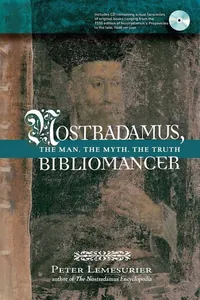
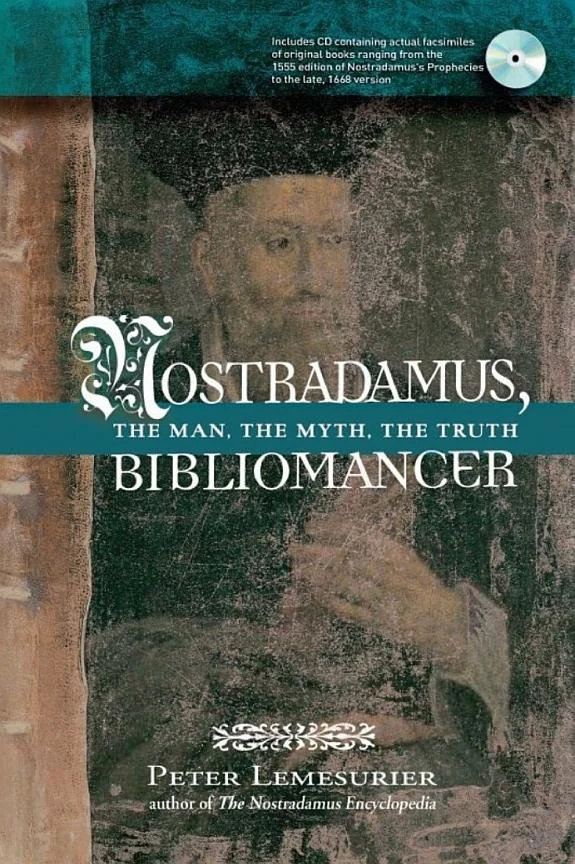
Nostradamus, Bibliomancer
 77
77

Nostradamus, Bibliomancer
Peter Lemesurier's *Nostradamus, Bibliomancer* provides a much-needed academic lens on the life and prophecies of Michel de Nostredame. Rather than rehashing worn-out predictions, Lemesurier focuses on the *how* of Nostradamus's prognostications, particularly his reliance on bibliomantic practices and the biblical text itself. A significant strength is the detailed analysis of Nostradamus's methods for generating prophecy, moving beyond simple fortune-telling. The book’s limitation, however, lies in its dense academic prose, which may deter casual readers seeking sensational occult revelations. The exploration of Nostradamus’s reliance on the Bible, particularly how he might have used it as a source for his quatrains, is particularly insightful. It’s a work for the dedicated researcher, not the casual enthusiast.
📝 Description
77
Peter Lemesurier's 2003 work, Nostradamus, Bibliomancer, dissects the 16th-century seer's methods beyond popular legend.
This book examines Michel de Nostredame not as a simple fortune-teller, but as a figure deeply embedded in the intellectual currents of the mid-16th century. Lemesurier moves past sensationalist interpretations to analyze the historical setting and potential sources that shaped Nostradamus's quatrains. The analysis scrutinizes the very structure and language of these prophetic verses, proposing ways to understand their complex meanings. The author situates Nostradamus's work within a Renaissance France marked by religious ferment and a keen interest in astrology. This intellectual climate allowed for individuals with specialized skills, like Nostradamus, to find support.
The core of Lemesurier's study rests on Nostradamus's practice of bibliomancy, specifically his use of the Bible as a source for prophecy, sometimes combined with divinatory techniques. The book also dissects the quatrain, Nostradamus's preferred format, and the deliberate vagueness within its construction. Furthermore, it considers how the *Propheties* were transmitted and received over time. This work is written for those who seek a historically grounded understanding of Nostradamus, appreciating detailed textual analysis over speculative accounts.
This study places Nostradamus within the broader tradition of European esotericism, specifically the Renaissance period's engagement with divination and prophecy. Unlike purely astrological forecasting prevalent earlier, Nostradamus's method of bibliomancy, drawing prophetic content from existing texts like the Bible, represents a distinct approach. Lemesurier's work examines this practice, along with the structured, yet ambiguous, quatrain format he employed. It situates these elements within the intellectual milieu of the 16th century, where such esoteric pursuits could intersect with scholarly and patronage networks, contrasting with more solitary or purely mystical traditions.
💡 Why Read This Book?
• Gain a precise understanding of Nostradamus's bibliomantic method, learning how he purportedly used existing texts, especially the Bible, as a source for his predictions, a technique distinct from mere astrological calculation. • Discover the structural characteristics of Nostradamus's quatrains, analyzing the deliberate ambiguity and literary devices he employed to make his prophecies open to varied interpretations across centuries. • Appreciate the historical milieu of 16th-century France, understanding the intellectual currents and societal conditions that allowed for figures like Nostradamus to flourish and gain recognition.
⭐ Reader Reviews
Honest opinions from readers who have explored this book.
❓ Frequently Asked Questions
What is bibliomancy according to Peter Lemesurier's book on Nostradamus?
In *Nostradamus, Bibliomancer*, bibliomancy refers to a divinatory practice where a practitioner uses a book, often the Bible, to gain prophetic insight. Lemesurier details how Nostradamus likely employed this method, drawing content from sacred texts.
What is a quatrain in the context of Nostradamus's prophecies?
A quatrain is a four-line verse, the primary structural unit of Nostradamus's prophecies as analyzed in the book. Lemesurier examines their composition and the strategic ambiguity within them.
Did Nostradamus predict future events using astrology?
While Nostradamus lived in an era of astrological interest, Lemesurier's work emphasizes his primary method as bibliomancy. The book suggests his reliance was more on textual sources than solely on astrological charts for generating prophecies.
What historical period does Nostradamus, Bibliomancer focus on?
The book centers on the mid-16th century, the period when Michel de Nostredame lived and published his *Propheties*. It explores the specific intellectual and religious climate of Renaissance France.
Is this book suitable for beginners interested in Nostradamus?
While informative, the book's scholarly approach and detailed textual analysis are best suited for readers with a serious interest in esoteric history and textual criticism, rather than those seeking a simple introduction.
What is the main argument of Peter Lemesurier's analysis?
Lemesurier's central argument is that Nostradamus was not just a seer but a bibliomancer who developed a systematic, albeit cryptic, method for prophecy, heavily influenced by existing biblical texts.
🔮 Key Themes & Symbolism
Bibliomancy as Prophetic Method
This book critically examines bibliomancy, the practice of divination through books, as Nostradamus's core prophetic technique. Lemesurier posits that Michel de Nostredame didn't merely receive visions but actively employed biblical texts, potentially through methods like scrying or random selection, to generate his enigmatic quatrains. The work explores how this reliance on scripture provided a framework and content for his predictions, distinguishing his approach from purely intuitive or astrological forecasting.
The Quatrain as Prophetic Vehicle
A central theme is the analysis of the four-line verse, or quatrain, as the deliberate format for Nostradamus's prophecies. Lemesurier dissects the linguistic and structural characteristics of these quatrains, highlighting their intentional ambiguity. This deliberate vagueness allowed interpretations to shift with historical events, contributing to the enduring mystique of the prophecies. The book investigates how this form facilitated a flexible and expansive prophetic legacy.
Historical and Intellectual Milieu
The work situates Nostradamus within the specific intellectual and religious landscape of 16th-century France. It explores the prevalence of occult studies, the impact of the Reformation, and the patronage systems available to individuals with unique predictive or scholarly abilities. Understanding this context is crucial for appreciating the origins and reception of Nostradamus's *Propheties* beyond simplistic notions of supernatural foresight.
Textual Interpretation and Scrutiny
Beyond prophecy itself, the book is a study in textual interpretation. Lemesurier applies a critical lens to Nostradamus's writings, encouraging readers to approach them not as infallible predictions but as complex literary and historical artifacts. The emphasis is on understanding the author's methods and the historical context of the text's creation and dissemination.
💬 Memorable Quotes
“The seer's prophecies were not spontaneous visions but structured textual derivations.”
— This interpretation highlights Lemesurier's central thesis: that Nostradamus's predictions were the result of a deliberate, systematic method involving existing written sources, rather than purely unmediated psychic experiences.
“Nostradamus's quatrains were designed for multi-temporal resonance through calculated ambiguity.”
— This paraphrased concept suggests that the four-line verses were intentionally crafted with imprecise language and multiple possible meanings, allowing them to be applied to different historical periods and events over time.
“The Bible served as both source material and scaffolding for the prophetic pronouncements.”
— This interpretation emphasizes the dual role of the Bible in Nostradamus's process, indicating it was not just a wellspring of content but also provided the structural or conceptual framework for his prophetic output.
“Understanding the 16th-century context is key to unlocking the nature of his predictions.”
— This paraphrased concept stresses the importance of historical context in analyzing Nostradamus's work. It suggests that his prophecies are best understood through the lens of Renaissance France's intellectual, religious, and social environment.
“The method of bibliomancy involved a conscious engagement with sacred texts for divination.”
— This interpretation clarifies that bibliomancy, as applied to Nostradamus, was an active, intentional practice of using religious books for prophetic purposes, rather than a passive reception of divine messages.
🌙 Esoteric Significance
Tradition
This work engages with the Western Esoteric tradition, particularly the lineage of divination and prophecy. While not strictly Hermetic or Kabbalistic, it examines a figure whose methods—bibliomancy and the symbolic interpretation of texts—align with a broader practice of seeking hidden knowledge through symbolic means. Lemesurier positions Nostradamus as a practitioner within a historical moment where such esoteric pursuits, often drawing on biblical symbolism, were more integrated into intellectual life than in later, more secularized eras.
Symbolism
The primary symbol explored is the 'quatrain' itself, acting as a vessel for coded prophecy. Additionally, the book implicitly deals with biblical symbolism, as Nostradamus drew heavily from scripture. The interpretation of these symbolic layers, often intentionally obscured by Nostradamus, is central to understanding his method. The act of bibliomancy itself symbolizes a search for divine order or guidance within the chaos of human events.
Modern Relevance
Modern occultists and historians of esotericism continue to reference Nostradamus, and Lemesurier's analytical approach offers a framework for understanding his methods beyond popular myth. Thinkers interested in textual divination, the history of prophecy, and the psychological underpinnings of belief systems can draw from this work. It informs contemporary discussions on how meaning is constructed and projected onto historical texts, relevant to fields from literary criticism to comparative religion.
👥 Who Should Read This Book
• Students of Western Esotericism: Those researching the history of divination, prophecy, and occult practices will find a detailed examination of a key historical figure's methodology. • Comparative Religion Scholars: Researchers interested in how religious texts are used for non-traditional purposes, such as prophecy, will benefit from the analysis of Nostradamus's bibliomancy. • Critical Thinkers of History: Individuals who enjoy dissecting historical claims and understanding the context behind influential figures and texts will appreciate the rigorous approach.
📜 Historical Context
Peter Lemesurier's *Nostradamus, Bibliomancer* emerges from a scholarly re-evaluation of prophetic figures in the late 20th and early 21st centuries, moving away from sensationalism towards critical analysis. It addresses the mid-16th century, specifically the period following Nostradamus's publication of the *Propheties* in 1555 and 1557. This era was marked by intense religious schism across Europe due to the Protestant Reformation, creating an atmosphere of anxiety and a hunger for divine guidance or reassurance. Astrological and occult practices were not fringe activities but were integrated into the intellectual life of the time, with figures like Nostradamus finding patronage among royalty and nobility. Lemesurier implicitly contrasts Nostradamus's methodical approach with earlier, more fluid forms of divination and situates him within a lineage of thinkers who sought order and meaning in a turbulent world. The reception of his work, while initially popular, also faced scrutiny, though outright censorship on the scale seen for other texts was less pronounced.
📔 Journal Prompts
The deliberate ambiguity within Nostradamus's quatrains and its impact on interpretation.
Nostradamus's reliance on biblical texts as a source for prophecy.
The concept of bibliomancy and its place in historical divinatory practices.
The societal conditions in 16th-century France that fostered prophetic figures.
Lemesurier's distinction between spontaneous vision and structured textual derivation.
🗂️ Glossary
Bibliomancy
A form of divination involving the use of books, particularly the Bible, to gain prophetic or divine guidance. Practitioners often open a book at random and interpret the passage that appears.
Quatrain
A four-line stanza or verse. In the context of Nostradamus, it refers to the specific poetic structure he used to record his prophecies, known for their cryptic nature.
Michel de Nostredame
The full name of the 16th-century French astrologer and physician, widely known as Nostradamus, famous for his book of prophecies, *Les Propheties*.
Scrying
A method of divination involving gazing into a reflective surface, such as a mirror, crystal ball, or bowl of water, to receive visions or insights.
Renaissance France
The period in French history roughly spanning the 16th century, characterized by significant cultural, artistic, and intellectual developments, influenced by the broader European Renaissance.
Textual Derivation
The process of deriving meaning, information, or predictions from existing written texts, as opposed to spontaneous inspiration or direct observation.
Esotericism
A category of religious and spiritual traditions that are usually secret, or intended only for certain people, often involving hidden knowledge, symbolism, and mystical practices.