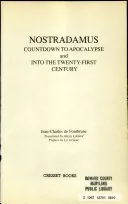
Las nuevas profecías de Nostradamus hasta el año 2025

 75
75

Las nuevas profecías de Nostradamus hasta el año 2025
Jean-Charles de Fontbrune's 'Las nuevas profecías de Nostradamus hasta el año 2025' offers a disciplined approach to deciphering the often-vague verses of the 16th-century seer. Fontbrune’s strength lies in his systematic attempt to contextualize quatrains within specific historical periods, moving beyond mere sensationalism. He meticulously analyzes linguistic nuances and cross-references verses to build a coherent narrative of fulfillment, particularly focusing on the early 21st century. A notable passage involves his interpretation of quatrains related to geopolitical shifts, attempting to map them onto potential future conflicts. However, the book's primary limitation is its inherent reliance on subjective interpretation; while Fontbrune strives for rigor, the predictive nature of prophecy inherently allows for multiple readings. The work's ambition to chart events up to 2025, while specific, also risks datedness as that year approaches and passes. Ultimately, this is a valuable scholarly exercise for serious Nostradamus students, offering detailed analysis rather than definitive prophecy.
📝 Description
75
Jean-Charles de Fontbrune's 1996 work re-examines Nostradamus's quatrains up to 2025.
Published in 1996, 'Las nuevas profecías de Nostradamus hasta el año 2025' by Jean-Charles de Fontbrune offers a contemporary analysis of Michel de Nostredame's prophecies. Fontbrune deciphers the 16th-century seer's quatrains, specifically looking at predictions extending into the early 21st century. The book uses a systematic method to interpret the verses, connecting them to both past historical events and potential future occurrences.
This text is for readers seriously interested in prophecy, esoteric studies, and historical interpretation. It will appeal to regular students of Nostradamus and those curious about the connection between historical foresight and current events. Individuals seeking to understand future possibilities through the perspective of a historical prophet will find it valuable. The book requires engagement with complex symbolic language and detailed historical analysis, rather than simple answers.
Fontbrune's book emerged in the mid-1990s, a time when interest in prophecies and end-times scenarios was growing. It joined a longer tradition of reinterpreting Nostradamus's work for changing eras. The book contributes to the ongoing discussion about how to understand Nostradamus's predictions, especially those relating to the period surrounding its publication and the year 2025. This follows centuries of scholarly and popular engagement with the quatrains first published in 1555.
💡 Why Read This Book?
• Gain a structured methodology for interpreting Nostradamus's quatrains, moving beyond speculative readings by examining Fontbrune's comparative analysis linking verses to specific historical events. • Understand the challenges of prophetic translation by exploring how Fontbrune grapples with archaic language and symbolism to project potential future occurrences up to the year 2025. • Explore the historical context of prophecy interpretation in the late 20th century through Fontbrune's work, observing how scholars engaged with Nostradamus’s legacy during that era.
⭐ Reader Reviews
Honest opinions from readers who have explored this book.
❓ Frequently Asked Questions
What is the primary focus of Jean-Charles de Fontbrune's 'Las nuevas profecías de Nostradamus'?
The book focuses on reinterpreting Nostradamus's quatrains, specifically aiming to decipher predictions that extend into the early 21st century, up to the year 2025. It employs historical analysis to contextualize these prophecies.
When was 'Las nuevas profecías de Nostradamus hasta el año 2025' first published?
The work was first published in 1996, placing its analysis within the context of late 20th-century interest in millennial prophecies and future predictions.
Does Fontbrune claim to have definitive answers from Nostradamus's prophecies?
Fontbrune presents interpretations and analytical frameworks rather than definitive pronouncements. The book engages with the inherent ambiguity of prophetic language and the challenges of historical correlation.
Who is Michel de Nostredame?
Michel de Nostredame, known as Nostradamus, was a 16th-century French astrologer and seer famous for his book 'Les Propheties,' a collection of quatrains (four-line poems) that have been interpreted as prophecies of future events.
What is the significance of the year 2025 in the book's title?
The year 2025 marks the temporal horizon of the prophecies Fontbrune attempts to interpret. It suggests a focus on events predicted to unfold in the period between the book's publication and that specific future date.
Is this book suitable for beginners interested in Nostradamus?
While accessible, the book is best suited for those with some prior interest or knowledge of Nostradamus. It offers detailed analysis and historical context that might be dense for absolute beginners.
🔮 Key Themes & Symbolism
Prophetic Interpretation Methodology
Fontbrune outlines a method for decoding Nostradamus's quatrains, emphasizing the importance of historical context and linguistic precision. He contrasts his approach with more speculative interpretations, advocating for a systematic cross-referencing of verses against documented historical events. The work explores how symbolic language within the prophecies, such as celestial imagery or allusions to specific regions, can be translated into potential future occurrences, aiming for a more grounded understanding of Nostradamus's foresight.
Chronological Prophetic Framework
A central theme is the construction of a chronological timeline for Nostradamus's predictions, with a particular focus on events leading up to and around the year 2025. Fontbrune attempts to map specific quatrains to particular historical periods and potential future happenings, seeking patterns that suggest a predictable unfolding of events. This chronological ambition is key to understanding the book's unique contribution to Nostradamus studies, offering a framework for future historical analysis.
The Nature of Foresight
The book engages with the philosophical implications of prophecy and foresight. It questions the extent to which future events can be known or predicted, even through symbolic means. Fontbrune's analysis implicitly explores the tension between free will and determinism, as presented through the lens of Nostradamus's visions. The work considers how humanity grapples with the unknown future and the enduring human desire to find meaning and patterns in apparent chaos.
Historical Resonance
Fontbrune examines how specific quatrains resonate with major historical events from the past, using these correlations to validate his interpretive methods and to project similar patterns into the future. The book explores the idea that historical cycles repeat, and that Nostradamus's prophecies serve as a guide to recognizing these recurring patterns. This theme highlights the interconnectedness of past, present, and future as perceived through prophetic tradition.
💬 Memorable Quotes
“The quatrains are not mere verses, but a map of time.”
— This paraphrased concept suggests Fontbrune views Nostradamus's work not as random poetry, but as a structured, intentional guide to understanding historical progression and future possibilities.
“Understanding the seer requires understanding his era.”
— This highlights Fontbrune's emphasis on historical context as crucial for accurate interpretation, arguing that Nostradamus's prophecies are deeply embedded in the 16th-century worldview and events.
“Future events echo past patterns.”
— This core idea underpins Fontbrune's methodology, suggesting that by identifying Nostradamus's accurate predictions of historical occurrences, one can better anticipate future events through recurring cycles.
“Symbolism is the key to unlocking temporal sequences.”
— This interpretation reflects Fontbrune's belief that the allegorical and symbolic language used by Nostradamus is not arbitrary but a deliberate code for revealing chronological and thematic connections in prophecies.
“The prophecies extend their gaze towards the 21st century.”
— This statement emphasizes the book's specific focus: moving beyond immediate historical fulfillment to analyze Nostradamus's foresight concerning events predicted to unfold in the modern era, particularly up to 2025.
🌙 Esoteric Significance
Tradition
Fontbrune's work operates within the Western esoteric tradition, specifically the lineage of prophetic interpretation that has followed Nostradamus since the 16th century. While not strictly Hermetic or Kabbalistic in its foundational structure, it draws upon the esoteric principle of hidden knowledge encoded in symbolic language. It fits within a broader modern esoteric interest in divination and foresight, seeking to apply ancient methods to contemporary concerns and future possibilities.
Symbolism
The book delves into Nostradamus's symbolic language, interpreting recurring motifs such as celestial bodies (sun, moon, stars) as indicators of significant shifts or rulers, and animal imagery (e.g., lions, eagles) as representations of nations or powerful figures. Geographical references, often cryptic, are analyzed as markers for specific events or conflicts. Fontbrune's method treats these symbols not as random poetic devices but as a coherent lexicon for mapping historical and future occurrences.
Modern Relevance
Fontbrune's approach to analyzing prophetic texts through historical correlation and linguistic precision remains relevant for contemporary esoteric scholars and practitioners interested in divination. His work informs modern discussions on predictive astrology, numerology, and other forms of foresight by offering a case study in systematic interpretation. Thinkers and groups focused on cyclical history, eschatology, and the analysis of symbolic systems can find valuable methodological insights in his detailed examination of Nostradamus's quatrains.
👥 Who Should Read This Book
• Students of Western esotericism interested in historical prophecy and divination, seeking to understand the methodology behind interpreting complex symbolic texts like Nostradamus's quatrains. • Researchers of historical forecasting and millennialism who want to examine late 20th-century approaches to prophetic interpretation, particularly concerning predictions for the early 21st century. • Enthusiasts of Nostradamus seeking a detailed, analytical approach that moves beyond sensationalism, focusing on contextualizing verses within historical timelines up to 2025.
📜 Historical Context
Published in 1996, Jean-Charles de Fontbrune's work emerged during a surge of interest in millennial prophecies and the approaching year 2000. This period saw numerous popular books and media discussions about apocalyptic scenarios, and Nostradamus was frequently invoked. Fontbrune's analysis sought to provide a more scholarly and systematic interpretation than many contemporary sensationalist accounts. His work engaged with a long tradition of Nostradamus scholarship that began shortly after the seer's death in 1566. While Fontbrune focused on the early 21st century, other contemporaries like psychic Sylvia Browne were also making bold predictions, albeit through different methods. The reception of such works often oscillated between fascination and skepticism, with academic historians generally viewing Nostradamus's quatrains as products of their time rather than literal prophecies.
📔 Journal Prompts
The symbolic lexicon of Nostradamus's quatrains.
Fontbrune's methodology for historical correlation.
Interpreting celestial symbols in prophecy.
The concept of chronological prophetic frameworks.
Nostradamus's era as a lens for interpretation.
🗂️ Glossary
Quatrain
A stanza of four lines, especially one having a rhyme scheme. Nostradamus's prophecies are famously written in quatrains, making them compact and often open to multiple interpretations.
Michel de Nostredame
The 16th-century French astrologer and seer, known as Nostradamus, whose book 'Les Propheties' (published 1555) contains predictions that have been interpreted for centuries.
Prophetic Interpretation
The process of analyzing and explaining the meaning of prophetic texts, often involving historical context, symbolic understanding, and comparative analysis of past events.
Historical Correlation
The method of comparing prophetic verses to known historical events to validate interpretations and predict future occurrences based on perceived patterns.
Symbolic Language
The use of symbols, metaphors, and allegories within texts to convey deeper or hidden meanings, often employed in prophetic and esoteric writings.
Chronological Framework
An ordered sequence of events in time. In prophecy interpretation, it refers to establishing a timeline for the fulfillment of predictions.
Esotericism
Teachings concerned with the nature of reality and the human spirit, often involving hidden knowledge, mystical practices, and symbolic interpretation, accessible only to a select group.