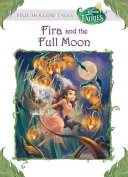
Disney Fairies: Fira and the Full Moon (Disney Fairies)
 84
84

Disney Fairies: Fira and the Full Moon (Disney Fairies)
Gail Herman's "Fira and the Full Moon" presents a familiar archetype: the overextended helper. Fira, a light-talent fairy, embodies the "take charge" mentality, volunteering for every task in Pixie Hollow. The initial premise, concerning the firefly flu and guiding miners underground, establishes a compelling need for her unique skills. However, the narrative's strength, Fira's tireless efforts, also becomes its central conflict, leading to her "glow flickers and fades." While the book effectively illustrates the consequences of unchecked self-reliance for young readers, the resolution feels somewhat understated, lacking the dramatic arc one might expect from such a build-up. The core message about the importance of balance and seeking assistance is clear, but its impact is somewhat muted by a predictable conclusion. Ultimately, it serves as a gentle cautionary tale on the pressures of responsibility.
📝 Description
84
In 2011, Gail Herman's Disney Fairies: Fira and the Full Moon introduced a light-talent fairy protagonist.
This 2011 book follows Fira, a fairy whose abilities center on light. She is tasked with managing several crises within Pixie Hollow, including a widespread illness affecting fireflies and the arrival of new fairies. Fira also guides mining-talent fairies on expeditions underground. The story is written for young readers, likely aged 6 to 10, who enjoy fantasy and magic. It touches on themes of self-reliance, leadership, and the importance of accepting assistance when faced with large responsibilities. The narrative presents a structured, magical society with fairies possessing distinct talents.
Published in 2011, this work is part of the Disney Fairies franchise, which adapted traditional fairy lore for a modern audience. It draws on a long history of fairy literature, dating back to works like J.M. Barrie's Peter Pan. The books extend the magical universe established in films, focusing on character backstories and the specific abilities of different fairy types, like light and mining talents. This approach creates a structured, albeit fantastical, world with defined roles and responsibilities.
💡 Why Read This Book?
• Learn about the challenges of leadership through Fira's experience managing light for Pixie Hollow during the firefly flu, understanding the personal toll of constant responsibility. • Explore the concept of "light-talent" fairies and their integral role in maintaining the underground expeditions of mining-talent fairies, appreciating specialized magical roles. • Witness Fira's struggle with self-reliance and the eventual realization that accepting help is crucial, a valuable lesson presented within the narrative's magical framework.
⭐ Reader Reviews
Honest opinions from readers who have explored this book.
❓ Frequently Asked Questions
What is the main conflict in Disney Fairies: Fira and the Full Moon?
The primary conflict is Fira, a light-talent fairy, becoming overwhelmed by her constant self-imposed responsibilities, causing her own light to weaken as she tries to help everyone in Pixie Hollow.
Who is Fira in the Disney Fairies series?
Fira is a light-talent fairy known for her independent nature and her tendency to take on too many tasks without asking for help, as depicted in Gail Herman's 2011 book.
What magical talents are featured in Fira and the Full Moon?
The book features light-talent fairies, like Fira, who provide illumination, and mining-talent fairies who explore underground caves, showcasing specialized magical abilities within Pixie Hollow.
What is the significance of the "full moon" in the title?
While not explicitly detailed in the blurb, the "full moon" likely signifies a period of heightened activity or a specific event within Pixie Hollow that requires Fira's full capacity.
What age group is Disney Fairies: Fira and the Full Moon intended for?
This book is generally aimed at early elementary school children, typically ages 6-10, who enjoy fantasy stories with relatable characters and magical settings.
What is the original publication year for Fira and the Full Moon?
Fira and the Full Moon was first published on August 23, 2011, as part of the broader Disney Fairies collection.
🔮 Key Themes & Symbolism
The Burden of Responsibility
Fira's relentless self-sufficiency in managing light for Pixie Hollow, from aiding fireflies with the "firefly flu" to guiding mining-talent fairies, highlights the immense pressure of taking on too much. The narrative illustrates how this unchecked dedication can lead to exhaustion and a flickering "glow," symbolizing depletion. It suggests that true strength lies not just in doing, but in knowing when and how to accept assistance, a concept often explored in spiritual disciplines concerning the balance of giving and receiving energy.
Specialized Talents and Cooperation
The book delineates distinct roles within Pixie Hollow, such as "light-talent" fairies and "mining-talent" fairies. This specialization underscores the idea that a community thrives through the unique contributions of its members. Fira's role in useful the underground expeditions for the miners emphasizes the interconnectedness of these talents. This reflects esoteric principles where different divine emanations or elemental forces work in concert to manifest reality, requiring each to fulfill its purpose.
Self-Reliance vs. Interdependence
Fira's character arc is a study in the tension between fierce independence and the necessity of interdependence. Her initial refusal to ask for help, while stemming from a desire to be capable, ultimately compromises her well-being. The story subtly advocates for a balanced approach, where individual strength is complemented by the support of others. This aligns with mystical traditions that recognize both the divine spark within the individual and the collective consciousness that binds all beings.
The Nature of Light
As a "light-talent" fairy, Fira's abilities are directly tied to illumination. Her "glow flickers and fades" as she becomes depleted, presenting light not merely as a magical effect but as an energetic output tied to her vitality. This symbolic representation of light as a finite, personal resource that requires replenishment connects to various spiritual concepts of inner light, divine radiance, and the energetic cost of manifestation.
💬 Memorable Quotes
Direct passages from the work, attributed to the author.
“Fira is a take-charge light-talent fairy, who never asks for help.”
— This opening statement establishes Fira's core personality trait: an independent spirit that drives her to manage tasks without external assistance, setting the stage for her eventual struggle with exhaustion.
“When all the fireflies come down with the firefly flu, who organizes light for Pixie Hollow?”
— This rhetorical question highlights Fira's immediate assumption of responsibility during a crisis, showcasing her proactive nature and the community's reliance on her specific talents.
“When three new light-talent fairies arrive on the same day, who volunteers to look after them?”
— This illustrates Fira's tendency to overcommit, taking on the burden of mentoring newcomers in addition to her other duties, further emphasizing her struggle with self-imposed obligations.
“And when the mining-talent fairies set off on their monthly expedition into the underground caves, who lights the way?”
— This highlights a critical, recurring task Fira performs, underscoring the essential nature of her light-talent for the safety and success of other fairy groups, reinforcing her indispensable role.
“But she's exhausted, and the deeper the miners go, the more her glow flickers and fades.”
— This marks the turning point where Fira's tireless efforts begin to take a visible toll, directly linking her physical and energetic state to the demands placed upon her, signaling the narrative's central conflict.
🌙 Esoteric Significance
Tradition
While not overtly aligned with a specific historical esoteric tradition like Hermeticism or Kabbalah, "Fira and the Full Moon" draws upon universal archetypes found in nature-based spiritualities and fairy folklore. It reflects a modern interpretation of elemental beings and the vital life force (prana, chi) often discussed in various traditions. The narrative can be seen as a secularized parable about managing one's inner energies, a concept resonant within Theosophy's focus on spiritual evolution and elemental planes.
Symbolism
The "light-talent" is a primary symbol, representing not just physical illumination but also vitality, energy, and perhaps spiritual awareness. Fira's "glow" flickering and fading directly symbolizes energetic depletion, a concept familiar in energy work and certain yogic traditions where maintaining one's vital force is crucial. The "full moon" itself is a potent symbol across many cultures, often associated with heightened magical energy, psychic sensitivity, and cycles of manifestation or completion.
Modern Relevance
Contemporary mindfulness and self-care movements echo the book's central theme of avoiding burnout. While lacking the rigorous metaphysical framework of classic esoteric texts, Fira's struggle speaks to modern individuals, particularly young adults, grappling with societal pressures and the digital age's demands. Discussions around "toxic positivity" and the importance of setting boundaries share thematic similarities with Fira's journey toward recognizing her limits and seeking support.
👥 Who Should Read This Book
• Young readers aged 6-10 interested in magical worlds and fairy lore, who will appreciate the relatable challenges faced by Fira in Pixie Hollow. • Parents and educators seeking stories that subtly convey lessons about responsibility, self-care, and the importance of asking for help from children. • Fans of the Disney Fairies franchise looking to explore the character of Fira and her specific role within the magical community of Pixie Hollow.
📜 Historical Context
The release of "Fira and the Full Moon" in 2011 positioned it within the burgeoning market for media tie-in books, particularly those expanding popular animated franchises. Gail Herman's contribution to the Disney Fairies series tapped into a post-2000s trend where studios actively cultivated expansive universes for younger audiences, mirroring earlier successes like the "Bratz" franchise or the continued popularity of "My Little Pony." While not engaging with the complex philosophical debates of its time, the book’s themes of responsibility and teamwork echo educational philosophies prevalent in early childhood learning, emphasizing social-emotional development. Unlike earlier fairy literature, such as Andrew Lang's "The Blue Fairy Book" (1889) which compiled folklore, this work is a singular narrative crafted for brand extension, reflecting a shift in children's publishing towards serialized character development and merchandise integration.
📔 Journal Prompts
Fira's constant effort to provide light.
The firefly flu and its impact on Pixie Hollow.
Fira's glow flickering and fading.
The role of mining-talent fairies.
Volunteering to look after new light-talent fairies.
🗂️ Glossary
Light-talent fairy
A fairy possessing magical abilities related to producing and controlling light, essential for illumination tasks within Pixie Hollow.
Pixie Hollow
The magical, hidden realm inhabited by fairies, serving as the central setting for the Disney Fairies stories.
Firefly flu
An illness affecting the fireflies in Pixie Hollow, creating a crisis that requires organized light solutions.
Mining-talent fairies
Fairies whose specialized skills involve excavating and working within underground caves, relying on light sources for their expeditions.
Glow flickers and fades
A metaphorical and literal description of Fira's diminishing energy and light due to exhaustion from overexertion.
Take-charge
Describes a personality trait of being proactive and assuming control, often without prompting or seeking assistance from others.
Self-reliance
The state of depending on one's own powers and resources rather than those of others; a key characteristic of Fira.