The mystical presence

 76
76

The mystical presence
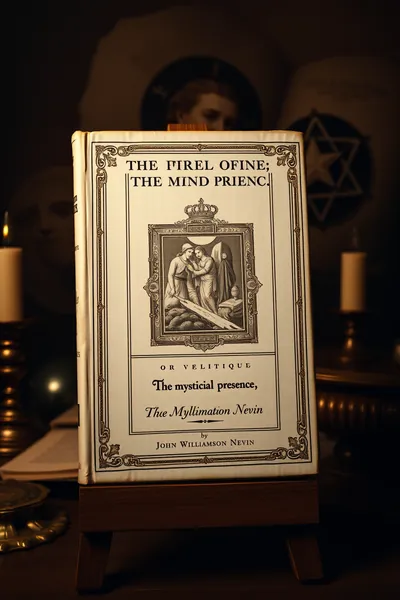
John Williamson Nevin's 'The Mystical Presence' offers a rigorous examination of how theologians have conceptualized divine immanence, particularly within Christian discourse. Its strength lies in its meticulous dissection of theological language, tracing how terms like "presence" have evolved and been debated across centuries. Nevin excels at highlighting the subtle shifts in meaning that alter fundamental understandings of God's relationship with the world. However, the book's dense, academic prose can be a significant hurdle; it demands considerable theological background and patience. A particularly illuminating section, for me, was Nevin's critique of overly intellectualized or abstract notions of presence, which he argues can diminish the visceral, experiential aspect of faith. Ultimately, 'The Mystical Presence' is an indispensable, albeit challenging, resource for those seeking a deep dive into the history of theological thought on divine immanence.
📝 Description
76
John Williamson Nevin's 1963 book examines divine immanence and God's active presence in creation.
Published in 1963, John Williamson Nevin's 'The Mystical Presence' investigates the theological and philosophical roots of divine immanence. The book details how various historical and theological traditions have understood God's active, present engagement with the created world. Nevin analyzes the specific language and conceptual changes that have defined perceptions of the 'mystical presence,' illustrating the idea that God is not a distant creator but a force intimately involved in the world and human life. This work is intended for serious students of theology, philosophy of religion, and esoteric studies. It is particularly relevant for those interested in the historical development of Christian thought, especially regarding Christology and ecclesiology. Readers will find Nevin's analysis useful when exploring the connection between metaphysical ideas and theological doctrine, seeking to grasp how abstract notions of divine presence appear in religious practice and belief. It is not an introductory text and requires dedicated engagement.
Nevin's study arises from mid-20th century theological discussions, a time that saw renewed attention to classical theological formulations and a critique of certain liberal theological directions. The book connects with a long history of thought that addressed the Reformation's focus on justification by faith and subsequent Protestant theology. It situates itself within debates on the nature of the church and the sacraments, frequently referencing figures and concepts from the Patristic era and the Reformation, such as Martin Luther and John Calvin, to trace doctrinal shifts concerning Christ's presence.
While rooted in Christian theology, Nevin's focus on the direct, experiential apprehension of the divine places 'The Mystical Presence' within broader currents of mystical thought. The book's examination of how God's presence is understood as an immanent force in the world and in human experience resonates with contemplative traditions that seek an immediate connection to the sacred, transcending purely intellectual or dogmatic frameworks. It speaks to the desire for a lived, felt reality of the divine, a core concern in many esoteric paths.
💡 Why Read This Book?
• Gain a nuanced understanding of "the mystical presence," differentiating it from abstract theological concepts by examining Nevin's critique of "sacramental" versus "spiritual" interpretations, a distinction crucial for grasping immanent divinity. • Explore the historical debates surrounding the "real presence" in the Eucharist, learning how theological language shaped views on divine communion since the Reformation, referencing specific arguments from figures like Luther. • Appreciate the mid-20th century theological landscape, understanding Nevin's engagement with classical formulations and critiques of liberal theology, providing context for ongoing discussions about God's engagement with creation.
⭐ Reader Reviews
Honest opinions from readers who have explored this book.
❓ Frequently Asked Questions
What is the primary focus of John Williamson Nevin's 'The Mystical Presence'?
The book primarily focuses on the theological concept of divine immanence, exploring how God's active, present engagement with creation has been understood historically and theologically, particularly within Christian thought.
When was 'The Mystical Presence' first published?
John Williamson Nevin's 'The Mystical Presence' was first published in 1963.
What kind of theological debates does the book engage with?
It engages with debates concerning the nature of God's presence in the world, Christology, ecclesiology, and particularly the "real presence" in the Eucharist, tracing arguments from the Reformation era onwards.
Is this book suitable for beginners in theology?
The book is generally suited for advanced students or those with a strong background in theology and philosophy of religion due to its academic rigor and dense prose.
What is the significance of the "mystical presence" concept in the book?
Nevin analyzes "the mystical presence" not as a mere abstract idea, but as a dynamic, experiential reality of divine engagement with creation, contrasting it with more detached or intellectualized conceptions of God.
Does the book discuss specific historical theological figures?
Yes, the work frequently references and analyzes the theological positions of key figures from the Reformation and earlier, including Martin Luther and John Calvin, to trace the development of ideas about divine presence.
🔮 Key Themes & Symbolism
Divine Immanence
The core theme revolves around the concept of God's active, inherent presence within the created order, rather than as a solely transcendent or distant deity. Nevin examines how this immanence is understood in theological discourse, moving beyond abstract philosophy to consider its implications for religious experience and doctrine. The work scrutinizes the language used to describe this presence, differentiating between philosophical notions and the vital, active engagement that defines the "mystical presence."
Sacramental Theology
A significant portion of the book addresses the theological understanding of sacraments, particularly the Eucharist, as sites where divine presence is made manifest. Nevin dissects the historical debates surrounding the "real presence," analyzing various interpretations that have emerged since the Reformation. He explores how different theological frameworks conceive of Christ's presence in these rites, questioning views that might reduce the divine encounter to a mere symbolic act or a mechanical ritual.
Theology of the Reformation
Nevin situates his analysis within the broader context of Reformation theology, engaging with the doctrines and debates initiated by reformers like Martin Luther and John Calvin. The work traces how their emphasis on grace and justification influenced subsequent understandings of God's relationship with humanity and the Church. By referencing these historical figures and movements, Nevin highlights continuity and divergence in theological thought regarding divine interaction and presence across centuries.
Language and Doctrine
The book underscores the critical role of theological language in shaping doctrinal understanding. Nevin meticulously examines how specific terms and phrases used to describe God's presence have carried different meanings and implications throughout history. This focus on semantics reveals how shifts in terminology can lead to profound alterations in how divine activity and engagement are perceived, emphasizing precision in theological discourse.
💬 Memorable Quotes
Direct passages from the work, attributed to the author.
“Distinguishing between 'sacramental' and 'spiritual' presence is crucial for accurate theological formulation.”
— This reflects Nevin's meticulous approach to theological language, suggesting that the precise meaning of terms used to describe divine presence significantly impacts one's understanding of God's interaction with humanity.
“The 'real presence' in the Eucharist demands more than mere intellectual assent.”
— This interpretation points to Nevin's critique of abstract or overly intellectualized views of divine presence, advocating for an understanding that incorporates experiential and vital aspects, particularly in sacramental contexts.
“Reformation theology shifted the focus toward God's direct action in salvation.”
— This captures the essence of Nevin's historical contextualization, emphasizing how the Reformation's doctrines, like justification by faith, altered perceptions of God's immediate involvement in human redemption.
💡 Key Ideas
Editorial paraphrase of the work's core concepts — not direct quotes.
The divine presence is not a static attribute but a dynamic reality.
This paraphrased concept highlights Nevin's emphasis on God's active, ongoing engagement with the world, contrasting it with static philosophical conceptions of God as an unchanging entity.
The Church is a locus of the mystical presence, not merely an institution.
This paraphrased concept suggests Nevin's view of the Church as a living embodiment of divine engagement, contrasting it with purely organizational or structural interpretations of religious bodies.
🌙 Esoteric Significance
Tradition
While rooted in Christian theology, Nevin's exploration of "the mystical presence" touches upon broader esoteric themes of divine immanence and the direct experience of the sacred. His work can be seen as a bridge between scholastic theology and more experiential, mystical traditions that emphasize God's indwelling. It aligns with a lineage that seeks to understand the divine not just as an external force but as an intimate reality accessible through faith and specific spiritual means, echoing Gnostic and certain Neoplatonic ideas about the immanence of the divine.
Symbolism
The primary symbolic focus is the Eucharist, which Nevin analyzes not just as a ritual but as a potent symbol of divine presence. He dissects the language used to describe this presence – "real," "spiritual," "sacramental" – treating these terms as symbolic keys to understanding different modes of divine engagement. The Church itself functions symbolically as the body through which this presence is mediated and experienced in the world, representing a tangible manifestation of the intangible divine.
Modern Relevance
Contemporary discussions in comparative religion and mystical theology often revisit Nevin's meticulous analysis of divine presence. Thinkers and practitioners exploring embodied spirituality, liturgical theology, and the experiential dimensions of faith can draw from his work. His insights are relevant to modern esoteric movements seeking to understand the "God within" or the pervasive nature of the divine, providing a robust theological framework for concepts often explored through more direct, less doctrinally bound methods.
👥 Who Should Read This Book
• Advanced theology students and scholars seeking a rigorous examination of divine immanence and Christology. • Researchers in the history of Christian doctrine interested in Reformation-era debates and their mid-20th century reception. • Mysticism and esoteric studies practitioners looking to understand the theological underpinnings of divine presence and sacramental theology.
📜 Historical Context
Published in 1963, John Williamson Nevin's 'The Mystical Presence' emerged during a period of significant theological re-evaluation in the mid-20th century. Following the seismic shifts of World War II and the rise of existentialism, theologians were grappling with the nature of faith, the Church, and God's relation to the modern world. Nevin's work engages with a lineage of thought that sought to recover or re-articulate classical theological doctrines, often as a counterpoint to more liberal or secularizing theological trends. He frequently references figures from the Reformation, such as Martin Luther and John Calvin, examining how their Christology and sacramental theology informed understandings of divine presence. This period also saw ongoing dialogues within ecumenical circles, particularly concerning the Eucharist, a topic Nevin deeply explores. While not overtly engaging with specific contemporaries like Karl Barth or Paul Tillich in extensive polemics within this text, Nevin's focus on the objective reality of divine presence implicitly positions his work within broader debates about the nature of revelation and the Church's role, often aligning with neo-orthodoxy's emphasis on divine sovereignty.
📔 Journal Prompts
The concept of the "mystical presence" as a dynamic reality.
Nevin's distinction between "sacramental" and "spiritual" presence.
The "real presence" debate in Reformation theology.
The role of theological language in defining divine interaction.
Interpreting the Eucharist as a locus of divine presence.
🗂️ Glossary
Mystical Presence
The concept of God's active, immanent, and experiential engagement with creation, distinct from purely transcendent or abstract notions of divinity.
Divine Immanence
The theological or philosophical idea that God is present within the universe and human experience, rather than solely existing outside of it.
Real Presence
A doctrine, particularly concerning the Eucharist, asserting the actual presence of Christ's body and blood, which has been interpreted in various ways since the Reformation.
Sacramental Presence
Referring to the belief that divine presence is specifically conveyed or mediated through the outward forms and actions of a sacrament, such as the Eucharist.
Spiritual Presence
An understanding of divine presence that is experienced internally or through faith, often considered less tied to specific material or ritualistic forms than sacramental presence.
Christology
The branch of Christian theology concerned with the nature, person, and work of Jesus Christ.
Ecclesiology
The branch of Christian theology that deals with the nature, constitution, and administration of the Christian Church.
🔮 Readers Also Liked
Browse all →




More by John Williamson Nevin
All books →

More Free Mysticism & Contemplation Books
View all →