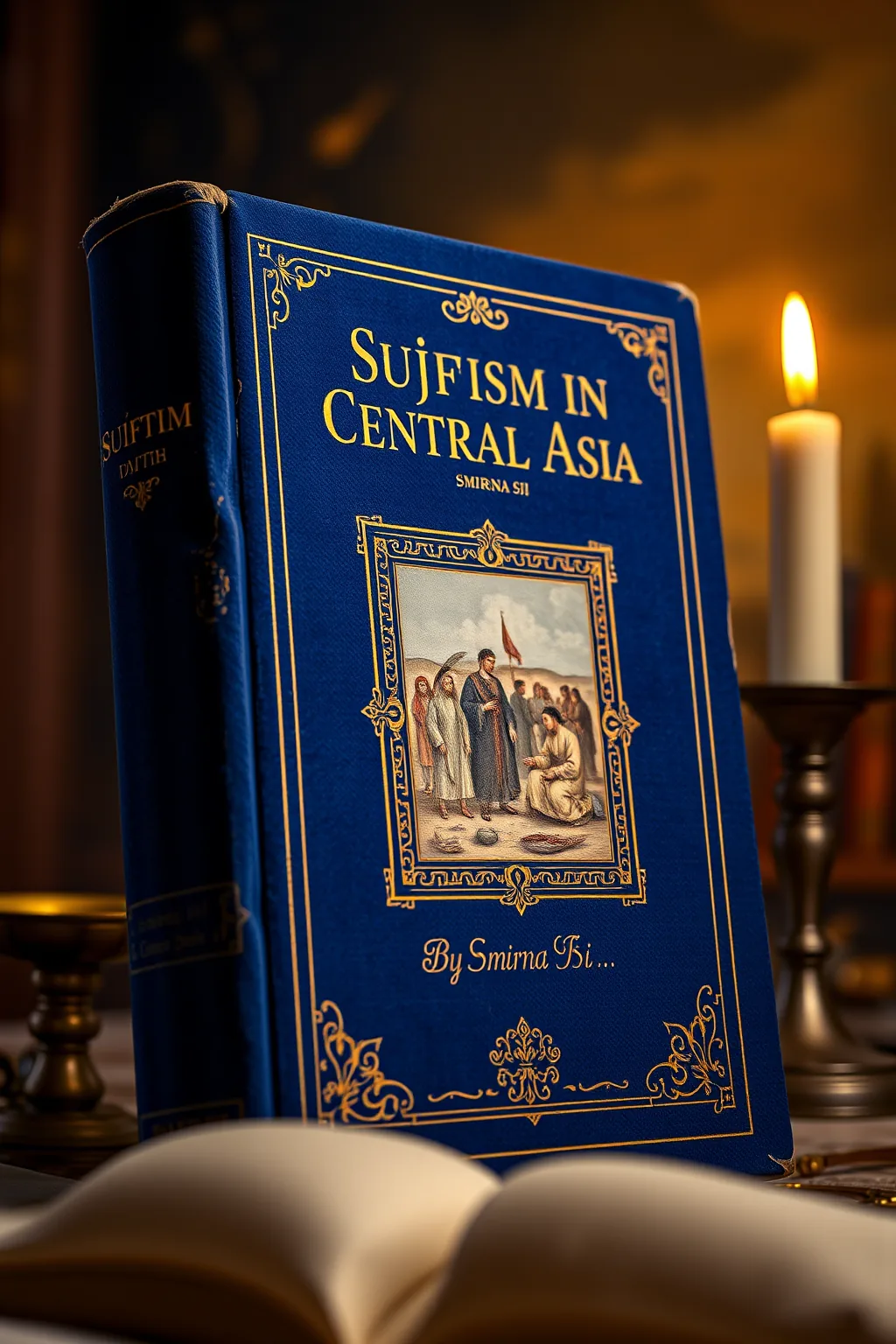
Sufism in Central Asia
 83
83

Sufism in Central Asia



Ophelia Vance, Mystical Literature Reviewer — Smirna Si's 'Sufism in Central Asia' is a luminous beacon for those navigating the intricate currents of Islamic mysticism. Si meticulously excavates the rich esoteric dimensions of Sufism as it flourished in this pivotal region, revealing profound insights into divine love, ecstatic union, and the transformative power of the spiritual path. The book excels in its elucidation of complex philosophical concepts and its rich tapestry of historical context. It is an essential read for scholars and dedicated practitioners alike, offering a deeply resonant exploration of Sufi wisdom that continues to inspire.
📝 Description
83
Smirna Si's 'Sufism in Central Asia' (2017) details the spiritual traditions of the region.
Smirna Si's book traces the development of Sufism in Central Asia. It begins with early mystical influences and follows their expression through the region's diverse environments and social centers. The author details devotional practices, the language of divine love, and the symbolic meanings within the rituals of Central Asian mystics. The work goes beyond simple history, creating a space for contemplation on the human desire for transcendence and the lasting impact of spiritual awakening.
This book is for individuals seeking a deeper comprehension of spiritual matters. It is also for academics looking for genuine understanding and for anyone drawn to the rich spiritual heritage of Sufism. Si provides a look into a tradition that is often misunderstood and kept private.
Sufism, the mystical dimension of Islam, has a long history in Central Asia, drawing from earlier Persian and Turkic mystical currents. Smirna Si's work places this regional expression within the broader esoteric tradition of Sufism. It highlights how local customs and cultural contexts shaped the development of Sufi thought and practice, particularly concerning the concept of divine love and the symbolic interpretation of rituals. The book examines how these practices served as pathways to spiritual realization, connecting the individual to the divine.
💡 Why Read This Book?
Uncover the veiled spiritual heart of Central Asia. 'Sufism in Central Asia' offers a rare, insightful journey into the esoteric dimensions of Sufi practice, revealing timeless wisdom on divine love and transcendence. Ideal for seekers of hidden knowledge, scholars of mysticism, and practitioners of contemplative traditions yearning for deeper understanding and spiritual connection.
⭐ Reader Reviews
Honest opinions from readers who have explored this book.
❓ Frequently Asked Questions
What is the primary focus of 'Sufism in Central Asia'?
The book primarily focuses on the historical development, key figures, and esoteric teachings of Sufism within the Central Asian region, emphasizing its unique spiritual traditions and philosophical underpinnings.
Is this book suitable for beginners in Sufism?
Yes, while offering depth for scholars, the book's clear prose and evocative descriptions make it accessible and engaging for beginners seeking an introduction to Sufi thought and practice in a specific geographical context.
What makes the Sufism of Central Asia unique?
Central Asian Sufism is distinguished by its integration with local cultures, its emphasis on specific meditative practices, and its rich lineage of venerated saints and scholars who shaped its distinctive mystical expression.
Does the book explore the practical aspects of Sufi devotion?
Indeed, the book delves into the practical manifestations of Sufi devotion, including prayer, remembrance (dhikr), meditation, and the communal aspects of spiritual life within Sufi orders prevalent in Central Asia.
Who was Martha Brill Olcott and her connection to this work?
Martha Brill Olcott was a significant scholar of Sufism, and her original notes provided a crucial foundation and inspiration for Smirna Si's extensive research and this comprehensive exploration of Central Asian Sufism.
🔮 Key Themes & Symbolism
The Luminous Path of Divine Love
Central to Central Asian Sufism is the fervent cultivation of divine love (ishq) as the primary vehicle for spiritual ascent. This theme explores how mystics in the region experienced and expressed this all-consuming passion, viewing it not merely as emotion but as the very essence of reality and the divine. The book explores the symbolic language used to describe this love, from the intoxication of the wine of union to the burning fire of separation, revealing how these metaphors guided practitioners towards direct experiential knowledge of the Beloved.
Traces of Ancient Wisdom
Smirna Si meticulously traces the deep roots of Sufism in Central Asia, showing how it absorbed and reinterpreted ancient philosophical and spiritual currents. This theme highlights the syncretic nature of the tradition, demonstrating how pre-Islamic mystical practices, Zoroastrian influences, and Neoplatonic ideas intertwined with Islamic teachings. The book illuminates the enduring power of these foundational wisdom traditions, showing how they continue to resonate within the esoteric framework of Sufi thought in the region.
The Sacred Geography of the Soul
This theme explores how the physical landscapes of Central Asia—its vast deserts, fertile oases, and ancient cities—became imbued with spiritual significance within Sufi cosmology. The book examines how these locales served as sites for contemplation, pilgrimage, and the manifestation of divine presence. Si reveals how the journey through these sacred geographies mirrored the inner journey of the soul, with each landmark and natural element carrying symbolic weight and offering lessons for spiritual seekers on their path to union.
💬 Memorable Quotes
Direct passages from the work, attributed to the author.
“In the silence between breaths, the universe whispers its secrets.”
— This highlights the Sufi practice of mindful presence and deep contemplation, suggesting that profound spiritual truths are revealed not through outward noise but through inner stillness and heightened awareness.
“The path is not walked with feet, but with the wings of the soul.”
— This metaphor underscores the non-physical nature of spiritual progress, asserting that true advancement on the mystical path is achieved through inner transformation and spiritual aspiration, not physical movement.
“Every grain of sand holds a story of creation's first breath.”
— This suggests a pantheistic or immanent view of the Divine, where even the smallest elements of existence are imbued with sacredness and carry the imprint of their origin, inviting contemplation of the eternal in the ephemeral.
“To know the Beloved is to lose oneself, and in that loss, to find all.”
— This classic Sufi paradox speaks to the transformative nature of divine love, where the ego dissolves, leading to a profound realization of unity and the attainment of true selfhood through surrender.
💡 Key Ideas
Editorial paraphrase of the work's core concepts — not direct quotes.
The heart is a mirror, polished by love's constant gaze.
This quote emphasizes the Sufi belief that the heart, through sustained devotion and remembrance of the Divine, can become a clear reflection of ultimate reality, free from worldly distractions.
🌙 Esoteric Significance
Tradition
This work primarily explores the esoteric dimensions of Sunni Islam, specifically within the Sufi tradition. It explores the inner, mystical interpretations of Islamic scripture and practice, focusing on the pursuit of direct experiential knowledge of God (ma'rifa) and the purification of the soul (tazkiyah). The Central Asian manifestation often incorporates elements of devotional mysticism, ecstatic practices, and a profound emphasis on the teacher-disciple relationship, all aimed at unveiling the hidden spiritual realities within the practitioner and the cosmos.
Symbolism
Central to the esoteric symbolism in Central Asian Sufism are concepts like the 'ladder of ascent,' representing the stages of spiritual purification and proximity to the Divine; the 'veil,' symbolizing the illusory nature of the material world that obscures ultimate truth; and 'light,' representing divine presence and gnosis. The book likely examines the symbolic meaning of sacred spaces, natural elements like water and fire, and the use of poetry and music in conveying profound spiritual truths, all of which serve as keys to unlocking deeper levels of understanding beyond the literal.
Modern Relevance
Despite the passage of centuries and geopolitical changes, the esoteric wisdom of Central Asian Sufism remains remarkably relevant. Its teachings on inner peace, mindful living, compassion, and the pursuit of authentic self-knowledge offer potent antidotes to the stress and materialism of contemporary life. The emphasis on tolerance, interfaith dialogue, and the recognition of the divine in all creation provides valuable perspectives for fostering understanding and harmony in a diverse world. For modern seekers, these ancient practices offer a rich wellspring of guidance for navigating personal challenges and cultivating a deeper connection to the spiritual dimension of existence.
👥 Who Should Read This Book
This book is a rich source for a diverse audience. **Beginners** seeking an accessible yet profound introduction to Islamic mysticism will find a clear and evocative entry point into the world of Sufism. **Scholars** of religious studies, Islamic history, and comparative mysticism will appreciate the rigorous research and nuanced analysis of a less-explored but vital branch of Sufi tradition. **Spiritual seekers** yearning for deeper contemplative practices and an understanding of divine love will find inspiration and guidance. **Practitioners** of meditation and mindfulness will discover ancient techniques and philosophical underpinnings that can enrich their personal journeys towards inner peace and enlightenment.
📜 Historical Context
The flourishing of Sufism in Central Asia occurred against a backdrop of significant historical shifts, including the rise and fall of empires, the Silk Road's vibrant trade routes, and periods of both religious tolerance and persecution. From the 9th century onwards, Sufi orders like the Naqshbandi and Yasawi gained immense influence, becoming integral to the region's cultural and spiritual fabric. This era witnessed intense intellectual and devotional activity, with scholars and mystics engaging in profound theological debates and establishing centers of learning and spiritual practice. The region's position at the crossroads of East and West facilitated the exchange of ideas, further enriching the esoteric dimensions of Sufism. The Mongol invasions and subsequent periods of rule by various khanates also shaped the Sufi landscape, sometimes leading to periods of suppression and at other times fostering an environment where mystical traditions could thrive, often adapting to local customs and beliefs.
📔 Journal Prompts
Reflect on a time you felt a profound sense of love or connection. How did this experience mirror the Sufi concept of divine love?
Consider the 'veils' that obscure your perception of ultimate truth in your daily life. What are they, and how can you begin to draw them back?
Imagine the landscapes of Central Asia described in the book. How do these external geographies resonate with your own inner spiritual journey?
What does the concept of 'losing oneself' to 'find all' mean to you personally? Explore this paradox in your own spiritual aspirations.
How can the practice of inner stillness and silence, as suggested by Sufi traditions, be integrated into your modern life to foster greater spiritual awareness?
🗂️ Glossary
Sufism
The mystical dimension of Islam, focused on the pursuit of direct experiential knowledge of God through asceticism, devotion, and spiritual discipline. It emphasizes inner transformation and the purification of the soul.
Dhikr
The remembrance of God, often performed through repetitive recitation of divine names or phrases. It is a central practice in Sufism for achieving spiritual presence and union.
Ma'rifa
Gnosis or direct experiential knowledge of God, considered the ultimate goal of the Sufi path. It transcends intellectual understanding and involves profound spiritual insight.
Ishq
Divine love, often described as an all-consuming passion for God. It is seen as the driving force behind the Sufi's spiritual journey and the ultimate reality.
Tazkiyah
The purification of the soul, a fundamental aspect of Sufi practice. It involves ridding oneself of negative traits like ego, pride, and desire to cultivate virtues and spiritual purity.
This book appears in 2 collections
🔮 Readers Also Liked
Browse all →






More by Smirna Si
All books →


From the “Christian Mysticism” Collection
View all →




More Free Mysticism & Contemplation Books
View all →