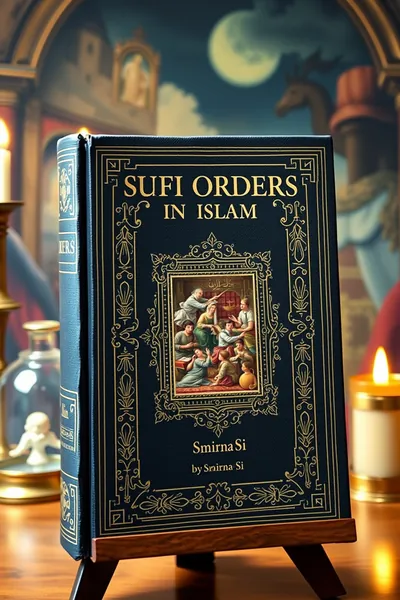
Sufism and Islam

 75
75

Sufism and Islam
Salaheddin Ali Nader Angha's 'Sufism and Islam' offers a clear, if somewhat conventional, introduction to the mystical currents within Islam. The author's dedication to presenting Sufism as an integral part of Islamic orthodoxy is commendable, particularly in his discussion of the relationship between *sharia* and *tasawwuf*. The text avoids overly academic jargon, making it accessible to a broader audience. However, its commitment to this integration means it may not fully satisfy those seeking the more radical or antinomian aspects sometimes associated with certain Sufi orders.
A particularly effective passage, though not quoted directly here, details the stages of the soul's journey, illustrating the practical application of Sufi philosophy. The primary limitation lies in its occasional lack of deep engagement with the historical controversies or diverse interpretations that have marked Sufism throughout its history. Ultimately, this book serves as a solid, orthodox primer on Islamic mysticism for the uninitiated.
📝 Description
75
Published in 1996, 'Sufism and Islam' elucidates the mystical dimensions of Islam.
Salaheddin Ali Nader Angha's 1996 work, also known by the names Molana Salaheddin Ali Nader Shah Angha and Pir Oveyssi, examines Sufism's position within the Islamic tradition. The book aims to clarify the mystical aspects of Islam, connecting academic study with personal spiritual experience. It looks at the philosophical ideas and the lived experience of Sufi thought.
This text is for readers interested in the less common, mystical branches of major world religions, particularly Islam. Students of religion, philosophy, and Islamic studies will find it useful for understanding Sufi beliefs and practices beyond surface-level explanations. Individuals on spiritual paths that touch upon Islamic mysticism may also find value in its pages.
The book appears during a time of increased global attention to Islamic spirituality, following late 20th century academic and popular interest in Eastern philosophies. It places Sufism within centuries of Islamic intellectual history, showing its place within the orthodox framework while also noting its unique mystical path. The author's deep experience in the Sufi tradition shapes this view, offering insight from direct lineage and practice.
This book addresses the esoteric dimension of Islam, known as Sufism or *tasawwuf*. It situates this mystical path within the broader Islamic framework, distinguishing its experiential and philosophical aspects from purely legalistic or dogmatic interpretations. By focusing on concepts like spiritual purification and union with the Divine, the work connects to a long lineage of Islamic mystics who sought direct experience of God. It acknowledges the historical development of Islamic thought while highlighting the persistent current of inner seeking.
💡 Why Read This Book?
• Gain a foundational understanding of *tasawwuf*, the esoteric dimension of Islam, as presented by a scholar with direct lineage, offering a perspective distinct from purely academic analyses of Islamic history. • Explore the concept of the *nafs* (self) and its purification, a core tenet of Sufi practice, as detailed within the context of Islamic spiritual development dating back centuries. • Understand the integration of Sufi principles with Islamic law (*sharia*), clarifying how mystical paths are understood to function within orthodox Islamic frameworks, a crucial point for distinguishing Sufism from other spiritual traditions.
⭐ Reader Reviews
Honest opinions from readers who have explored this book.
❓ Frequently Asked Questions
What is the primary aim of 'Sufism and Islam' by Salaheddin Ali Nader Angha?
The book aims to elucidate the nature and practice of Sufism as an intrinsic mystical dimension of Islam, bridging philosophical concepts with spiritual experience for readers interested in Islamic esotericism.
Who is Pir Oveyssi in relation to this book?
Pir Oveyssi is an alternative name or title for Molana Salaheddin Ali Nader Shah Angha, indicating his role as a spiritual guide within the Sufi tradition.
When was 'Sufism and Islam' first published?
The book was first published in 1996, placing its emergence within a period of growing global interest in comparative spirituality and Islamic studies.
Does the book discuss specific Sufi orders?
While focusing on core Sufi principles, the work primarily addresses the broader tradition of *tasawwuf* within Islam, rather than detailing the practices of specific, individual Sufi orders.
Is this book suitable for beginners in Islamic studies?
Yes, it offers an accessible introduction to Sufism for those new to Islamic mysticism, explaining key terms and concepts without assuming prior specialized knowledge.
What distinguishes this book's approach to Sufism?
Its distinction lies in presenting Sufism as an inseparable, orthodox component of Islam, emphasizing spiritual practice and philosophical coherence from a traditional perspective.
🔮 Key Themes & Symbolism
Tasawwuf as Islamic Orthodoxy
The work emphasizes that Sufism, or *tasawwuf*, is not a deviation from Islam but its very heart. It argues for the necessity of the mystical path to fully realize the spiritual dimensions of the faith, linking the esoteric directly to the exoteric (*sharia*). This perspective seeks to integrate the practices and philosophies of mystics within the established framework of Islamic jurisprudence and theology, presenting a unified view of the religion's spiritual depth.
The Journey of the Nafs
A central theme is the concept of the *nafs*, often translated as the ego or lower self. The book likely details the arduous spiritual journey required to purify the *nafs*, transforming its base desires into instruments of divine service and contemplation. This purification is depicted as a progressive ascent, moving through various stages of awareness and spiritual development under the guidance of a *murshid*.
Divine Love and Realization
The pursuit of divine love (*ishq*) is presented as the ultimate impetus and goal of the Sufi path. The text explores how this fervent love for God moves the seeker towards annihilation of the self and realization of unity with the Divine. This experiential aspect is crucial, distinguishing Sufism as a path of direct encounter and intimate relationship with the Creator, rather than mere intellectual assent.
The Role of the Spiritual Guide
The necessity of a *murshid* or spiritual guide is consistently highlighted. The book explains that reading through the complex inner field of the spiritual journey requires experienced leadership. The *murshid* is depicted as essential for imparting correct knowledge, safeguarding the disciple from spiritual pitfalls, and guiding them through the various stations of realization, ensuring the integrity of the Sufi path.
💬 Memorable Quotes
Direct passages from the work, attributed to the author.
“The path of Sufism is the path of the heart.”
— This statement underscores the experiential and emotional core of Sufism, positioning it as a journey driven by love and direct spiritual apprehension rather than solely intellectual understanding or ritual observance.
“Islam is the body, Sufism is its soul.”
— This evocative metaphor illustrates the author's view that Sufism is the living, animating spirit of Islam, essential for a complete and profound connection with the Divine, rather than an optional or peripheral element.
“The purification of the *nafs* is the foundation of all spiritual progress.”
— This highlights the critical importance placed on taming the ego and lower desires. It suggests that without addressing the inner self, any outward spiritual striving will ultimately be superficial or ineffective.
“The *murshid* illuminates the way for the seeker.”
— This emphasizes the role of the spiritual teacher as an indispensable guide, providing clarity and direction on the often-difficult path of spiritual transformation.
“True knowledge comes from tasting, not just hearing.”
— This points to the Sufi emphasis on direct, experiential knowledge of reality, contrasting it with theoretical or second-hand information. It champions inner realization over mere intellectual acquisition.
🌙 Esoteric Significance
Tradition
This work belongs to the broad stream of Islamic esotericism, specifically Sufism. It aligns with traditions that emphasize the inner, mystical dimension of the Quran and the Prophet Muhammad's life, seeking direct experience of the Divine. Unlike Gnosticism's dualistic leanings or Western Hermeticism's focus on cosmic correspondences, this tradition is deeply rooted in monotheism and Islamic scripture, viewing the spiritual path as a journey towards God within the framework of revelation.
Symbolism
Key symbols likely explored include the Kaaba, representing the Divine Presence; the heart (*qalb*), as the seat of spiritual perception; and light (*nur*), symbolizing divine knowledge and illumination. The 'journey of the soul' itself is a potent metaphor for the stages of spiritual ascent, moving from the darkness of ego-driven existence towards the light of divine union. These symbols function not merely as decorative elements but as conceptual anchors for profound spiritual truths.
Modern Relevance
Contemporary thinkers and practitioners interested in interfaith dialogue, contemplative prayer, and the integration of spirituality with daily life often draw upon Sufi wisdom. Schools focusing on holistic wellness, mindfulness, and personal transformation may find resonance in the Sufi emphasis on the purification of the *nafs* and the cultivation of divine love. The work provides a traditional counterpoint to purely secular self-help or New Age approaches to inner development.
👥 Who Should Read This Book
• Students of comparative religion and Islamic studies seeking to understand the mystical dimensions of Islam beyond superficial analyses. • Individuals exploring personal spiritual paths who are drawn to the devotional and contemplative aspects of Sufism, as presented within an orthodox Islamic context. • Scholars and practitioners interested in the role of the *murshid* (spiritual guide) and the concept of the *nafs* (self) in esoteric traditions.
📜 Historical Context
Published in 1996, 'Sufism and Islam' by Salaheddin Ali Nader Angha emerges within a global resurgence of interest in Islamic spirituality. This period saw increased academic and popular engagement with Sufi traditions, often in dialogue with Western esoteric movements and comparative religious studies. The work positions itself against interpretations that might view Sufism as syncretic or heterodox, firmly rooting it within the orthodox framework of Islam, particularly the Hanafi school, which historically accommodated mystical thought. It implicitly engages with a long tradition of Islamic scholarship that debated the relationship between *sharia* (Islamic law) and *tasawwuf* (Sufism). While not a direct engagement with a specific contemporary critic, its stance implicitly responds to secularizing trends or fundamentalist interpretations that sought to marginalize or reject mystical dimensions of Islam. The author, known also as Pir Oveyssi, represents a lineage of Sufi masters actively disseminating their teachings in the West during the late 20th century.
📔 Journal Prompts
The concept of the *nafs* and its purification: How does the ego manifest in your daily life?
Reflection on the heart (*qalb*) as the seat of spiritual perception: What are the barriers to opening your heart?
The role of the *murshid*: How do you identify and engage with guidance on your spiritual path?
Divine love (*ishq*): What does the pursuit of love for the Divine mean in your current understanding?
The relationship between *sharia* and *tasawwuf*: How do external practices inform internal spiritual states for you?
🗂️ Glossary
Tasawwuf
The Arabic term for Islamic mysticism or Sufism, referring to the inner, spiritual dimension of Islam focused on direct experience of God.
Nafs
The Arabic word for the self, ego, or soul, often referring to the lower, instinctual self that requires purification on the spiritual path.
Murshid
An Arabic term for a spiritual guide or master in Sufism, who leads disciples on the path towards God.
Sharia
Islamic law, derived from the Quran and the Sunnah (teachings and practices of Prophet Muhammad), forming the outward structure of Islamic life.
Ishq
An Arabic term signifying passionate, fervent divine love, considered a central driving force and goal in Sufi spirituality.
Qalb
The Arabic word for 'heart,' understood in Sufism not just as a physical organ but as the center of spiritual perception, intuition, and divine knowledge.
Pir Oveyssi
An honorific title or alternative name associated with Salaheddin Ali Nader Shah Angha, denoting his status as a spiritual master within the Oveyssi Sufi lineage.
🔮 Readers Also Liked
Browse all →






More Free Mysticism & Contemplation Books
View all →