Rabiah al-Adawiyah as Mystic Muslim and Woman
 84
84

Rabiah al-Adawiyah as Mystic Muslim and Woman



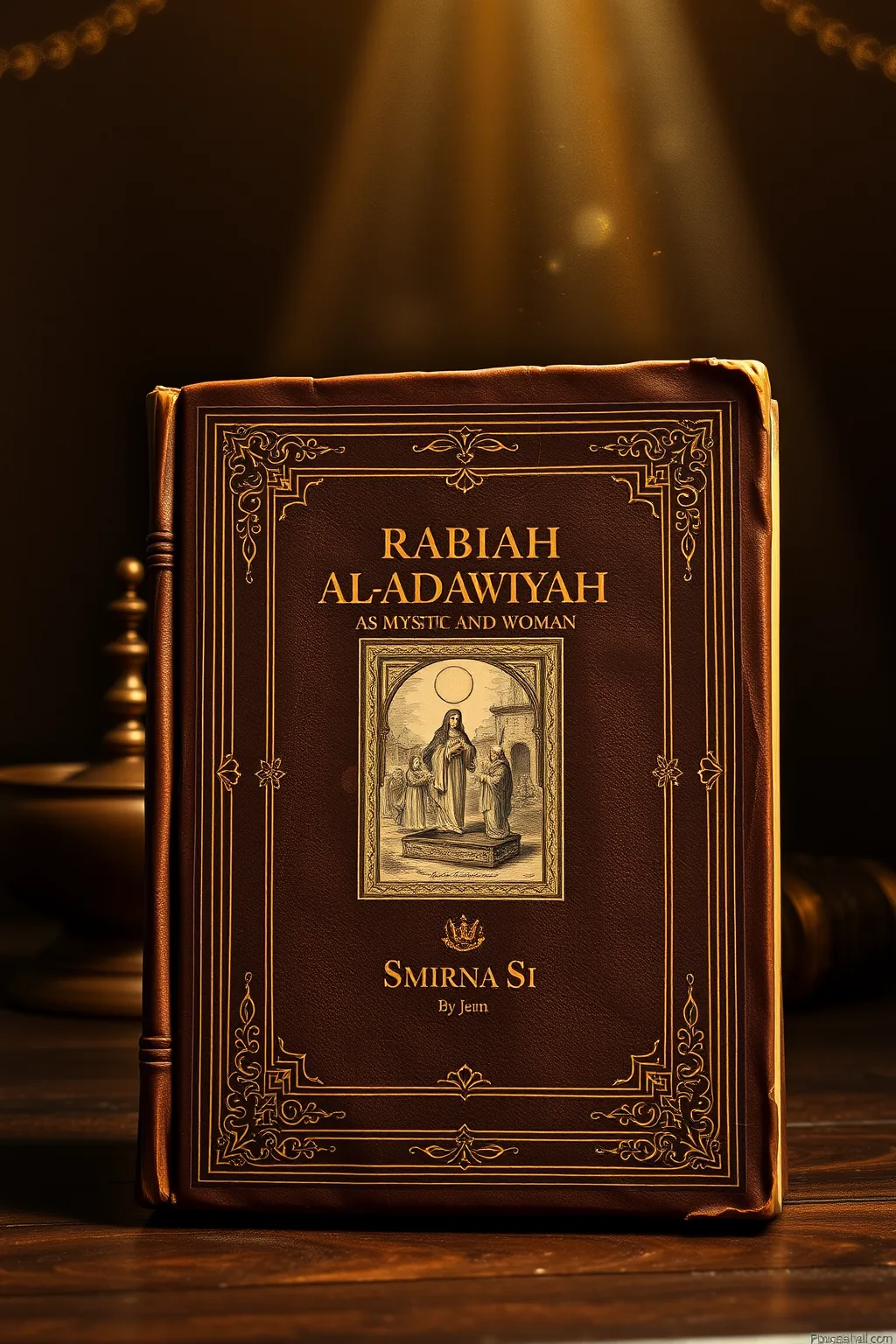
Smirna Si's 'Rabiah al-Adawiyah as Mystic Muslim and Woman' is a seminal work, offering a deeply insightful examination of one of Sufism's most radiant stars. Si meticulously dissects Rabiah's spiritual philosophy, highlighting her radical embrace of divine love as the ultimate gnosis, a concept often overlooked in broader theological discussions. The author masterfully weaves historical context with esoteric interpretation, revealing the profound symbolic language embedded within Rabiah's life and sayings. This book is indispensable for scholars of Sufism, practitioners of contemplative traditions, and anyone seeking to understand the transformative power of pure, unadulterated devotion. Si’s work illuminates the feminine principle within the mystical path, making Rabiah's wisdom accessible and profoundly relevant.
📝 Description
84
Smirna Si's 2005 study examines Rabiah al-Adawiyah's role as a mystic, Muslim, and woman.
This book approaches the life and teachings of Rabiah al-Adawiyah, a significant early figure in Islamic mysticism. Smirna Si moves beyond a simple biography to consider Rabiah as both a respected female saint and a skilled spiritual practitioner within the early Sufi tradition. The work details her path, characterized by divine love, steadfast devotion, and detachment from worldly concerns. Si uses descriptive language to depict Rabiah's inner life, where ordinary existence gives way to a heightened awareness of the Divine.
The text invites readers interested in spiritual connection to contemplate Rabiah's understanding of divine knowledge, transmitted across generations. It highlights the spiritual strength of a woman known for her intense love for God. The volume offers a particular perspective on Islamic mystical practices for those seeking a deeper spiritual awareness and the quiet insights found in the lives of spiritual exemplars.
This work situates Rabiah al-Adawiyah within the early development of Sufism, the mystical dimension of Islam. It examines her contributions to a tradition focused on direct experience of the divine, often characterized by intense love, ascetic practices, and a detachment from material life. The book explores how her teachings and example shaped the understanding of spiritual attainment within this lineage, offering a look at the personal and communal dimensions of early Islamic mysticism.
💡 Why Read This Book?
Uncover the esoteric wisdom of Rabiah al-Adawiyah, a foundational figure in Sufism. This book offers profound insights into divine love, spiritual detachment, and the feminine path within Islamic mysticism. Ideal for seekers of spiritual depth, scholars of Sufism, and practitioners looking for timeless guidance on cultivating an unshakeable connection with the Divine.
⭐ Reader Reviews
Honest opinions from readers who have explored this book.
❓ Frequently Asked Questions
Who was Rabiah al-Adawiyah?
Rabiah al-Adawiyah was an 8th-century Sufi mystic from Basra, renowned for her intense devotion to God and her revolutionary concept of loving God for God's own sake, rather than out of fear of Hell or desire for Paradise.
What is Sufism?
Sufism is the mystical dimension of Islam, focused on seeking direct, personal experience of God through practices like meditation, devotion, and asceticism. It emphasizes the purification of the heart and the attainment of spiritual enlightenment.
What makes Rabiah al-Adawiyah unique?
Rabiah was a pioneer in articulating the concept of divine love as the sole motivation for worship, moving beyond transactional faith. Her status as a prominent female mystic in early Islam also broke significant societal and religious barriers.
What esoteric themes are explored?
The book delves into themes of divine union, the annihilation of the ego (fana), the symbolic language of love and longing, and the direct apprehension of Divine Truth, all central to esoteric Sufi practice.
Is this book suitable for beginners?
Yes, while offering depth for scholars, the book is accessible to beginners interested in understanding the core tenets of Sufi mysticism and the profound spiritual legacy of Rabiah al-Adawiyah.
🔮 Key Themes & Symbolism
The Alchemy of Divine Love
This theme explores Rabiah al-Adawiyah's revolutionary articulation of divine love as the ultimate spiritual goal. It moves beyond conventional piety, looking at the transformative power of loving God solely for His essence, a concept that reshaped the trajectory of Sufism. The book examines how this pure, unadulterated love acts as an alchemical agent, purifying the soul and dissolving egoic barriers to achieve spiritual union. It reveals the esoteric understanding of love not merely as an emotion, but as a direct pathway to gnosis and divine intimacy, a potent force capable of transmuting ordinary existence into sacred experience.
The Ascetic Path and Spiritual Sovereignty
The asceticism practiced by Rabiah al-Adawiyah is presented not as self-denial, but as a profound act of spiritual liberation and sovereignty. This section unpacks how her detachment from worldly possessions and desires was a strategic choice to achieve an unshakeable inner freedom, allowing her to fully dedicate her being to the Divine Beloved. It explores the esoteric significance of renunciation as a means to strip away illusions and societal conditioning, revealing the true self that is inherently connected to the Absolute. Her life demonstrates how true power lies not in material wealth, but in the unassailable strength of a soul anchored in divine presence.
The Feminine Voice in Mystical Tradition
This theme highlights Rabiah al-Adawiyah's groundbreaking role as a prominent female mystic in the early Islamic period. It examines how her unique perspective, shaped by her experiences as a woman, infused the nascent Sufi tradition with a distinct feminine resonance. The book explores the symbolic and spiritual implications of her female embodiment in her teachings on divine love and surrender. It challenges patriarchal interpretations by showcasing a powerful, authoritative female voice at the heart of a major spiritual movement, demonstrating that the path to esoteric truth is open to all souls, regardless of gender, offering a vital counter-narrative within the historical discourse of mysticism.
💬 Memorable Quotes
Direct passages from the work, attributed to the author.
“O God, if I worship Thee for fear of Hell, burn me in Hell, and if I worship Thee in hope of Paradise, exclude me from Paradise; but if I worship Thee for Thine own sake, then withhold not Thine everlasting beauty.”
— This iconic declaration articulates Rabiah's radical purity of intention, seeking God not for reward or to avoid punishment, but for the intrinsic beauty of the Divine itself.
“I would rather be a humble servant in the path of God than a proud ruler in any other.”
— This statement emphasizes Rabiah's commitment to spiritual humility and service over worldly status, revealing her deep understanding that true greatness lies in one's connection to the Divine.
“Let me not be distracted by the love of the world, but let my longing for Thee consume me.”
— This plea underscores Rabiah's intense spiritual yearning, illustrating the constant inner struggle to maintain focus on the Divine amidst the distractions of earthly existence.
“The lover of God is not the one who prays most and fasts most, but the one whose heart is filled with the love of God.”
— Here, Rabiah shifts the focus from outward ritual to the inner state of the heart, emphasizing that true devotion is characterized by an all-encompassing love for the Divine.
💡 Key Ideas
Editorial paraphrase of the work's core concepts — not direct quotes.
My love for God has so possessed my heart that no room is left for loving the world.
This quote expresses Rabiah's complete absorption in divine love, signifying a profound spiritual transformation where worldly desires are eclipsed by the overwhelming presence of the Divine.
🌙 Esoteric Significance
Tradition
Rabiah al-Adawiyah is a foundational figure in the esoteric tradition of Sufism, the mystical path of Islam. Her teachings emphasize the direct, experiential knowledge of God (gnosis) through intense love and devotion, a core principle in Sufi practice. She is credited with articulating the concept of *'ishq ilahi* (divine love) as the highest form of worship, moving beyond purely legalistic or transactional faith. Her life exemplifies the Sufi ideal of *fana* (annihilation of the ego) in the Divine Beloved, a state of profound spiritual union achieved through purification of the heart and detachment from the self.
Symbolism
Rabiah's life is rich with symbolic meaning for esoteric practitioners. Her radical detachment from worldly possessions symbolizes the shedding of egoic attachments, a crucial step in spiritual liberation. Her unwavering focus on God, even in the face of hardship, represents the steadfastness of the *murid* (seeker) on the path. The imagery of the lover and the Beloved, central to her discourse, serves as a potent metaphor for the soul's yearning for union with the Divine. Her prayers and sayings are often interpreted as coded messages guiding initiates through the stages of spiritual ascent and the dissolution of illusion.
Modern Relevance
In an era often characterized by spiritual superficiality and materialistic pursuits, Rabiah al-Adawiyah's message of pure, selfless divine love offers a profound counterpoint. Her emphasis on inner transformation and direct experiential connection with the Divine remains highly relevant for contemporary seekers across various spiritual traditions. Her life provides a timeless model for cultivating spiritual resilience, finding sovereignty in detachment, and understanding that true fulfillment lies not in external validation but in an unshakeable internal relationship with the Absolute. Her legacy continues to inspire those who seek a deeper, more authentic spiritual life beyond dogma and ritual.
👥 Who Should Read This Book
This clear work is essential for anyone drawn to the profound depths of spiritual wisdom. **Seekers** of divine connection will find Rabiah's message of pure love and devotion deeply resonant. **Scholars** of religious history and comparative mysticism will appreciate the meticulous research and insightful analysis of early Sufi thought. **Practitioners** of contemplative disciplines, regardless of tradition, will discover timeless principles for spiritual growth and inner transformation. Beginners to Islamic mysticism will find an accessible yet profound introduction to one of its most revered figures, while seasoned practitioners will uncover new layers of meaning in Rabiah's enduring legacy.
📜 Historical Context
Rabiah al-Adawiyah flourished in the 8th century CE in Basra, a period of significant intellectual and spiritual development within the nascent Islamic world. This era saw the consolidation of Islamic jurisprudence and theology, but also the emergence of diverse ascetic and mystical movements that would eventually coalesce into Sufism. Rabiah emerged during a time when early Islamic society was grappling with questions of faith, practice, and the nature of God. Her radical emphasis on selfless divine love stood in contrast to more legalistic or fear-based approaches to religion prevalent at the time. She was a contemporary of other ascetics and mystics, but her unique articulation of love as the central tenet of the spiritual path set her apart and laid crucial groundwork for the later development of Sufi philosophy. Her life and teachings provided a powerful example of spiritual devotion and intellectual independence, particularly for women, in a society where such public spiritual leadership was rare.
📔 Journal Prompts
Reflect on Rabiah's concept of loving God for His own sake. What does this purity of intention mean for your own spiritual practice?
How can the principle of detachment from worldly possessions, as exemplified by Rabiah, be applied in a modern context without advocating for extreme asceticism?
Consider Rabiah's role as a female mystic in a patriarchal society. What lessons can be drawn about the expression of spiritual authority and feminine spiritual wisdom today?
Explore the idea of 'divine longing' in your own life. What are the objects of your deepest desires, and how do they align with or distract from your spiritual aspirations?
Rabiah's life suggests that true spiritual wealth lies in one's relationship with the Divine. How can you cultivate this inner wealth and find contentment independent of external circumstances?
🗂️ Glossary
Sufism
The mystical dimension of Islam, focused on direct experiential knowledge of God through spiritual practices, purification of the heart, and intense devotion.
Gnosis
Direct, intuitive knowledge of spiritual truths, often attained through mystical experience and inner contemplation.
Fana
A Sufi concept meaning annihilation or dissolution of the ego or self in the Divine, leading to spiritual union.
Murid
A spiritual disciple or seeker in Sufism who has pledged allegiance to a shaykh (spiritual guide).
Tawhid
The absolute oneness and uniqueness of God, a central tenet of Islam and a core concept in Sufi metaphysics.
This book appears in 2 collections
🔮 Readers Also Liked
Browse all →






More by Smirna Si
All books →


From the “Christian Mysticism” Collection
View all →







More Free Mysticism & Contemplation Books
View all →