Die Legende des Baalschem

 74
74

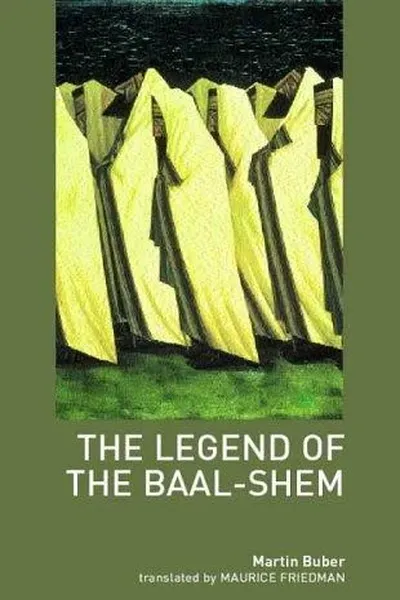
Die Legende des Baalschem
Buber’s 1922 presentation of the Baal Shem Tov’s legends offers a unique window into the soul of Hasidism, filtered through Buber’s own philosophical development. The strength of this work lies in its ability to imbue ancient tales with a palpable spiritual urgency, making the Baal Shem Tov’s teachings accessible without sacrificing their depth. Buber’s prose, even in translation, carries a certain gravitas. However, the primary limitation for the contemporary reader might be the scarcity of direct, verifiable quotes from the Baal Shem Tov himself, as Buber’s interpretation often takes precedence. The section detailing the Tzaddik’s role as a spiritual conduit, while illuminating, relies heavily on Buber's conceptual framework. This book serves best as an introduction to Hasidic thought as interpreted by a towering 20th-century philosopher.
📝 Description
74
### What It Is Martin Buber's "Die Legende des Baalschem," first published in 1922, is not a simple retelling but a profound exploration of Hasidic legend. It presents the teachings and parables of Rabbi Israel ben Eliezer, the Baal Shem Tov, through Buber's unique interpretative lens. The work seeks to convey the spiritual essence and ethical imperatives embedded within these narratives, rather than merely recounting historical events. It functions as a bridge between ancient mystical wisdom and the modern seeker.
### Who It's For This collection is suited for readers interested in Jewish mysticism, particularly the Chassidic movement. It appeals to those who appreciate philosophical depth and literary artistry in spiritual texts. Individuals seeking to understand the foundational stories and teachings that shaped a significant branch of Jewish spirituality will find value here. It is also for scholars of religion and philosophy examining the development of mystical thought in the early 20th century.
### Historical Context "Die Legende des Baalschem" emerged in the vibrant intellectual milieu of post-World War I Europe. Buber, a prominent voice in Jewish philosophy and Zionism, was deeply engaged with Eastern European Jewish folklore and mysticism. This period saw a resurgence of interest in pre-modern spiritual traditions as a counterpoint to secularization and rationalism. Buber's work stood alongside contemporaneous explorations of mysticism by figures like Gershom Scholem, though Buber focused more on the existential and dialogical aspects of faith.
### Key Concepts The book centers on the concept of the Baal Shem Tov, a charismatic spiritual leader whose life and teachings embody a direct, immanent experience of the divine. Central themes include the sanctification of everyday life, the importance of joy in worship, the role of the Tzaddik (righteous leader) as a mediator, and the interconnectedness of all creation. Buber emphasizes the dialogical relationship between God and humanity, a concept that would become central to his later philosophy.
💡 Why Read This Book?
• Gain insight into the foundational legends of the Hasidic movement, understanding the historical figure of Rabbi Israel ben Eliezer (Baal Shem Tov) and his core teachings as presented by Buber. • Explore the concept of the Tzaddik, learning how this spiritual leader functions as a mediator and guide within the Hasidic worldview, a central tenet of the tradition. • Appreciate Buber's distinct philosophical approach to mysticism, recognizing how his 1922 work frames Jewish legend through a lens of existential dialogue and the sanctification of daily life.
⭐ Reader Reviews
Honest opinions from readers who have explored this book.
❓ Frequently Asked Questions
What is the original publication year of 'Die Legende des Baalschem'?
'Die Legende des Baalschem' was first published in 1922, a significant year for spiritual and philosophical literature, reflecting Martin Buber's engagement with Hasidic traditions.
Who was the Baal Shem Tov mentioned in Martin Buber's book?
The Baal Shem Tov, whose legends are explored by Buber, was Rabbi Israel ben Eliezer (c. 1698–1760), a mystical healer and preacher who founded the Hasidic movement in Eastern Europe.
What is the primary focus of Martin Buber's 'Die Legende des Baalschem'?
The book focuses on presenting and interpreting the spiritual teachings and parables attributed to the Baal Shem Tov, aiming to convey the essence of Hasidic spirituality.
Is this book a historical account or a philosophical interpretation?
It is primarily a philosophical interpretation of Hasidic legends by Martin Buber. While based on historical figures and traditions, the work emphasizes Buber's unique understanding and presentation of these narratives.
What esoteric tradition does this book relate to?
The book is deeply rooted in Jewish mysticism, specifically the Chassidic movement which emerged in 18th-century Eastern Europe, emphasizing ecstatic worship and divine immanence.
Does the book contain direct teachings of the Baal Shem Tov?
The book presents legends and interpretations attributed to the Baal Shem Tov. Buber's own philosophical perspective significantly shapes the presentation of these teachings.
🔮 Key Themes & Symbolism
The Tzaddik Figure
The concept of the Tzaddik, or righteous leader, is central to "Die Legende des Baalschem." Buber presents the Baal Shem Tov not just as a historical figure but as an archetype of spiritual leadership. The Tzaddik acts as a conduit between the divine and the mundane, capable of interceding for the community and embodying a higher spiritual awareness. The book explores how the Tzaddik’s presence and teachings elevate the everyday lives of his followers, demonstrating a direct path to spiritual connection through charismatic guidance and communal faith.
Sanctification of the Everyday
A core tenet explored in Buber's interpretation is the idea that holiness is not confined to ritual or specific sacred times but can be found in all aspects of daily life. The legends of the Baal Shem Tov emphasize the importance of joy, sincere prayer, and the sanctification of common actions, such as eating or working. Buber highlights how the Hasidic path, as exemplified by the Baal Shem Tov, teaches that the divine is immanent in the world, accessible through simple acts of devotion and a conscious effort to infuse ordinary moments with spiritual meaning.
Divine Immanence and Joy
Buber's rendition of the Baal Shem Tov's teachings stresses the pervasive presence of God throughout creation. This doctrine of divine immanence is intrinsically linked to the concept of joy as a vital component of worship and spiritual life. The legends often depict the Baal Shem Tov and his followers expressing profound happiness in their connection to God, even amidst hardship. This emphasis on ecstatic joy serves as a powerful counterpoint to more somber or ascetic spiritual traditions, offering a path to the divine characterized by lightness and spiritual effervescence.
Dialogical Spirituality
While fully developed in Buber's later works, the seeds of his dialogical philosophy are present in his engagement with these legends. The relationship between the Baal Shem Tov and his disciples, and more broadly between God and humanity, is portrayed as one of mutual encounter and response. The book implicitly suggests that true spiritual understanding arises not from abstract dogma but from genuine, lived relationships. This interpretive framework highlights how the Baal Shem Tov's teachings fostered a sense of direct, personal connection with the divine, emphasizing active participation rather than passive observance.
💬 Memorable Quotes
“The Tzaddik is the one who knows how to turn the world towards God.”
— This paraphrased concept highlights the role of the spiritual leader, the Tzaddik, as an intermediary. It suggests that their wisdom and actions are instrumental in guiding others to a spiritual path and fostering a connection with the divine.
“Joy is the key that opens all doors to God.”
— This interpretation emphasizes the profound importance of happiness and spiritual elation within Hasidic practice as presented by Buber. It posits that genuine joy is not merely an emotional state but a crucial element for accessing a deeper connection with the divine.
“Even the smallest action, done with intention, can sanctify.”
— This concept underscores the Hasidic belief in the sacredness of ordinary life. It suggests that through conscious devotion and mindfulness, everyday activities and acts can become imbued with spiritual significance and holiness.
“God is present in every corner of the world.”
— This paraphrased idea reflects the doctrine of divine immanence central to the Baal Shem Tov's teachings. It conveys the understanding that the divine is not distant but intimately woven into the fabric of all existence.
“The Baal Shem Tov taught through stories that touched the heart.”
— This interpretation focuses on the pedagogical method of the Baal Shem Tov as depicted by Buber. It highlights the power of narrative and parable in conveying spiritual truths in a way that resonates emotionally and ethically with the listener.
🌙 Esoteric Significance
Tradition
This work is firmly rooted in the Chassidic tradition, a branch of Jewish mysticism that flourished in Eastern Europe from the 18th century onwards. Buber's interpretation, however, positions the Baal Shem Tov's teachings within a broader mystical framework, emphasizing themes of divine immanence and the ecstatic experience of God, which resonate with broader esoteric currents. While distinctively Jewish, his focus on the dialogical relationship between the human and divine touches upon universal mystical concerns explored in various traditions.
Symbolism
Key symbols include the 'Tzaddik,' representing the spiritual leader who bridges the earthly and divine realms, and 'joy' (simcha), symbolizing the ecstatic state of divine connection and a vital aspect of worship. The 'everyday' itself becomes symbolic, representing the potential for finding the sacred within the mundane. Buber interprets these symbols not as static doctrines but as dynamic expressions of a lived, immanent spirituality.
Modern Relevance
Buber's work on the Baal Shem Tov continues to influence contemporary thinkers in Jewish spirituality and beyond. His emphasis on dialogue, the sanctification of everyday life, and the importance of embodied spiritual experience informs modern contemplative practices and pastoral theology. Scholars and practitioners interested in the intersection of existentialism and mysticism, or those seeking accessible introductions to Hasidic thought, frequently engage with Buber's interpretations.
👥 Who Should Read This Book
• Students of Jewish mysticism: Those seeking to understand the origins and core teachings of the Hasidic movement, particularly the foundational role of Rabbi Israel ben Eliezer (Baal Shem Tov). • Philosophy and religion scholars: Individuals interested in Martin Buber's intellectual development and his unique philosophical approach to interpreting religious traditions and mystical texts. • Seekers of spiritual wisdom: Readers looking for accessible narratives that explore themes of divine immanence, the role of spiritual leaders, and the integration of spirituality into daily life.
📜 Historical Context
Martin Buber's "Die Legende des Baalschem," published in 1922, emerged during a period of intense intellectual and spiritual ferment in post-World War I Europe. Buber, already a significant figure in German-Jewish thought and a proponent of Hasidism, was part of a generation grappling with modernity's challenges to traditional faith. This era saw scholars like Gershom Scholem pioneering the academic study of Kabbalah and Jewish mysticism, often through a critical, historical lens. Buber’s approach, however, was more existential and interpretative, seeking to draw out the living spirit of Hasidic teachings for contemporary relevance. His work offered an alternative to purely rationalist or assimilationist Jewish thought, emphasizing the power of myth, legend, and direct spiritual experience. The reception of such works often navigated between academic interest and a wider spiritual seeking.
📔 Journal Prompts
The Tzaddik's role as a spiritual guide, as presented in Buber's legends.
The concept of sanctifying the everyday through intentional actions.
The expression of divine immanence and its connection to joy.
Buber's interpretation of the Baal Shem Tov's teachings.
The power of stories to convey spiritual truths, as seen in the Baal Shem Tov's parables.
🗂️ Glossary
Baal Shem Tov
Literally 'Master of the Good Name,' referring to Rabbi Israel ben Eliezer (c. 1698–1760), the founder of the Hasidic movement in Eastern Europe, known for his mystical teachings and charismatic leadership.
Tzaddik
A righteous person in Jewish tradition, particularly in Hasidism, who serves as a spiritual leader and intermediary between God and the community, often possessing extraordinary spiritual insight.
Hasidism
A spiritual movement within Orthodox Judaism founded in 18th-century Eastern Europe by the Baal Shem Tov, emphasizing mystical experience, joy in worship, and the immanence of God.
Immanence
The philosophical or theological concept that the divine is present within the material world and all of creation, rather than being transcendent or entirely separate from it.
Sanctification
The act or process of making something holy or sacred. In Hasidism, this often involves infusing everyday actions and objects with divine intention and awareness.
Parable
A simple story used to illustrate a moral or spiritual lesson, often employed by spiritual leaders like the Baal Shem Tov to convey complex ideas in an accessible manner.
Mitzvah
A commandment or religious duty in Judaism. In Hasidic thought, performing mitzvot with joy and intention is a key path to spiritual connection.