The Rituals Of Black Magic
 61
61

The Rituals Of Black Magic

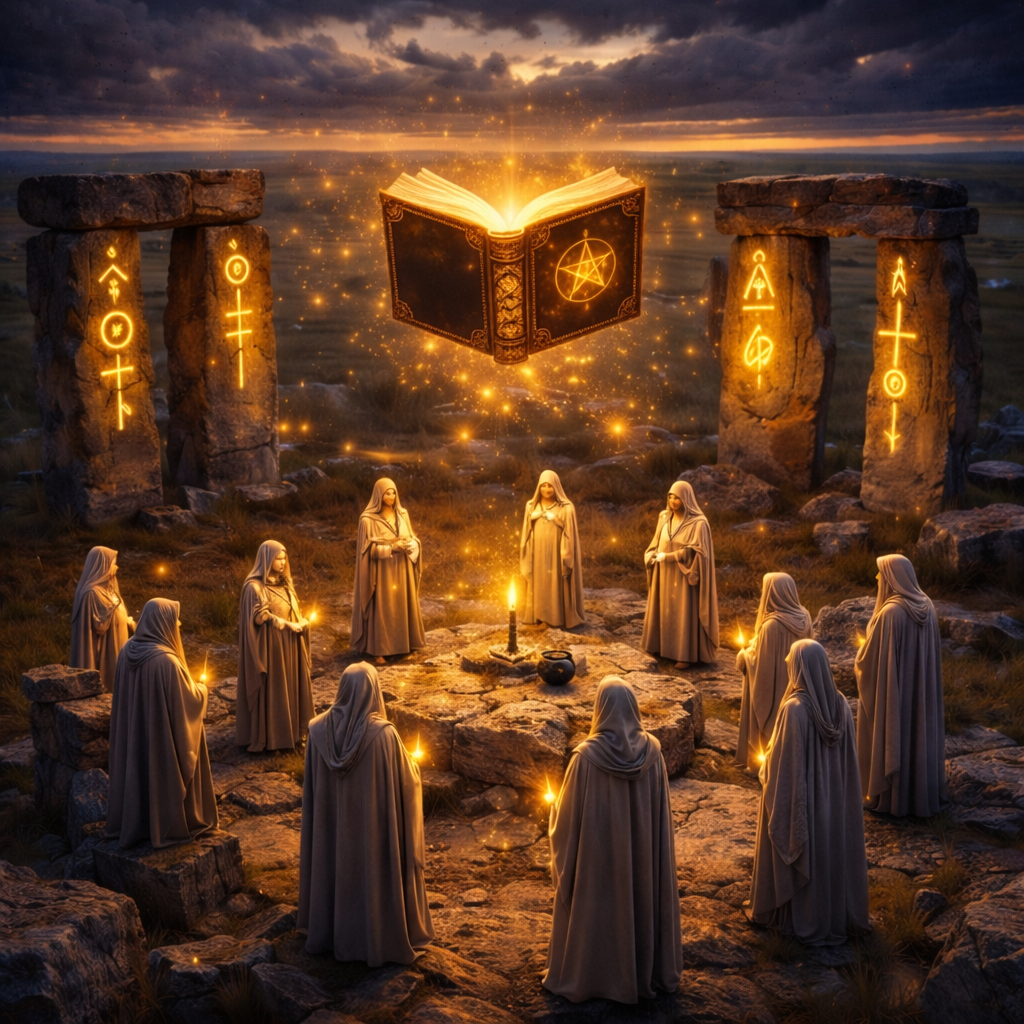

Arthur Edward Waite’s 'The Rituals of Black Magic' stands as a monumental testament to the enduring allure and complex nature of occultism. Waite masterfully dissects the philosophical and practical dimensions of ceremonial magic, offering an authoritative yet accessible exploration. He eschews sensationalism, instead focusing on the profound symbolic language and spiritual underpinnings of these ancient practices. This work is essential for serious practitioners and scholars alike, providing a robust framework for understanding the historical development and inherent complexities of black magic, not as mere superstition, but as a potent path of spiritual transformation and will-cultivation. Its strength lies in Waite's scholarly rigor and his ability to convey the gravitas of the subject matter.
📝 Description
61
Embark on a profound journey into the shadowed heart of arcane practices with Arthur Edward Waite's seminal work, 'The Rituals of Black Magic.' This meticulously researched tome delves into the esoteric currents that lie beneath the veneer of the mundane, illuminating the ancient and often misunderstood world of ceremonial magic. Waite, a scholar of unparalleled depth, guides the reader through a labyrinth of forgotten rites, potent symbolism, and the very essence of occult forces. The atmosphere within these pages is one of hushed reverence, charged with the palpable energy of ancient wisdom waiting to be rediscovered. This book is not for the faint of heart, but for the dedicated seeker, the earnest student of the hidden arts, and the philosopher yearning to comprehend the deeper mechanics of reality. It offers a potent lens through which to view the interplay between the human will and the cosmic powers, revealing the intricate tapestry of spiritual and material existence. Discover the philosophical underpinnings of ritualistic invocation, the psychology of altered states, and the ethical considerations that govern the manipulation of unseen energies. 'The Rituals of Black Magic' is an indispensable cornerstone for any serious exploration of Western esotericism, a beacon illuminating the path for those who dare to tread beyond the ordinary.
✍️ Author

Arthur Edward Waite
Arthur Edward Waite (2 October 1857 – 19 May 1942) was a British poet and scholarly mystic who wrote extensively on the occult and Western esotericism. He was the co-creator of the Rider–Waite Tarot (also called the Rider–Waite–Smith or Waite–Smith deck).
💡 Why Read This Book?
Uncover the veiled truths behind potent ceremonial rites and understand the philosophical underpinnings of occult practices. 'The Rituals of Black Magic' is essential for scholars seeking historical accuracy, practitioners aiming for deeper comprehension of ritual efficacy, and seekers of hidden knowledge who wish to explore the profound depths of will-based spiritual work.
⭐ Reader Reviews
Honest opinions from readers who have explored this book.
❓ Frequently Asked Questions
What distinguishes 'black magic' as presented by Waite?
Waite distinguishes 'black magic' not by its malevolent intent, but by its focus on the exercise of will and the manipulation of forces for specific, often earthly, objectives, contrasting it with purely spiritual or white magic.
Is this book a practical guide for performing rituals?
While rich in detail, Waite's work is primarily a scholarly and philosophical exposition. It provides theoretical understanding and historical context rather than a step-by-step manual for novice practitioners.
What is the role of symbolism in Waite's exploration?
Symbolism is paramount. Waite argues that rituals are replete with symbolic language, acting as keys to unlocking deeper understanding of cosmic laws and the human psyche's interaction with them.
Who is the ideal reader for this book?
The ideal reader is a mature individual with a serious interest in occult history, comparative religion, or esoteric philosophy, possessing the intellectual curiosity to engage with complex metaphysical concepts.
Does Waite endorse or condemn black magic?
Waite adopts a neutral, scholarly stance, presenting the subject matter for intellectual understanding and historical context rather than offering personal endorsement or condemnation.
🔮 Key Themes & Symbolism
The Power of Will and Intent
Waite meticulously examines the central role of focused human will in the execution of potent magical operations. He explores how directed intent acts as the crucible where desire is forged into manifestation, emphasizing that true magic is not merely about external forces but about the disciplined projection of one's inner power. This theme delves into the psychological and spiritual mechanics of willpower, its cultivation through ritual, and its capacity to shape both the inner and outer worlds. It underscores that the efficacy of any ritual hinges on the practitioner's mental clarity, emotional control, and unwavering conviction in their purpose, offering a pathway to self-mastery.
Symbolism as a Language of the Unseen
This theme illuminates how symbols serve as the fundamental language through which occult knowledge is conveyed and magical operations are conducted. Waite dissects the rich tapestry of symbols found in ancient texts and rituals, revealing their multi-layered meanings that transcend literal interpretation. From celestial bodies to alchemical elements and archetypal figures, each symbol acts as a key, unlocking specific energetic frequencies and conceptual understandings. The book demonstrates that mastering this symbolic lexicon is crucial for comprehending the subtle currents of existence and for effectively communicating with the deeper strata of consciousness and the spiritual realms.
The Ethics and Philosophy of Ritual
Beyond the mechanics, Waite engages with the profound philosophical and ethical considerations surrounding ritualistic practices. He scrutinizes the motivations behind magical pursuits, differentiating between those that seek personal aggrandizement and those that align with broader spiritual evolution. The exploration delves into the inherent responsibilities that accompany the wielding of occult forces, the potential consequences of misuse, and the importance of aligning one's actions with universal laws. This theme encourages a contemplative approach, urging practitioners to consider the karmic implications and the ultimate purpose of their magical endeavors, fostering a mature and spiritually grounded perspective on the Great Work.
💬 Memorable Quotes
“The ritual is the vehicle of the will.”
— This succinctly captures the essence of magic: ritual acts as the structured means by which a focused intention is enacted and brought into reality.
“True power lies in understanding, not mere force.”
— Emphasizes that effective magic stems from deep knowledge and comprehension of cosmic principles, rather than brute application of energy.
“Symbolism is the key to the hidden door.”
— Highlights the crucial role of symbolic language in unlocking esoteric truths and accessing concealed aspects of reality.
“The universe responds to focused intent.”
— Suggests that the cosmos is not indifferent but actively receptive to clearly defined and powerfully projected desires and purposes.
“Know thyself, and know the forces you invoke.”
— A foundational principle, stressing self-awareness as a prerequisite for safely and effectively engaging with occult energies and entities.
🌙 Esoteric Significance
Tradition
Waite's work is deeply rooted in the Western Esoteric Tradition, drawing heavily from Hermeticism, Kabbalah, ceremonial magic, and alchemical symbolism. He navigates the complex interplay of these streams, presenting a cohesive, albeit dense, exploration of magical theory and practice. His approach emphasizes the spiritual and philosophical underpinnings, positioning magic not as mere trickery, but as a profound path of self-transformation and communion with divine principles.
Symbolism
The book is a veritable lexicon of esoteric symbolism. Waite meticulously deciphers the visual and conceptual language of rituals, exploring the meanings embedded in sigils, geometrical patterns, planetary correspondences, and archetypal imagery. These symbols are presented as keys to understanding the hidden architecture of the cosmos and the intricate relationship between the microcosm (human) and the macrocosm (universe), enabling practitioners to engage with higher forces on their own terms.
Modern Relevance
In an age often characterized by superficiality and disconnection, Waite's 'The Rituals of Black Magic' offers a compelling invitation to explore deeper layers of reality and personal potential. Its emphasis on focused will, symbolic understanding, and ethical practice remains profoundly relevant for modern seekers. The book provides a historical anchor for contemporary magical traditions and serves as a critical resource for those interested in the psychological and spiritual dimensions of ritual, encouraging a conscious and responsible engagement with the arcane.
👥 Who Should Read This Book
This seminal work is indispensable for a discerning audience. Scholars of comparative religion, occult history, and esoteric philosophy will find Waite's meticulous research and insightful analysis invaluable. Serious practitioners of ceremonial magic will benefit from the deep dive into ritualistic theory and symbolism, gaining a richer understanding of their craft. Seekers of hidden knowledge and those interested in the philosophical underpinnings of spiritual power will discover a profound exploration of human potential and cosmic interaction. While not a beginner's primer, its depth and scholarly approach make it a rewarding, albeit challenging, read for anyone committed to a serious study of the occult.
📜 Historical Context
Written during a period of fervent interest in spiritualism and occultism in late Victorian and Edwardian England, Arthur Edward Waite's 'The Rituals of Black Magic' emerged from a milieu steeped in esoteric societies like the Hermetic Order of the Golden Dawn. This era saw a resurgence of scholarly inquiry into ancient mystery traditions, comparative mythology, and the perceived spiritual dimensions of existence, often as a counterpoint to burgeoning industrialization and scientific materialism. Waite, a prolific author and scholar, was at the forefront of this movement, meticulously documenting and analyzing a vast array of occult practices and beliefs. His work reflects the intellectual currents of the time, blending rigorous historical research with a deep, personal engagement with the metaphysical. The book's publication contributed significantly to the popular and academic understanding of ceremonial magic, offering a more nuanced and less sensationalized perspective than many contemporary accounts.
📔 Journal Prompts
Reflect on a personal ritual or ceremony you have experienced. How did the principles of intent and symbolism play a role?
Explore a symbol that holds personal significance for you. What are its layers of meaning, and how does it connect you to a deeper aspect of yourself or the universe?
Consider the concept of 'willpower' in your daily life. How could a more disciplined and focused will enhance your personal or spiritual goals?
What ethical considerations arise when seeking to influence external circumstances through focused intent?
Imagine a modern ritual designed to foster a specific quality, such as patience or creativity. What symbols and actions would you incorporate, and why?
🗂️ Glossary
Ceremonial Magic
A formalized system of magical practice involving specific rites, invocations, and the use of symbolic tools and regalia to achieve desired spiritual or material effects.
Esotericism
A broad category of mystical, spiritual, or philosophical traditions that propose hidden knowledge or wisdom accessible only to a select few, often involving symbolic interpretation and inner transformation.
Invocation
The act of calling upon a spiritual entity, deity, or force, often with the intention of establishing communication or partnership, typically for guidance or assistance.
Symbolism
The use of objects, images, or concepts to represent abstract ideas or deeper meanings, serving as a language for conveying complex spiritual or occult principles.
The Great Work
In esoteric traditions, particularly alchemy and ceremonial magic, this refers to the ultimate process of spiritual transformation, purification, and attainment of higher consciousness or enlightenment.