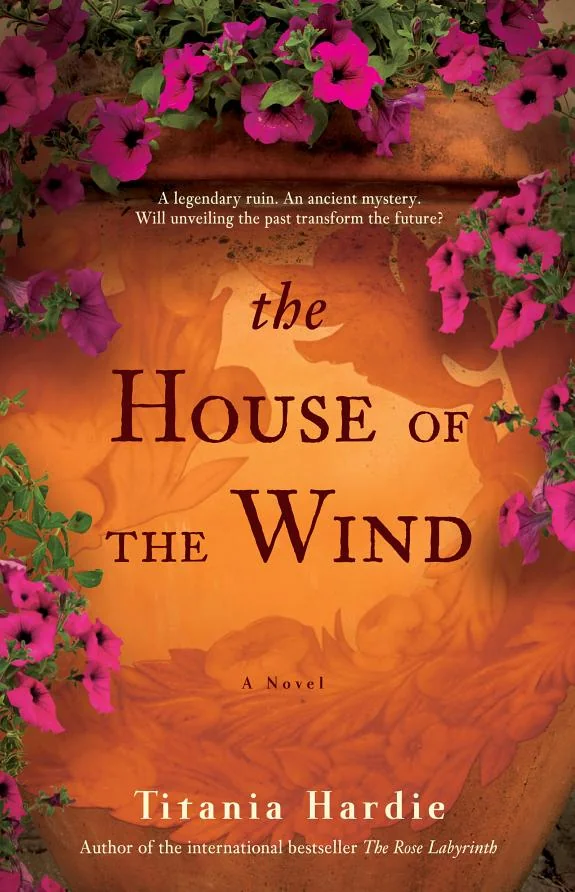
The House of the Wind
 73
73

The House of the Wind
Titania Hardie's "The House of the Wind" attempts to marry the quiet ache of grief with the spectral resonance of an ancient Italian dwelling. The premise, a woman finding solace and confronting her sorrow through an encounter with a haunted house, is compelling. Hardie excels at evoking the atmosphere of Tuscany and the palpable sense of history within the villa walls, particularly in descriptions of the crumbling stone and echoing corridors. However, the narrative occasionally falters in balancing its supernatural elements with the love story. The pacing can feel uneven, with moments of genuine spectral tension sometimes diffused by lengthy introspective passages. A particularly strong moment involves the protagonist's interaction with an antique mirror, which seems to reflect not just her image but fragmented echoes of past occupants, offering a tangible glimpse into the house's spectral layer. Despite its occasional narrative stumbles, the novel offers a sensitive portrayal of healing. "The House of the Wind" is a mood piece that offers a quiet, if sometimes slow, exploration of loss and lingering spirits.
📝 Description
73
Titania Hardie's 1998 novel, The House of the Wind, centers on a woman confronting grief within a haunted Italian villa.
Set in a medieval Italian villa, the narrative follows a woman as she grapples with her past and the lingering energies of the house. The story weaves together elements of romance and the spectral, focusing on emotional healing through encounters with spirits. It is suited for readers who appreciate gothic atmosphere and psychological depth.
Those interested in narratives about overcoming loss, the enduring power of place, and the subtle presence of the past will find resonance. The book appeals to fans of character-driven stories with a touch of the uncanny, offering a contemplative rather than action-packed supernatural experience. The novel engages with the idea of 'place memory,' where locations absorb emotional imprints from past events.
The novel is set in a fourteenth-century Tuscan house, a period with deep roots in folklore regarding haunted places and residual energy. Hardie's work taps into a long tradition of literature that uses the supernatural as a metaphor for unresolved emotional states. This theme is present from the Gothic novels of the 18th century to contemporary ghost stories. The book engages with 'place memory,' where locations absorb emotional imprints from past events, and explores how these energies can influence sensitive individuals.
💡 Why Read This Book?
• Gain insight into how 'place memory' functions as a narrative device, particularly how the historical setting of the fourteenth-century Tuscan villa actively shapes the protagonist's emotional journey. • Experience a unique approach to overcoming grief by engaging with spectral phenomena, offering a symbolic framework for confronting unresolved sorrow. • Understand the subtle interplay between love, loss, and the supernatural, as depicted through the protagonist's evolving relationship with both the house and its unseen inhabitants.
⭐ Reader Reviews
Honest opinions from readers who have explored this book.
❓ Frequently Asked Questions
When was "The House of the Wind" first published?
Titania Hardie's "The House of the Wind" was first published on March 6, 2012, marking its entry into contemporary literature exploring themes of grief and the supernatural.
What is the primary setting for "The House of the Wind"?
The novel is primarily set in a haunted fourteenth-century house located in Tuscany, Italy, providing a rich historical and atmospheric backdrop for the story.
Does "The House of the Wind" focus on intense horror or psychological drama?
The book leans more towards psychological drama and atmospheric haunting rather than graphic horror, focusing on the protagonist's emotional journey and the subtle presence of the supernatural.
What themes are explored in Titania Hardie's novel?
Key themes include overcoming grief, the influence of past events on the present, the concept of place memory, and the redemptive power of confronting spectral presences.
Is "The House of the Wind" considered a ghost story?
Yes, it is often categorized as a ghost story, but one that emphasizes emotional healing and love rather than outright terror, using the spectral elements to explore the protagonist's inner landscape.
What is the significance of the Tuscan setting in the book?
The Tuscan setting, specifically the ancient fourteenth-century house, serves as a character in itself, embodying history, memory, and the lingering emotional imprints that drive the plot.
🔮 Key Themes & Symbolism
Grief and Spectral Echoes
The novel posits that profound grief can create a psychic resonance, drawing individuals to places imbued with similar emotional residue. The protagonist's journey through the fourteenth-century Tuscan villa becomes a mirror for her internal state, suggesting that confronting the spectral past is integral to processing personal loss. This intertwining of personal sorrow with the house's history highlights an esoteric view where emotional energy persists and interacts with the living.
Place Memory and Haunting
Hardie explores the concept of 'place memory,' wherein locations absorb the psychic imprints of significant events and emotions. The Tuscan house, with its centuries of history, acts as a repository for these energies. The haunting is not merely a supernatural event but a manifestation of unresolved historical narratives and emotional currents that the protagonist must engage with to find peace, aligning with esoteric traditions that view sacred or charged spaces as active entities.
Love as a Transcendent Force
Beyond a conventional romance, the book presents love as a force capable of bridging dimensions – the living and the spectral, the past and the present. The protagonist's capacity for love, both for those she has lost and for the potential she finds within the haunted house, acts as a catalyst for healing. This perspective aligns with esoteric philosophies that see love as a fundamental cosmic energy that can transmute suffering and connect disparate areas of existence.
The House as a Psychic Vessel
The fourteenth-century Tuscan villa functions as more than just a setting; it is depicted as a psychic vessel holding collective memories and emotional imprints. Its ancient stones and architecture are imbued with the weight of time and human experience. The house's 'haunting' is presented as a dialogue with these stored energies, suggesting that understanding and integrating the house's history is a crucial step in the protagonist's own psychological and spiritual renewal.
💬 Memorable Quotes
Direct passages from the work, attributed to the author.
“Grief paints the walls with shadows.”
— This interpretation highlights how the protagonist's sorrow manifests visually and sensorially within the haunted house. The spectral phenomena are presented as extensions of her internal emotional landscape, blurring the lines between subjective experience and objective haunting.
“Some love stories are written in dust and echoes.”
— This concept speaks to the novel's blending of romance with the supernatural. It suggests that enduring love can transcend the physical realm, leaving its imprint on places and persisting through time, even manifesting in spectral or atmospheric ways.
“The wind carries whispers of what was.”
— This metaphorical statement refers to the titular 'House of the Wind' and its connection to the past. The natural elements are depicted as conduits for historical memory and spectral presences, reinforcing the idea that the environment holds ancient secrets.
💡 Key Ideas
Editorial paraphrase of the work's core concepts — not direct quotes.
The stones remember more than we do.
This paraphrased sentiment captures the book's exploration of 'place memory,' suggesting that inanimate structures, particularly ancient ones like the Tuscan villa, retain traces of past events and emotions long after human occupants have departed.
To heal, one must walk through the echoes.
This paraphrased idea underscores the narrative's central theme: that emotional recovery, particularly from deep grief, requires direct engagement with the past and its lingering psychic imprints, symbolized by the spectral occurrences within the house.
🌙 Esoteric Significance
Tradition
While not strictly adhering to a single esoteric lineage, "The House of the Wind" draws from themes prevalent in Western esotericism, particularly those concerning psychic imprints, spiritual healing, and the interconnectedness of consciousness and environment. It echoes Neoplatonic ideas of the soul's journey and the lingering influence of past lives or events on the present, framing the haunted house as a locus for spiritual integration.
Symbolism
The fourteenth-century Tuscan house itself is a primary symbol, representing accumulated history, memory, and unresolved emotional energy. The 'wind' in the title symbolizes the unseen forces and spectral presences that permeate the space, carrying whispers of the past. Light and shadow, particularly as they interact with antique objects like mirrors, symbolize the revelation of hidden truths and the confrontation with one's inner and outer specters.
Modern Relevance
Contemporary practitioners of somatic experiencing and ecopsychology might find parallels in the novel's depiction of how environments hold trauma and how healing involves attuning to these subtle energies. The book's exploration of 'place memory' also appeals to modern discussions in paranormal investigation and ghost studies that move beyond mere specter hunting to consider the energetic and psychological residue within locations.
👥 Who Should Read This Book
• Readers interested in psychological gothic fiction who appreciate atmospheric settings and character-driven narratives exploring loss. • Individuals exploring esoteric concepts of 'place memory' and how environments can retain psychic imprints from historical events. • Those seeking literary fiction that uses supernatural elements as a metaphor for emotional healing and the complex nature of love and grief.
📜 Historical Context
Published in 2012, Titania Hardie's "The House of the Wind" emerged during a period of renewed interest in gothic literature and supernatural fiction that explored psychological depth. While not directly engaging with specific intellectual movements like the occult revival of the late 19th century (e.g., figures like Madame Blavatsky or the Hermetic Order of the Golden Dawn), Hardie's work taps into a lineage of ghost stories that use spectral phenomena to explore human emotion, a tradition exemplified by authors such as M.R. James or Shirley Jackson. The novel's focus on 'place memory' and the house as a sentient entity echoes certain psychogeographical explorations, though Hardie anchors these concepts within a narrative driven by personal grief and romance. Reception at the time likely saw it placed alongside contemporary authors exploring similar themes, such as Susanna Clarke or Diane Setterfield, who also blended historical settings with uncanny elements.
📔 Journal Prompts
The echoes within the fourteenth-century Tuscan villa.
The protagonist's confrontation with spectral presences.
The symbolic meaning of the wind in the narrative.
Love as a force transcending time and space.
Manifestations of grief within the house's atmosphere.
🗂️ Glossary
Place Memory
The esoteric concept that locations, particularly those with a long or emotionally charged history, can absorb and retain psychic imprints or energies from past events and inhabitants.
Spectral Presence
Entities or phenomena believed to be the lingering consciousness or energetic imprint of deceased individuals, manifesting in a haunted location like the Tuscan villa.
Psychic Resonance
The idea that strong emotional states, such as grief, can create a vibrational echo that attracts individuals or interacts with similar energies present in a specific environment.
Tuscan Villa
The primary setting of the novel; a historical house in Tuscany, Italy, dating back to the fourteenth century, serving as a vessel for memories and spectral occurrences.
Emotional Imprint
The residual energetic signature left behind by significant emotional experiences within a physical space, influencing the atmosphere and perceptions of those present.
Spiritual Integration
The process of reconciling one's inner spiritual or emotional state with external realities, often involving confronting difficult experiences or unseen forces to achieve wholeness.
Love Story
A narrative focusing on the development of romantic love, which in this context is explored as a force that can transcend death and the spectral realm.
This book appears in 1 collection
🔮 Readers Also Liked
Browse all →







From the “Folklore Magic” Collection
View all →





More Free Magic & Ritual Books
View all →