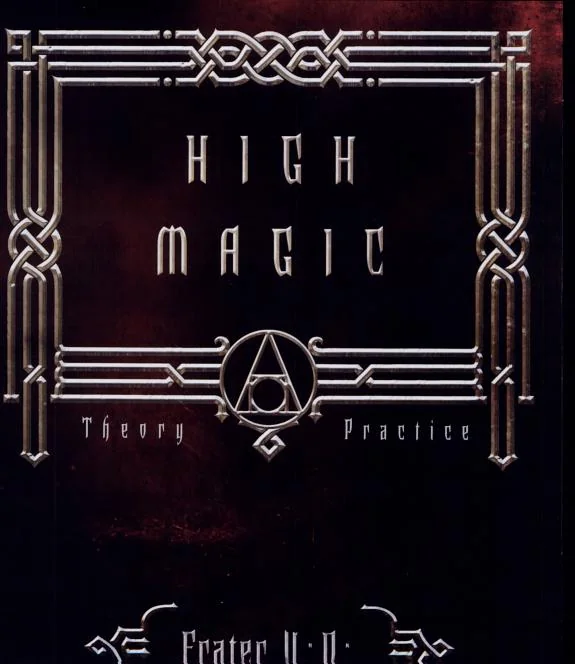
High Magic
 80
80

High Magic
Frater U.D.'s High Magic offers a bracingly direct perspective on ceremonial practice, cutting through the often-fluffy discourse that can surround Western esotericism. Its core strength lies in its relentless focus on personal experience as the crucible of magical development. The author doesn't shy away from the hard work, framing magic as a discipline requiring self-mastery, not just ritual recitation. A particularly salient point is made concerning the distinction between the *knowledge* of magic and the *accomplishment* it yields, a crucial difference often blurred in contemporary occult literature. However, the book's unvarnished pragmatism, while refreshing, can sometimes feel stark, potentially leaving practitioners accustomed to more nurturing or symbolic approaches feeling a bit adrift. The emphasis on personal effort is undeniable, but the guidance on *how* to cultivate that effort beyond basic instruction could be more fleshed out. Ultimately, High Magic serves as a necessary corrective, urging practitioners toward authentic self-actualization through rigorous practice.
📝 Description
80
Published in 2005, Frater U.D.'s High Magic prioritizes personal experience in ceremonial magic.
High Magic, released in 2005 by Frater U.D., offers a practical method for ceremonial magic, moving beyond theoretical study. The book stresses that personal experience and self-development are central to any magical work. While acknowledging universal magical principles, it views specific European traditions, such as the Golden Dawn or O.T.O., as useful starting points, not final goals. The author guides practitioners to move past simply learning about magical orders and toward achieving their own magical potential.
This book is for dedicated magic students who have finished introductory material and wish to deepen their practical abilities. It speaks to those who find existing systems inadequate for their personal magical growth. Readers seeking a direct, experience-oriented approach to ceremonial magic, or who question the value of purely academic occult study, will find this work beneficial. It is suited for independent learners in the esoteric field.
High Magic arrived in 2005, a time when esoteric information was widely available online and in popular books, a contrast to its former guarded status. Frater U.D.'s work counters this by reaffirming the individual effort and depth of experience needed for true magical achievement. This echoes earlier criticisms of diluted occult teachings. It appears during a renewed interest in Western esotericism, yet it provides a distinct, pragmatic viewpoint compared to more academic or historical analyses of groups like the Hermetic Order of the Golden Dawn.
💡 Why Read This Book?
• Learn the critical distinction between theoretical knowledge of magic and actual magical accomplishment, a concept central to Frater U.D.'s approach, differentiating it from purely academic occult studies. • Understand the importance of personal experience and self-mastery as the primary drivers of magical development, moving beyond reliance on established esoteric orders like the Golden Dawn. • Gain a practical framework for evaluating the efficacy of magical practices, emphasizing internal integration and demonstrable results over rote memorization of rituals and symbols.
⭐ Reader Reviews
Honest opinions from readers who have explored this book.
❓ Frequently Asked Questions
What is the core philosophy behind Frater U.D.'s "High Magic"?
The core philosophy emphasizes personal experience and self-accomplishment as paramount in magical practice, distinguishing it from the mere acquisition of theoretical knowledge. It posits that true magic is actualized through rigorous personal effort and integration, not just study.
How does "High Magic" differ from teachings of groups like the Golden Dawn?
While acknowledging the value of historical esoteric orders like the Golden Dawn, Frater U.D. positions them as schools providing knowledge, whereas "High Magic" focuses on the personal attainment that must follow such study, prioritizing lived experience over doctrine.
Is "High Magic" suitable for absolute beginners in occultism?
The book is best suited for those who have moved beyond introductory occult concepts. It assumes a foundational understanding and is geared towards practitioners seeking to deepen their practical application and self-mastery in ceremonial magic.
What does Frater U.D. mean by 'self-accomplishment' in magic?
'Self-accomplishment' refers to the internal transformation and demonstrable magical ability that arises from consistent, dedicated personal practice. It is the result of integrating magical principles into one's being, leading to genuine power and effectiveness.
Does the book offer specific magical rituals or techniques?
While the book discusses the principles and necessity of practice, its primary focus is on the underlying philosophy and the practitioner's internal development. It provides a framework for applying techniques rather than an exhaustive grimoire.
When was "High Magic" by Frater U.D. first published?
"High Magic" by Frater U.D. was first published in 2005, a time when esoteric knowledge was becoming widely disseminated, prompting the author to re-emphasize practical, experiential attainment.
🔮 Key Themes & Symbolism
Primacy of Personal Experience
The central theme is that genuine magical ability stems not from memorizing texts or joining orders, but from direct, lived experience. Frater U.D. argues that knowledge, while a starting point, is insufficient. True 'high magic' is achieved through dedicated practice, self-discipline, and the integration of esoteric principles into one's being, leading to self-accomplishment. This contrasts with passive reception of information, urging practitioners toward active engagement and internal transformation.
Self-Accomplishment Over Doctrine
This work posits 'self-accomplishment' as the ultimate goal of magical training. It challenges the notion that adherence to specific traditions, such as those exemplified by the Golden Dawn or O.T.O., guarantees magical proficiency. Instead, the book stresses that each practitioner must undertake their own journey of development, achieving mastery through personal effort and the realization of their innate magical potential. Knowledge serves as a tool, but accomplishment is the true measure.
Critique of Esoteric Proliferation
Published in 2005, the book implicitly critiques the then-growing accessibility of occult knowledge via the internet. Frater U.D. suggests that this widespread availability can lead to superficial understanding and a lack of genuine practical application. The work advocates for a return to rigorous, experiential training, suggesting that many contemporary approaches dilute the transformative power of magic by focusing on information rather than the arduous, yet rewarding, path of personal magical achievement.
Practical Application of Magic
High Magic is fundamentally a practical guide, albeit one focused on the underlying philosophy of practice. It encourages a no-nonsense approach to ceremonial magic, emphasizing that its principles are universal and its effectiveness depends entirely on the practitioner's commitment and skill. The book serves as a call to action, urging readers to move beyond theoretical study and engage in the disciplined, experiential work required to manifest magical results in their lives.
💬 Memorable Quotes
Direct passages from the work, attributed to the author.
“Magic is Magic wherever.”
— This concise statement suggests the fundamental nature of magical forces is universal, transcending cultural or traditional boundaries. It implies that while methods and interpretations may vary, the underlying principles and potential of magic remain constant across all systems.
“What is key is not the knowledge but the self-accomplishment that comes only through personal experience.”
— This highlights the author's core argument: true magical attainment is measured by personal achievement and inner transformation, not by the accumulation of esoteric information or adherence to established doctrines. Direct experience is presented as the sole pathway to mastery.
“Ceremonial Magic... is perceived as largely European in origin and practice.”
— This acknowledges the historical roots and common perception of ceremonial magic, particularly within Western esoteric traditions. It sets the stage for discussing how these traditions, while significant, serve as starting points for a more personalized and universally applicable magical path.
“As valid as these esoteric orders were and are, they are at best schools and the knowledge taught is now widely available.”
— This interpretation suggests that while organizations like the Golden Dawn or O.T.O. provide valuable foundational knowledge, they are ultimately limited. The author implies that the real work of magic begins after one has absorbed this basic teaching and must be pursued through individual effort and experience.
“The knowledge taught is now widely available.”
— This observation points to the 2005 publication context, where esoteric information had become democratized. It serves as a justification for the book's emphasis on personal practice over mere information gathering, arguing that accessibility necessitates a focus on application and internal development.
🌙 Esoteric Significance
Tradition
High Magic is firmly rooted in the Western Esoteric Tradition, drawing implicitly from Hermeticism, Ceremonial Magic, and practical occultism. It departs from more dogmatic or strictly lineage-bound interpretations by prioritizing a universal, experience-based approach. The work seeks to distill the essence of magical practice, making it accessible and applicable to the individual practitioner, irrespective of their formal affiliation with specific schools or historical movements.
Symbolism
While the book emphasizes personal experience, its framework often implicitly references traditional esoteric symbolism. Concepts like the 'magician's will' and the 'accomplishment of the Great Work' echo Hermetic principles. The book's focus on self-mastery and the transformation of the practitioner can be seen as a symbolic journey, akin to the alchemical process of transmutation, where the base elements of the self are refined into a more potent, realized state.
Modern Relevance
Contemporary practitioners of ceremonial magic, chaos magic, and other forms of practical esotericism often reference Frater U.D.'s work for its emphasis on efficacy and personal responsibility. Thinkers and practitioners focused on results-oriented magic, or those seeking to move beyond the theoretical study of occultism, find value in its direct, no-nonsense approach. The book continues to be relevant for its challenge to information saturation and its advocacy for rigorous, self-directed magical development.
👥 Who Should Read This Book
• Serious students of ceremonial magic who feel they have outgrown introductory texts and are seeking to deepen their practical application and understanding of personal efficacy. • Practitioners disillusioned with purely theoretical occultism or dogma, looking for a pragmatic approach that emphasizes tangible results and inner transformation through rigorous self-discipline. • Researchers and historians of Western esotericism interested in contemporary critiques of established magical orders and the ongoing evolution of practical occult philosophy beyond historical lineages.
📜 Historical Context
Published in 2005, Frater U.D.'s High Magic arrived at a time when the internet had dramatically increased the accessibility of esoteric knowledge, a stark contrast to the more guarded teachings of historical orders. The book emerged as a counterpoint to this trend, emphasizing personal experience and self-accomplishment over the mere acquisition of information. It was written within a milieu where Western esotericism, including traditions like the Hermetic Order of the Golden Dawn and the O.T.O., was experiencing a resurgence in interest, often mediated through online forums and readily available texts. Frater U.D.'s work directly challenged this informational abundance by insisting on the primacy of practical application and internal development, implicitly critiquing approaches that prioritized theoretical understanding or ritualistic performance without deep personal engagement. This pragmatic stance offered a distinct voice compared to more academic or historical analyses of occultism prevalent at the time.
📔 Journal Prompts
The concept of 'self-accomplishment' in your magical practice.
Personal experience versus theoretical knowledge in magic.
The European origins of ceremonial magic and your own path.
Evaluating the effectiveness of magical systems studied.
The role of discipline in achieving magical results.
🗂️ Glossary
Ceremonial Magic
A branch of magic focused on formalized rituals, often involving specific tools, invocations, and constructions of sacred space. Historically perceived as European in origin, it aims to effect change through symbolic actions and the manipulation of subtle energies.
Self-Accomplishment
The core concept in Frater U.D.'s work, referring to the personal realization, inner transformation, and practical magical ability achieved through dedicated individual practice and experience, rather than solely through theoretical study.
Esoteric Orders
Fraternal organizations dedicated to the study and practice of occult or mystical traditions, such as the Golden Dawn or O.T.O. They typically provide structured teachings and initiatory pathways for their members.
Great Work
A term originating in alchemy and adopted by Western esotericism, often referring to the process of spiritual transformation, self-mastery, and the attainment of higher consciousness or magical power.
Occultism
A broad term encompassing the study and practice of hidden or secret knowledge, including magic, alchemy, astrology, and divination. It often emphasizes esoteric principles and practices not typically accepted by mainstream science or religion.
Hermeticism
A philosophical and religious tradition based on the purported teachings of Hermes Trismegistus. It emphasizes principles such as 'as above, so below,' and focuses on gnosis, spiritual ascent, and the interconnectedness of the cosmos.
Personal Experience
In the context of High Magic, this refers to the direct, subjective engagement with magical principles and forces through dedicated practice, experimentation, and internal integration, considered essential for true magical development.
This book appears in 1 collection
🔮 Readers Also Liked
Browse all →








From the “High Magic” Collection
View all →






More Free Magic & Ritual Books
View all →