Book of Ceremonial Magic
 61
61

Book of Ceremonial Magic


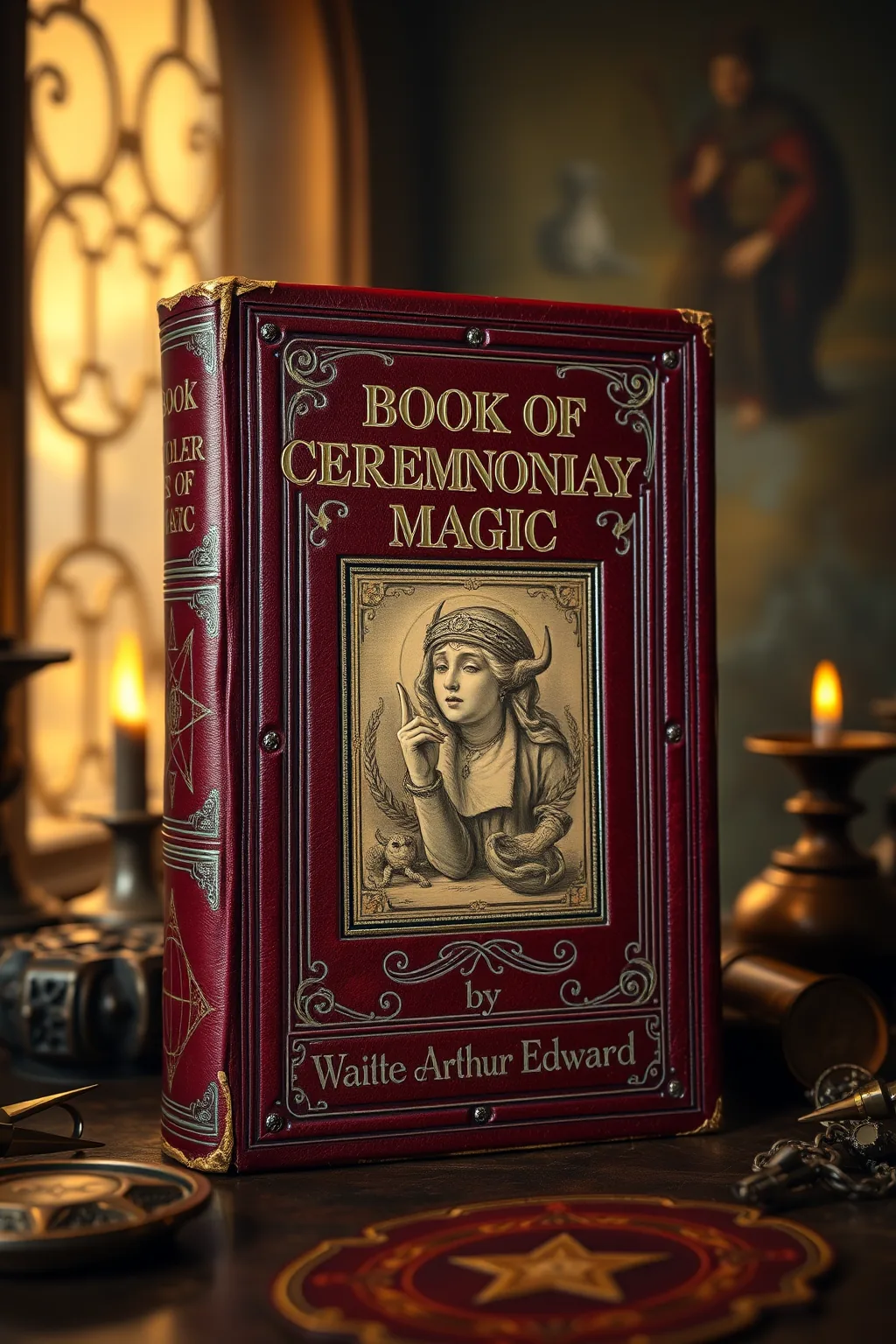
Arthur Edward Waite's 'Book of Ceremonial Magic' stands as a monumental achievement in occult literature, offering unparalleled insight into the structured practice of ritual. Waite's scholarly approach bridges the gap between historical record and esoteric application, illuminating the intricate mechanics and philosophical underpinnings of ceremonial magic. This volume is a treasure trove for practitioners seeking to deepen their understanding of solomonic traditions, angelic hierarchies, and the elemental forces. Its strength lies in its comprehensive scope and Waite's unique ability to synthesize complex material into a coherent, albeit challenging, framework. An essential read for serious students of Western esotericism and ceremonial practitioners.
📝 Description
61
Arthur Edward Waite published 'The Book of Ceremonial Magic' in 1911, detailing a wide array of magical rituals.
Arthur Edward Waite's 'The Book of Ceremonial Magic,' first released in 1911, examines the structure and practice of Western ceremonial magic. Waite compiles and analyzes various ritualistic systems, drawing from historical grimoires and esoteric lore. He discusses the practical elements of magic, including the construction of magical circles, the preparation of tools, and the invocation of spiritual entities. The book also addresses the theoretical underpinnings, such as the symbolism behind the rituals and the psychological or spiritual effects intended by their performance.
Waite presents these practices with a critical eye, often distinguishing between what he considers genuine magical operations and what he views as superstition or fraud. His aim was to provide a comprehensive overview of the field as it stood, accessible to students of the occult. The work covers topics like the hierarchy of spirits, planetary correspondences, and the use of talismans, all within the context of ritualistic magic.
Published in 1911, 'The Book of Ceremonial Magic' emerged during a period of significant interest in occultism and spiritualism in Europe. Waite, a prolific writer on these subjects, sought to codify and explain the practices of ceremonial magic, a tradition rooted in medieval and Renaissance European occultism. His work sits within a lineage that includes figures like Agrippa and is contemporary with the Hermetic Order of the Golden Dawn, of which Waite was a prominent member. The book reflects a desire to systematize esoteric knowledge, making it understandable while also maintaining a distinction between different levels of occult practice.
💡 Why Read This Book?
Uncover the foundational texts and methodologies of Western ceremonial magic. 'Book of Ceremonial Magic' offers a scholarly yet accessible exploration of ritual, symbolism, and arcane practices. Ideal for occult scholars, ritual practitioners, and seekers of hidden knowledge who wish to understand the historical and practical dimensions of this profound art.
⭐ Reader Reviews
Honest opinions from readers who have explored this book.
❓ Frequently Asked Questions
What is ceremonial magic according to Waite?
Waite defines ceremonial magic as the art of invoking and compelling spirits, often involving elaborate rituals, divine names, and symbolic tools to achieve specific spiritual or material ends.
Is this book suitable for beginners?
While comprehensive, the book's depth and scholarly tone may present a challenge for absolute beginners. It is best suited for those with some prior interest or foundational knowledge in occultism or comparative religion.
What kind of spirits are discussed?
The book explores various classes of spirits, including angels, demons, elementals, and planetary intelligences, detailing their traditional hierarchies and methods for invocation or evocation.
Does the book provide practical instructions?
Yes, it provides detailed accounts of historical rituals, magical operations, and the necessary preparations, tools, and incantations required for their execution, albeit presented with a scholarly and historical perspective.
What is the primary goal of ceremonial magic as presented?
The primary goal, as elucidated by Waite, often involves spiritual ascent, communion with higher intelligences, self-transformation, and the attainment of divine knowledge, rather than mere manipulation of forces.
🔮 Key Themes & Symbolism
The Art of Invocation and Evocation
This theme studies the core practices of ceremonial magic: the distinction between invoking (drawing spirits within) and evoking (drawing spirits forth). Waite meticulously details the historical methods, the specific linguistic structures of divine names and incantations, and the necessary mental and spiritual preparations required to safely and effectively engage with various spiritual entities. It explores the philosophical underpinnings of why such practices were believed to yield results, touching on sympathetic magic and the power of focused intent.
Symbolism and Correspondences
The book is rich with the symbolic language of magic, exploring the intricate web of correspondences between planets, elements, colors, divine names, and spiritual beings. Waite illuminates how these symbols act as keys to unlock deeper understanding and facilitate communication with the unseen realms. The careful arrangement of symbolic elements within a ritual space is presented as crucial for aligning the practitioner with cosmic forces and directing magical energies.
The Path of Spiritual Ascent
Beyond mere operative magic, Waite emphasizes the philosophical and spiritual dimensions of ceremonial practice. The book treats ritual as a transformative journey, a method for purifying the soul, expanding consciousness, and achieving union with the divine or higher principles. It frames magical work not just as a means to an end, but as a profound discipline for personal evolution and the realization of one's true spiritual potential.
💬 Memorable Quotes
Direct passages from the work, attributed to the author.
“Magic is the science of the hidden.”
— This succinctly captures the essence of magic as a discipline dedicated to uncovering and understanding the concealed laws and forces of the universe, often inaccessible to conventional science.
“The greater the spiritual purity, the greater the magical power.”
— This emphasizes the ethical and inner-developmental aspect of magic, suggesting that true power is intrinsically linked to the practitioner's moral and spiritual condition.
“Silence is the guardian of the hidden.”
— This points to the importance of discretion, introspection, and the controlled sharing of esoteric knowledge, suggesting that silence protects and preserves its integrity.
💡 Key Ideas
Editorial paraphrase of the work's core concepts — not direct quotes.
The rite is the intelligible expression of a spiritual want.
This quote highlights that ritual is not arbitrary but arises from a genuine spiritual need or desire, giving form and purpose to the practitioner's inner quest.
The visible is the shadow of the invisible.
A foundational mystical concept, this quote posits that the material world is merely a reflection or manifestation of a deeper, unseen spiritual reality.
🌙 Esoteric Significance
Tradition
The book is deeply rooted in the Western Esoteric Tradition, drawing heavily from the Hermetic, Kabbalistic, Gnostic, and Neoplatonic streams of thought. It specifically focuses on the traditions of ceremonial magic, particularly those influenced by the Solomonic grimoires, angelic magic, and planetary magic, aiming to synthesize and explicate these complex systems for a more discerning audience.
Symbolism
Waite meticulously deciphers the strong symbolism inherent in ceremonial magic, including the meanings of magical circles, wands, swords, pentacles, and divine names. He explains how these symbols act as conduits for spiritual energy and as mnemonic devices that connect the practitioner to cosmic archetypes and forces, facilitating a deeper, more intuitive understanding of the magical universe.
Modern Relevance
Despite its historical roots, 'Book of Ceremonial Magic' remains profoundly relevant for contemporary seekers. It offers a structured approach to understanding the psychological and spiritual dimensions of ritual, providing a framework for personal transformation, self-discovery, and the exploration of consciousness. Its scholarly rigor encourages critical engagement, making it a valuable resource for practitioners and theorists alike in the ongoing evolution of esoteric thought.
👥 Who Should Read This Book
This key work is essential for occult scholars and historians seeking to understand the evolution of Western magical practices. Dedicated practitioners of ceremonial magic will find it an invaluable reference for ritual structure, symbolism, and historical context. Spiritual seekers interested in the deeper philosophical underpinnings of ritual and the relationship between the human and divine will also benefit immensely. While its depth requires dedicated study, it is a foundational text for anyone serious about exploring the arcane arts.
📜 Historical Context
Published in the early 20th century, Arthur Edward Waite's 'Book of Ceremonial Magic' emerged during a period of intense interest in the occult and spiritualism in Europe and America. This era, often termed the 'occult revival,' saw a surge in societies like the Hermetic Order of the Golden Dawn, of which Waite was a prominent member. Scholars, artists, and intellectuals were actively seeking alternative spiritualities and exploring ancient wisdom traditions. Waite's work reflects this milieu, synthesizing a vast array of grimoires and historical magical texts, providing a comprehensive, albeit critical, overview of ceremonial magic from a scholarly yet informed perspective. It served to legitimize the study of these esoteric practices, placing them within a historical and philosophical context.
📔 Journal Prompts
Reflect on the 'spiritual want' that might drive a desire to practice ceremonial magic. What is your own 'spiritual want'?
Consider the symbolic significance of a common object in your daily life. How might it be interpreted within a magical framework?
Waite emphasizes the importance of 'spiritual purity.' How does this concept influence your understanding of magical ethics and efficacy?
If the 'visible is the shadow of the invisible,' what invisible realities might be reflected in your current life circumstances?
How does the idea of 'silence as the guardian of the hidden' relate to your personal journey of learning and discovery in esoteric subjects?
🗂️ Glossary
Grimoire
A textbook of magic, typically containing instructions for spellcasting, invocation, and the creation of magical tools and amulets.
Invocation
The act of calling upon a divine or spiritual being, often with the intention of drawing its presence or influence into oneself or a sacred space.
Evocation
The act of calling forth or summoning a spirit or entity from its own realm into a visible manifestation or a specific location.
Kabbalah
A system of Jewish mysticism that explores the divine nature and the relationship between God and the created universe through symbolic interpretations of scripture and esoteric cosmology.
Hermeticism
A philosophical and religious tradition based on the purported teachings of Hermes Trismegistus, emphasizing divine knowledge, alchemy, and the correspondence between the microcosm and the macrocosm.
This book appears in 3 collections
🔮 Readers Also Liked
Browse all →








More by Waite Arthur Edward
All books →
From the “Ritual Magic” Collection
View all →






More Free Magic & Ritual Books
View all →