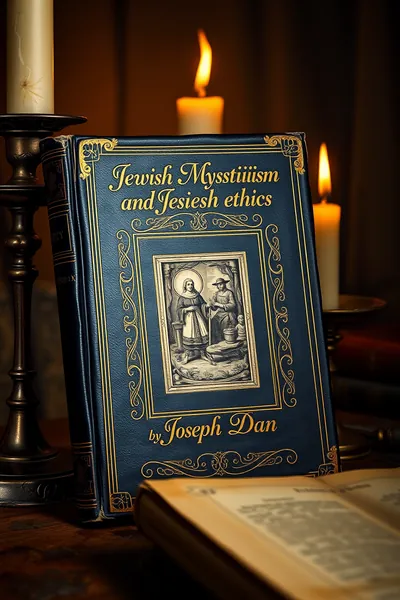
Elements of the Qabalah

 80
80

Elements of the Qabalah
Éliphas Lévi's "Elements of the Qabalah" attempts a monumental task: to render the intricate Qabalistic system comprehensible to a Western esoteric audience. The strength of the book lies in Lévi’s ambitious synthesis, connecting the Tree of Life to concepts familiar to occultists, such as Tarot and alchemy. His insistence that "Truth, being the essence of all that is, is not difficult to find: it is within us and we are within it" grounds the abstract cosmology in personal experience. However, the work suffers from Lévi's characteristic dense prose and a tendency to assume prior knowledge, making it less accessible than its title suggests. A particular challenge is the section discussing the correspondence between Hebrew letters and celestial bodies, which can feel speculative without deeper context. Despite these hurdles, the book remains a significant, albeit demanding, contribution to Qabalistic literature for dedicated students.
📝 Description
80
Éliphas Lévi's "Elements of the Qabalah" was first published in 2011, distilling complex Jewish mysticism.
Éliphas Lévi's "Elements of the Qabalah" provides an introduction to the esoteric system of Jewish mysticism. Lévi, a significant figure in 19th-century occultism, sought to connect older mystical ideas with contemporary understanding. The book aims to make the core principles of Qabalah accessible, presenting it as a structure for creation and consciousness.
This text is for those seriously studying Western esoteric traditions, especially Hermeticism, Freemasonry, and related occult philosophies. Readers interested in the connections between the Sephiroth, Hebrew letters, and Tarot will find a challenging but clear starting point. It requires dedication from the sincere seeker engaging with dense philosophical material.
The work reflects the intellectual atmosphere of the 19th-century occult revival, a time of renewed interest in ancient mysteries. Lévi's writing appeared during a period when figures like Helena Blavatsky and the Hermetic Order of the Golden Dawn were active. This era focused on interpreting and integrating Qabalistic teachings into Western magical thought, moving beyond solely religious applications.
Published posthumously in 2011, "Elements of the Qabalah" emerged from the 19th-century occult revival. This period saw a surge in interest in esoteric systems and ancient wisdom. Lévi's work contributed to efforts by groups like the Hermetic Order of the Golden Dawn to systematize and revive occult knowledge. His writings aimed to bridge older mystical traditions with contemporary occult frameworks, integrating Qabalistic concepts into broader Western magical practices.
💡 Why Read This Book?
• Gain a foundational understanding of the Tree of Life, as presented by a key 19th-century occultist, to grasp its structure and the Sephirothic emanations. • Explore the symbolic connections Lévi draws between the Hebrew alphabet and cosmic forces, offering a unique lens on scriptural and magical traditions. • Discover how Lévi integrates Qabalistic principles with other esoteric systems, providing context for its influence on movements like the Hermetic Order of the Golden Dawn.
⭐ Reader Reviews
Honest opinions from readers who have explored this book.
❓ Frequently Asked Questions
What is the primary purpose of Éliphas Lévi's "Elements of the Qabalah"?
The book aims to introduce and explain the core principles of Qabalistic mysticism to a Western esoteric audience, synthesizing complex ideas into a more digestible framework for seekers of spiritual truth.
When was "Elements of the Qabalah" first published?
Although written by Éliphas Lévi, a prominent 19th-century occultist, the book "Elements of the Qabalah" saw its first publication in 2011.
Who is Éliphas Lévi and why is he important?
Éliphas Lévi (Alphonse Louis Constant) was a French occultist and writer influential in the 19th-century revival of magical traditions. His works, including this one, significantly shaped modern Western esotericism.
What are the Sephiroth mentioned in the book?
The Sephiroth are the ten divine emanations or attributes described in the Qabalah, forming the structure of the Tree of Life, which Lévi explores as a cosmic map.
Is "Elements of the Qabalah" suitable for absolute beginners in mysticism?
While it aims to explain, the book is dense and assumes a degree of familiarity with esoteric concepts. It's best suited for those with some prior interest in occultism or comparative religion.
What historical context influenced Lévi's Qabalistic writings?
Lévi wrote during the 19th-century occult revival, a period of intense interest in ancient wisdom traditions, including Qabalah, Kabbalah, and Hermeticism, as seen in contemporary movements like Spiritualism.
🔮 Key Themes & Symbolism
The Tree of Life as a Cosmic Blueprint
Lévi presents the Qabalistic Tree of Life not just as a diagram but as the fundamental architecture of existence. He meticulously details the ten Sephiroth, the divine attributes emanating from the Absolute, and the 22 paths connecting them, often correlating them with the Hebrew alphabet and Tarot trumps. This structure is depicted as a map of both the cosmos and the human psyche, illustrating the descent of consciousness and the potential for ascent through spiritual discipline.
The Hebrew Alphabet as Creative Force
A significant focus is placed on the 22 letters of the Hebrew alphabet, which Lévi posits as primal sounds and symbols of creation. Each letter is explored for its numerical value (Gematria), its symbolic meaning, and its correspondence to specific paths on the Tree of Life and astrological influences. This perspective elevates the alphabet from mere script to a dynamic force shaping reality, offering a key to understanding divine language and magical operations.
Qabalah as Universal Esoteric Science
Lévi argues for the Qabalah as a universal science underlying all authentic mystical traditions. He seeks to demonstrate its presence in ancient Egyptian mysteries, Greek philosophy, and Christian symbolism, positioning it as the hidden root of Western esotericism. The book aims to reveal the common threads of spiritual knowledge, suggesting that a deep understanding of Qabalah unlocks the secrets of these diverse traditions and provides a unified framework for occult study.
The Seeker's Path to Truth
Central to Lévi's exposition is the idea that truth is an internal state accessible through sincere effort and spiritual sacrifice. He frames the study of Qabalah as a path of self-discovery and purification. The book encourages readers to see themselves as microcosms reflecting the macrocosm, emphasizing that the external Qabalistic structures are mirrors of the internal spiritual journey towards divine understanding and union.
💬 Memorable Quotes
Direct passages from the work, attributed to the author.
“Being is. This is incontestable and absolute.”
— Lévi asserts the fundamental reality of existence itself as the ultimate, undeniable principle from which all else derives. This foundational statement grounds his philosophical approach in an ontological certainty.
“Its knowledge is science; its ideal expression is reason; its activity is creation.”
— This highlights Lévi's view of Being (or Truth) not as a passive concept but as an active, knowable principle that manifests as scientific understanding, rational thought, and the ongoing process of creation.
“I can give you this title because you are searching for the truth in the sincerity of your heart, ready to make the necessary sacrifices in order to find it.”
— This opening sentiment frames the book not as a casual read but as a guide for dedicated aspirants willing to undergo personal transformation and commitment in their quest for esoteric knowledge.
“It is like light and the blind do not see it.”
— This powerful metaphor illustrates Lévi's perspective on spiritual truth: it is ever-present and accessible, yet obscured by ignorance or a lack of inner receptivity, much like light is invisible to those unable to perceive it.
💡 Key Ideas
Editorial paraphrase of the work's core concepts — not direct quotes.
Truth, being the essence of all that is, is not difficult to find: it is within us and we are within it.
This quote expresses Lévi's core belief that ultimate reality and spiritual truth are not external discoveries but inherent aspects of our own consciousness, accessible through introspection and connection to the divine.
🌙 Esoteric Significance
Tradition
This work is firmly rooted in the Western Esoteric Tradition, specifically within the Kabbalistic and Hermetic lineages. Lévi sought to revitalize and recontextualize Jewish Kabbalah, making its principles accessible and relevant to a broader European occult audience. He integrated Qabalistic concepts, particularly the Tree of Life, with Hermetic philosophy, alchemy, and even Christian mysticism, presenting it as a universal key to understanding the cosmos and the divine.
Symbolism
Key symbols include the Tree of Life (representing divine emanations and the structure of reality), the Hebrew letters (seen as primal creative forces and divine language), and the Sephiroth (the ten spheres of divine influence and consciousness). Lévi interprets these symbols not merely as abstract concepts but as active principles governing the universe and the human soul, providing a framework for magical practice and spiritual development.
Modern Relevance
Lévi's interpretation of Qabalah continues to be a starting point for many contemporary esoteric practitioners and organizations, including neopagans, ceremonial magicians, and students of Western occultism. His synthesis influenced the foundational texts and practices of groups like the Hermetic Order of the Golden Dawn and remains a primary reference point for understanding the Qabalah's role in modern magical systems.
👥 Who Should Read This Book
• Students of Western Esotericism seeking a foundational text on Qabalistic principles as interpreted through a 19th-century occult lens. • Aspiring ceremonial magicians and occultists who need to understand the symbolic language and structures, such as the Tree of Life, that underpin many magical systems. • Comparative religion scholars interested in the historical development and cross-cultural adaptation of Jewish mysticism within European occult thought.
📜 Historical Context
Éliphas Lévi's "Elements of the Qabalah" emerges from the vibrant intellectual range of 19th-century European occultism, a period marked by a resurgence of interest in Hermeticism, Gnosticism, and Jewish mysticism. The book, published posthumously in 2011 but originating from Lévi's extensive writings, reflects his goal of systematizing esoteric knowledge for a modern audience. He operated within a milieu that included figures like the magician John Dee (whose work on Enochian magic predated Lévi but informed the era's esoteric interests) and later contemporaries such as Helena Blavatsky, founder of the Theosophical Society. Lévi's attempt to synthesize Qabalah with Christian symbolism and broader magical theory was part of a larger trend to create a unified esoteric science. His work was highly influential, particularly on the Hermetic Order of the Golden Dawn, which adapted many of his Qabalistic interpretations. While not facing explicit censorship, the esoteric nature of his work placed it outside mainstream academic and religious discourse, accessible primarily through private study groups and occult circles.
📔 Journal Prompts
The concept of Being as absolute truth within the Sephirothic structure.
Reflecting on the Hebrew alphabet as a source of creative force.
How the Tree of Life mirrors the macrocosm and microcosm.
The necessity of sincere heart and sacrifice in seeking esoteric knowledge.
Interpreting the metaphor of light and the blind in relation to spiritual perception.
🗂️ Glossary
Qabalah
An esoteric system of Jewish mysticism concerned with divine emanations, the structure of the universe, and the path to spiritual enlightenment, often represented by the Tree of Life.
Sephiroth
The ten divine attributes or emanations described in the Kabbalah, which form the structure of the Tree of Life. They represent stages of divine manifestation and aspects of God's relationship with creation.
Tree of Life
A symbolic diagram central to Kabbalistic thought, consisting of ten spheres (Sephiroth) connected by 22 paths. It represents the structure of the cosmos, the process of creation, and the human spiritual journey.
Hebrew Alphabet
The alphabet used in Hebrew, which in Qabalistic tradition is considered to possess profound symbolic, numerical, and creative power, with each letter holding deep mystical significance.
Macrocosm
The universe considered as a great whole; the greater world. In esoteric philosophy, it is often seen as mirroring the microcosm.
Microcosm
The human being considered as a miniature universe or a reflection of the macrocosm. The study of the microcosm is key to understanding the universe.
Esotericism
Belief systems and practices that focus on hidden or inner knowledge, often related to spiritual transformation, divine mysteries, and the occult, typically accessible only to initiates or dedicated students.
This book appears in 1 collection
🔮 Readers Also Liked
Browse all →








From the “Qabalah” Collection
View all →






More Free Kabbalah & Jewish Mysticism Books
View all →