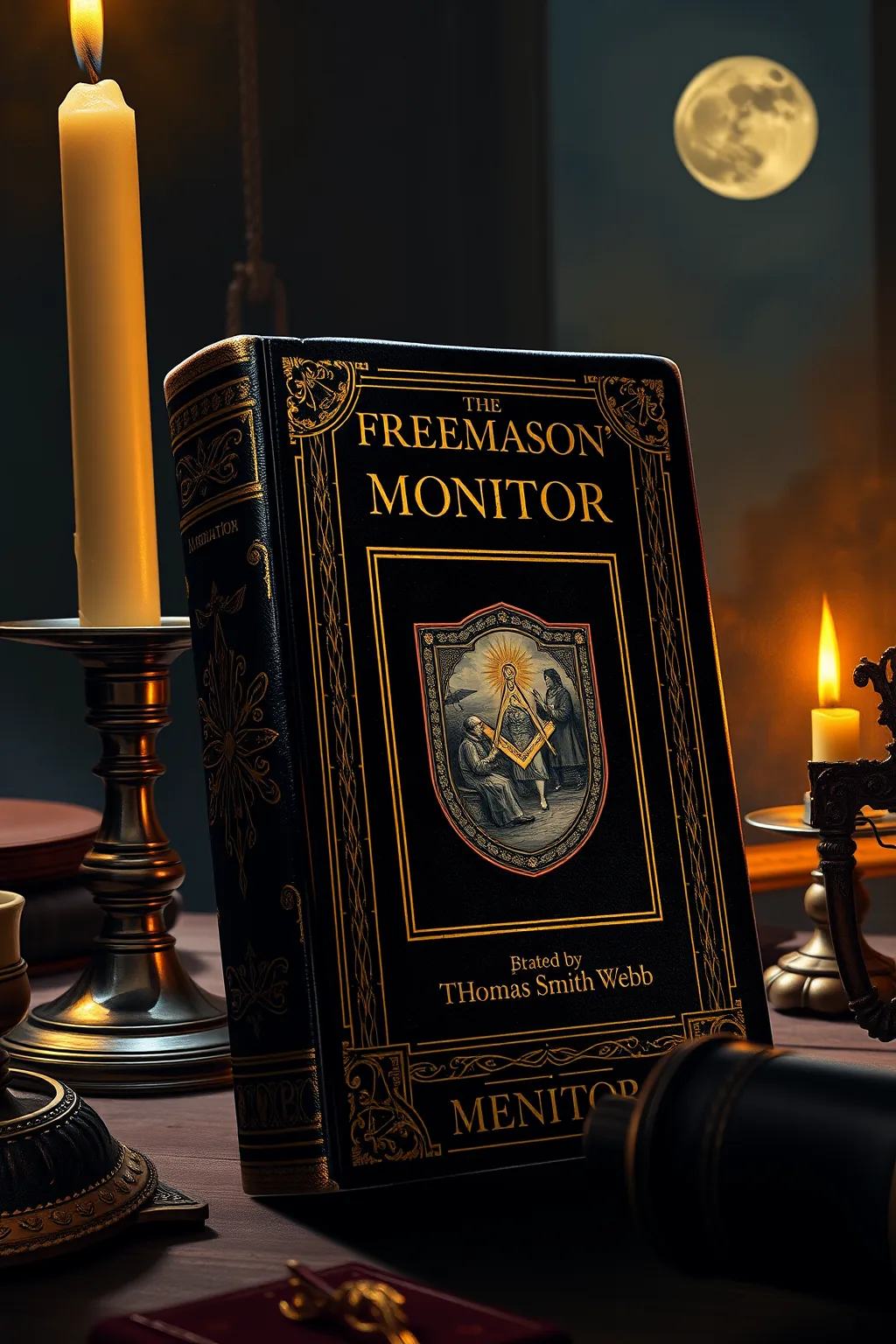
The Freemason's Monitor: Or, Illustrations of Masonry: in Two Parts
 72
72

The Freemason's Monitor: Or, Illustrations of Masonry: in Two Parts


Thomas Smith Webb's 'The Freemason's Monitor' is a treasure trove of esoteric wisdom that continues to resonate with modern readers. Published in 1818, this book offers a detailed exploration of Masonic rituals, symbols, and philosophies, making it an essential read for anyone interested in the occult and secret societies. Webb's thorough illustrations and explanations provide a deep understanding of Freemasonry's intricate practices, making the text accessible to both initiates and curious seekers. The historical context in which the book was written adds an extra layer of significance, as it reflects the growing influence and popularity of Freemasonry during the early 19th century. For contemporary esoteric seekers, 'The Freemason's Monitor' serves as a valuable resource for uncovering the hidden truths and mysteries of Freemasonry. It is a must-read for those who wish to delve into the esoteric traditions that have shaped our understanding of the occult.
📝 Description
72
Thomas Smith Webb published The Freemason's Monitor in 1797, detailing Masonic rituals and symbolism.
First published in 1797, Thomas Smith Webb's The Freemason's Monitor aimed to standardize Masonic ritual and provide a clear exposition of its teachings. The book is divided into two parts, with the first focusing on the Craft degrees (Entered Apprentice, Fellow Craft, and Master Mason) and the second on the Royal Arch degree. Webb's work is notable for its systematic approach, presenting the lectures and ceremonies in a structured format that became influential in American Freemasonry.
Webb intended his Monitor to serve as a reliable guide for both new members and established Masons. He carefully explained the allegorical meanings behind the symbols and actions within Masonic ceremonies. This included interpretations of the working tools, the tracing boards, and the traditional stories associated with the order. The book's clarity and logical organization helped to solidify understanding and practice across different lodges.
Webb's work sits within the broader tradition of Masonic esoteric literature that sought to codify and interpret the order's teachings. Following earlier works that often relied on oral tradition or fragmented texts, The Freemason's Monitor provided a unified and accessible presentation. It drew upon Enlightenment philosophy and earlier Masonic interpretations of biblical and classical narratives, framing them within a system of moral and spiritual instruction. This effort contributed to the formalization of Masonic symbolism and ritual, making it more uniform for practitioners.
💡 Why Read This Book?
Reading 'The Freemason's Monitor' today offers a unique opportunity to explore the rich history and esoteric wisdom of Freemasonry. This book provides valuable insights into the rituals, symbols, and philosophical foundations of the craft, making it an essential read for both practicing Masons and curious seekers of occult knowledge. By delving into Webb's detailed illustrations and explanations, readers can gain a deeper understanding of the hidden world of secret societies and their enduring influence on modern thought. Whether you are a student of esoteric studies or simply intrigued by the mysteries of Freemasonry, this book offers a comprehensive and enlightening journey into the heart of the occult.
⭐ Reader Reviews
Honest opinions from readers who have explored this book.
❓ Frequently Asked Questions
What is the significance of 'The Freemason's Monitor' in the study of Freemasonry?
The book is significant because it provides a detailed and comprehensive overview of Masonic rituals, symbols, and philosophies, making it an invaluable resource for both initiates and curious seekers of esoteric knowledge.
Who should read 'The Freemason's Monitor'?
This book is ideal for practicing Freemasons, students of occult studies, and anyone intrigued by the mysteries of secret societies. It offers deep insights into the hidden world of Freemasonry and its enduring influence.
What makes 'The Freemason's Monitor' a valuable resource for modern esoteric seekers?
The book's detailed illustrations and explanations of Masonic practices, combined with its historical context, provide a rich and enlightening journey into the esoteric traditions that have shaped our understanding of the occult.
🔮 Key Themes & Symbolism
Mystical Rituals
The Freemason's Monitor delves deeply into the mystical rituals of Freemasonry, revealing the hidden knowledge and spiritual significance behind each ritual. Webb's detailed illustrations and explanations provide a comprehensive guide to the esoteric practices that define Freemasonry, making this book an essential read for those seeking to understand the deeper spiritual meanings behind these rituals.
Symbolic Imagery
Symbolism is a central theme in The Freemason's Monitor, as Webb explores the wide range of symbols that form the foundation of Freemasonry. From the Square and Compass to the All-Seeing Eye, each symbol is imbued with profound esoteric meanings that Webb meticulously unpacks, offering readers a deeper understanding of the symbolic language of Freemasonry.
Philosophical Tenets
The philosophical tenets of Freemasonry are another key theme in this book. Webb examines the philosophical underpinnings of Freemasonry, exploring how its teachings on brotherhood, morality, and spiritual growth have shaped the lives of its members. This book is a valuable resource for those interested in the philosophical significance of Freemasonry's esoteric traditions.
💬 Memorable Quotes
Direct passages from the work, attributed to the author.
“The true Mason values knowledge above all else.”
— Webb underscores the importance of seeking hidden knowledge and understanding the deeper spiritual truths that Freemasonry embodies.
“The pursuit of truth is the Mason's highest calling.”
— Webb's words underscore the importance of spiritual and intellectual pursuit in Freemasonry, encouraging members to seek out hidden wisdom and esoteric knowledge.
💡 Key Ideas
Editorial paraphrase of the work's core concepts — not direct quotes.
Masonry is the science of morality.
This quote highlights the moral and ethical foundations of Freemasonry, emphasizing its role in cultivating virtue and wisdom.
Symbols are the language of the initiated.
This quote emphasizes the esoteric nature of Freemasonry's symbols, which are meant to be deciphered by those who have been initiated into its mysteries.
The secrets of Masonry are revealed to those who are worthy.
This quote highlights the selective nature of Freemasonry's esoteric teachings, which are meant to be shared only with those who have proven themselves worthy of initiation.
🌙 Esoteric Significance
Tradition
The Freemason's Monitor belongs to the Hermetic tradition of esoteric knowledge, which emphasizes the pursuit of hidden wisdom and spiritual enlightenment. This book is a valuable resource for those interested in the mystical and occult dimensions of Freemasonry, as it provides a comprehensive guide to its rituals, symbols, and philosophical tenets.
Symbolism
Key symbols in The Freemason's Monitor include the Square and Compass, the All-Seeing Eye, and the Pillars of Strength and Wisdom. Each of these symbols is imbued with profound esoteric meanings that Webb meticulously unpacks, offering readers a deeper understanding of the symbolic language of Freemasonry.
Modern Relevance
The Freemason's Monitor remains relevant today as a foundational text for modern Freemasonry. Its exploration of the mystical and esoteric dimensions of Freemasonry continues to be studied by scholars and practitioners alike, making it an essential resource for those seeking to understand the deeper spiritual meanings behind Freemasonry's practices.
👥 Who Should Read This Book
Beginners interested in Freemasonry will find The Freemason's Monitor to be an invaluable introduction to the mystical and esoteric dimensions of the practice. Scholars of occult studies will appreciate the depth of esoteric insights and the historical context provided in the book. Spiritual seekers will be drawn to the philosophical tenets and symbolic imagery that define Freemasonry, while practitioners will benefit from the comprehensive guide to its rituals and teachings.
📜 Historical Context
The Freemason's Monitor was published in the late 18th century, a time when Freemasonry was experiencing a resurgence of interest and influence. The book's importance lies in its role as a comprehensive guide to the rituals, symbols, and philosophical tenets of Freemasonry during this period. Webb's work helped to standardize many of the practices and beliefs associated with Freemasonry, making it a foundational text for the brotherhood. Its influence can still be seen in modern Freemasonry, as many of the rituals and symbols described in the book continue to be used today.
📔 Journal Prompts
Reflect on the significance of Freemasonry's rituals in your own spiritual journey.
Consider the role of symbolism in Freemasonry and how it might apply to your own life.
Explore the philosophical tenets of Freemasonry and how they resonate with your personal beliefs.
Write about the importance of hidden knowledge in your spiritual quest.
Reflect on the moral and ethical foundations of Freemasonry and how they influence your actions.
🗂️ Glossary
Square and Compass
A symbol representing the tools used by stonemasons, signifying the moral and ethical principles of Freemasonry.
All-Seeing Eye
A symbol representing divine providence and the pursuit of spiritual enlightenment.
Pillars of Strength and Wisdom
Symbols representing the virtues of fortitude and wisdom, essential for spiritual growth and moral development.
Hermetic Tradition
An esoteric tradition emphasizing the pursuit of hidden wisdom and spiritual enlightenment, often associated with alchemy and mysticism.
Esoteric Knowledge
Hidden or secret knowledge accessible only to those who have been initiated into its mysteries.
This book appears in 2 collections
🔮 Readers Also Liked
Browse all →






More by Thomas Smith Webb
All books →From the “Secret Societies” Collection
View all →






More Free Freemasonry & Secret Societies Books
View all →