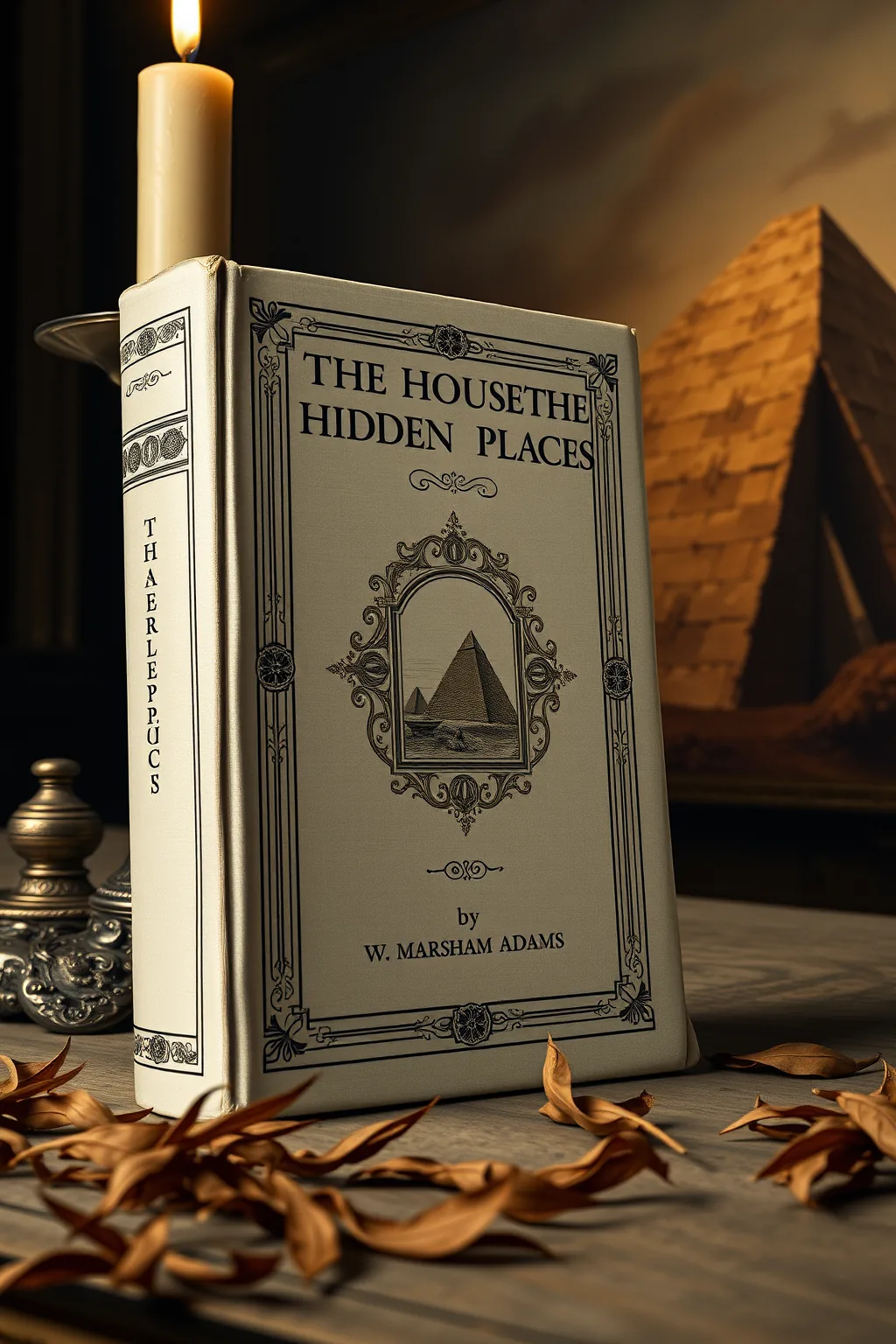
The House of the Hidden Places
 75
75

The House of the Hidden Places


Ophelia Vance, Mystical Literature Reviewer — W. Marsham Adams' "The House of the Hidden Places" is a revelation, a bold reinterpretation of the Great Pyramid's purpose. Adams brilliantly connects the pyramid's architecture to the initiatory path described in the Book of the Dead, presenting it as a profound allegory for spiritual ascent. His dismissal of superficial pyramidology in favor of deep symbolic analysis is refreshing and insightful. This book offers a compelling vision of ancient Egypt as a cradle of profound esoteric wisdom, anticipating later traditions like Masonic ritual. It's a must-read for serious students of ancient mysteries and those seeking to understand the deeper, hidden meanings embedded within humanity's most enduring monuments.
📝 Description
75
W. Marsham Adams argued in 1895 that the Great Pyramid was an allegorical map for the soul.
W. Marsham Adams' "The House of the Hidden Places" proposes that the Great Pyramid of Giza was not a tomb, but a symbolic representation of spiritual progression. Adams interpreted the pyramid's internal structure as a physical manifestation of the journey of the soul, aligning its chambers and passages with the initiatory trials found in Egyptian funerary texts, particularly the Book of the Dead. He suggested the structure was designed as a guide for initiates facing the transition through afterlife consciousness.
Adams challenged the common interpretations of his time, which often viewed the pyramid through a religious or tomb-centric lens. Instead, he put forward a Gnostic understanding, seeing the pyramid as a repository of esoteric knowledge and a precursor to later mystical traditions. The book connects ancient Egyptian rites with a broader pursuit of self-understanding, positioning the pyramid as a tangible record of forgotten wisdom.
Adams' work fits within the late 19th-century surge of interest in Egyptology and esoteric interpretations of ancient monuments. While many contemporaries focused on historical or archaeological aspects, Adams pursued a symbolic reading, aligning Egyptian beliefs with Gnostic and Hermetic ideas about spiritual transformation. His approach connects the physical world, represented by the pyramid, with an inner, spiritual reality, a common theme in esoteric traditions that seek to find universal principles within specific cultural expressions.
💡 Why Read This Book?
Uncover the Great Pyramid's true esoteric purpose as a map for soul-initiation, not a mere tomb. Adams offers a unique, Gnostic interpretation, linking it to the Book of the Dead and ancient rites. Ideal for seekers of hidden knowledge, students of ancient symbolism, and those fascinated by the spiritual architecture of the past.
⭐ Reader Reviews
Honest opinions from readers who have explored this book.
❓ Frequently Asked Questions
What is the central thesis of 'The House of the Hidden Places'?
The central thesis posits that the Great Pyramid of Giza is not a tomb, but an allegorical representation of the soul's journey through the afterlife, mirroring the initiatory stages described in the Egyptian Book of the Dead.
How does Adams' interpretation differ from other 19th-century pyramid theories?
Adams breaks from common Christian dispensational interpretations, focusing instead on the Egyptian Book of the Dead and viewing the pyramid as a profound symbolic blueprint for spiritual initiation and esoteric knowledge.
What is the significance of the Book of the Dead in this context?
The Book of the Dead serves as Adams' Rosetta Stone, providing the narrative and symbolic framework for understanding the pyramid's internal structure as a representation of the soul's trials and transformations in the afterlife.
Does Adams connect the pyramid's symbolism to later esoteric traditions?
Yes, Adams suggests that the pyramid's blueprint for initiation acted as a precursor or a parallel to the rituals and symbolic language found in later esoteric traditions, such as Freemasonry.
Who is the intended audience for this book?
The book is intended for serious students of ancient mysteries, Egyptology, comparative religion, esoteric philosophy, and anyone seeking to understand the deeper, symbolic meanings embedded in ancient monumental architecture.
🔮 Key Themes & Symbolism
The Pyramid as a Spiritual Map
Adams revolutionizes the understanding of the Great Pyramid, moving beyond its function as a tomb to reveal it as a sophisticated, three-dimensional allegory for spiritual evolution. He meticulously details how the chambers, passages, and shafts correspond to the stages of the soul's passage through the afterlife, as outlined in ancient Egyptian funerary texts. This perspective positions the pyramid as a cosmic device for transformation, a sacred space designed to guide initiates through the trials of death and rebirth towards higher consciousness. It’s a evidence of the advanced spiritual understanding of its builders.
The Book of the Dead as an Initiatory Text
Central to Adams' thesis is the profound connection he draws between the Great Pyramid's architecture and the Egyptian Book of the Dead. He interprets the text not merely as a collection of spells for the deceased, but as a detailed guide for the soul's journey, a spiritual roadmap through the challenges and revelations of the underworld. By aligning the pyramid's physical structure with the narrative of the Book of the Dead, Adams demonstrates how ancient Egyptians envisioned the path to spiritual enlightenment and transcendence, offering a glimpse into their complex cosmology and soteriology.
Ancient Initiation and Esoteric Precursors
Adams argues that the Great Pyramid served as a tangible representation of an ancient system of spiritual initiation, a sacred institution designed to impart profound esoteric knowledge. He boldly suggests that this initiatory blueprint, encoded within the pyramid's very stones, predates and perhaps even influenced later mystery schools and esoteric traditions, including aspects of Masonic ritual. This perspective places the pyramid at the nexus of ancient spiritual practices, highlighting its enduring legacy as a repository of forgotten wisdom and a evidence of humanity's perennial quest for ultimate truth.
💬 Memorable Quotes
Direct passages from the work, attributed to the author.
“The Great Pyramid is not a tomb, but a house of initiation.”
— This concise statement captures Adams' radical reinterpretation, shifting the pyramid's perceived purpose from death to spiritual rebirth and enlightenment.
“Within its stones lie the secrets of the soul's passage.”
— This evocative phrase highlights the pyramid's symbolic function as a repository of wisdom concerning the afterlife and spiritual transformation.
“A temple of wisdom, not a monument to mortality.”
— This emphasizes Adams' view of the pyramid as a place of learning and spiritual development, contrasting it with common perceptions of it as a burial site.
“The ancient Egyptians charted the path to the stars.”
— This suggests a profound cosmic understanding held by the ancient Egyptians, with the pyramid and its associated texts mapping a celestial or spiritual journey.
💡 Key Ideas
Editorial paraphrase of the work's core concepts — not direct quotes.
The Book of the Dead is the blueprint for the ascent.
This quote directly links the ancient funerary text to the pyramid's architecture, underscoring its role as a guide for spiritual progression.
🌙 Esoteric Significance
Tradition
Adams' work is deeply rooted in the esoteric traditions of ancient Egypt, particularly its funerary beliefs and the concept of spiritual initiation. He interprets the Great Pyramid as a tangible manifestation of these ancient mystery teachings, a physical representation of the soul's journey towards deification or higher consciousness. His analysis connects this to a broader stream of esoteric thought, suggesting parallels with Gnosticism and later Western mystery traditions, viewing the pyramid as a universal symbol of spiritual ascent and the quest for hidden knowledge.
Symbolism
The core symbolism lies in the Great Pyramid itself, where each chamber, passage, and shaft is imbued with meaning related to the soul's transition. The ascent through the pyramid mirrors the stages of spiritual awakening, from the trials of the lower realms to the illumination of higher states. The Book of the Dead provides the symbolic language and narrative for these stages, detailing the challenges, deities, and cosmic forces encountered. Adams deciphers these symbols to reveal a profound map of consciousness and the transformative power of ancient rituals.
Modern Relevance
In an age increasingly seeking meaning beyond materialism, Adams' work offers a compelling ancient perspective on spiritual growth and the nature of reality. His interpretation of the Great Pyramid as a tool for self-realization speaks to contemporary interests in consciousness studies, mindfulness, and the search for deeper purpose. The book's exploration of ancient initiatory practices and esoteric symbolism provides valuable insights for practitioners of various spiritual disciplines and scholars interested in the perennial philosophy and the enduring human quest for transcendence.
👥 Who Should Read This Book
This profound work is essential for seekers of ancient wisdom, spiritual explorers, and students of comparative religion and esoteric philosophy. Beginners to esoteric studies will find a fascinating entry point into the symbolic language of ancient Egypt. Scholars of Egyptology and archaeology will appreciate Adams' unique, text-based approach that challenges conventional interpretations. Practitioners of meditation, ritual, and those on a path of self-discovery will find inspiration and a collection of symbolism to engage with their own inner journeys.
📜 Historical Context
Published in the late 19th century, "The House of the Hidden Places" emerged during a fervent period of fascination with ancient Egypt and its monumental structures. This era saw a surge in archaeological discoveries and a proliferation of speculative theories about the pyramids, often colored by Victorian religious and millenarian beliefs. W. Marsham Adams, however, distinguished himself by moving away from these prevailing, often Christian-centric interpretations. His groundbreaking approach, drawing directly from newly translated Egyptian texts like the Book of the Dead, placed the pyramid within the context of indigenous Egyptian spirituality and its sophisticated understanding of the afterlife and initiation. His work challenged conventional wisdom, positioning the Great Pyramid as a profound esoteric artifact and a evidence of a forgotten science of the soul, influencing subsequent generations of scholars and mystics interested in the deeper meanings of ancient civilizations.
📔 Journal Prompts
Reflect on the concept of a 'spiritual map.' How does the Great Pyramid, as described by Adams, function as one for the soul?
Consider the Book of the Dead as an initiatory text. What parallels can you draw between its described journey and your own spiritual or personal growth experiences?
Adams links the pyramid's symbolism to later esoteric traditions. What enduring archetypes or symbols of initiation do you see in contemporary spiritual or philosophical movements?
If the Great Pyramid were a physical representation of inner transformation, what would be the equivalent 'chambers' or 'passages' in your own life's journey?
How does understanding monumental architecture as having esoteric or spiritual purposes change your perception of ancient civilizations and their legacy?
🗂️ Glossary
Esoteric
Relating to or accessible only by a small number of people with a specialized knowledge or interest; understood by or meant for only the initiated.
Allegory
A story, poem, or picture that can be interpreted to reveal a hidden meaning, typically a moral or political one. In this context, the pyramid's structure represents spiritual concepts.
Initiation
The action of admitting someone into a society or group, typically with a ritual or ceremony. In esoteric contexts, it refers to a process of spiritual awakening and transformation.
Book of the Dead
An ancient Egyptian funerary text, consisting of a collection of spells intended to assist a dead person's journey through the Duat, or underworld, and into the afterlife.
Gnosticism
A complex and diverse set of religious and philosophical ideas and systems that originated in the 1st century AD. Gnostics believed that salvation came through hidden knowledge (gnosis) revealed by a divine messenger.
This book appears in 6 collections
🔮 Readers Also Liked
Browse all →









From the “Transcendental Meditation” Collection
View all →





More Free Esoteric History & Biography Books
View all →