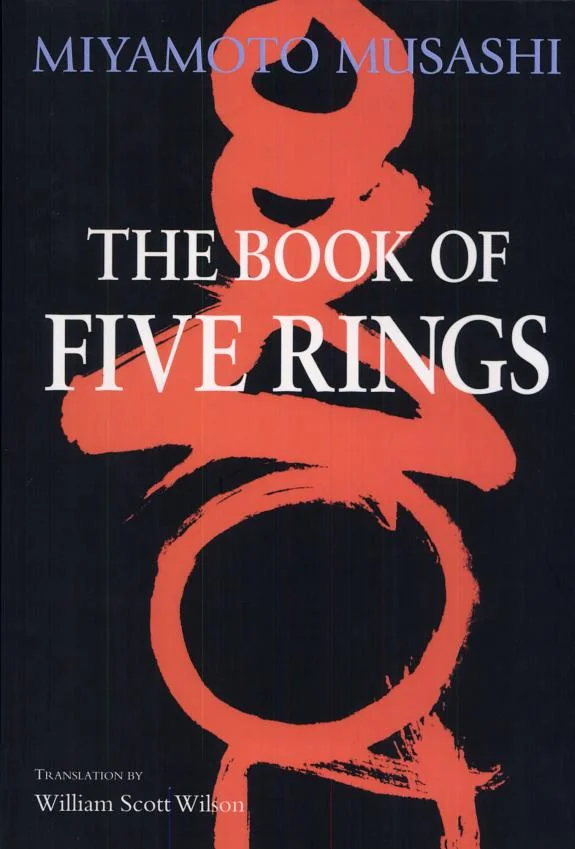
The Book of Five Rings
 81
81

The Book of Five Rings
Miyamoto Musashi's The Book of Five Rings is less a manual for dueling and more a philosophical treatise on the application of principle in conflict, be it on the battlefield or in the dojo. The section on "Wind," for instance, offers a sharp critique of other schools, not out of arrogance, but as a means to isolate the core truths of his own "Niten Ichi-ryū." Musashi’s writing, though direct and unadorned, possesses a remarkable clarity that cuts through the esoteric jargon often found in such works. A notable strength is the consistent emphasis on adaptability, presented through the metaphor of water, urging the practitioner to remain fluid and responsive. However, the text's brevity can also be a limitation; the transition between the practical advice in "Fire" and the more abstract "Void" might leave some readers seeking more explicit connections. The passage describing the "way of strategy" as being like a carpenter or artisan, focusing on fundamentals, is particularly illustrative of his approach. This work serves as a concise, albeit demanding, guide to strategic thinking. It is a foundational text for those who value disciplined action guided by clear principle.
📝 Description
81
Miyamoto Musashi composed The Book of Five Rings around 1645, detailing his martial philosophy.
The Book of Five Rings is a treatise on strategy and martial philosophy written by the legendary swordsman Miyamoto Musashi. It is structured into five sections: Earth, Water, Fire, Wind, and Void. Each part explains aspects of Musashi's Niten Ichi-ryū swordsmanship and his broader views on combat and life.
The work offers practical guidance for martial artists and strategists. Business leaders can find lessons on planning and competition. It also appeals to those interested in Japanese history, the philosophical influence of Zen Buddhism, and the pursuit of mastery in any field. The book focuses on understanding principles rather than just acquiring skills.
Composed during Japan's Edo period, a time of peace after civil wars, Musashi wrote this text late in his life for his disciple. It shows how martial arts were changing from battlefield tools to more formalized disciplines, often linked with philosophical thought. The book provides insight into a warrior's attempt to record his extensive experiences.
While often seen as a martial arts manual, The Book of Five Rings contains a contemplative dimension. Musashi's concept of 'Void' suggests a state of egolessness and pure awareness, akin to principles found in Zen Buddhism. His emphasis on understanding the fundamental principles of conflict and strategy, beyond mere technique, aligns with contemplative traditions that seek insight into the nature of reality and effective action within it. The book's focus on adapting to circumstances and seeing clearly reflects a practice of mindful engagement with the world.
💡 Why Read This Book?
• Understand the "Way of Strategy" through Musashi's direct instruction, learning how to apply fundamental principles to diverse challenges, as detailed in the "Book of Earth." • Cultivate mental fluidity and adaptability by internalizing the "Water" metaphor, enabling a responsive and unhindered approach to any situation. • Dissect the core tenets of Musashi's unique "Niten Ichi-ryū" style and learn to distinguish genuine strategic principles from the superficial, as explored in the "Book of Wind."
⭐ Reader Reviews
Honest opinions from readers who have explored this book.
❓ Frequently Asked Questions
When was The Book of Five Rings originally written?
Miyamoto Musashi composed The Book of Five Rings around 1645, late in his life, after a long career as a renowned swordsman and strategist.
What does the "Book of Void" in The Book of Five Rings represent?
The "Book of Void" (or Kū) represents the state of egolessness and natural awareness, where one acts without conscious thought, achieving perfect understanding and balance.
Is The Book of Five Rings only about samurai sword fighting?
While rooted in samurai sword fighting and Musashi's "Niten Ichi-ryū" style, the book's principles of strategy, timing, and mindset are widely applicable to business, sports, and personal development.
Who was Miyamoto Musashi?
Miyamoto Musashi (c. 1584–1645) was a legendary Japanese swordsman, ronin, strategist, and author, famous for his undefeated record in duels and his unique two-sword fighting style.
What is the 'Niten Ichi-ryū' style mentioned in the book?
'Niten Ichi-ryū' translates to 'Two Heavens as One' style, referring to Musashi's distinctive method of wielding two swords simultaneously.
Does The Book of Five Rings discuss Zen Buddhism?
While not explicitly a Buddhist text, the book's emphasis on mindfulness, detachment, and the "Void" reflects a strong influence of Zen philosophy on Musashi's approach to strategy and life.
🔮 Key Themes & Symbolism
The Way of Strategy
Musashi defines the "Way of Strategy" (Heihō) not merely as martial skill but as a comprehensive understanding of principle applicable to all aspects of life. He likens it to the path of a carpenter, emphasizing meticulous attention to detail, mastery of tools, and an understanding of the overall construction. This 'Way' requires constant practice and a clear mind, free from delusion, aiming for efficiency and directness in action. The 'Book of Earth' lays the groundwork for this understanding, asserting that true strategy is universal and can be learned through diligent study and application, transcending mere technique.
Adaptability and Fluidity
The "Book of Water" is central to Musashi's philosophy of adaptability. He uses water as a metaphor for the ideal warrior's mind and body: fluid, formless, and capable of taking on any shape. This implies responding to circumstances without rigid preconceptions, adjusting tactics as the situation evolves, and maintaining inner calm amidst chaos. Just as water can wear away stone or flow around obstacles, the strategist must be flexible, never becoming predictable or dogmatic. This principle extends to understanding the opponent's movements and intentions, reacting with precision and natural ease.
Perception and Mindset
Musashi stresses the importance of correct perception and mental clarity throughout the text. The "Book of Wind" critiques other schools for their rigid adherence to specific styles, suggesting they lack a true understanding of strategy. He advocates for seeing things as they are, without the filter of personal bias or preconceived notions. Achieving the state of "Void" (Kū) signifies transcending the ego and dualistic thinking, operating from a place of pure intuition and natural awareness. This heightened state allows for unbiased judgment and effortless action, the pinnacle of strategic mastery.
Mastery Through Practice
The entire work is an ode to the pursuit of mastery through rigorous, consistent practice. Musashi emphasizes that true understanding comes not from theoretical knowledge alone, but from embodying the principles through repeated action. He advises against superficial learning, urging practitioners to engage deeply with the fundamentals. Whether it's mastering the stance, understanding timing, or developing a keen eye for an opponent's weaknesses, each element requires dedication. The ultimate goal is to internalize the Way so completely that it becomes second nature, a seamless extension of one's being.
💬 Memorable Quotes
Direct passages from the work, attributed to the author.
“There is a way of waging war of which the world on the whole knows nothing.”
— This statement suggests Musashi's strategy is not just about swordsmanship but a deeper, perhaps esoteric, understanding of conflict and dominance that transcends conventional military tactics known to the public.
“To learn our Way, you must observe all things.”
— This highlights the empirical and observational foundation of Musashi's philosophy. True learning comes from direct experience and keen perception of the world, rather than solely relying on dogma or inherited teachings.
“You must train day and night in the arts of strategy.”
— This underscores the necessity of constant, dedicated practice. Mastery is not achieved passively but through relentless effort and immersion in the chosen discipline, as detailed in the 'Book of Earth'.
“The Way of Strategy is nothing less than the Way of things.”
— This statement captures the profound philosophical underpinning of Musashi's work, suggesting that strategic principles are not artificial constructs but inherent laws of nature and existence.
💡 Key Ideas
Editorial paraphrase of the work's core concepts — not direct quotes.
If you understand the way of things, you will understand the way of strategy.
This paraphrased concept emphasizes the interconnectedness of all principles. Musashi believed that mastering the fundamental 'Way' of existence itself was key to mastering any specific discipline, including strategy.
🌙 Esoteric Significance
Tradition
While not explicitly belonging to a codified esoteric lineage like Hermeticism or Kabbalah, The Book of Five Rings draws heavily from Zen Buddhist principles, particularly its emphasis on mindfulness, emptiness (sūnyatā), and direct experience. Musashi's philosophy aligns with the Chan/Zen tradition's focus on achieving a state of egolessness and spontaneous action through rigorous practice. The concept of the "Void" (Kū) is particularly resonant with Zen teachings on emptiness as the source of all potential and understanding, suggesting a practical, embodied application of these spiritual concepts.
Symbolism
The five "books" or scrolls—Earth, Water, Fire, Wind, and Void—serve as symbolic frameworks for Musashi's strategic principles. Earth represents the foundation and fundamental principles. Water symbolizes fluidity, adaptability, and purity of mind. Fire denotes the dynamics of battle, aggression, and timing. Wind critiques the specific styles and doctrines of other schools, representing the need for discernment. Void signifies the ultimate state of enlightenment, where consciousness is free from attachment and duality, allowing for natural, intuitive action. The two-sword style itself symbolizes balance and the integration of seemingly opposing forces.
Modern Relevance
Contemporary thinkers in fields as diverse as business management, psychology, and sports psychology frequently cite The Book of Five Rings. Its principles of strategic thinking, adaptability, and mental discipline are applied to leadership development, competitive analysis, and personal effectiveness. Schools of martial arts continue to study Musashi's techniques and philosophy. Furthermore, individuals pursuing mastery in any discipline, from programming to creative arts, find value in its emphasis on fundamental principles and relentless practice, drawing parallels between Musashi's 'Way' and their own paths to expertise.
👥 Who Should Read This Book
• Martial artists and practitioners of combat sports seeking to deepen their understanding of strategy, timing, and the psychological aspects of conflict beyond mere technique. • Business leaders, entrepreneurs, and strategists looking for timeless principles of planning, competitive analysis, and decisive action applicable in corporate environments. • Individuals interested in Japanese philosophy, Zen Buddhism's practical applications, and the pursuit of mastery in any field, seeking a guide to disciplined self-development.
📜 Historical Context
Composed around 1645, The Book of Five Rings emerged during Japan's Edo period (1603-1868), a time of enforced peace and societal restructuring following the tumultuous Sengoku period. Miyamoto Musashi, a ronin and legendary swordsman who claimed to have won over 60 duels, wrote this treatise late in his life for his disciple, Terao Magonojō. The work stands apart from the more formalized, ritualistic martial arts schools that were beginning to flourish, like the Yagyū Shinkage-ryū. Musashi's approach, known as Niten Ichi-ryū (Two Heavens as One), emphasized practicality and adaptability, often clashing with more rigid doctrines. While not immediately widely published or influential in its time, its later rediscovery and translation in the 20th century propelled it into global prominence, particularly within martial arts and business strategy circles. Its reception was initially limited, but its enduring principles have since been cited by numerous modern thinkers.
📔 Journal Prompts
The "Book of Earth's" emphasis on fundamental principles: How do your core beliefs guide your daily actions?
Musashi's "Water" metaphor for adaptability: Identify a recent situation where rigidity hindered you.
Critique of other schools in the "Book of Wind": Analyze a commonly accepted practice in your field for its true efficacy.
The concept of "Void" (Kū): Reflect on moments of effortless action where technique and awareness merged seamlessly.
The importance of the "Way of Strategy": How can you apply Musashi's principles to a non-combat challenge you currently face?
🗂️ Glossary
Niten Ichi-ryū
Literally 'Two Heavens as One Style,' this is Miyamoto Musashi's unique martial art, characterized by the simultaneous use of two swords (a long sword and a short sword).
Heihō
The Japanese term for 'strategy' or 'tactics,' as espoused by Musashi. It refers to his broader philosophy of combat and life, not just sword techniques.
Dō
Meaning 'Way' or 'Path,' often used in Japanese arts and martial arts (e.g., Kendō, Bushidō). It signifies a disciplined path of practice and self-cultivation.
Kū
The Japanese term for 'Void' or 'Emptiness,' a central concept in Zen Buddhism. In Musashi's context, it represents a state of egolessness and pure awareness.
Ronin
A masterless samurai during the feudal period of Japan. Musashi was a ronin for much of his life, which influenced his independent and practical approach.
Edo Period
The period of Japanese history from 1603 to 1868, characterized by relative peace, political stability under the Tokugawa shogunate, and a flourishing of arts and culture.
Sengoku Period
The 'Warring States period' of Japanese history, lasting from the mid-15th to the early 17th century, marked by near-constant civil war and social upheaval.
This book appears in 1 collection
🔮 Readers Also Liked
Browse all →







From the “Taoism” Collection
View all →








More Free Esoteric History & Biography Books
View all →