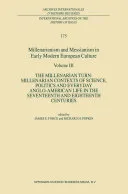
Millenarianism and Messianism in Early Modern European Culture
 74
74

Millenarianism and Messianism in Early Modern European Culture
The collection *Millenarianism and Messianism in Early Modern European Culture* excels at demonstrating the persistent undercurrent of apocalyptic expectation in an era often assumed to be dominated by nascent secularism. Force and Popkin's contributors reveal how concepts of a coming messianic age or a divinely ordained leader continued to inform intellectual and social currents well past the Reformation's peak. A particular strength lies in its tracing of these ideas into the "long" eighteenth century, challenging the simplistic narrative of Enlightenment triumph over religious fervor. However, the book's breadth occasionally leads to a diffusion of focus; some essays feel more like preliminary sketches than fully developed arguments. The analysis of how the American and French Revolutions were perceived through the lens of millenarianism, while present, could have been more deeply explored. Nevertheless, for its meticulous scholarship in revealing a less-examined facet of early modern thought, the work offers substantial value.
📝 Description
74
Published in 2002, Millenarianism and Messianism in Early Modern European Culture examines apocalyptic thought across Europe.
This collection moves beyond the well-studied case of Cromwellian England to investigate the influence of apocalyptic and messianic beliefs on European culture from the Reformation to the Enlightenment. It challenges the idea that these eschatological ideas faded with the rise of rationalism and stability.
The book highlights the surprising persistence of future-oriented prophecies and the anticipation of a coming savior or golden age. These beliefs continued to shape intellectual, religious, and political discourse even during the "long" eighteenth century. The work addresses the period after the English Revolution, through the American and French Revolutions, showing how ingrained expectations adapted and endured.
It is intended for scholars and advanced students of early modern European history, religious studies, and the history of ideas. Readers interested in the intersection of religion and politics, the development of secularism, and the cultural impact of eschatological expectations will find it valuable.
This work engages with the long tradition of apocalyptic and messianic thinking that has permeated European culture for centuries. It specifically focuses on how these deeply held beliefs about divine intervention and future transformation persisted and evolved during the early modern period. The collection examines how concepts of a coming savior or a redeemed future, often rooted in religious prophecy, continued to influence intellectual and political currents even as secular and rationalist ideas gained prominence.
💡 Why Read This Book?
• Learn how millenarian expectations, far from being confined to the Reformation, persisted and evolved through the "long" eighteenth century, influencing key historical events. • Understand the specific cultural conceptions of messianic leadership and divine intervention discussed in relation to figures and movements of the era. • Gain insight into the adaptation of apocalyptic thought into more secularized forms of societal transformation during the Enlightenment, challenging conventional historical timelines.
⭐ Reader Reviews
Honest opinions from readers who have explored this book.
❓ Frequently Asked Questions
What is the primary focus of 'Millenarianism and Messianism in Early Modern European Culture'?
The book's primary focus is to explore the persistent influence of millenarian and messianic ideas in European culture during the 'long' eighteenth century, extending beyond the more commonly studied period of the English Civil War.
Which historical period does this book primarily cover?
It primarily covers the 'long' eighteenth century, from roughly the aftermath of the English Civil War through the era of the American and French Revolutions, examining intellectual and cultural currents.
How does this book differ from studies focusing solely on Cromwellian England?
Unlike studies focused narrowly on Cromwellian England, this work investigates the subtler, yet pervasive, presence of millenarian and messianic beliefs in subsequent periods, particularly within the supposedly rationalistic Enlightenment.
Who are the editors of this collection?
The editors of this collection are J.E. Force and R.H. Popkin, renowned scholars in the history of early modern thought and religion.
What kind of 'messianic leader' is discussed in the context of Cromwellian England?
The book references Oliver Cromwell as a key figure associated with messianic expectations in Cromwellian England, where he was perceived by some as a leader ushering in a new era.
Does the book discuss the impact of the French Revolution on millenarian thought?
Yes, the book examines the 'long' eighteenth century up to and including the period of the American and French Revolutions, considering how these events were interpreted through the lens of existing millenarian and messianic frameworks.
🔮 Key Themes & Symbolism
Messianic Leadership
The collection investigates the concept of the 'messianic leader,' moving beyond the well-documented case of Oliver Cromwell in England. It explores how individuals and movements across early modern Europe interpreted certain figures as divinely appointed agents destined to bring about a new age or a radical transformation. This theme examines the psychological and social functions of such beliefs, particularly in times of upheaval and uncertainty, and how these perceptions shaped political discourse and popular expectations.
Apocalyptic Expectations
This theme delves into the pervasive millenarian expectations that fueled a belief in the imminent end of the current world order and the establishment of a divine kingdom. It traces how these expectations manifested not only in overt religious movements but also in subtle cultural undercurrents throughout the "long" eighteenth century. The work scrutinizes how the anticipation of a millennium or a cataclysmic divine intervention influenced intellectual currents and societal responses to historical events.
Enlightenment Paradox
The book critically examines the apparent paradox of widespread millenarian and messianic beliefs coexisting with the rise of Enlightenment rationalism. It challenges the conventional narrative that the Enlightenment definitively eradicated eschatological thinking, revealing instead its persistence and adaptation. This theme explores how concepts of progress, revolution, and societal perfection, even in secularized forms, carried echoes of older prophetic traditions, demonstrating a complex interplay between reason and faith.
Cultural Adaptation of Prophecy
This theme focuses on how prophetic and eschatological ideas were not static but dynamically adapted to changing cultural and intellectual landscapes. It examines the transition from overt religious pronouncements to more secularized interpretations of future transformation. The work illustrates how these enduring beliefs informed responses to significant historical moments, including the American and French Revolutions, showcasing their resilience and capacity to reframe contemporary events within an overarching providential or teleological framework.
💬 Memorable Quotes
“The widespread belief that England, with its messianic leader 1 Cromwell, heralded the millennium is well known.”
— This statement highlights a foundational understanding of millenarianism in early modern England, identifying Oliver Cromwell as a central figure in the era's messianic expectations and its perceived role in ushering in a thousand-year reign.
“Less well examined, perhaps, has been the cultural conceptions of the role of millenarian and messianic ideas in the 'long' eighteenth century.”
— This indicates a core scholarly gap the book aims to address: the underestimation of apocalyptic and messianic thought's continued influence during periods often characterized by rationalism, like the Hanoverian era.
“Especially during the stable Hanoverian era - until the American and French Re”
— This fragment points to the surprising persistence of millenarian and messianic ideas even within periods of perceived political stability, suggesting these beliefs were not solely confined to times of overt crisis or revolution.
“The work explores the cultural conceptions of the role of millenarian and messianic ideas in the 'long' eighteenth century.”
— This paraphrased concept emphasizes the collection's objective to investigate how beliefs about a coming golden age or savior figure were integrated into the broader cultural fabric of the 18th century.
“The stable Hanoverian era saw the continuation of these eschatological expectations.”
— This interpretation suggests that despite the era's focus on rational governance, underlying beliefs in divine intervention and future salvation remained influential, shaping societal outlooks.
🌙 Esoteric Significance
Tradition
This work intersects with esoteric traditions by examining the persistent belief in divine intervention and transformative historical epochs, often central to Gnostic, Hermetic, and Kabbalistic thought. While not a manual of practice, it analyzes the cultural manifestation of these deeply held convictions about cosmic cycles and salvation. It fits within esoteric scholarship by revealing how concepts of a 'Golden Age' or a 'Messianic Age' – core tenets in many esoteric lineages – permeated broader European consciousness, influencing political and social movements.
Symbolism
Key symbols explored implicitly include the 'Messianic Leader,' representing divine authority or providential guidance in human affairs, and the 'Millennium' itself, symbolizing a future state of perfection, peace, and spiritual renewal. The concept of 'Divine Providence' also functions symbolically, representing an overarching cosmic order guiding history towards a predestined, often utopian, outcome, a common motif in esoteric cosmologies.
Modern Relevance
Contemporary thinkers and movements concerned with historical cycles, utopian ideals, and the role of charismatic leadership can draw from this work. It informs discussions on the enduring appeal of revolutionary fervor and the search for societal salvation, demonstrating how these deeply human desires have historical roots in millenarian and messianic expectations. Understanding this lineage is crucial for analyzing modern political ideologies and social movements that promise radical transformation.
👥 Who Should Read This Book
• Scholars of early modern European history and the history of ideas: Gain a nuanced understanding of how religious and eschatological beliefs continued to shape intellectual discourse and political events during the Enlightenment. • Students of comparative religion and cultural studies: Explore the persistent cultural impact of messianic and millenarian thought beyond its peak during the Reformation and English Civil War. • Researchers interested in the roots of modern political ideologies: Understand how concepts of societal transformation and utopian futures have historical precedents in early modern apocalyptic expectations.
📜 Historical Context
The "long" eighteenth century, spanning from the late 17th century through the French Revolution, was a period of profound intellectual and social transformation in Europe. While the Enlightenment championed reason, scientific inquiry, and secular governance, it did not eradicate deeply ingrained religious and eschatological beliefs. The period following the upheavals of the English Civil War and the Restoration saw a complex interplay between nascent secularism and enduring millenarianism. Figures like Isaac Newton, while a scientific giant, also engaged extensively with biblical prophecy, illustrating this intellectual duality. Furthermore, the French Revolution, with its radical reshaping of political and social orders, was interpreted by many through apocalyptic lenses, demonstrating the continued relevance of messianic and millenarian frameworks. This collection argues that these ideas, often operating beneath the surface of Enlightenment discourse, significantly shaped cultural perceptions and responses to historical events.
📔 Journal Prompts
Millenarian expectations during the Hanoverian era: How did they differ from those of Cromwellian England?
The concept of the 'messianic leader': What are its enduring characteristics across different historical contexts discussed?
Cultural conceptions of a coming millennium: How were these ideas adapted to fit Enlightenment rationalism?
Apocalyptic thought and the American and French Revolutions: What connections does the work suggest?
The paradox of stability and expectation: Reflect on how periods of perceived peace fostered future-oriented beliefs.
🗂️ Glossary
Millenarianism
A belief system centered on the idea of an imminent, future earthly kingdom or era of peace and righteousness, often lasting a thousand years (a millennium), typically ushered in by divine intervention or a messianic figure.
Messianism
Belief in the coming of a messiah (anointed one) or savior figure who will redeem humanity, restore a lost golden age, or establish a divinely ordained kingdom on Earth.
Cromwellian England
Refers to England during the period of the Commonwealth and Protectorate (1649–1660), when Oliver Cromwell was a dominant political and military leader, often associated with radical religious and political movements.
Long Eighteenth Century
A historiographical term referring to the period extending from the late 17th century (often starting with the Glorious Revolution of 1688) up to the French Revolution of 1789 or even later, encompassing the Enlightenment and its aftermath.
Hanoverian Era
The period of British history ruled by the House of Hanover, beginning with George I in 1714 and continuing through the reigns of George II, George III, and George IV, generally associated with relative political stability.
Eschatology
The branch of theology concerned with the final destiny of the soul and of humankind, including beliefs about the end of the world, judgment, resurrection, and the afterlife.
Enlightenment
An intellectual and cultural movement in the 17th and 18th centuries emphasizing reason, individualism, skepticism towards traditional authority, and the pursuit of knowledge through empirical observation and scientific method.