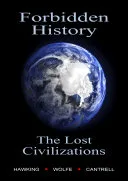
Forbidden History, The Lost Civilizations
 72
72

Forbidden History, The Lost Civilizations
The assertion that civilizations like Thebes existed in 37,900 BC, as presented in Hawking and Wolfe's Forbidden History, The Lost Civilizations, is a bold claim that immediately signals the book's departure from established archaeological consensus. The authors meticulously compile accounts and supposed evidence from sites worldwide, constructing a compelling case for a much older, forgotten human history. One significant strength is the direct challenge to accepted timelines; the work forces readers to re-examine what they consider 'settled' historical fact. However, a limitation lies in the sometimes speculative nature of the interpretations, which, while intriguing, often lack the rigorous peer-reviewed validation expected in academic archaeology. A passage discussing the potential reinterpretation of megalithic structures, for instance, is particularly evocative. Ultimately, the book serves as a potent catalyst for questioning, rather than a definitive historical record.
📝 Description
72
### What It Is Forbidden History, The Lost Civilizations by M.G. Hawking and Jenna Wolfe, Ph.D. investigates archaeological anomalies that challenge conventional timelines of human development. The work presents evidence suggesting advanced societies existed far earlier than mainstream history acknowledges. It scrutinizes findings from various global sites, positing that current academic narratives may be incomplete.
### Who It's For This book is for the independent researcher, the amateur archaeologist, and any reader questioning established historical accounts. It appeals to those interested in ancient mysteries, proto-history, and the potential for forgotten chapters in the human story. It is suited for individuals seeking evidence that deviates from standard university curricula.
### Historical Context The authors directly confront the post-Ice Age origin model for civilization. They cite specific sites like Thebes, reportedly dating to 37,900 BC, and Edfu, c. 18,000 BC, to illustrate their point. This challenges prevailing theories that place the rise of complex societies, such as those in Mesopotamia or Egypt, much later in established timelines. The work engages with a growing body of literature that questions conventional archaeological dating and historical progression.
### Key Concepts The central thesis revolves around the existence of prehistoric advanced civilizations. The book explores concepts like cyclical history, lost knowledge, and the possibility of cataclysmic events that erased previous epochs. It examines how geological and archaeological records might be interpreted to support these theories, moving beyond the accepted progression from hunter-gatherer societies to settled civilizations.
💡 Why Read This Book?
• Gain an alternative perspective on the origins of civilization by examining evidence for pre-Ice Age societies, such as the alleged dating of Edfu to c. 18,000 BC. • Understand the challenges to conventional archaeological timelines and the reasoning behind questioning established historical narratives. • Explore the concept of lost epochs and the potential impact of cataclysmic events on the preservation of ancient human knowledge, as discussed within the book's framework.
⭐ Reader Reviews
Honest opinions from readers who have explored this book.
❓ Frequently Asked Questions
What evidence does Forbidden History, The Lost Civilizations present for ancient civilizations predating the last Ice Age?
The book cites archaeological findings from sites like Thebes (c. 37,900 BC) and Edfu (c. 18,000 BC) as primary evidence challenging the conventional post-Ice Age origin of civilization. It references various global locations and artifacts.
Who are the authors of Forbidden History, The Lost Civilizations?
The book is authored by M.G. Hawking and Jenna Wolfe, Ph.D. It was first published in 2025.
What is the main argument against traditional historical timelines in this book?
The central argument is that contemporary discoveries in archaeology increasingly undermine the theory that human civilization began only after the last Ice Age, suggesting much older, advanced cultures.
What kind of reader would most appreciate Forbidden History, The Lost Civilizations?
Readers interested in esoteric history, ancient mysteries, alternative archaeology, and those who enjoy questioning established historical narratives would find this book compelling.
Does the book offer specific examples of lost civilizations?
Yes, the book explores evidence for lost civilizations by referencing sites such as Thebes and Edfu, suggesting they represent sophisticated societies from periods far earlier than commonly accepted.
When was Forbidden History, The Lost Civilizations first published?
The book was first published on September 24, 2025.
🔮 Key Themes & Symbolism
Pre-Ice Age Civilizations
The core of the book is the meticulous examination of evidence suggesting advanced human societies existed prior to the last glacial period. It presents archaeological findings and interpretations that push the timeline of civilization back tens of thousands of years, citing sites like Thebes (c. 37,900 BC) and Edfu (c. 18,000 BC) as examples. This theme challenges the established narrative of civilization's origins, proposing a history far more ancient and complex than currently taught.
Archaeological Anomalies
This theme focuses on artifacts, structures, and sites that defy conventional explanations within mainstream archaeology. The authors highlight discoveries that seem out of place chronologically or technologically, suggesting they are remnants of forgotten epochs. The work encourages a re-evaluation of existing data and a consideration of alternative interpretations for these anomalies, moving beyond accepted academic paradigms.
Lost Knowledge and Cataclysms
Forbidden History posits that advanced knowledge and sophisticated cultures may have been lost to history due to catastrophic events. This theme explores the cyclical nature of civilizations, where periods of great advancement are followed by destruction and subsequent rebirth. The book considers how such events could explain the scarcity of evidence for extremely ancient societies, even if they once existed.
Revisionist History
The book operates within the realm of revisionist history, actively questioning and seeking to overturn established accounts of the past. It champions critical thinking regarding historical narratives and academic consensus, encouraging readers to explore alternative theories and evidence. This theme is about the pursuit of a more complete, albeit potentially unsettling, understanding of human origins and development.
💬 Memorable Quotes
“Contemporary discoveries have greatly undermined that conjecture [that human civilization began only following the last Ice Age].”
— This statement encapsulates the book's central thesis, asserting that new archaeological evidence directly contradicts the widely accepted timeline for the emergence of complex human societies.
“Modern research has unearthed lost civilizations one after another.”
— This highlights the authors' assertion that the discovery of ancient, advanced societies is not an isolated phenomenon but a recurring pattern challenging established historical frameworks.
“Academic accounts of the origins of civilization have fallen forfeit to evidence from archaeological sites worldwide.”
— This suggests that empirical findings, particularly from sites like Thebes and Edfu, are now so compelling that they invalidate older, less evidence-based theories about humanity's earliest civilizations.
“Thebes (c. 37,900 BC), Edfu (c. 18,000 BC).”
— These specific dates and locations serve as concrete anchors for the book's argument, presenting seemingly verifiable evidence of advanced human settlements far earlier than mainstream archaeology typically accepts.
“The archaeological community labored under the theory that human civilization began only following the last Ice Age.”
— This points to the dominant paradigm the authors aim to dismantle, framing their work as a necessary correction to a historical narrative they believe is based on incomplete or outdated assumptions.
🌙 Esoteric Significance
Tradition
This work aligns with esoteric traditions that posit cyclical ages of civilization and the existence of lost golden ages, often found in Theosophical, Anthroposophical, and certain New Age interpretations of history. It departs from strictly academic historical lineages by prioritizing speculative evidence and alternative interpretations that align with pre-established esoteric narratives of humanity's hidden past.
Symbolism
While not heavily symbolic in a traditional occult sense, the book's implied symbolism lies in the very concept of 'lost civilizations.' These represent a lost golden age, a forgotten potential of humanity, and the cyclical nature of existence. The sites mentioned, like Thebes and Edfu, become symbols of suppressed knowledge and proof that human potential has been far greater and older than conventionally understood.
Modern Relevance
Contemporary thinkers exploring topics like ancient advanced technology, earth mysteries, and alternative chronologies often draw upon the ideas presented in works like this. It fuels discussions in online communities dedicated to ancient civilizations, providing 'evidence' for theories about pre-Diluvian societies and influencing modern esoteric interpretations of human origins.
👥 Who Should Read This Book
• Seekers of alternative historical narratives: Individuals who question mainstream archaeological and historical accounts and are interested in evidence suggesting much older, advanced civilizations. • Amateur archaeologists and researchers: Those who enjoy exploring historical anomalies, fringe theories, and piecing together potential forgotten chapters of human history. • Readers interested in esoteric history: Individuals drawn to the idea of lost epochs, ancient wisdom, and the cyclical nature of civilization, seeking to understand humanity's past beyond conventional academic frameworks.
📜 Historical Context
Published in 2025, *Forbidden History, The Lost Civilizations* emerges amidst a continued global interest in ancient mysteries and alternative histories. The intellectual currents it taps into include fringe archaeology, ancient astronaut theories, and critical re-examinations of established timelines, often fueled by accessible online content and documentaries. The book directly challenges the consensus view championed by figures like renowned Egyptologist Zahi Hawass, who has consistently advocated for the established timelines of ancient Egyptian civilization. While not a direct engagement, the work implicitly critiques the scientific establishment that Hawass represents. The period of its publication sees a proliferation of pseudoarchaeological content, making it difficult to pinpoint specific contemporary scholarly debates or reception events directly engaging with this particular title, though its themes resonate with broader discussions about historical revisionism.
📔 Journal Prompts
Ancient sites like Thebes (c. 37,900 BC) prompt questions about the preservation of knowledge across millennia.
The concept of 'lost civilizations' invites reflection on what humanity might have forgotten.
Consider the implications of evidence contradicting established historical timelines.
Reflect on the role of cataclysms in shaping and potentially erasing human history.
The existence of Edfu (c. 18,000 BC) raises questions about the continuity of human development.
🗂️ Glossary
Last Ice Age
The most recent glacial period, which occurred roughly between 115,000 and 11,700 years ago. Conventional theories often posit that complex human civilization began to emerge following its conclusion.
Archaeological Anomalies
Discoveries or findings that do not fit neatly into existing archaeological frameworks or timelines, often suggesting older or more advanced civilizations than previously accepted.
Prehistoric Civilizations
Advanced human societies that existed before recorded history, often characterized by complex social structures, technology, and culture, as proposed by alternative historical theories.
Conventional Timelines
The generally accepted chronological order of historical events and developments, particularly regarding the origins and progression of human civilization as established by mainstream academic consensus.
Lost Civilizations
Hypothetical or actual ancient societies that have disappeared or whose existence has been largely erased from historical records, often speculated to have possessed advanced knowledge or technology.
Cyclical History
A view of history that posits recurring patterns of rise, decline, and fall of civilizations, suggesting that epochs of advancement are followed by periods of destruction and renewal.
Proto-history
The period between prehistory and history, characterized by early forms of civilization and societal organization that are not fully documented through written records.