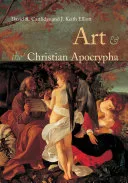
Art and the Christian Apocrypha
 74
74

Art and the Christian Apocrypha
The decision to focus on the visual impact of apocryphal texts is a wise one, moving beyond purely theological or textual analysis. Cartlidge and Elliot make a compelling case that these "lost" stories were far from forgotten, instead fueling a vibrant stream of Christian art. The strength of the book lies in its clear presentation of complex relationships between obscure texts and recognizable artistic motifs. For instance, the discussion of how the Protoevangelium of James informed depictions of Mary's parents, Joachim and Anne, is particularly illuminating. A minor limitation might be the book's accessibility for absolute beginners; while lucid, it assumes some familiarity with art historical and textual criticism. Nevertheless, the central argument—that the apocrypha provided a crucial wellspring for Christian iconography—is persuasively argued and well-supported by examples. It offers a valuable corrective to a canon-centric view of early Christian art.
📝 Description
74
### Unveiling the Canonical Exclusions
This volume meticulously examines the artistic and theological landscape shaped by texts intentionally omitted from the New Testament canon. It argues that these "excluded" scriptures, far from being mere curiosities, profoundly influenced the visual culture of Christianity, providing narrative and iconographic foundations for countless works of art. The book serves as a crucial guide for understanding how apocryphal stories, such as those detailing the early life of Mary or the deeds of Christ's disciples, found their way into mosaics, paintings, and sculptures across centuries, often filling narrative gaps left by the canonical gospels.
### The Visual Language of Heretical Texts
Cartlidge and Elliot demonstrate that the visual representations of Christian narratives were not solely derived from the four canonical gospels. Instead, a rich visual vocabulary emerged from apocryphal traditions, including the Protoevangelium of James and the Infancy Gospels. These texts provided detailed accounts of events, characters, and miracles that, while not accepted by early church councils as authoritative scripture, were widely disseminated and embraced by the faithful. The book charts the transmission of these narratives and their translation into tangible artistic forms, revealing a dynamic interplay between textual tradition and visual expression.
### A Bridge Between Text and Image
Art and the Christian Apocrypha offers a lucid introduction to the often-overlooked connection between these non-canonical writings and the visual arts. It moves beyond simple illustration to explore how apocryphal narratives offered alternative theological perspectives and characterizations that resonated with artists and patrons. The work provides a scholarly yet accessible entry point for appreciating the depth and complexity of early Christian storytelling and its enduring impact on the iconography that defines Western art.
### Scholarly Foundation and Artistic Resonance
The book's strength lies in its systematic approach, cataloging specific apocryphal texts and tracing their influence through various artistic mediums. It highlights how these stories, circulating from at least the 2nd century CE, offered compelling narratives that were visually translated into stone, pigment, and glass. This exploration is vital for anyone seeking to understand the full spectrum of early Christian belief and its material manifestations, showing how artistic choices were often dictated by a broader, less restrictive scriptural and narrative environment.
💡 Why Read This Book?
• Gain an understanding of how apocryphal texts, such as the Protoevangelium of James, provided narrative frameworks for early Christian art, influencing visual representations beyond canonical scripture. • Discover specific artistic motifs and iconographic choices directly linked to non-canonical narratives, enriching your interpretation of paintings, mosaics, and sculpture from the early Christian period. • Appreciate the broader textual landscape of early Christianity, recognizing that artistic expression often drew from a wider pool of stories than the finalized New Testament canon suggests, particularly from the 2nd century onwards.
⭐ Reader Reviews
Honest opinions from readers who have explored this book.
❓ Frequently Asked Questions
What are the "Christian Apocrypha" discussed in this book?
The Christian Apocrypha are ancient texts relating to Jesus and his followers that were not included in the New Testament canon. Examples include the Gospel of Thomas and the Protoevangelium of James, which offer different accounts of Jesus's life and early Christian beliefs.
How did apocryphal texts influence Christian art?
Apocryphal texts provided visual artists with rich narrative material and character details not found in the canonical Bible. These stories were frequently depicted in paintings, mosaics, and sculptures, shaping the iconography of Christian belief and practice.
When did these apocryphal stories begin influencing art?
The influence began early, with many apocryphal texts circulating from the 2nd century CE onwards. Their narratives gradually permeated Christian visual culture, becoming significant sources for artistic representation throughout the early and medieval periods.
Are the authors David R. Cartlidge and J. Keith Elliot scholars in this field?
Yes, David R. Cartlidge and J. Keith Elliot are recognized scholars who have contributed significantly to the study of early Christian texts and their reception in art history.
What is the historical context for the exclusion of these texts from the canon?
The exclusion of these texts from the Christian canon was a complex process involving early Church councils and debates over theological orthodoxy and apostolic authority, solidifying the New Testament canon by the 4th century CE.
Does this book argue for the theological validity of the apocrypha?
No, the book focuses on the historical and artistic influence of the apocrypha, analyzing their impact on visual culture rather than making claims about their theological authenticity or canonical status.
🔮 Key Themes & Symbolism
Narrative Visualisation
This theme explores how stories absent from the canonical New Testament, particularly those concerning the Virgin Mary's early life or the infancy of Jesus, were translated into visual forms. The Protoevangelium of James, for instance, provided detailed accounts of Joachim and Anne's piety and Mary's upbringing, which artists then rendered in mosaics and frescoes. The book illustrates how these apocryphal narratives offered a richer, more human dimension to biblical figures, moving beyond the sparse details of canonical texts to create compelling visual narratives.
Iconographic Innovation
The work highlights how apocryphal texts served as a source of novel iconography for early Christian art. Instead of solely relying on existing biblical imagery, artists drew from apocryphal traditions to depict specific events, miracles, or theological concepts. This allowed for the development of unique visual symbols and scenes that conveyed Christian beliefs to a wider audience, often filling gaps left by the canonical scriptures and contributing to the diverse visual language of the faith from the 2nd century onwards.
Canonical Influence vs. Popular Tradition
This theme addresses the dynamic between the officially sanctioned biblical canon and the broader body of popular Christian stories. The book demonstrates that while certain texts were excluded from the New Testament by church authorities, their narratives continued to circulate widely and held significant sway among the populace and artists. This created a complex relationship where art often reflected a more inclusive tradition than the finalized scripture, showing how popular imagination and artistic practice engaged with a wider textual universe.
Theological Articulation Through Imagery
Beyond mere storytelling, apocryphal narratives offered distinct theological perspectives that found expression in art. The book examines how imagery derived from these texts could subtly or overtly communicate different understandings of Christology, Mariology, or salvation history. By analyzing specific artworks, the authors reveal how artists used apocryphal motifs to convey nuanced theological ideas that may not have been as easily articulated through canonical texts alone, thus enriching the visual theology of early Christianity.
💬 Memorable Quotes
“The apocryphal texts often filled narrative lacunae in the canonical scriptures.”
— This observation points to how stories about figures like Mary or Jesus, which were popular but not detailed in the New Testament, were fleshed out by apocryphal writings, providing artists with richer material to depict.
“Visual representations frequently paralleled apocryphal accounts.”
— This suggests a direct link where paintings, mosaics, and sculptures were not just inspired by but actively depicted scenes and characters described in non-canonical Christian texts.
“Many traditional stories about Christian origins were excluded from the New Testament canon.”
— This highlights the historical reality that the accepted Bible represents a selection, and many widely circulated narratives were deemed non-canonical by early Church authorities but persisted in popular culture.
“Apocryphal texts had a marked effect on visual representations of Christian belief.”
— This emphasizes that the influence of these excluded texts was not merely textual but had a tangible and significant impact on the visual art produced by and for early Christian communities.
“These texts provided foundations for the Church's traditions and theology.”
— This indicates that even though excluded from scripture, the stories within apocryphal texts contributed to shaping the broader theological landscape and traditional practices of Christianity over time.
🌙 Esoteric Significance
Tradition
While not strictly aligned with a single esoteric lineage like Gnosticism or Kabbalah, this work resonates with traditions that explore Gnostic interpretations of early Christianity and the broader Hermetic corpus. It touches upon the concept of a 'hidden' or 'received' wisdom that exists outside mainstream religious structures, a common theme in esoteric thought. The focus on texts deemed apocryphal aligns with esoteric interests in alternative spiritual paths and the recovery of suppressed or lost knowledge, suggesting that orthodox canons may obscure deeper spiritual truths.
Symbolism
The book implicitly engages with symbols like the Nativity and the early life of Mary, which are often depicted with details drawn from apocryphal sources. For instance, imagery of the Virgin Mary's parents, Joachim and Anne, their miraculous conception of Mary, and her presentation in the Temple, are frequently derived from texts like the Protoevangelium of James. These scenes, rich in symbolism of divine providence, purity, and the unfolding of a sacred lineage, take on deeper meaning when understood through their apocryphal origins, representing more complex theological ideas about divine intervention in human affairs.
Modern Relevance
Contemporary esoteric scholars and practitioners interested in historical Christian mysticism, Gnostic studies, and comparative religion find this work valuable. It informs modern explorations of Sophia (Wisdom) traditions, alternative Christologies, and the development of Marian devotion, often revealing its roots in non-canonical narratives. Thinkers and artists seeking to deconstruct established religious narratives or to find inspiration in less orthodox spiritual currents can draw upon its insights into how apocryphal traditions shaped belief and artistic expression.
👥 Who Should Read This Book
• Art historians and students specializing in Early Christian or Medieval art seeking to understand the textual influences behind iconography. • Scholars of religious studies and New Testament apocrypha interested in the reception history of non-canonical texts and their impact on culture. • Individuals with a background in esoteric Christianity or Gnosticism looking to trace the origins of certain mystical traditions and their visual manifestations.
📜 Historical Context
Published in 2013, *Art and the Christian Apocrypha* emerges in an era of renewed scholarly interest in the textual diversity of early Christianity. The book builds upon decades of research into the New Testament apocrypha, a field significantly advanced by scholars like Wilhelm Schneemelcher and his *New Testament Apocrypha* series, and more recently by figures such as Bart Ehrman. The early Christian period itself (roughly 1st to 4th centuries CE) was marked by intense textual production and debate. Various Gospels, Acts, and Epistles circulated, some of which were later deemed heretical by emerging orthodox authorities, such as those championed by Irenaeus of Lyons in the 2nd century. The reception of these apocryphal texts was complex; while formally excluded from the canon by councils like Laodicea (c. 360 CE), their narratives continued to be popular and influential, particularly in artistic circles. This book engages with that historical tension, showing how art often lagged behind or diverged from strict canonical pronouncements, reflecting a broader, more fluid understanding of sacred narrative.
📔 Journal Prompts
The narrative lacunae filled by apocryphal texts.
Visual parallels between apocryphal accounts and early Christian art.
The influence of excluded Christian stories on later traditions.
The theological articulation of apocryphal motifs in visual form.
Joachim and Anne's piety as depicted through apocryphal narratives.
🗂️ Glossary
Apocrypha
Ancient texts relating to biblical figures or events that were not accepted into the canonical scriptures of Judaism or Christianity. They often provide alternative narratives and perspectives.
Canonical
Relating to or forming part of a canon of scripture or accepted doctrine. In this context, it refers to the books officially recognized as part of the New Testament.
Iconography
The visual images and symbols used in the study or interpretation of art. It refers to the subject matter and meaning of the artwork, often related to religious or mythological themes.
Protoevangelium of James
An apocryphal text from the 2nd century CE that details the life of Mary, the mother of Jesus, and her parents, Joachim and Anne. It significantly influenced Christian art and tradition.
Narrative Lacunae
Gaps or missing sections within a narrative. In this context, it refers to aspects of biblical stories not fully elaborated upon in the canonical scriptures.
New Testament Canon
The collection of twenty-seven books that are accepted by most Christian denominations as the inspired Word of God and the authoritative scripture of the Christian faith.
Theology
The study of the nature of God and religious belief. In this book, it refers to how apocryphal narratives contributed to the development and expression of Christian thought.