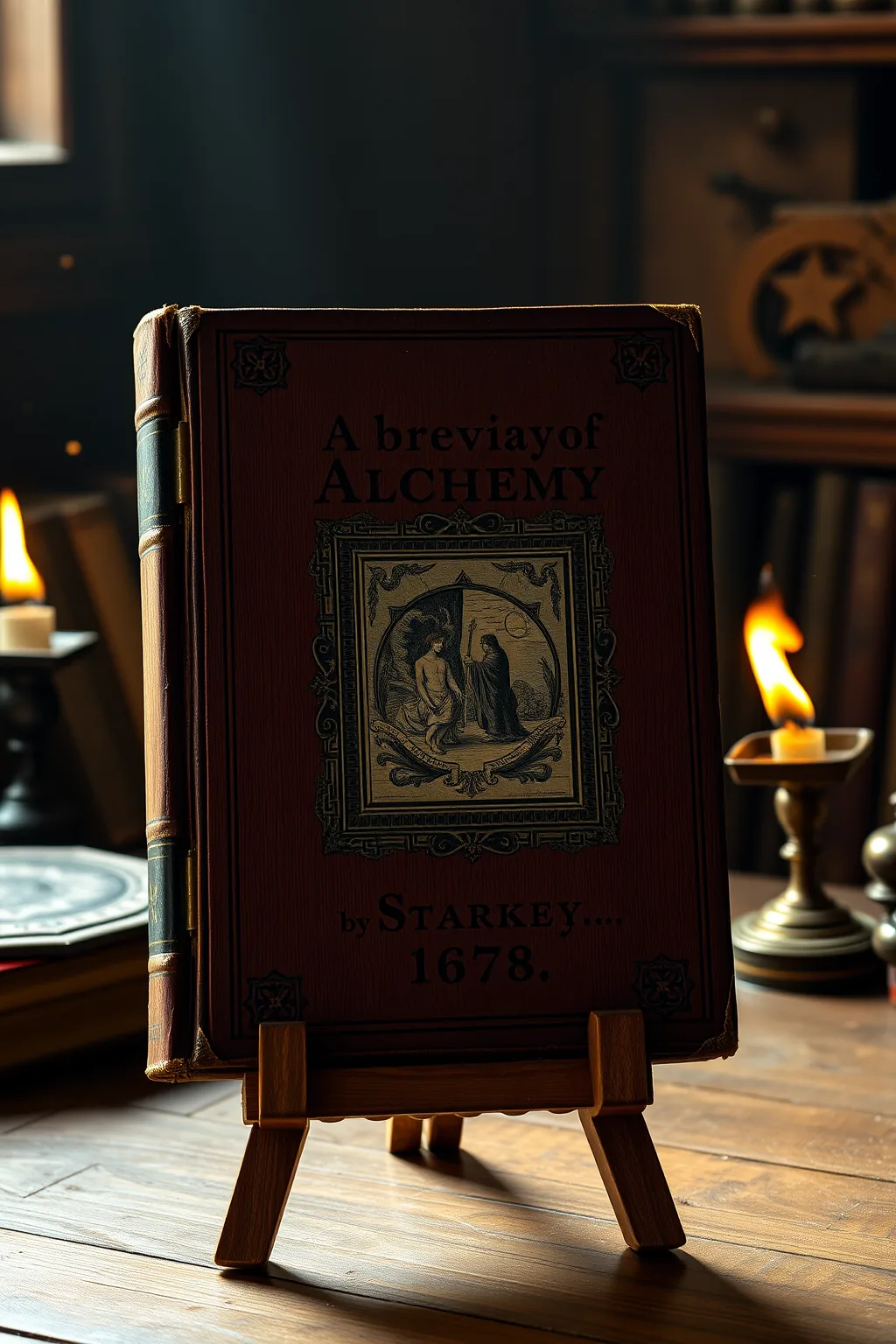
A breviary of alchemy; ... 1678
 84
84

A breviary of alchemy; ... 1678


Ophelia Vance (Mystical Literature Reviewer) — George Starkey's 'A Breviary of Alchemy' is a cornerstone text for serious students of the Hermetic arts. Published in 1678, this work transcends simple laboratory procedures, delving into the profound philosophical underpinnings of alchemical transformation. Starkey's evocative prose illuminates the symbolic language of the Art, offering profound insights into the spiritual dimensions of material change. Its strength lies in its concise yet potent distillation of complex ideas, making it accessible to those with a dedicated thirst for esoteric knowledge. This breviary is an invaluable resource for practitioners seeking deeper understanding and scholars examining the evolution of Western esotericism.
📝 Description
84
George Starkey's 'A Breviary of Alchemy' was written in 1678, distilling complex alchemical ideas.
George Starkey penned 'A Breviary of Alchemy' in 1678, a work that distills alchemical principles for the serious student. This text does not present simple laboratory procedures. Instead, it offers a philosophical outlook on the Great Work, using alchemical symbolism to discuss transmutation. Starkey, a man of his era, aimed to convey hidden knowledge concerning both spiritual and material change. The book is intended for individuals who wish to grasp the connection between the human self and the wider universe. It guides the reader in understanding nature's secrets and pursuing divine insight through alchemy.
The breviary invites contemplation on the oneness of existence and the transformative potential found in the search for genuine wisdom. It encourages a deep engagement with alchemical concepts, suitable for those prepared to consider the deeper meanings behind the art. The work reflects a commitment to understanding fundamental correspondences within the natural world and the human spirit.
Written in 1678, this breviary belongs to the Hermetic tradition that flourished in early modern Europe. Alchemists of this period, like Starkey, sought to understand the fundamental principles of the cosmos, believing in a hidden unity underlying all phenomena. Their work often blended practical laboratory pursuits with philosophical and spiritual aims, seeking not just physical gold but also inner transformation. This tradition drew heavily on ancient Greek, Egyptian, and Arabic sources, interpreting them through a Christianized Neoplatonic lens. Starkey's text fits within this lineage, emphasizing the symbolic and philosophical dimensions of alchemy.
💡 Why Read This Book?
Unravel the ancient secrets of transformation and spiritual evolution. This breviary offers a potent glimpse into the heart of alchemical philosophy, ideal for seekers of hidden wisdom, scholars of esoteric traditions, and practitioners aspiring to deepen their understanding of the Great Work. Explore timeless principles of material and spiritual transmutation.
⭐ Reader Reviews
Honest opinions from readers who have explored this book.
❓ Frequently Asked Questions
What is the primary focus of Starkey's 'A Breviary of Alchemy'?
The primary focus is on the philosophical and spiritual aspects of alchemy, rather than purely practical laboratory procedures. It aims to distill core principles and symbolic understanding of the Great Work.
Who was George Starkey?
George Starkey was an English alchemist and physician active in the 17th century, known for his contributions to alchemical literature and his work in a period of intense alchemical exploration.
What is the 'Great Work' in alchemy?
The 'Great Work' (Magnum Opus) refers to the ultimate alchemical goal, often interpreted as the creation of the Philosopher's Stone, but more profoundly, it signifies spiritual purification and enlightenment.
Is this book suitable for beginners?
While comprehensive, it is best approached by those with a foundational interest in alchemy and esoteric thought. Beginners may find it beneficial when paired with introductory texts.
What historical period does this book represent?
This book represents the height of alchemical inquiry in the 17th century, a period characterized by both scientific curiosity and deeply ingrained mystical and philosophical traditions.
🔮 Key Themes & Symbolism
The Philosophical Stone and Transmutation
This breviary explores the alchemical pursuit of the Philosopher's Stone not merely as a substance for material wealth, but as a potent symbol of spiritual perfection. Starkey expounds on the concept of transmutation, illustrating how the alchemical process mirrors the human journey of self-refinement and the elevation of consciousness. It explores the idea that true alchemy is an inner work, a transformation of the soul, where base elements of the self are refined into a higher state of being, mirroring the spiritual and physical changes sought in the laboratory.
The Language of Symbols and Correspondences
Central to Starkey's work is the understanding that alchemy operates through a wide range of symbols, allegories, and hidden correspondences. The text guides the reader to interpret the esoteric language embedded within alchemical texts and natural phenomena. It emphasizes the interconnectedness of all things, the macrocosm and microcosm, and how understanding these relationships unlocks the secrets of creation. The breviary serves as a lexicon for deciphering these profound symbolic communications, essential for any serious alchemist seeking to grasp the deeper truths of the Art.
The Spiritual Quest for Divine Knowledge
Beyond the material aims often associated with alchemy, Starkey presents the Great Work as fundamentally a spiritual quest. The process of alchemical transformation is depicted as a path to divine knowledge, enlightenment, and union with the ultimate source. The breviary encourages a contemplative approach, urging the practitioner to cultivate inner purity, wisdom, and a profound connection with the divine. It positions alchemy as a sacred discipline, a means to understand God's creation and one's place within it, leading to spiritual rebirth and apotheosis.
💬 Memorable Quotes
Direct passages from the work, attributed to the author.
“Observe Nature, for she is the greatest teacher.”
— This highlights the alchemical principle of 'As Above, So Below,' stressing the importance of studying the natural world to decipher its hidden laws and unlock alchemical secrets.
“The true gold is found within.”
— This points to the esoteric interpretation of alchemy, suggesting that the ultimate goal is spiritual purification and self-realization, rather than mere material wealth.
“Seek the hidden fire that animates all.”
— This refers to the vital force or spiritual energy believed to be present in all matter, the pursuit of which is central to alchemical understanding and manipulation.
“The vessel must be pure for the Elixir.”
— This emphasizes the necessity of inner purity and spiritual readiness on the part of the alchemist to successfully undertake the Great Work and achieve profound transformation.
💡 Key Ideas
Editorial paraphrase of the work's core concepts — not direct quotes.
The Art is not for the impatient soul.
This quote underscores the demanding nature of alchemy, emphasizing that true understanding and mastery require significant time, dedication, and a profound inner stillness, not haste.
🌙 Esoteric Significance
Tradition
This breviary is firmly rooted in the Western Hermetic tradition, drawing heavily from ancient Hermeticism, Neoplatonism, and Gnosticism. It represents a vital strand of Renaissance and early modern alchemical thought, focusing on the spiritual and philosophical dimensions of the Great Work. Starkey's approach emphasizes the allegorical and symbolic nature of alchemical processes, aligning with the Hermetic view of the universe as a divinely ordered system accessible through esoteric knowledge and diligent practice.
Symbolism
Starkey's work employs a rich lexicon of alchemical symbols, including the sun, moon, mercury, sulphur, salt, and various animal and mythical figures. These symbols represent not only physical substances but also cosmic principles, psychological states, and stages of spiritual development. The transmutation of base metals into gold serves as a powerful metaphor for the purification of the soul, while the serpent, the lion, and the phoenix embody transformative cycles and the overcoming of obstacles on the path to enlightenment.
Modern Relevance
In contemporary times, Starkey's 'A Breviary of Alchemy' offers clear insights into the timeless human pursuit of transformation and self-understanding. Its emphasis on symbolic language and the interconnectedness of the material and spiritual realms speaks to modern interests in Jungian psychology, consciousness studies, and holistic philosophies. For practitioners, it provides a foundational text for exploring the deeper, spiritual dimensions of alchemical practice, encouraging a more integrated approach to personal growth and the search for meaning.
👥 Who Should Read This Book
This breviary is essential for seasoned practitioners of the Hermetic Arts seeking to deepen their philosophical understanding of alchemy. Scholars of Western Esotericism will find it an invaluable primary source for understanding 17th-century alchemical thought. Aspiring alchemists and spiritual seekers will benefit from its profound exploration of transformation, symbolism, and the quest for divine knowledge. While it offers clear insights, beginners may find it most rewarding when approached with a foundational knowledge of esoteric traditions and a commitment to contemplative study.
📜 Historical Context
Published in 1678, George Starkey's 'A Breviary of Alchemy' emerges from a wide range of 17th-century alchemical and philosophical thought. This era, poised between medieval mysticism and the burgeoning scientific revolution, saw alchemy viewed by many as a legitimate, albeit esoteric, form of natural philosophy. Figures like Robert Boyle were exploring the material world with new methodologies, yet the mystical underpinnings of alchemy remained potent. Starkey's work reflects this duality, blending practical alchemical discourse with profound spiritual and hermetic interpretations. It speaks to a time when the pursuit of the Philosopher's Stone was intertwined with quests for enlightenment and a deeper understanding of God's creation, influencing not only proto-chemical practices but also philosophical and even theological debates of the period.
📔 Journal Prompts
Reflect on a personal 'base metal' in your life that you wish to transmute. What symbolic steps might this involve?
How does the concept of 'As Above, So Below' manifest in your daily experiences or observations of nature?
What alchemical symbol or metaphor from the text resonates most deeply with your current life path, and why?
Consider the idea of 'purity' in the alchemical vessel. What does inner purity mean to you in your spiritual or personal journey?
If the 'true gold' is found within, what practices or disciplines help you uncover and refine this inner treasure?
🗂️ Glossary
Great Work (Major work)
The ultimate alchemical pursuit, often understood as the creation of the Philosopher's Stone, but more profoundly, the spiritual purification and enlightenment of the alchemist.
Philosopher's Stone
A legendary alchemical substance believed to be capable of transmuting base metals into gold and/or bestowing immortality, also symbolizing spiritual perfection.
Transmutation
The alchemical process of changing one substance into another, which in a spiritual context refers to the transformation of the self towards a higher state of being.
Hermeticism
A philosophical and religious tradition based on the purported teachings of Hermes Trismegistus, emphasizing esoteric knowledge, spiritual ascent, and the interconnectedness of the cosmos.
Microcosm and Macrocosm
The principle that the human being (microcosm) is a reflection of the universe (macrocosm), and vice versa, suggesting a fundamental correspondence between the two.
This book appears in 3 collections
🔮 Readers Also Liked
Browse all →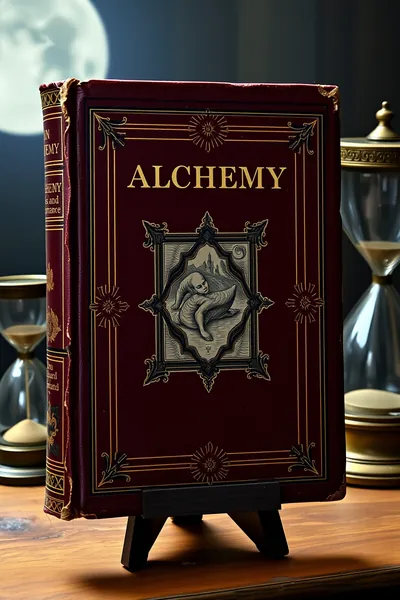

![Ancient fragments of the Phœnician, Chaldæan, Egyptian, Tyrian, Carthaginian, Indian, Persian, and other writers; with an introductory dissertation: and an inquiry into the philosophy and trinity of the ancients. By Isaac Preston Cory […]](/img/thumb/ancient-fragments-of-the-ph-nician-chald-an-egyptian-tyrian-carthaginian-indian-persian-and-other-writers-with-an-introductory-dissertation-and-an-inquiry-into-the-philosophy-and-trinity-of-the-ancien.webp)





More by Starkey, George.
All books →

From the “Hermeticism” Collection
View all →




More Free Alchemy & Hermeticism Books
View all →