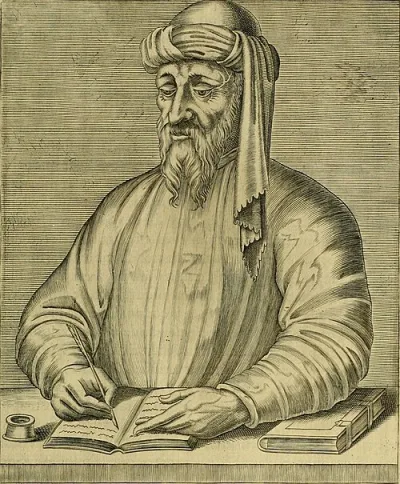
Porphyry
Porphyry was a Phoenician Neoplatonist philosopher, best known for editing Plotinus's Enneads and his influential logic textbook, the Isagoge.
Porphyry, a Phoenician philosopher born in Tyre around 234 AD, was a prominent figure in Neoplatonism and a student of Plotinus. He is credited with editing and publishing his teacher's seminal work, the Enneads. Porphyry authored numerous original philosophical texts in Greek on diverse subjects including logic, music, Homeric studies, and vegetarianism. His 'Isagoge', an introduction to logic, became a foundational textbook throughout the Middle Ages in its various translations, significantly shaping philosophical and theological discourse, particularly concerning the problem of universals. He was also known for his critiques of Christianity, engaging in theological debates and writing polemical works, some of which were later suppressed.
Philosophical Contributions and Logic
Porphyry's most enduring contribution to philosophy is his 'Isagoge', an introductory text on logic. This work, often considered a commentary on Aristotle's Categories, breaks down the concept of substance into five key components: genus, species, difference, property, and accident. This classification, famously illustrated by the 'Porphyrian Tree', became a standard element in medieval logic education. The 'Isagoge's' translation into Latin and Arabic ensured its widespread influence, serving as a primary text for philosophical and theological studies in both the Western and Islamic worlds and contributing significantly to discussions on the nature of universals.
Neoplatonism and Spiritual Practice
As a dedicated Neoplatonist, Porphyry was deeply involved in the philosophical and spiritual practices of his time. He studied under Plotinus in Rome, dedicating himself to the school's teachings and undergoing significant personal spiritual discipline, including dietary changes. Porphyry also engaged in a notable philosophical disagreement with his own disciple, Iamblichus, particularly concerning the practice of theurgy, or divine ritual. Porphyry himself advocated for spiritual exercises as crucial for personal development, aligning with a broader emphasis on the soul's journey within Neoplatonism.
Writings on Ethics and Classical Traditions
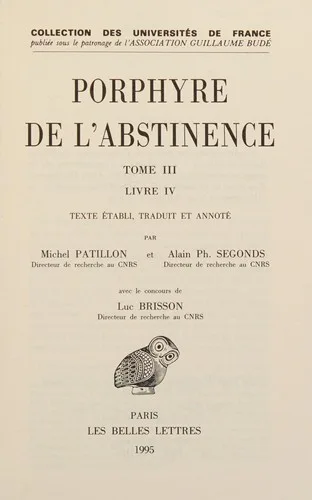
Porphyry was a notable advocate for vegetarianism, approaching it from spiritual and ethical perspectives, similar to Pythagoras. His work 'On Abstinence from Animal Food' argued against the consumption of animal products, viewing it as a means to maintain universal harmony. He also produced significant scholarship on classical literature, including detailed commentaries and analyses of Homer's epics, such as 'Homeric Questions' and 'On the Cave of the Nymphs'. His writings explored music theory and compiled biographical accounts of philosophers, including a life of his teacher, Plotinus.
Polemical Works and Anti-Christian Stance
Porphyry is also recognized for his opposition to Christianity, engaging in significant polemical writing against the faith. His work 'Against the Christians', a multi-book treatise, presented arguments that were later extensively debated by Christian apologists. While some accounts suggest he may have previously engaged with Christianity, his later writings firmly established him as a critic. His work 'Philosophy from Oracles' also defended traditional pagan religious practices. Due to their controversial nature, some of Porphyry's anti-Christian writings were ordered destroyed by Roman emperors.
Key Ideas
- Classification of substance into genus, species, difference, property, and accident (Porphyrian Tree)
- Advocacy for vegetarianism on spiritual and ethical grounds
- Spiritual exercises as essential for development
- Neoplatonic philosophy and interpretation of logic
Books by Porphyry
10 free public domain books · Read online or download