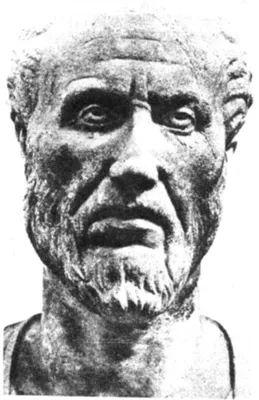
Riccardo Chiaradonna
Riccardo Chiaradonna is a scholar specializing in the history of Neoplatonism and its influence.
Riccardo Chiaradonna is an author whose work centers on Neoplatonism, a philosophical and religious movement that emerged in the 3rd century AD. This school of thought, originating with figures like Ammonius Saccas and Plotinus, posits that all reality can be traced back to a single, ultimate principle known as "the One." Neoplatonism encompasses a series of thinkers rather than a rigid set of doctrines, and it significantly shaped the subsequent intellectual landscape of Western philosophy and religion.
The influence of Neoplatonic ideas extended through the Middle Ages, impacting Christian, Jewish, and Muslim scholars. Thinkers like Thomas Aquinas and mystics such as Meister Eckhart engaged with these concepts, while Renaissance philosophers like Marsilio Ficino and Giovanni Pico della Mirandola integrated them into their own philosophies. The movement's legacy continues to resonate in modern spirituality and philosophical traditions, highlighting its enduring impact.
Neoplatonism: Origins and Core Concepts
Neoplatonism represents a significant development within Platonic philosophy, originating in the 3rd century AD amidst the intellectual ferment of Hellenistic philosophy and religion. It is characterized less by a uniform set of doctrines and more by a succession of influential thinkers from a specific historical period. A central tenet often found within Neoplatonic thought is monism, the belief that the entirety of existence can be understood as emanating from a single, ultimate source or principle, referred to as "the One." This philosophical system began with Ammonius Saccas and his student Plotinus, and its development continued through subsequent centuries, influencing major intellectual centers like the academies in Alexandria and Athens.
Historical Development and Key Figures
The lineage of Neoplatonism is typically traced from Ammonius Saccas and his prominent student Plotinus (c. 205–271 AD), considered the foundational figure of the movement. Following Plotinus, Neoplatonism evolved through distinct phases, notably the contributions of his student Porphyry (3rd to early 4th century), followed by the work of Iamblichus (3rd to 4th century). The final period saw the flourishing of Neoplatonic thought in the academies of Alexandria and Athens during the 5th and 6th centuries. These thinkers synthesized a range of philosophical and religious ideas, drawing from Middle Platonists, Neopythagoreans, and even Hellenized Jewish thought, as exemplified by Philo.
Enduring Influence and Legacy
Neoplatonism exerted a profound and lasting influence on the trajectory of Western philosophy and religious thought. During the Middle Ages, its concepts were actively explored by scholars across Christian, Jewish, and Islamic traditions. Prominent figures such as al-Farabi, Solomon ibn Gabirol, Avicenna, and Maimonides incorporated Neoplatonic elements into their own philosophical systems. Later, Christian thinkers like Thomas Aquinas engaged with Neoplatonic texts, while mystics such as Meister Eckhart found inspiration in its contemplative dimensions. The Italian Renaissance witnessed a significant revival of Neoplatonism through thinkers like Marsilio Ficino and Giovanni Pico della Mirandola, and its ideas continue to inform contemporary spirituality and philosophical discourse.
Key Ideas
- Monism: The doctrine that all reality derives from a single principle, "the One."
- The One: A supreme, transcendent principle beyond being and non-being.
Notable Quotes
“The gods have proclaimed Christ to have been most pious, but the Christians are a confused and vicious sect.”