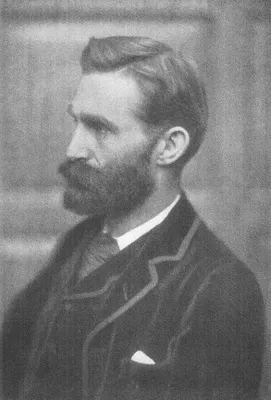
Frank Podmore was an English author and Fabian Society co-founder known for his research into spiritualism and psychical phenomena.
Frank Podmore (1856-1910) was an English author and a significant figure in both socialist and psychical research circles. He was a founding member of the Fabian Society, helping to establish its name and early headquarters. Concurrently, Podmore was an influential member of the Society for Psychical Research, dedicating much of his life to investigating spiritualism and related phenomena.
Initially drawn to spiritualism, Podmore developed a more skeptical perspective over time, particularly regarding mediumship, which he critically examined in his book 'The New Spiritualism'. Despite his skepticism towards fraudulent claims, he remained open to other concepts like telepathy and viewed ghosts as potential telepathic hallucinations. His career also included work for the Post Office and a significant biographical study of Robert Owen. Podmore's life ended tragically by drowning in 1910.
Spiritualism and Psychical Research
Frank Podmore's engagement with psychical research began early in his life, leading him to become a prominent member of the Society for Psychical Research. While initially impressed by spiritualist claims, he eventually adopted a critical stance, especially concerning the authenticity of mediums. His extensive research led him to conclude that many mediums were fraudulent, a viewpoint detailed in his work 'The New Spiritualism'. However, Podmore did not dismiss all paranormal phenomena, maintaining an interest in telepathy and proposing that ghost sightings could be understood as 'telepathic hallucinations'. His investigations often involved analyzing cases of alleged mediumship and poltergeists, frequently seeking rational or psychological explanations.
Fabian Society and Social Reform
Beyond his work in psychical research, Frank Podmore was a key figure in the early socialist movement in Britain. He was instrumental in the formation of the Fabian Society in 1884, contributing to its naming and providing his home as its initial headquarters. Podmore's involvement with the Fabian Society reflected a broader interest in social reform and intellectual debate. He collaborated with other prominent socialists, including Edward R. Pease and Sidney Webb. His contributions to the society included co-authoring a pamphlet on unemployment, demonstrating a commitment to practical social analysis alongside his more speculative investigations into the supernatural.
Skepticism and Explanations
Podmore's approach to psychical phenomena evolved towards a more skeptical viewpoint, particularly concerning the claims of spiritualist mediums. He meticulously examined various cases, often attributing alleged supernatural events to trickery or psychological factors. His book 'Studies in Psychical Research' was noted for its scientific approach to debunking fraudulent mediums. While he was critical of many spiritualist claims, he did not reject the possibility of telepathy, though even this hypothesis faced challenges in his analysis, especially concerning figures like Leonora Piper. His work aimed to provide rational explanations for phenomena that often defied conventional understanding.
Key Ideas
- Skepticism towards spiritualist mediumship, often attributing phenomena to fraud.
- Belief in telepathy as a potential explanation for some psychical experiences.
- Conceptualization of ghosts as 'telepathic hallucinations'.
- Founding member and early organizer of the Fabian Society.
Books by
8 free public domain books · Read online or download