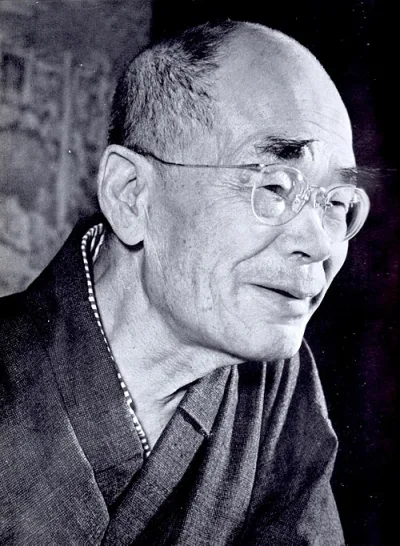
Daisetz Teitaro Suzuki was a Japanese scholar who introduced Zen and Mahayana Buddhism to the West through his writings and lectures.
Daisetz Teitaro Suzuki (1870–1966) was a Japanese scholar and essayist renowned for his extensive work in introducing Buddhist philosophy, particularly Zen and Shin, to Western audiences. Born Teitarō Suzuki in Kanazawa, he faced early hardship after his father's death, which led him to seek answers in religion. His intellectual curiosity guided his studies at Waseda and Tokyo Universities, where he mastered several languages and began Zen practice.
Suzuki's career was significantly shaped by his association with American scholar Paul Carus, whom he assisted in translating Eastern spiritual texts. He spent years in the West, lecturing at universities and collaborating on publications that aimed to bridge Eastern and Western thought. Later in life, he also explored the Jōdo Shinshū faith of his mother. Suzuki's prolific writing and translation efforts, alongside his academic appointments in Japan and abroad, cemented his legacy as a pivotal figure in the global dissemination of Buddhist thought.
Introduction of Zen Buddhism to the West
Daisetz Teitaro Suzuki played a crucial role in popularizing Zen Buddhism and Far Eastern philosophy in the Western world. Through his extensive writings, translations, and lectures, he made complex Buddhist concepts accessible to a global audience. Suzuki's approach often highlighted the practical and experiential aspects of Zen, drawing parallels with Western mystical traditions, which resonated with Western readers. He spent considerable time teaching and lecturing at Western universities, fostering a deeper understanding and interest in these traditions. His work was instrumental in establishing Zen as a significant philosophical and religious influence outside of East Asia.
Scholarly Pursuits and Key Works
Suzuki's academic career was marked by a deep engagement with Buddhist texts and philosophies. He studied Chinese, Sanskrit, Pali, and European languages, facilitating his work as a translator and scholar. He collaborated with Paul Carus, translating classical texts like the Tao Te Ching and contributing to works on Mahayana Buddhism. Suzuki held professorships at prominent institutions, including Ōtani University, and founded the Eastern Buddhist Society, which published scholarly research. His notable works, such as 'Essays in Zen Buddhism' and 'Zen and Japanese Culture,' explored Zen practice, its history, and its influence on Japanese society. He also translated the Lankavatara Sutra and studied Christian mysticism, drawing comparisons between figures like Meister Eckhart and Japanese mystics.
Zen Training and Philosophical Contributions
Suzuki's own Zen training began at Engaku-ji in Kamakura under masters Kosen Roshi and Soyen Shaku. He described this period as an intense period of mental, physical, moral, and intellectual struggle, living a monk's life focused on humility, labor, service, prayer, and meditation. This personal experience deeply informed his later writings. Suzuki proposed that Zen's distinctiveness lay in its integration of spiritual awakening with the demands of everyday life, a departure from earlier Indian Buddhist traditions. He emphasized the practical, socially integrated nature of Zen practice as it developed in China, where monks engaged in mundane tasks alongside their spiritual pursuits. This perspective offered a relatable framework for Westerners encountering Zen.
Key Ideas
- Zen enlightenment is integrated with everyday life.
- Chinese Zen developed a unique temple and training system involving mundane tasks.
- Zen's practical and experiential emphasis is relatable to Western mystical traditions.
- The importance of Mahayana Buddhism as a significant development in East Asia.
Notable Quotes
“Suzuki in his later years was not just a reporter of Zen, not just an expositor, but a significant contributor to the development of Zen and to its enrichment.”
Books by
5 free public domain books · Read online or download