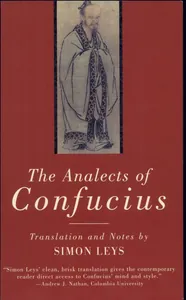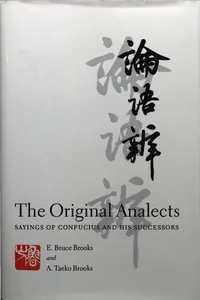
Bryan W. Van Norden, P. J. Ivanhoe, Confucius
Laozi, traditionally the author of the Tao Te Ching, is a foundational figure in Taoism, though his historical existence is debated.
Laozi, also known as Lao Tzu, is a central figure in Chinese philosophy and is traditionally credited as the author of the Tao Te Ching, a foundational text of Taoism. While traditional accounts place him in the 6th century BC as a historian for the Zhou court who met Confucius, modern scholarship generally views the biographical details as later inventions. The name 'Laozi' itself is an honorific title meaning 'Old Master,' likely used to suggest an ancient, anonymous wisdom. Scholars often consider the Tao Te Ching to be a compilation of sayings by various authors, possibly composed over a long period, with its current form emerging during the Warring States period.
Despite the historical uncertainties surrounding Laozi's person, his influence on Chinese culture and philosophy is immense. He is regarded as the founder of Taoism and has been revered by various dynasties. The Tao Te Ching itself has profoundly shaped Chinese religious and philosophical thought. Its core concepts, such as the Tao (the fundamental principle of the universe), wu wei (non-action or effortless action), and ziran (naturalness or harmony with the Tao), have been extensively studied and debated. The text's literary style, characterized by paradox and analogy, further contributes to its enduring impact.
Historical and Scholarly Perspectives
Traditional narratives identify Laozi as Li Er, a philosopher born in the 6th century BC in the state of Chu. He is often depicted as serving as the royal archivist for the Zhou dynasty, where he encountered Confucius. These accounts suggest he composed the Tao Te Ching before retiring into seclusion. However, modern scholarship casts doubt on the historicity of these biographical details, viewing them as later embellishments. Textual criticism indicates that the Tao Te Ching may not have been written by a single individual but is likely a compilation from multiple authors, with its composition possibly extending into the Warring States period. The name 'Laozi' is understood as an honorific title, meaning 'Old Master,' rather than a personal name, reflecting a common practice among ancient Chinese thinkers.
The Tao Te Ching and Its Concepts
The Tao Te Ching, often referred to as Laozi, is a seminal work deeply influential in Chinese thought. The text itself is noted for its distinctive literary style, employing paradox, analogy, and repetition to convey its ideas. Unlike many philosophical texts, it conspicuously lacks a central 'master' figure and rarely references specific historical events or individuals, contributing to an aura of timelessness. Key concepts within the Tao Te Ching include the Tao, described as the unseen yet immensely powerful source and principle of all existence, and the ideal state of being in harmony with it. The text advocates for a return to a natural state, critiquing conventional wisdom and language as artificial.
Core Philosophical Principles
Central to the teachings of the Tao Te Ching is the concept of 'wu wei,' often translated as 'non-action' or 'effortless action.' This principle encompasses a multifaceted approach to living, including acting spontaneously, not forcing outcomes, and flowing with the moment. Wu wei is intrinsically linked to 'ziran,' or naturalness, which signifies living in harmony with the Tao. The text emphasizes simplicity and humility as crucial virtues, often contrasting them with selfish or ambitious actions. It suggests that value distinctions are largely ideological and that ambition stems from a singular source, advocating for a balanced perspective on existence.
Key Ideas
- Tao: The fundamental, unseen source and principle of all existence.
- Wu wei: Non-action, effortless action, acting spontaneously and in harmony with the natural flow.
- Ziran: Naturalness, living in accordance with the Tao.
- Simplicity and humility: Virtues emphasized in contrast to ambition and selfish action.
Books by Bryan W. Van Norden, P. J. Ivanhoe, Confucius
17 free public domain books · Read online or download