Stranger with my face

 83
83

Stranger with my face
Lois Duncan’s *Stranger with My Face* is more than a simple teen thriller; it’s a chilling examination of identity, particularly concerning the unsettling phenomenon of doppelgängers. The premise, where a girl suspects her life is being impersonated by a psychic duplicate, is executed with palpable unease. Duncan masterfully builds suspense, making the reader question the very fabric of Laurie’s reality. The portrayal of a psychic connection that turns predatory is particularly effective. However, the resolution, while fitting the genre, feels somewhat abrupt, leaving certain metaphysical implications less explored than one might hope. The strength lies in its atmospheric dread and its early engagement with concepts that later became more prevalent in speculative fiction. It remains a solid piece of suspense that taps into primal fears about losing oneself. A genuinely unsettling read that lingers.
📝 Description
83
Lois Duncan's 1986 novel, *Stranger with My Face*, examines the unsettling idea of a psychic twin.
The novel follows Laurie, a high school student who discovers she has a doppelgänger. This girl, also named Laurie, appears in a magazine, and soon Laurie realizes the resemblance is more than superficial. She begins to suspect her double is not merely a look-alike but a separate entity with a disturbing connection to her own life. The story unfolds as Laurie investigates this uncanny link, uncovering a hidden world of astral projection and psychic phenomena.
Duncan builds suspense as Laurie grapples with the possibility that her life is being mimicked or even taken over. The narrative questions the nature of identity and personal boundaries when faced with a literal stranger sharing one's face. It explores the anxieties of adolescence through a supernatural lens, touching on themes of selfhood and the fear of losing control.
Published in 1986, *Stranger with My Face* taps into a mid-1980s cultural interest in the paranormal. This period saw a surge in popular media exploring psychic abilities and unexplained phenomena, often influenced by New Age ideas. The novel specifically engages with concepts like psychic twinning and astral projection, which were present in occult and esoteric literature. These themes reflect a broader societal questioning of reality and consciousness, suggesting that human experience might extend beyond the physically observable.
💡 Why Read This Book?
• Gain insight into the concept of psychic twins and doppelgängers, as explored through Laurie's terrifying experiences and her interactions with the unsettling Brenda. • Understand the psychological impact of identity theft on a metaphysical level, specifically how the narrative depicts the potential for one's life to be 'stolen' or mimicked. • Appreciate a foundational text in young adult fiction that grapples with occult themes, predating many contemporary explorations of psychic phenomena and existential dread.
⭐ Reader Reviews
Honest opinions from readers who have explored this book.
❓ Frequently Asked Questions
What is the main conflict in Lois Duncan's Stranger with My Face?
The central conflict involves Laurie, a teenage girl, who discovers a disturbing resemblance to another girl named Brenda. She begins to suspect Brenda is not only impersonating her but may also be using psychic means, like astral projection, to interfere with her life.
When was Stranger with My Face first published?
Stranger with My Face was first published in 1986 by Little, Brown and Company.
Are there supernatural elements in Stranger with My Face?
Yes, the novel heavily features supernatural elements. These include psychic connections, doppelgängers, and the possibility of astral projection, which are central to the plot and the protagonist's fear.
What is the significance of the title Stranger with My Face?
The title directly refers to the core theme of identity confusion and the horror of seeing one's own face on another person, who is also acting as a stranger and an antagonist.
Does Stranger with My Face explore themes of self-identity?
Absolutely. The novel uses the doppelgänger motif to explore profound questions about self-identity, individuality, and what it means to be oneself when confronted with a perfect, yet sinister, replica.
Is Stranger with My Face considered a horror novel?
While it is often categorized as young adult suspense or mystery, Stranger with My Face incorporates significant horror elements, particularly psychological horror and the uncanny, due to its themes of doppelgängers and psychic intrusion.
🔮 Key Themes & Symbolism
The Doppelgänger Phenomenon
The narrative hinges on the unsettling concept of the doppelgänger, a spectral double or twin. Laurie suspects Brenda is an actual psychic counterpart, not just a look-alike. This theme questions the uniqueness of the self and introduces a profound existential dread. The work posits that such duplicates can possess malevolent intent, seeking to usurp the original's life, a concept often found in folklore and occult traditions warning of parasitic entities or soul-stealing spirits.
Psychic Intrusion and Identity Theft
Beyond mere physical resemblance, the novel explores psychic intrusion, where Brenda seemingly invades Laurie's life and consciousness through paranormal means, possibly astral projection. This raises questions about the boundaries of personal space and mental integrity. The fear is not just of being impersonated, but of one's very essence, memories, and relationships being accessed and manipulated by an external, hostile force, blurring the lines of who is real.
The Nature of Consciousness
Duncan's work probes the nature of consciousness and individual identity. If one's 'self' can be replicated or even stolen, what constitutes true individuality? The novel plays with the idea that consciousness might not be solely tied to a physical body, or that psychic abilities could manifest in dangerous ways. Laurie's struggle is an existential one, fighting for her right to exist authentically against a perceived psychic usurper.
The Uncanny and Fear of the Self
The uncanny, a feeling of unsettling familiarity, is a dominant mood. The horror stems from the familiar (one's own face) becoming alien and threatening. This taps into primal fears about the self and the potential for internal or external forces to destabilize one's reality. The novel uses this unsettling trope to create a pervasive sense of dread, making the reader question their own perceptions and sense of security.
💬 Memorable Quotes
Direct passages from the work, attributed to the author.
“It wasn't just that she looked like me. It was like she knew me, inside and out.”
— This interpretation emphasizes the psychic element. The fear is amplified because Brenda's knowledge transcends mere observation; it suggests an invasive, possibly telepathic or astral, connection that violates Laurie's personal mental space.
“I felt like my life was being stolen, piece by piece.”
— This reflects Laurie's growing paranoia and the sense of encroaching danger. It conveys the feeling of gradual erosion of her identity and experiences, as if an external force is systematically claiming what is rightfully hers.
“How could someone else wear my face and pretend to be me?”
— This question embodies the core existential dread of the novel. It directly addresses the fear of identity usurpation, where the most personal aspect of self—one's face—is used by a stranger, leading to profound confusion and terror.
“She was a shadow, a reflection that had somehow gained substance and malice.”
— This interpretation describes Brenda's nature as perceived by Laurie. It suggests Brenda is not a fully independent entity but a dark, animated echo or psychic projection with harmful intent, underscoring the supernatural threat.
💡 Key Ideas
Editorial paraphrase of the work's core concepts — not direct quotes.
She looked just like me. It was as if she had stepped out of my mirror.
This paraphrased concept captures Laurie's initial shock and horror upon realizing the uncanny physical resemblance to Brenda, highlighting the central theme of the doppelgänger and the unsettling nature of seeing oneself as an 'other'.
🌙 Esoteric Significance
Tradition
While not explicitly tied to a single esoteric lineage, *Stranger with My Face* draws from Western folk magic and occult folklore concerning doppelgängers and psychic doubles. Its themes echo Gnostic concerns about false selves or emanations and the broader Hermetic idea of correspondence between the inner and outer worlds. The narrative’s focus on psychic abilities and the potential for one’s life force or identity to be attacked aligns with cautionary tales found in various occult traditions regarding spiritual defense and the dangers of uncontrolled psychic phenomena.
Symbolism
The primary symbol is the doppelgänger itself, representing the uncanny, the shadow self, and the terrifying possibility of identity loss or usurpation. The mirror is also a potent symbol, acting as a portal or a revealer of the hidden doppelgänger, blurring the lines between reality and its reflection. The concept of astral projection, though not deeply detailed, symbolizes the potential for consciousness to detach from the physical body and interact with the world—or to be preyed upon in this disembodied state.
Modern Relevance
Contemporary discussions in occult and esoteric circles about psychic self-defense, the nature of consciousness, and the potential for energy vampires or parasitic entities find echoes in Duncan's work. Thinkers and practitioners exploring quantum consciousness, the simulation hypothesis, or even modern witchcraft that addresses energetic boundaries might find the novel’s fictional exploration of identity theft and psychic invasion to be a compelling, albeit fictionalized, case study. It serves as a pop-culture touchstone for fears about losing one's authentic self.
👥 Who Should Read This Book
• Young adult readers interested in suspenseful narratives that incorporate supernatural and psychological horror elements. • Aspiring occultists and students of esoteric lore seeking fictional explorations of concepts like doppelgängers, psychic doubles, and astral projection. • Fans of Lois Duncan's previous works, such as *I Know What You Did Last Summer*, who appreciate her ability to blend suspense with unsettling, often supernatural, themes.
📜 Historical Context
Published in 1986, *Stranger with My Face* emerged during a period of burgeoning interest in the paranormal and supernatural among young adults. This era saw authors like R.L. Stine beginning his prolific career, and popular culture was captivated by phenomena like psychic powers, ghosts, and extraterrestrial encounters. Lois Duncan herself was a prominent voice in young adult literature, known for her suspenseful plots that often touched on darker, more psychological themes than previously common. Her work was often compared to that of Mary Downing Hahn, another author exploring supernatural elements in adolescent fiction. The novel’s exploration of doppelgängers and psychic invasion resonated with a generation influenced by movies like *The Omen* and a growing public discourse around parapsychology and occultism, though it largely remained within the area of fiction rather than direct engagement with specific esoteric schools.
📔 Journal Prompts
The phenomenon of Brenda appearing as a psychic double to Laurie.
Laurie's fear of her own life being 'stolen' by Brenda.
The concept of astral projection as a tool for intrusion.
The uncanny feeling of seeing one's own face on a stranger.
The struggle to maintain one's identity against a doppelgänger.
🗂️ Glossary
Doppelgänger
A biologically unrelated person who resembles another person so closely that they appear identical. In folklore and fiction, it often carries connotations of ill omen, psychic connection, or a sinister double.
Psychic Twin
A term suggesting a non-biological, spiritual, or energetic connection between two individuals, often implying a shared consciousness, destiny, or the ability to influence one another through supernatural means.
Astral Projection
An esoteric or spiritual practice where an individual's spirit or consciousness (the 'astral body') is believed to leave the physical body and travel to other places or dimensions.
Uncanny
A psychological term describing a feeling of unease, strangeness, or creepiness evoked by something that is simultaneously familiar and unfamiliar, often associated with the uncanny valley or doppelgängers.
Identity Usurpation
The act of one entity taking over or replacing another's identity, often implying a complete takeover of their life, persona, and social standing, as depicted in the novel through psychic means.
Psychic Intrusion
The concept of an external force or entity penetrating an individual's personal mental space, consciousness, or energetic field without consent, often with malicious intent.
Metaphysical
Relating to the fundamental nature of reality, existence, and the universe, beyond the physical. In this context, it refers to the non-physical aspects of identity and consciousness explored in the book.
🔮 Readers Also Liked
Browse all →









More by Lois Duncan
All books →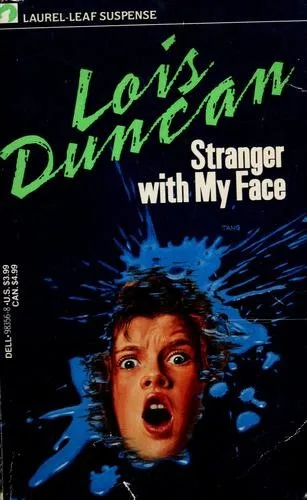





More Free Occult Philosophy Books
View all →