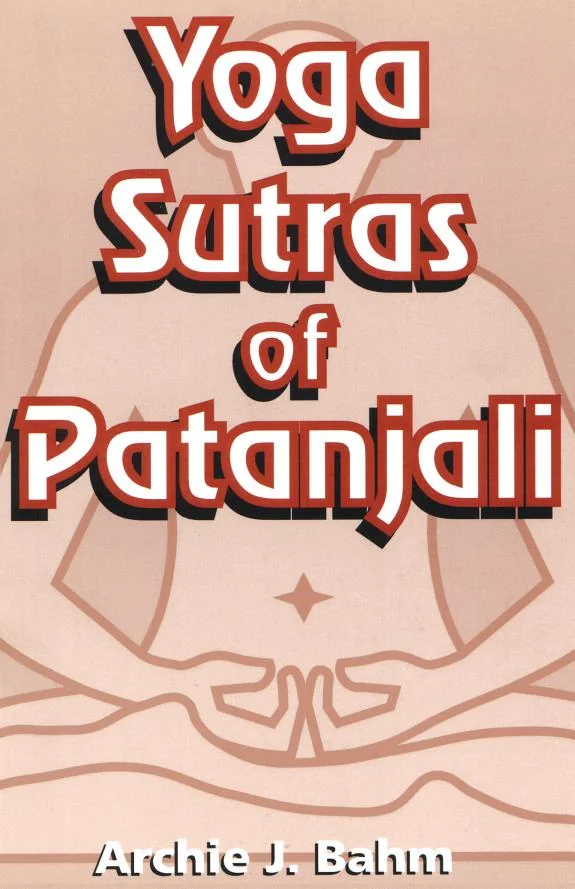
Yoga Sutras of Patanjali
 73
73

Yoga Sutras of Patanjali
Archie J. Bahm’s rendition of the Yoga Sutras of Patanjali offers a commendable, if somewhat understated, entry into this vital Indian philosophical text. Bahm’s primary strength lies in his commitment to lucid exposition; he strips away the often-dense interpretive layers that can obscure the original aphorisms. His commentary on Sutra 2.16, concerning the cessation of pain through the discrimination of the seer and the seen, exemplifies this clarity. However, the very simplicity that makes the work accessible might leave some advanced practitioners yearning for a deeper engagement with the text’s more esoteric dimensions or a more robust exploration of its historical reception. The translation itself, while clear, occasionally feels more like a paraphrase than a direct rendering, a common challenge with ancient Sanskrit. Ultimately, Bahm’s edition serves as a reliable and unintimidating guide for those beginning their study of classical Yoga philosophy.
📝 Description
73
Composed between 400 BCE and 200 CE, the Yoga Sutras of Patanjali is a key text for Yoga philosophy.
The Yoga Sutras of Patanjali contains 196 aphorisms attributed to the sage Patanjali. This edition features commentary by Archie J. Bahm, aiming to make the text's insights on consciousness and liberation clear. Bahm's work focuses on mental discipline and ethical conduct as necessary steps for spiritual understanding, rather than physical postures.
This book is suitable for both newcomers to Yoga philosophy and experienced practitioners. Beginners can find a straightforward introduction to Yoga's intellectual foundations, moving beyond common physical interpretations. Those already familiar with Yoga will discover Bahm's explanations helpful for grasping deeper psychological and metaphysical ideas. It appeals to anyone seeking self-awareness and mental calm, irrespective of their background in Indian philosophy.
Patañjali's work synthesized existing yogic practices and philosophies into a structured system. It became a central reference point for classical Yoga, shaping later commentaries and interpretations for centuries.
Emerging in ancient India around the turn of the Common Era, the Yoga Sutras appeared during a period of intense philosophical development. It developed alongside traditions like Samkhya and early Buddhist thought. Patañjali's text organized and codified yogic ideas that had diverse and ancient roots. This synthesis provided a framework that would influence Indian spiritual and philosophical history for millennia, becoming a touchstone for classical Yoga.
💡 Why Read This Book?
• Gain a foundational understanding of *chitta* and the obstacles (*kleshas*) to mental clarity, as explained in Patanjali’s sutras, to better manage your own mental landscape. • Learn about the concept of *samadhi* and the eight limbs of yoga (*ashtanga yoga*) as presented by Bahm, offering a structured path toward inner peace and self-awareness. • Appreciate the psychological depth of Yogic thought, as articulated in the sutras dating back to antiquity, providing practical philosophical tools for everyday life.
⭐ Reader Reviews
Honest opinions from readers who have explored this book.
❓ Frequently Asked Questions
Is the Yoga Sutras of Patanjali primarily about physical exercise?
No, the Yoga Sutras, particularly in editions like Archie J. Bahm's, focus on the philosophical and psychological aspects of Yoga. While the eight limbs (*ashtanga yoga*) include physical postures (*asana*), the core of the text deals with mental discipline, concentration, and ethical conduct as paths to liberation.
Who was Patanjali and when did he live?
Patanjali is the traditional author of the Yoga Sutras. While his exact dates are debated, scholars generally place the composition of the text between 400 BCE and 200 CE, a period of significant philosophical development in India.
What is the significance of the term 'sutra'?
A 'sutra' is a Sanskrit term for an aphorism or a concise rule. The Yoga Sutras are a collection of brief, memorable statements designed to be easily recited and memorized, forming the core teachings of classical Yoga philosophy.
What does Archie J. Bahm's edition offer that others might not?
Bahm's edition is noted for its clear, simple language and succinct commentary on each sutra, aiming to make the profound psychological insights of Yogic thought accessible to a broad audience, including newcomers.
What are the 'kleshas' mentioned in the Yoga Sutras?
The 'kleshas' are the five afflictions or sources of suffering identified in Patanjali’s Yoga Sutras. They include ignorance (*avidya*), egoism (*asmita*), attachment (*raga*), aversion (*dvesha*), and the fear of death (*abhinivesha*).
Is this book suitable for someone interested in meditation?
Yes, the Yoga Sutras are highly relevant for meditation. The text details various states of concentration and absorption, such as *dhyana* (meditation) and *samadhi* (absorption), providing a philosophical framework for the practice.
🔮 Key Themes & Symbolism
The Nature of Consciousness
Patanjali's sutras offer a detailed map of the mind, or *chitta*. Bahm's commentary elucidates concepts like the fluctuations of consciousness (*vrittis*) and the ultimate goal of stilling them. The text posits that true self-awareness arises not from identifying with mental states, but from realizing the pure, unchanging nature of the self (*purusha*) as distinct from the mind's activity. This distinction is crucial for understanding the path toward liberation from suffering, as the mind's incessant activity is seen as the root of confusion and distress.
Obstacles to Enlightenment
The text identifies the *kleshas* – ignorance, egoism, attachment, aversion, and clinging to life – as fundamental impediments to spiritual progress. Bahm’s edition presents these afflictions in clear terms, explaining how they cloud judgment and perpetuate cycles of suffering. Understanding the *kleshas* is presented as the first step in dismantling them. The sutras provide a psychological framework for recognizing these internal barriers and developing the discernment necessary to overcome them, paving the way for mental clarity and peace.
The Eight Limbs of Yoga
The Yoga Sutras outline *ashtanga yoga*, the eight-limbed path, as a systematic approach to achieving self-mastery and enlightenment. Bahm’s commentary clarifies these limbs, from ethical observances (*yamas* and *niyamas*) and postures (*asana*) to breath control (*pranayama*), sense withdrawal (*pratyahara*), concentration (*dharana*), meditation (*dhyana*), and finally, profound absorption (*samadhi*). This structured progression is presented not as a rigid dogma, but as a practical, integrated method for purifying the mind and body.
Liberation and the Self
The ultimate aim articulated in the Yoga Sutras is *kaivalya*, or absolute freedom. This state is characterized by the discriminative discernment between the self (*purusha*) and the mind (*prakriti*). Bahm's edition helps readers grasp this subtle but critical distinction. True liberation is not an external achievement but an internal realization of one's true nature, which is eternally pure, unconditioned, and beyond the flux of experience. The sutras guide the practitioner toward this profound understanding and existential freedom.
💬 Memorable Quotes
Direct passages from the work, attributed to the author.
“Yoga is the cessation of the fluctuations of the mind.”
— This is the second sutra and a central to Patanjali's system. It defines the very essence of Yoga not as a physical practice, but as a state of mental stillness achieved by quieting the incessant, often chaotic, activity of consciousness.
“Then the Seer abides in its own nature.”
— This profound statement, appearing after the description of the eight limbs, signifies the ultimate goal. It describes the state of pure consciousness (*purusha*) realizing its true, unadulterated essence, free from the distortions and identifications imposed by the mind.
“The mind is like a mirror.”
— This metaphorical interpretation, drawn from the text's descriptions of *chitta*, highlights how the mind reflects experiences. The goal of Yoga is to purify this mirror so it can reflect reality clearly, without distortion, rather than being clouded by mental 'dust'.
💡 Key Ideas
Editorial paraphrase of the work's core concepts — not direct quotes.
The afflictions are to be abandoned.
This paraphrased concept refers to the *kleshas* (ignorance, egoism, attachment, aversion, fear of death). The sutras outline methods and the necessity of actively working to dismantle these mental poisons that cause suffering and obscure true perception.
Practice and detachment are the means.
This paraphrased concept expresses the core disciplines (*abhyasa* and *vairagya*) Patanjali emphasizes for achieving mental control and spiritual insight. Consistent effort and non-attachment to worldly outcomes are presented as essential for progress on the Yogic path.
🌙 Esoteric Significance
Tradition
The Yoga Sutras are a central to the classical Indian philosophical tradition, specifically within the school of Yoga, which is closely allied with Samkhya. While not typically categorized within Western esoteric lineages like Hermeticism or Kabbalah, its principles of mind control, subtle energy, and the pursuit of liberation resonate with Gnostic and Neoplatonic ideas concerning the soul's journey and the overcoming of material illusion. It represents an indigenous esoteric path focused on direct experiential knowledge of consciousness.
Symbolism
Key symbols include the concept of *purusha* (the pure, conscious self) often envisioned as a detached witness, contrasted with *prakriti* (primordial matter/nature) which includes the mind. The *ashtanga yoga* or eight limbs are symbolic stages of a journey, from ethical foundations to profound meditative states. The metaphor of the mind as a 'mirror' or 'lake' that can become clouded by 'afflictions' (*kleshas*) is also central, representing the need for purification to reflect truth.
Modern Relevance
Contemporary thinkers and practitioners across various spiritual and psychological disciplines draw heavily from the Yoga Sutras. Modern mindfulness and meditation movements often trace their lineage to Patanjali's concepts of *dharana* (concentration) and *dhyana* (meditation). Psychologists and neuroscientists explore its insights into consciousness, attention, and the mind-body connection. Esoteric practitioners, particularly those interested in Eastern philosophies, continue to study the sutras for their profound teachings on self-realization and altered states of consciousness.
👥 Who Should Read This Book
• Aspiring practitioners of Raja Yoga and meditation seeking a philosophical grounding beyond physical postures, to understand the mental disciplines required. • Students of comparative philosophy and religion interested in foundational texts of Indian thought, to grasp the systematic approach to consciousness from 400 BCE - 200 CE. • Individuals seeking practical psychological tools for managing their minds and reducing suffering, by learning about the *kleshas* and the path to mental clarity.
📜 Historical Context
The Yoga Sutras of Patanjali, likely compiled between 400 BCE and 200 CE, emerged from a rich intellectual milieu in India where various schools of thought, including Samkhya, Vedanta, and early Buddhist philosophies, were flourishing. Patanjali’s work served to systematize and synthesize existing yogic knowledge and practices into a coherent philosophical framework, distinct from, yet influential upon, these other traditions. While its precise origins and Patanjali's life remain subjects of scholarly debate, the text quickly became a central authority for classical Yoga. Its reception was significant, establishing a lineage of commentary that continued for centuries, with figures like Vyasa providing extensive interpretations. The sutras offered a unique emphasis on mental discipline and introspection, providing a counterpoint to more ritualistic or devotional practices prevalent at the time. This enduring text has shaped Indian philosophy and spiritual practices profoundly.
📔 Journal Prompts
The nature of *chitta* and its fluctuations.
Identifying and confronting the five *kleshas* in daily life.
The relationship between *abhyasa* and *vairagya* in practice.
The distinction between *purusha* and *prakriti* as described by Patanjali.
The potential for achieving *samadhi* through the eight limbs.
🗂️ Glossary
Sutra
A Sanskrit word meaning 'thread' or 'aphorism.' In philosophical texts, sutras are concise, memorable statements designed to encapsulate complex ideas, serving as mnemonic aids for oral transmission.
Chitta
The aggregate of mind, intellect, and ego; the total content of consciousness. It is seen as the instrument through which the self perceives and interacts with the world.
Kleshas
The five afflictions or sources of suffering: ignorance (*avidya*), egoism (*asmita*), attachment (*raga*), aversion (*dvesha*), and the fear of death (*abhinivesha*).
Ashtanga Yoga
The 'eight limbs' of Yoga as outlined by Patanjali: Yama (restraints), Niyama (observances), Asana (posture), Pranayama (breath control), Pratyahara (sense withdrawal), Dharana (concentration), Dhyana (meditation), and Samadhi (absorption).
Purusha
The true Self; pure consciousness. It is considered eternal, unchanging, and distinct from the mind and material world.
Samadhi
A state of profound meditative absorption or profound concentration, often translated as enlightenment or union.
Kaivalya
Liberation; absolute freedom. The ultimate goal of Yoga, characterized by the realization of the Self's true nature, separate from all mental and material phenomena.
This book appears in 1 collection
🔮 Readers Also Liked
Browse all →









From the “Yoga” Collection
View all →






More Free Occult Philosophy Books
View all →