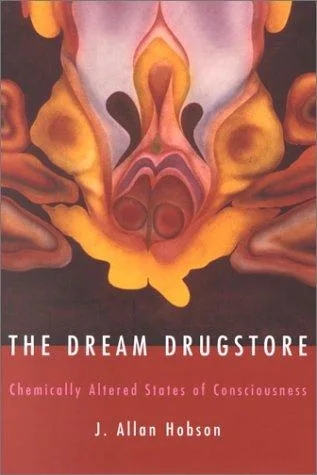
The Dream Drugstore
 78
78

The Dream Drugstore
J. Allan Hobson’s *The Dream Drugstore* tackles the brain’s chemistry with a scientist’s precision, offering a compelling framework for understanding how altered states of consciousness arise. The strength of the book lies in its detailed neurobiological explanations, moving beyond speculative theories to ground phenomena like dreaming and drug-induced experiences in specific neurochemical processes. Hobson’s explanation of how shifts in neurotransmitter balance, particularly concerning the forebrain and brainstem, can manifest as different states of awareness is particularly illuminating. However, readers seeking a purely esoteric or mystical interpretation may find the dense scientific detail challenging; the book prioritizes empirical data over symbolic exploration. A passage discussing the cholinergic activation during REM sleep, for instance, clearly illustrates the book’s scientific rigor. Ultimately, *The Dream Drugstore* provides a vital, scientifically-grounded perspective on the chemistry of consciousness.
📝 Description
78
J. Allan Hobson's 2002 book, The Dream Drugstore, proposes a neurochemical model for altered states of consciousness.
This work examines the brain's chemical activity during sleep and dreaming, arguing that shifts in neurochemistry influence our subjective experiences. Hobson details how these chemical changes connect to natural states, like dreaming, and those induced by substances, including psychedelics. The book offers a scientific perspective on altered states, moving beyond purely psychological or philosophical explanations. It grounds these experiences in observable brain chemistry, drawing connections to topics often found in countercultural discussions.
Hobson introduces the idea of neurochemical gradients and their function in shifting consciousness. He specifies the neurotransmitter systems, such as serotonin and acetylcholine, and explains how their regulation during sleep or by drugs can alter perception and cognition. The text also considers the relevance of these mechanisms for understanding mental health conditions. The book was published as neuroscientific inquiry into consciousness was intensifying, building on prior sleep research.
While J. Allan Hobson's work is primarily scientific, its discussion of chemically induced altered states and their connection to subjective experience touches upon themes relevant to esoteric traditions. The book's exploration of how substances can shift perception and consciousness aligns with historical interests in entheogens and their use in spiritual or occult practices. By offering a neurochemical framework for these experiences, Hobson provides a scientific lens through which to examine phenomena that have long been part of mystical and ritualistic traditions, bridging biological mechanisms with altered subjective realities.
💡 Why Read This Book?
• Understand the specific neurochemical mechanisms, like the role of acetylcholine and serotonin, that govern transitions between wakefulness, dreaming, and chemically altered states, as detailed in Hobson's research. • Gain insight into how fluctuations in brain chemistry, as explored concerning the forebrain and brainstem systems, can account for shifts in perception and cognition. • Learn how the scientific understanding of neurotransmitter balance, first articulated in this 2002 work, informs our view of both natural altered states and the effects of psychoactive substances.
⭐ Reader Reviews
Honest opinions from readers who have explored this book.
❓ Frequently Asked Questions
What is J. Allan Hobson's central thesis in The Dream Drugstore?
Hobson's central thesis is that altered states of consciousness, including dreaming and drug-induced states, are fundamentally rooted in specific shifts in the brain's neurochemical balance, particularly involving neurotransmitters and their interaction with forebrain systems.
How does The Dream Drugstore explain the effects of psychedelic drugs?
The book explains that psychedelic drugs disrupt the brain's normal neurochemical equilibrium, causing imbalances that lead to altered perceptions and states of consciousness, similar to but distinct from natural shifts during sleep.
What role does sleep play in Hobson's model of consciousness?
Hobson posits that the shift in brain chemistry during sleep, particularly the transition into REM sleep, represents a natural form of altered consciousness where different neurochemical systems become dominant.
What is the significance of the forebrain and brainstem in the book?
The book highlights the interplay between the brainstem, which regulates basic states of arousal and neurochemical release, and the forebrain, responsible for higher cognitive functions, to explain consciousness.
When was The Dream Drugstore first published?
The Dream Drugstore was first published on August 23, 2002.
Does the book discuss mental health conditions?
Yes, the book touches upon how imbalances in brain chemistry, as discussed in relation to altered states, may offer insights into the neurochemical underpinnings of conditions like depression and schizophrenia.
🔮 Key Themes & Symbolism
Neurochemical Basis of Mind
This work grounds subjective experience firmly in the brain's chemistry. Hobson details how specific neurotransmitter systems, such as those involving serotonin and acetylcholine, fluctuate to produce distinct states of consciousness. The book moves beyond abstract notions to demonstrate how chemical imbalances, whether naturally occurring during sleep or induced by external agents, directly shape our perceptions and cognitive processes. This perspective offers a concrete, scientific lens for understanding phenomena often explored through more mystical or psychological frameworks.
Altered States as Chemical Transitions
Hobson reframes altered states not as departures from a 'normal' reality, but as predictable outcomes of neurochemical shifts. The transition from wakefulness to dreaming, or from sobriety to a drug-induced state, is presented as a consequence of specific chemical gradients within the brain. This view provides a scientific explanation for the diverse subjective experiences reported across different states, linking them to the operational state of neural networks modulated by chemistry.
The Chemistry of Dreams and Psychedelics
A significant focus is placed on comparing and contrasting the neurochemical underpinnings of natural dream states with those induced by psychedelic substances. Hobson explores how drugs can hijack or mimic the brain's own chemical signaling pathways, leading to profound alterations in sensory input and self-awareness. This comparative approach allows for a deeper scientific understanding of both phenomena, clarifying aspects often shrouded in speculation.
Brain Balance and Mental Well-being
The book extends its neurochemical model to suggest potential links between chemical imbalances in the brain and mental health conditions. By examining how disruptions in neurotransmitter systems can manifest as altered states of consciousness, Hobson proposes avenues for understanding the biological basis of disorders like depression and schizophrenia. This aspect highlights the practical implications of understanding brain chemistry for psychological well-being.
💬 Memorable Quotes
Direct passages from the work, attributed to the author.
“The balance of the brain chemistry is disturbed when we fall asleep and dream.”
— This statement captures Hobson's core argument: dreaming isn't just a different mode of thought, but a state actively produced by a distinct neurochemical configuration, differing significantly from our waking brain chemistry.
“Psychedelic drugs work to disturb that balance.”
— This highlights the mechanistic view of drug action, suggesting that their profound effects on consciousness stem from their ability to directly interfere with and alter the brain's natural neurochemical equilibrium.
“Similar imbalances may cause depression and schizophrenia.”
— This connects the study of altered states to clinical psychology, proposing that the same neurochemical disturbances that alter consciousness could underlie serious mental health disorders.
“Altered states of consciousness are a result of shifts in brain chemistry.”
— This is a fundamental assertion, positioning neurochemistry as the primary driver of all variations in conscious experience, from natural sleep to chemically induced states.
“The brain's chemistry is balanced when we are awake.”
— This provides the baseline for Hobson's model, establishing a presumed state of neurochemical equilibrium during wakefulness against which other states, like dreaming or drug-induced states, are compared.
🌙 Esoteric Significance
Tradition
While rooted in empirical neuroscience, *The Dream Drugstore* interfaces with esoteric traditions by providing a scientific framework for phenomena they have long explored. It offers a materialist explanation for altered states of consciousness, which many esoteric paths view as gateways to higher knowledge or spiritual insight. By detailing the neurochemical mechanisms, Hobson’s work can be seen as translating esoteric concepts of 'mind alteration' into the language of modern biology, bridging the gap between subjective experience and objective science.
Symbolism
While the book is primarily scientific, the concepts of 'balance' and 'imbalance' in brain chemistry can be seen as symbolic parallels to esoteric notions of equilibrium. The 'drugstore' metaphor itself suggests a place where consciousness can be chemically altered, akin to an alchemist's laboratory where substances are transmuted. The distinctions between wakefulness, dreaming, and drug states can symbolize different planes of existence or levels of awareness that esoteric traditions often describe.
Modern Relevance
Hobson's work continues to be relevant for contemporary thinkers in fields like psychedelic-assisted therapy, consciousness studies, and the philosophy of mind. Researchers investigating the neural correlates of altered states, including those seeking to understand the therapeutic potential of psychedelics, draw upon his foundational insights into neurochemical modulation. His emphasis on a scientific, brain-based understanding of subjective experience remains a reference for many modern explorations of consciousness.
👥 Who Should Read This Book
• Neuroscientists and psychologists seeking a detailed neurochemical model of consciousness and its variations, especially REM sleep and drug-induced states. • Philosophers of mind interested in the biological underpinnings of subjective experience and the mind-body problem. • Individuals curious about the scientific explanations for altered states of consciousness, including dreaming and the effects of psychoactive substances.
📜 Historical Context
Published in 2002, *The Dream Drugstore* emerged during a period of burgeoning interest in the neuroscience of consciousness, building on earlier work like Michel Jouvet's studies on REM sleep. Hobson’s neurochemical approach offered a tangible, empirically driven counterpoint to the more philosophical or introspective explorations of consciousness prevalent in some circles. At a time when research into brain states was rapidly advancing, this book provided a systematic framework for understanding altered states, including those induced by substances often discussed in countercultural contexts. While not directly engaging with figures like Timothy Leary in this specific text, Hobson’s work implicitly addressed the scientific underpinnings of experiences that Leary and others had popularized. The book’s reception was largely within scientific and academic communities, appreciating its rigorous, data-driven analysis of subjective phenomena.
📔 Journal Prompts
The neurochemical balance during wakefulness versus dreaming.
Your own experiences with chemically altered states.
The brain's chemical shifts when transitioning between states.
How imbalances in brain chemistry might manifest subjectively.
The forebrain's role in interpreting neurochemical signals.
🗂️ Glossary
Neurotransmitters
Chemical messengers in the brain that transmit signals between neurons, playing an important role in regulating mood, cognition, and consciousness.
REM Sleep
Rapid Eye Movement sleep, a stage of sleep characterized by high brain activity, vivid dreaming, and temporary muscle paralysis.
Altered States of Consciousness
Any mental state significantly different from a normal waking consciousness, often induced by meditation, drugs, or sleep.
Forebrain
The part of the brain responsible for higher cognitive functions such as thinking, memory, and emotion, which Hobson links to subjective experience.
Brainstem
The part of the brain connecting the cerebrum and cerebellum to the spinal cord, responsible for regulating basic life functions and states of arousal.
Cholinergic Activation
The process involving acetylcholine, a neurotransmitter that plays a key role in arousal, attention, and memory, particularly active during REM sleep.
Serotonergic System
A neurotransmitter system involving serotonin, which influences mood, appetite, and sleep, and whose balance is critical for stable consciousness.