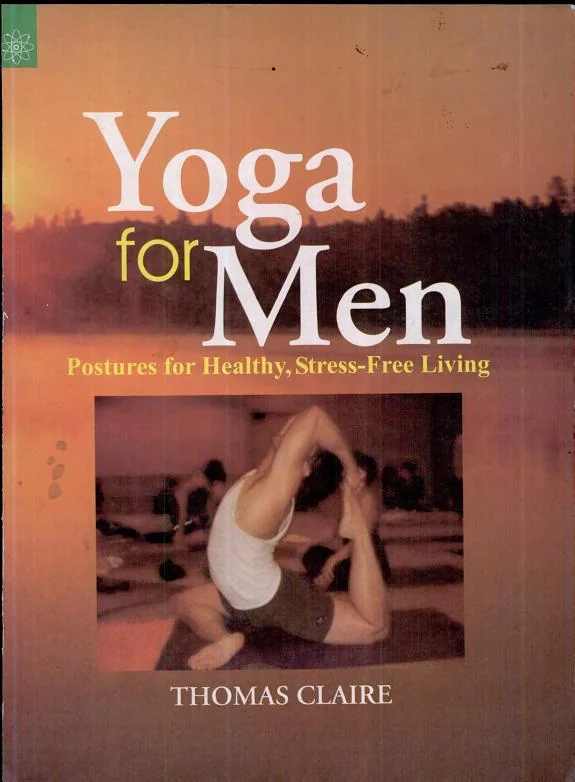
Yoga for Men
 77
77

Yoga for Men
Thomas Claire's "Yoga for Men" attempts to demystify the practice for a specific demographic, and largely succeeds by focusing on tangible benefits. Its strength lies in its straightforward, no-nonsense approach to asana, eschewing overly spiritual language for clear instructions on building strength and flexibility. The section detailing modifications for poses to accommodate a typical male musculature is particularly well-executed, addressing a common barrier to entry. However, the text occasionally feels dated, particularly in its early 2000s framing of gendered approaches to fitness, and could benefit from a deeper exploration of the philosophical underpinnings that give yoga its enduring power beyond mere physical exercise. The chapter on *pranayama*, while clear, could have been expanded to better convey the subtle energetic effects. Claire’s work is a solid, practical primer for men new to yoga, offering accessible techniques for physical and mental well-being.
📝 Description
77
Thomas Claire's Yoga for Men, published in 2004, offers a practical Hatha Yoga approach for men.
Yoga for Men by Thomas Claire addresses Hatha Yoga from a perspective suited to the male physique and mindset. Published in 2004, the book moves past yoga's frequent association with feminine stereotypes. Instead, it concentrates on strength, flexibility, and stress management relevant to men's lives. Claire details specific postures, breathing techniques, and meditation practices, showing how to apply them in daily routines.
This guide is for men of any age or fitness level interested in yoga who might feel put off by its cultural image or perceived physical difficulty. It suits those aiming to improve physical health, build core strength, increase mobility, and manage stress. Athletes seeking to enhance their training with better flexibility and recovery, or individuals looking for a clear path to mental focus, will find this book useful.
Claire's work arrived as yoga gained wider Western acceptance in the early 2000s. At a time when many yoga books targeted general readers or specific spiritual paths, this text filled a perceived need for a male-focused approach. It connects ancient yogic principles of physical culture and wellness to a demographic often overlooked by mainstream yoga, which then often favored less strength-intensive styles. The book grounds yogic concepts like prana and dhyana as practical tools for vitality and mental clarity.
💡 Why Read This Book?
• You will learn specific Hatha Yoga postures and breathing techniques, like *Ustrasana* (Camel Pose), modified for male physiology, offering a direct path to increased flexibility not commonly detailed in general yoga texts. • You will gain practical methods for stress reduction through *pranayama* exercises, as presented in Claire's 2004 publication, providing tangible tools for mental clarity that are distinct from generic wellness advice. • You will discover how to integrate yogic principles, such as the focus on *dhyana* (meditation), into a busy modern schedule, a concept elaborated upon with male-centric examples that differentiate it from broader spiritual guides.
⭐ Reader Reviews
Honest opinions from readers who have explored this book.
❓ Frequently Asked Questions
Is Thomas Claire's Yoga for Men suitable for complete beginners?
Yes, Yoga for Men is designed for beginners. Thomas Claire provides clear instructions on fundamental postures (asanas) and breathing techniques (pranayama), assuming no prior yoga experience and tailoring content for the male physique.
What is the historical publication year of Yoga for Men?
The book Yoga for Men by Thomas Claire was first published in 2004, placing it within the early wave of mainstream yoga adoption in the Western world.
Does the book cover meditation techniques?
Yes, Yoga for Men includes sections on meditation, referred to as *dhyana*. It aims to equip readers with practical methods for cultivating focus and mental calm.
Are there specific poses recommended for men in this book?
Absolutely. The book offers modifications and emphasizes poses that build strength and flexibility beneficial for male anatomy, moving beyond generalized yoga instruction.
What is Pranayama as discussed in Yoga for Men?
Pranayama refers to yogic breathing techniques. In Yoga for Men, Thomas Claire explains how controlled breathing can enhance physical energy and reduce mental stress, presenting it as a core component of the practice.
Can Yoga for Men help with athletic performance?
The book suggests that improved flexibility, strength, and stress management through yoga can complement athletic training. It offers practical applications for recovery and physical conditioning.
🔮 Key Themes & Symbolism
Masculine Adaptation of Asana
This theme addresses the core premise of Claire's work: adapting traditional Hatha Yoga postures to suit the typical male physique. It moves away from generalized instructions, acknowledging differences in musculature, flexibility, and common physical complaints (e.g., tight hamstrings, broader shoulders). The book details specific modifications and emphasizes poses that build core strength and stability, offering men a pathway to yoga that feels accessible and directly beneficial to their physical structure, rather than requiring them to conform to a perceived feminine ideal of movement.
Pranayama for Vitality
Central to the yogic system, *pranayama* (breath control) is presented not merely as an accessory but as a vital tool for enhancing male well-being. Claire emphasizes how conscious breathing techniques can increase energy levels, alleviate mental fatigue, and promote a sense of calm. The book likely details specific breathing exercises, explaining their physiological and psychological effects, positioning *prana* (life force) as something that can be cultivated and directed for tangible benefits in daily life, such as improved focus and stress resilience.
Dhyana for Mental Fortitude
Beyond physical postures and breathwork, *dhyana* (meditation) is explored as a means to develop mental fortitude and clarity. The work frames meditation not as an esoteric practice removed from reality, but as a practical skill for managing the pressures of modern male life. By focusing on techniques that foster concentration and equanimity, Claire aims to provide readers with tools to navigate stress, enhance problem-solving abilities, and cultivate a more centered and resilient mindset. This theme underscores yoga's holistic approach to well-being.
Holistic Stress Management
Yoga for Men posits that physical postures, breath control, and meditation are interconnected elements of a comprehensive stress management system. It argues that by addressing physical tension through *asana*, calming the nervous system via *pranayama*, and training the mind with *dhyana*, men can develop robust resilience against the chronic stress prevalent in contemporary society. This approach offers a practical, integrated strategy for achieving balance and improving overall quality of life, presenting yoga as a potent antidote to modern pressures.
💬 Memorable Quotes
Direct passages from the work, attributed to the author.
“Controlled breathing is key to managing energy and tension.”
— This likely represents a core teaching on *pranayama*, underscoring the book's focus on the practical application of yogic breathwork for tangible benefits like increased vitality and reduced stress.
“Yoga can complement athletic training by improving flexibility.”
— This points to the book's relevance for athletes, highlighting how yogic practices can enhance physical performance and recovery, a practical benefit often sought by male readers.
“Adapt the practice to your body, not the other way around.”
— This likely expresses Claire's advice on modifying poses, promoting an inclusive approach that respects individual male anatomy and avoids the common pitfall of forcing the body into unnatural positions.
💡 Key Ideas
Editorial paraphrase of the work's core concepts — not direct quotes.
Focus on strength and stability in your poses.
This sentiment, likely paraphrased from Claire's instructions, highlights the book's emphasis on building a solid physical foundation through yoga, catering to a male inclination towards strength-based practices.
Even short periods of meditation can yield significant mental benefits.
This paraphrase suggests the book's practical approach to *dhyana*, making meditation accessible by emphasizing achievable outcomes even for those with limited time or prior experience.
🌙 Esoteric Significance
Tradition
While not explicitly aligning with a single esoteric lineage like Hermeticism or Gnosticism, "Yoga for Men" draws heavily from the practical, embodied aspects of Hatha Yoga, which itself has roots in ancient Indian tantric and yogic traditions. These traditions often explore the manipulation of subtle energies (*prana*) and the physical body as a vehicle for spiritual development. Claire's work, however, filters these through a modern, secular lens, emphasizing psychological and physiological benefits over overt mystical attainment, making it a contemporary adaptation rather than a direct transmission of classical esoteric doctrine.
Symbolism
The primary symbolism in "Yoga for Men" lies in the body itself as a microcosm of the universe. Specific postures (*asanas*) like the *Adho Mukha Svanasana* (Downward-Facing Dog) can be interpreted as representing grounding and expansion simultaneously. The focus on *prana* connects to the concept of life force or Aether, a fundamental element in many esoteric systems. Breath control (*pranayama*) symbolizes the mastery over the vital energies that animate existence, a core tenet in traditions seeking to harmonize the microcosm (individual) with the macrocosm (universe).
Modern Relevance
Contemporary thinkers and practitioners in fields like somatic psychology, sports science, and mindfulness-based stress reduction (MBSR) can find resonance with Claire's approach. His emphasis on the tangible mind-body connection and the practical application of yogic techniques for stress management and physical conditioning aligns with modern scientific validation of these practices. While not directly citing Claire, many current wellness coaches, physical therapists, and even secular meditation instructors offer approaches that echo his work's goal of making ancient yogic tools accessible and beneficial for contemporary, often male, audiences.
👥 Who Should Read This Book
• Men seeking a structured introduction to yoga: Readers who are curious about yoga but feel intimidated by its cultural associations or physical demands will find Claire's tailored approach accessible and encouraging. • Athletes and fitness enthusiasts: Individuals looking to enhance flexibility, build core strength, improve recovery, and manage physical stress will benefit from the specific asana and pranayama techniques offered. • Individuals focused on stress management: Those seeking practical, non-pharmacological methods to reduce anxiety, improve focus, and cultivate mental resilience will find value in the integrated approach to asana, pranayama, and dhyana.
📜 Historical Context
Thomas Claire’s "Yoga for Men" arrived in 2004, a period when yoga's popularity in the West had surged, yet its image often skewed towards women or specific spiritual traditions. While figures like B.K.S. Iyengar were already establishing rigorous, alignment-focused approaches, and Pattabhi Jois’s Ashtanga Vinyasa was gaining traction for its demanding physical practice, a distinct market for male-oriented yoga instruction was still developing. Claire’s work implicitly addressed this gap, positioning itself against the prevailing narrative of yoga as solely a gentle, feminine pursuit. It emerged during a broader cultural conversation about men's health and wellness, seeking to make ancient practices relevant to contemporary male lifestyles. The book navigated the evolving field of physical culture, offering a specialized application of yogic principles that contrasted with both the generalized wellness texts and the more intensely spiritual or ascetic interpretations of yoga prevalent at the time.
📔 Journal Prompts
The male physique's relationship to specific *asanas* as described by Claire.
Your personal experience with *pranayama* and its effect on perceived energy levels.
Cultivating mental fortitude through *dhyana* in daily life.
Integrating yogic principles into a demanding schedule.
Assessing physical tension and identifying poses for relief.
🗂️ Glossary
Asana
Refers to a physical posture in Hatha Yoga. Claire's work emphasizes adapting these postures to suit the male body, focusing on strength, stability, and flexibility.
Pranayama
The practice of yogic breathing techniques. In "Yoga for Men", it's presented as a tool for managing energy, reducing stress, and enhancing mental clarity.
Dhyana
Meditation or concentration. The book explores practical methods for cultivating mental focus and equanimity, framing it as essential for overall well-being.
Prana
The vital life force or energy believed to be present in all living beings. Pranayama aims to control and direct this energy.
Hatha Yoga
A branch of yoga that typically involves physical postures (asanas) and breathing techniques (pranayama). Claire's book is a practical guide to Hatha Yoga.
Mindfulness
A state of active, open attention to the present. While not a traditional yogic term, it aligns with the goals of dhyana discussed in the book.
Core Strength
Refers to the muscles of the torso, including the abdomen, back, and pelvis. Yoga for Men emphasizes developing this for stability and injury prevention.
This book appears in 1 collection
🔮 Readers Also Liked
Browse all →







From the “Hatha Yoga” Collection
View all →







More Free Occult Philosophy Books
View all →