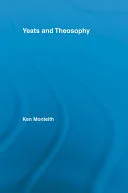
Yeats and Theosophy
 76
76

Yeats and Theosophy
Ken Monteith's "Yeats and Theosophy" offers a rigorous examination of the poet's formative years within Helena Blavatsky's movement. The book's strength lies in its detailed archival research, connecting specific Theosophical texts and lectures to Yeats's early writings and organizational affiliations. Monteith compellingly argues that the spiritual and moral ideals Blavatsky outlined in "The Key to Theosophy" were not just adopted but actively lived by Yeats, influencing his commitment to social and artistic reform. A notable limitation, however, is the occasional dense prose, which can make the intricate connections between Theosophical doctrine and Yeats's evolving thought challenging to follow without prior familiarity with the subject matter. The exploration of Yeats's interpretation of the 'Great White Brotherhood' concept, as presented by Blavatsky, is particularly illuminating, revealing a crucial aspect of his esoteric framework. This work serves as an essential resource for understanding the occult roots of a major literary figure.
📝 Description
76
Ken Monteith's 2016 book details Helena Blavatsky's influence on W. B. Yeats.
This study examines the significant impact of Helena Blavatsky's Theosophical Society on W. B. Yeats. Monteith traces Yeats's early encounters with Theosophical ideas and figures, showing how these connections shaped his later occult interests and artistic creations. The book goes beyond simple biography to analyze the integration of Theosophy into Yeats's personal philosophy and creative output.
Intended for scholars of Irish literature, occult history, and comparative religion, the work will also interest those curious about the links between spiritual movements and art. Readers seeking to understand the hidden forces behind modern poetry will find this analysis valuable. Those familiar with Theosophy or Western Esotericism will appreciate the detailed look at its influence on a major literary figure. The book places Yeats's engagement within the late 19th century's widespread fascination with spiritualism, occultism, and Eastern thought.
Theosophy, established in the 1870s by Helena Blavatsky, offered intellectuals an alternative to materialism by drawing on Eastern religions and Western occult traditions. It proposed a complex cosmology and path to spiritual development, influencing many artists and thinkers in the late Victorian and early 20th centuries. Yeats's early involvement with Theosophy, alongside his later work with organizations like the Hermetic Order of the Golden Dawn, demonstrates the period's fertile ground for esoteric ideas and their integration into artistic and philosophical pursuits.
💡 Why Read This Book?
• Gain specific insights into W. B. Yeats's early esoteric training by understanding his 1887 affiliation with the Theosophical Society and how it shaped his worldview. • Discover how Theosophical concepts like karma and reincarnation, central to "The Key to Theosophy," were integrated into Yeats's poetic symbolism and philosophy. • Appreciate the historical milieu of late Victorian spiritualism by examining the intellectual currents that drew figures like Yeats towards Blavatsky's movement.
⭐ Reader Reviews
Honest opinions from readers who have explored this book.
❓ Frequently Asked Questions
What was W. B. Yeats's initial connection to Theosophy?
W. B. Yeats joined Helena Blavatsky's Theosophical Society in 1887. This period marked his initial immersion into the esoteric teachings and spiritual philosophies that would significantly influence his later occult studies and literary works.
How did Theosophy influence Yeats's artistic development?
Theosophy provided Yeats with a framework of symbolic language, cosmic principles like karma and reincarnation, and a moral idealism. These elements informed his poetry, plays, and his search for a universal spiritual truth.
What is 'The Key to Theosophy' in relation to Yeats?
"The Key to Theosophy" is a foundational text by Helena Blavatsky defining Theosophical principles. Monteith's work suggests Blavatsky's definition of a 'true Theosophist' closely mirrored Yeats's own ethical and spiritual aspirations during his involvement.
Besides Theosophy, what other esoteric groups was Yeats involved with?
Following his engagement with Theosophy, Yeats co-founded the Hermetic Order of the Golden Dawn, a significant magical organization that further shaped his esoteric practices and understanding.
Does this book cover Yeats's later occult work?
While primarily focusing on his Theosophical roots, the book establishes the foundational influence that underpins Yeats's later, more complex engagement with various esoteric traditions, including his work with the Golden Dawn.
Who was Helena Blavatsky?
Helena Blavatsky was a Russian esotericist and the principal founder of the Theosophical Society in 1875. She was a controversial figure known for her extensive writings on occultism and comparative religion.
🔮 Key Themes & Symbolism
Theosophical Doctrine
The work examines core Theosophical tenets as presented by Helena Blavatsky, including the concepts of karma, reincarnation, the Seven Principles of Man, and the existence of a 'Great White Brotherhood.' It details how these doctrines provided Yeats with a comprehensive spiritual cosmology and a framework for understanding human existence and consciousness beyond the material world. The book analyzes Yeats's assimilation and reinterpretation of these teachings during his formative years.
Yeats's Esoteric Development
This theme traces Yeats's spiritual and intellectual journey, beginning with his 1887 membership in the Theosophical Society. It highlights his transition from a literal interpretation of Theosophical teachings to a more symbolic and personalized application. The exploration covers his engagement with key Theosophical figures and texts, demonstrating how this early involvement laid the groundwork for his later, more complex explorations within Western esotericism, including his role in the Hermetic Order of the Golden Dawn.
Symbolism and Poetics
The book investigates how Theosophical symbolism directly influenced Yeats's poetic output. It connects specific symbols and allegorical narratives found in Theosophical literature to motifs appearing in Yeats's verse and prose. The analysis demonstrates how the esoteric worldview offered by Theosophy provided Yeats with a rich vocabulary of images and archetypes, enabling him to express profound spiritual and philosophical ideas through his art.
Moral and Social Ideals
Central to the study is the exploration of the ethical dimension of Theosophy, particularly as defined by Blavatsky in 'The Key to Theosophy.' The work argues that Yeats embraced the Theosophical call for altruism, self-improvement, and unity with humanity. This section examines how these ideals informed Yeats's social activism, his vision for Irish cultural revival, and his belief in the transformative power of spiritual understanding for both the individual and society.
💬 Memorable Quotes
Direct passages from the work, attributed to the author.
“Yeats joined Blavatsky's group in 1887, and subsequently left to help form The Golden Dawn”
— This statement marks a crucial transition in Yeats's esoteric path, showing his initial commitment to Theosophy and his subsequent move towards the more ritualistic and magical framework of the Hermetic Order of the Golden Dawn.
“The controversial head of the turn of the century movement Theosophy”
— This description frames Helena Blavatsky and her movement within their historical context, acknowledging the significant impact and often debated nature of Theosophy during the late 19th and early 20th centuries.
“The work explores Yeats's interpretation of 'The Great Chain of Being'.”
— This indicates a focus on how Yeats engaged with a traditional esoteric concept, likely filtered through Theosophical lenses, to understand hierarchical spiritual and material realities in his personal philosophy and writings.
“The study details the integration of concepts like karma and reincarnation.”
— This highlights the practical application of core Theosophical beliefs within Yeats's life and work, suggesting the book examines how these ideas moved from abstract doctrine to tangible influence on his creative output.
💡 Key Ideas
Editorial paraphrase of the work's core concepts — not direct quotes.
A true Theosophist must put in practice the loftiest moral ideal, must strive to realize his unity with the whole of humanity, and work ceaselessly for others.
This quote from Blavatsky's 'The Key to Theosophy' is presented as a defining principle that W. B. Yeats embodied during his Theosophical period, highlighting the ethical and altruistic core of his spiritual practice.
🌙 Esoteric Significance
Tradition
This work is firmly rooted in the study of Western Esotericism, specifically examining the impact of the Theosophical tradition founded by Helena Blavatsky. It positions Theosophy as a crucial, though often under-acknowledged, influence on W. B. Yeats's broader esoteric development. The book details how Yeats engaged with Blavatsky's synthesis of Eastern and Western mystical thought, seeing it as a vital component of his lifelong quest for spiritual knowledge and symbolic truth.
Symbolism
Central symbols explored include the 'Great Chain of Being,' representing hierarchical spiritual and material realities, and the concepts of karma and reincarnation, which provided a framework for understanding cosmic justice and spiritual evolution. The work likely also touches upon Theosophical interpretations of ancient myths and symbols, which Yeats would have adapted into his own poetic lexicon, imbuing them with personal and national significance.
Modern Relevance
Contemporary scholars of literature, comparative religion, and occult history continue to draw upon this research. The book's findings are relevant to modern discussions on the relationship between spirituality and creativity, the historical development of esoteric movements, and the enduring influence of figures like Yeats and Blavatsky on global culture and thought.
👥 Who Should Read This Book
• Scholars of W. B. Yeats and Irish Literature: Gain a deeper understanding of the esoteric foundations that informed his poetry, plays, and philosophical outlook. • Students of Theosophy and Helena Blavatsky: Explore the practical application and influence of Theosophical doctrines on a major literary figure. • Researchers of Western Esotericism: Understand the complex interplay between different occult traditions in the late 19th and early 20th centuries, particularly the Theosophical Society's role.
📜 Historical Context
Published in 2014, Ken Monteith's "Yeats and Theosophy" revisits a fertile period in Western esotericism: the late 19th century. This era saw a surge of interest in spiritualism, occultism, and Eastern religions, largely fueled by figures like Helena Blavatsky and her Theosophical Society, founded in 1875. Theosophy offered an alternative to prevailing materialism and orthodox religion, attracting intellectuals, artists, and seekers. Yeats's involvement began in 1887, a time when Theosophy was gaining significant traction. He later co-founded the Hermetic Order of the Golden Dawn in 1888, a magical order that also drew heavily from Hermeticism and Kabbalah, indicating a broader engagement with esoteric currents beyond Theosophy alone. This period was marked by intellectual ferment, with contemporaries exploring diverse spiritual paths; for instance, Annie Besant, a prominent Theosophist, also became a significant political figure. While Theosophy faced skepticism and accusations of fraud, its influence on literature and the arts was undeniable, shaping the imaginative landscape for generations.
📔 Journal Prompts
The moral ideals outlined in 'The Key to Theosophy' and their embodiment by Yeats.
Yeats's transition from Theosophy to the Hermetic Order of the Golden Dawn.
The symbolic language of Theosophy as reflected in Yeats's early poetry.
Yeats's interpretation of concepts like karma and reincarnation.
The influence of Blavatsky's teachings on Yeats's worldview.
🗂️ Glossary
Theosophical Society
An organization founded in 1875 by Helena Blavatsky, William Quan Judge, and others, dedicated to promoting esoteric knowledge, comparative religion, and spiritual advancement through the study of ancient wisdom traditions.
Karma
In Theosophy, the universal principle of cause and effect, action and reaction, which governs the cycle of rebirth and spiritual development. It dictates that individuals experience the consequences of their past actions in this or future lives.
Reincarnation
The Theosophical belief that the soul or spiritual principle passes through a series of earthly lives in different physical bodies, evolving towards spiritual perfection over many lifetimes.
The Key to Theosophy
A foundational text by Helena Blavatsky published in 1889, which serves as an exposition of the basic ethical and philosophical principles of Theosophy, intended to clarify its teachings for the general public.
Hermetic Order of the Golden Dawn
A magical organization founded in 1888, influential in the development of Western esotericism. Yeats was a prominent member, alongside other figures interested in Kabbalah, astrology, alchemy, and ceremonial magic.
Great White Brotherhood
In Theosophical lore, a group of highly evolved spiritual masters or adepts who guide humanity's spiritual evolution. Yeats referenced this concept in his own esoteric writings.
Esotericism
A broad category of religious and spiritual traditions characterized by their reliance on hidden knowledge, initiation, and the pursuit of direct experience of the divine or ultimate reality.