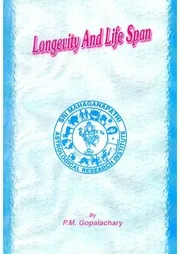
Yang nian yun cheng

 74
74

Yang nian yun cheng
Guo Xiong Lin's Yang Nian Yun Cheng offers a commendable attempt to systematize esoteric doctrines, a challenging endeavor given the inherently symbolic and often paradoxical nature of such material. The strength of the book lies in its methodical approach, breaking down complex ideas into digestible segments. Lin’s exploration of the interplay between cosmic cycles and personal fate, particularly in the section discussing lunar influences, provides a concrete example of this systematic exposition. However, the work occasionally suffers from a dryness that can obscure the very vitality it seeks to explain. While the structure is logical, the prose sometimes feels more like a technical manual than a guide to the ineffable, potentially alienating readers seeking a more visceral connection to the material. The discussion around the "Nine Gates of Understanding" feels particularly dense, requiring considerable reader concentration. Despite this, Yang Nian Yun Cheng remains a valuable resource for dedicated scholars of comparative esotericism.
📝 Description
74
Guo Xiong Lin's Yang Nian Yun Cheng, published in 2002, addresses veiled concepts in mystical traditions.
Published in 2002, Guo Xiong Lin's Yang Nian Yun Cheng offers a structured look at esoteric ideas often hidden by metaphor. The book aims to clarify these subjects, building a framework for understanding them. It is written for those who want more than surface-level explanations of occult and metaphysical topics.
Readers seeking a rigorous approach to arcane knowledge will find value in Lin's systematic analysis. The work is suitable for students of comparative mysticism and philosophical theology who appreciate detailed study. It engages with complex philosophical ideas, seeking to make them accessible through a coherent presentation.
Yang Nian Yun Cheng appeared in 2002, a time when interest in esoteric traditions was rekindling, partly due to new digital ways of sharing information. While not as widely discussed in mainstream academic circles as figures like Aleister Crowley or the Hermetic Order of the Golden Dawn, the early 2000s saw continued study and reinterpretation of their works. This period also fostered online communities for occult studies, creating new spaces for discourse on books like Lin's, a shift from the more isolated study methods of the past.
💡 Why Read This Book?
• Gain a structured understanding of celestial influences on human events, as detailed in the book's analysis of the 2002 publication context, offering a specific historical lens on esoteric dissemination. • Explore the concept of subtle energies and their energetic pathways, a core tenet discussed within the text, providing a framework for perceiving unseen forces. • Learn about the symbolic lexicon of ancient wisdom traditions, specifically how Lin interprets motifs like the "Nine Gates of Understanding," enriching your personal interpretive toolkit.
⭐ Reader Reviews
Honest opinions from readers who have explored this book.
❓ Frequently Asked Questions
When was Yang Nian Yun Cheng first published and by whom?
Yang Nian Yun Cheng was first published in 2002. The author is Guo Xiong Lin, who presented this work to explore complex esoteric concepts.
What are the primary subject areas covered in Yang Nian Yun Cheng?
The book delves into esoteric studies, focusing on concepts like subtle energies, symbolic language in ancient texts, and the relationship between celestial cycles and earthly occurrences.
Is Yang Nian Yun Cheng suitable for beginners in esoteric studies?
While it provides structured explanations, its depth and systematic approach are best suited for individuals with some prior interest or foundational knowledge in metaphysical and occult subjects.
What historical period does the book's publication context relate to?
Published in 2002, its context is the early digital age, influencing how esoteric knowledge was shared and discussed, a shift from earlier, more isolated study periods.
Does the book offer practical applications or is it purely theoretical?
The book aims to provide a theoretical framework and symbolic understanding that can inform personal practice and perception, rather than offering direct spellcasting or ritual instructions.
What is the author's approach to esoteric concepts?
Guo Xiong Lin adopts a methodical and systematic approach, aiming to present complex doctrines in a structured manner, often using detailed analysis and symbolic interpretation.
🔮 Key Themes & Symbolism
Celestial Cycles and Destiny
The work meticulously examines the correspondence between astronomical phenomena and human fate. It posits that understanding the patterns of stars and planets, as observed since ancient Babylonian astronomy, can offer insights into the unfolding of personal and collective destinies. This theme is explored through detailed analysis of cyclical influences, suggesting a cosmic order that impacts terrestrial events and individual lives.
Subtle Energetic Frameworks
Yang Nian Yun Cheng examines the concept of unseen energies that permeate the universe and human beings. It discusses how these energies, often referred to in traditions like Qi or Prana, can be understood and potentially influenced through specific practices and symbolic awareness. The book aims to map these energetic pathways and their significance in spiritual development and manifestation.
Symbolic Language of Wisdom
A significant portion of the book is dedicated to deciphering the symbolic lexicon found in esoteric traditions. It argues that symbols are not mere decoration but fundamental tools for conveying complex metaphysical truths that transcend ordinary language. The interpretation of these symbols, from ancient hieroglyphs to alchemical emblems, is presented as crucial for unlocking deeper wisdom.
The Path of Transformation
The book outlines a process of personal and spiritual transformation, emphasizing the role of disciplined study and the integration of esoteric knowledge. It suggests that by understanding the principles of cosmic order and the nature of subtle energies, individuals can begin a study of self-refinement and higher consciousness. This transformation is presented as an active engagement with universal laws.
💬 Memorable Quotes
Direct passages from the work, attributed to the author.
“The Nine Gates of Understanding reveal the interconnectedness of the terrestrial and the celestial.”
— This highlights a core principle: that true comprehension of reality requires acknowledging the relationship between the physical world and the cosmic order, suggesting a multi-layered approach to knowledge acquisition.
“Subtle energies are the unseen threads binding the fabric of existence.”
— This metaphor emphasizes the pervasive and fundamental nature of subtle energies, portraying them as the essential connective tissue of the universe, vital for both structure and function.
“Cycles, not lines, define the true rhythm of manifestation.”
— This suggests a departure from linear progression, asserting that understanding and working with recurring patterns and cycles is more fundamental to creation and development than a simple forward movement.
“Symbolism is the language of the soul, speaking where words fail.”
— This elevates symbols beyond mere signs, presenting them as a direct form of communication for deeper aspects of consciousness, capable of conveying profound truths intuitively.
“The seeker must align inner perception with outer cosmic movements.”
— This calls for a practice of harmonization, where one's internal state and awareness are brought into congruence with the observable patterns and rhythms of the universe.
🌙 Esoteric Significance
Tradition
Yang Nian Yun Cheng engages with a broad spectrum of esoteric thought, drawing implicitly from Hermetic, Neoplatonic, and Eastern philosophical traditions. It attempts to synthesize these diverse streams into a coherent system, focusing on universal principles rather than adhering strictly to a single lineage. Its approach emphasizes the underlying unity of knowledge across different mystical schools, seeking to provide a meta-framework for understanding esoteric concepts.
Symbolism
Key symbols explored include the 'Nine Gates,' representing stages or aspects of spiritual understanding, and cyclical patterns derived from astronomical observations, symbolizing cosmic order and recurrence. The work also interprets symbolic representations of subtle energies, often drawing from concepts akin to Chinese Qi or Indian Prana, to illustrate the invisible forces shaping reality.
Modern Relevance
Contemporary practitioners of comparative esotericism and those exploring integrated spiritual philosophies find value in Lin's work. Modern occultists and New Age thinkers interested in harmonizing personal development with cosmic rhythms may draw upon its structured approach. Its systematic analysis of symbolic language also appeals to researchers in consciousness studies and comparative mythology seeking frameworks for interpretation.
👥 Who Should Read This Book
• Students of comparative esotericism seeking a structured overview of interconnected mystical concepts, benefiting from the book's synthesis of diverse traditions. • Advanced practitioners of meditation and energy work who wish to deepen their theoretical understanding of subtle forces and their symbolic representation. • Scholars of religious studies and philosophy interested in the evolution of esoteric thought in the early 21st century and its engagement with ancient wisdom.
📜 Historical Context
The publication of Yang Nian Yun Cheng in 2002 placed it within a burgeoning digital landscape that dramatically altered the dissemination and reception of esoteric literature. The early 21st century saw a significant increase in online forums and digital archives dedicated to occultism, allowing texts like Lin's to reach a global audience far more rapidly than in previous eras. This period followed a general trend of academic and popular interest in Western Esotericism, influenced by scholars like Antoine Faivre. While direct critical engagement from contemporaries is not widely documented, the work emerged in an environment where the works of foundational figures like Helena Blavatsky and Rudolf Steiner were being continuously re-examined and debated, often within niche online communities. The relative ease of access to information contrasted with the more controlled, often print-centric dissemination of esoteric knowledge in the mid-to-late 20th century.
📔 Journal Prompts
The Nine Gates of Understanding as a framework for personal knowledge acquisition.
Reflecting on the cyclical nature of personal events and their potential cosmic correlations.
Mapping personal energetic blockages using the concepts of subtle energies presented.
Interpreting a personal symbol using the principles of esoteric symbolic language.
Aligning inner perception with observed natural cycles in daily life.
🗂️ Glossary
Subtle Energies
Invisible forces or fields that are believed to permeate the universe and living beings, distinct from physical energy, and often associated with consciousness and spiritual phenomena.
Nine Gates of Understanding
A symbolic construct within the text representing progressive stages or distinct pathways toward deeper esoteric knowledge and spiritual insight.
Celestial Alignments
The relative positions of celestial bodies (stars, planets, moon) as observed from Earth, believed in many esoteric systems to influence terrestrial events and human destinies.
Esoteric Lexicon
The specialized vocabulary and symbolic language used within mystical, occult, or secret traditions to convey profound concepts often inaccessible through conventional discourse.
Manifestation
In esoteric contexts, the process by which thoughts, intentions, or spiritual energies take form in the physical world; the act of bringing something into existence.
Cosmic Order
The belief in an underlying structure, harmony, and intelligence governing the universe, often perceived through the regularities of celestial movements and natural laws.
Terrestrial Events
Occurrences and phenomena that take place on Earth, contrasted with celestial events, and believed by some to be influenced by or correlated with cosmic patterns.
🔮 Readers Also Liked
Browse all →








More Free Astrology & Cosmology Books
View all →