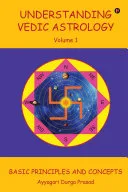
Understanding Vedic Astrology
 84
84

Understanding Vedic Astrology
Ayyagari Durga Prasad's "Understanding Vedic Astrology" arrives with a commendable ambition: to present Jyotisha as a precise science of timing. The author correctly identifies that the efficacy of actions is often contingent on temporal alignment, a core tenet of Vedic thought. The book’s strength lies in its systematic breakdown of foundational elements—Grahas, Rashis, and Bhavas—offering clarity where many texts falter. However, the prose, while informative, occasionally leans towards a dry, academic tone that may not fully ignite the passion for the subject that its esoteric nature implies. A particularly insightful section details the predictive Dasha systems, illustrating how temporal cycles are mapped onto an individual's life. While the book provides a solid theoretical framework, readers seeking practical, hands-on application might find themselves wanting more illustrative case studies. Nevertheless, for its clear exposition of Vedic astrological principles, it serves as a valuable, if measured, introduction.
📝 Description
84
Published in 2022, Ayyagari Durga Prasad's Understanding Vedic Astrology examines Jyotisha as a science of time and karma.
This book lays out Jyotisha, the Indian system of celestial interpretation, as more than simple fortune-telling. It argues for astrology as a sophisticated science connected to time and karma, rooted in Vedic philosophy. Prasad aims to make the complex calculations and symbolic language of Jyotisha understandable for modern readers. The goal is to help people align their lives with cosmic patterns.
The volume is for anyone interested in the predictive and philosophical dimensions of esoteric studies. It focuses on the connections between celestial events and earthly life within Hindu cosmology. Whether new to birth charts or an experienced student of astrology, readers will find a structured method for learning Vedic astrology. The book suggests that timely actions can lead to a more successful and balanced life.
Vedic astrology, or Jyotisha, is one of the six Vedangas, auxiliary disciplines connected to the Vedas. Its history goes back to ancient Indian sages who observed the skies. They linked planetary movements to human fate and natural events. The system uses a sidereal zodiac, which differs from the tropical zodiac common in Western astrology. Prasad's work connects his modern explanation to this long tradition of development and refinement.
Jyotisha is one of the six Vedangas, auxiliary disciplines linked to the Vedas, the foundational texts of Hinduism. Its origins are traced to ancient Indian sages who developed a system for correlating cosmic movements with earthly happenings and human destiny. Unlike Western astrology, which typically uses a tropical zodiac, Jyotisha relies on a sidereal zodiac, which aligns with the fixed stars. This system is deeply interwoven with concepts of karma and dharma, viewing astrological configurations as manifestations of past actions and guides for present conduct. The earliest systematic texts on Jyotisha date to the Gupta period in India.
💡 Why Read This Book?
• Grasp the unique predictive power of Vedic Dasha systems, understanding how specific planetary periods, as detailed in the book, are believed to govern life events and offer insights into opportune timing for actions. • Learn to differentiate the Vedic sidereal zodiac from the Western tropical zodiac, appreciating how this fundamental distinction, explored in the text, influences astrological interpretations and chart calculations. • Explore the concept of Grahas and their distinct karmic influences within the Vedic framework, gaining an understanding of how these celestial forces, as presented by Prasad, shape destiny and character.
⭐ Reader Reviews
Honest opinions from readers who have explored this book.
❓ Frequently Asked Questions
When was "Understanding Vedic Astrology" first published?
"Understanding Vedic Astrology" by Ayyagari Durga Prasad was first published on November 4, 2022, making it a contemporary exploration of ancient Vedic principles.
What is the primary difference between Vedic and Western astrology as discussed in the book?
The book highlights that Vedic astrology utilizes the sidereal zodiac, which aligns with the fixed constellations, while Western astrology primarily uses the tropical zodiac, based on the seasons. This difference is crucial for accurate chart interpretation.
What are the "Vedangas" mentioned in the context of Vedic astrology?
The Vedangas are the six auxiliary disciplines associated with the Vedas. Jyotisha (Vedic astrology) is one of these six, serving as a "science of light" to understand celestial influences.
Does the book explain how to cast a Vedic astrological chart?
While the book focuses on understanding the principles and interpretations of Vedic astrology, it provides the foundational knowledge necessary to grasp chart construction, which is a complex process.
Who are the "Rishis" in relation to Vedic astrology?
The Rishis are the ancient sages of India credited with observing the cosmos and developing the foundational principles of Vedic astrology, gifting this knowledge to humanity.
What is the significance of "Grahas" in Vedic astrology?
Grahas, referring to the planets (including the Sun, Moon, and lunar nodes), are central to Vedic astrology. The book explains their individual energies and how their positions and interactions influence destiny and karma.
🔮 Key Themes & Symbolism
The Science of Timing
Prasad's work positions Vedic astrology, or Jyotisha, as a precise science dedicated to understanding and utilizing time. It posits that cosmic timing, dictated by planetary movements, is paramount for the success of actions and decisions. The book elaborates on how the ancient Rishis developed this system to harmonize human endeavors with celestial cycles, emphasizing that choices made at auspicious moments are more likely to yield positive results. This focus on temporal efficacy distinguishes Jyotisha as a practical tool for life alignment, rather than purely a divinatory art.
Karma and Celestial Influence
A core tenet explored is the relationship between karma and planetary positions. The book presents the birth chart as a snapshot of past karmic imprints at the moment of birth. The configurations of the Grahas (planets) within the Rashis (zodiac signs) and Bhavas (houses) are interpreted as indicators of accumulated karma. Understanding these celestial influences, as detailed in the text, is presented as a means to comprehend one's destiny, challenges, and opportunities, facilitating a more conscious engagement with life's unfolding journey.
Jyotisha's Vedanga Classification
The book situates Vedic astrology within its historical and philosophical context as one of the six Vedangas, or auxiliary sciences of the Vedas. This classification underscores Jyotisha's integral role in the Vedic tradition, not as an isolated practice but as a discipline intended to illuminate and support spiritual understanding and practical living. By adhering to this ancient categorization, Prasad emphasizes the profound depth and sacred lineage from which Vedic astrology derives its authority and significance.
The Sidereal Zodiac
A crucial distinction made throughout the text is the adherence to the sidereal zodiac. Unlike the tropical zodiac used in Western astrology, the sidereal zodiac is fixed and aligned with the actual constellations in the sky. This technical detail is fundamental to Vedic astrological calculations and interpretations. The book explains how this system provides a more accurate representation of celestial positions, directly impacting the delineation of planetary influences and the timing of predictive cycles known as Dashas.
💬 Memorable Quotes
Direct passages from the work, attributed to the author.
“Decisions and actions get fructified only if they are done at the right and appropriate time.”
— This statement expresses the book's central thesis: the profound importance of temporal alignment in achieving success. It suggests that astrological timing is not merely predictive but prescriptive, guiding individuals towards optimal moments for action.
“Our Vedic Rishis have gifted us with the science of Vedic astrology which is time personified.”
— This highlights the divine or ancient origin of Jyotisha, framing it as a direct revelation from wise sages. The concept of 'time personified' emphasizes its role as a living, dynamic force that governs existence and can be understood through celestial observation.
“Vedic astrology... guides us to elect the right time to perform actions according to our time, date and place of birth.”
— This emphasizes the personalized and practical application of Vedic astrology. It's presented as a tool for natal chart analysis, enabling individuals to identify auspicious timings tailored to their unique birth data for effective action.
“As Vedic astrology deals with the effects of planetary movements...”
— This is a foundational statement defining the subject matter. It points to the core mechanism of Jyotisha: the systematic study of how celestial bodies' positions and transits influence terrestrial events and human lives.
💡 Key Ideas
Editorial paraphrase of the work's core concepts — not direct quotes.
Successful life is a reward for those who take the right decisions and perform the right actions at the right time.
This paraphrase from the blurb sets the stage by connecting astrological principles to a universally desired outcome: a successful life. It implies that the wisdom of Vedic astrology is a key to unlocking this success through informed action.
🌙 Esoteric Significance
Tradition
This work firmly belongs to the Indic esoteric tradition, specifically the Vedic lineage. Jyotisha is one of the six Vedangas, auxiliary sciences designed to uphold and understand the Vedas. It's deeply interwoven with Hindu cosmology, philosophy, and concepts of karma and dharma. Prasad's approach aligns with classical Jyotisha, emphasizing its role as a divine science gifted by sages (Rishis) for understanding the temporal unfolding of destiny and facilitating spiritual growth through aligned action.
Symbolism
Key symbols include the Grahas (planets), which are not merely physical bodies but personified deities or cosmic forces carrying specific karmic signatures and influences. The Rashis (zodiac signs) represent archetypal energies and environments, while the Bhavas (houses) denote specific areas of life experience. The interaction between these elements—a planet in a sign in a house—forms the symbolic language through which cosmic patterns and life trajectories are interpreted.
Modern Relevance
In contemporary esoteric circles, Vedic astrology is increasingly recognized for its sophisticated predictive techniques and its philosophical depth, particularly its integration with concepts of karma and reincarnation. Thinkers and practitioners interested in comparative astrology, Eastern philosophies, and holistic life planning often turn to Jyotisha. Works like Prasad's are crucial for making this ancient system accessible to a modern audience seeking guidance on personal development, timing of events, and understanding life's purpose beyond Western astrological frameworks.
👥 Who Should Read This Book
• Aspiring students of Jyotisha seeking a structured introduction to the fundamental principles, including the sidereal zodiac, Grahas, Rashis, and Bhavas. • Individuals interested in comparative esotericism who wish to understand the differences and unique contributions of Vedic astrology compared to Western systems. • Those seeking a deeper understanding of karma and destiny as interpreted through celestial influences, as presented in the classical Vedic tradition.
📜 Historical Context
Published in 2022, Ayyagari Durga Prasad's "Understanding Vedic Astrology" enters a discourse with a lineage stretching back millennia. Jyotisha, one of the Vedangas, has been systematically developed since at least the Gupta period (c. 320-550 CE), with foundational texts like the Brihat Jataka by Varahamihira (circa 6th century CE) establishing its core principles. The book's contemporary presentation engages with a long history of astronomical observation and philosophical interpretation, often contrasted with the Hellenistic-derived Western astrology that gained prominence in the West. While Vedic astrology experienced a resurgence in global interest in the latter half of the 20th century, often influenced by figures like K. S. Krishnamurti who championed a specific predictive technique (KP System), Prasad's work aims for a comprehensive overview. Its emergence in 2022 places it within a modern digital age where esoteric knowledge is widely disseminated, yet often fragmented, making a structured exposition like this valuable.
📔 Journal Prompts
The concept of time personified within Vedic astrology.
How the influence of Grahas might manifest in your daily life.
The significance of your birth chart's Bhavas.
Reflecting on the sidereal zodiac's difference from the tropical.
The role of Rishis in developing Jyotisha.
🗂️ Glossary
Jyotisha
The traditional Vedic name for Indian astrology, often translated as the "science of light" or celestial knowledge. It is considered one of the Vedangas.
Graha
Literally 'seizer' or 'planet'. In Vedic astrology, it refers to the Sun, Moon, Mars, Mercury, Jupiter, Venus, Saturn, and the lunar nodes (Rahu and Ketu), each possessing distinct energies and karmic significance.
Rashi
A zodiac sign in Vedic astrology. There are twelve Rashis, corresponding to the twelve segments of the ecliptic, each with specific characteristics and elemental associations.
Bhava
A house in the Vedic astrological chart. There are twelve Bhavas, representing different areas of life experience, such as self, wealth, siblings, home, children, health, relationships, and spirituality.
Sidereal Zodiac
An astrological zodiac based on the fixed positions of constellations in the sky. It differs from the tropical zodiac used in Western astrology, which is based on the seasons and the Sun's apparent path.
Dasha System
A predictive system in Vedic astrology that divides a person's life into periods governed by specific planets, indicating the unfolding of karmic influences and potential life events.
Rishi
A sage or seer in ancient Indian tradition, credited with divine knowledge and the authorship of sacred texts. The Rishis are considered the originators of Vedic astrology.