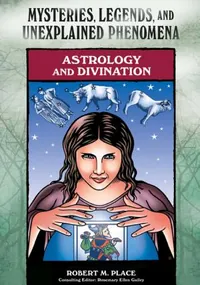
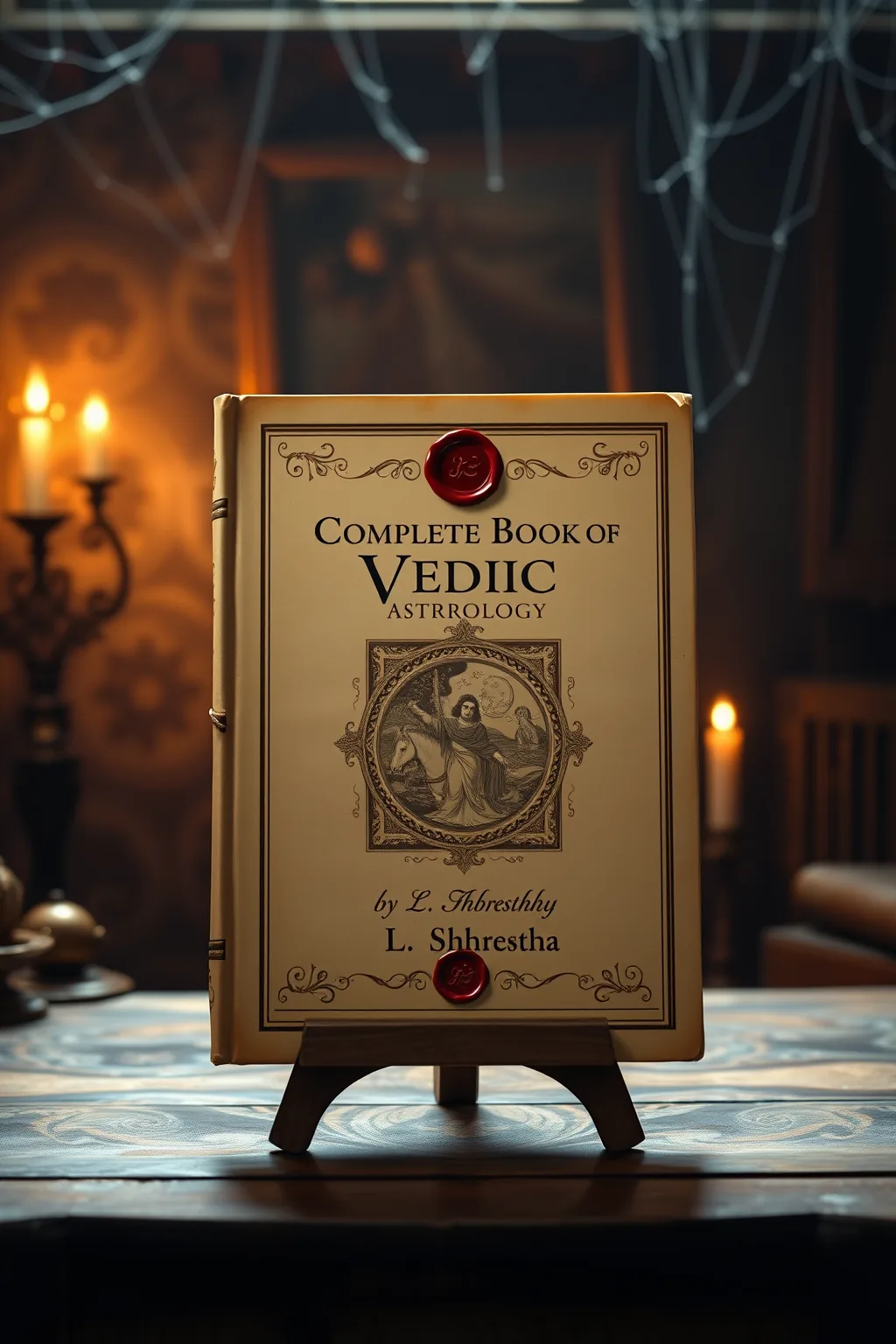
Complete Book of Vedic Astrology
 62
62

Complete Book of Vedic Astrology


Ophelia Vance, Mystical Literature Reviewer — L. Shrestha's "Complete Book of Vedic Astrology" stands as a monumental achievement in the field of Jyotish. It transcends the ordinary, offering a deeply spiritual and esoteric perspective on celestial influences. Shrestha's meticulous scholarship and profound understanding of Vedic wisdom illuminate the subtle energies and karmic threads woven into our horoscopes. This comprehensive tome is an indispensable resource for serious practitioners and philosophical explorers alike, revealing the ancient secrets of planetary wisdom and their intricate connection to the human soul. It is a beacon for those seeking authentic astrological knowledge and profound self-understanding.
📝 Description
62
L. Shrestha's 'Complete Book of Vedic Astrology' was published to detail the Jyotish system.
This book serves as a comprehensive introduction to Vedic astrology, also known as Jyotish. It explains the fundamental principles of this ancient Indian system of divination. The text covers planetary influences, zodiac signs, and the houses, which are central to astrological interpretation. Readers will find detailed explanations of concepts like planetary strengths, aspects, and yogas (planetary combinations). The book also discusses the dashas, or planetary periods, which are crucial for understanding timing in an astrological chart. It aims to provide a clear understanding of how celestial movements connect to earthly events and individual destinies.
Shrestha presents the philosophical and symbolic aspects of Jyotish alongside its practical application. The work is structured to guide the reader through the complexities of chart calculation and interpretation. It emphasizes the connection between astrology, karma, and spiritual development. The book is intended for those serious about learning Vedic astrology, offering a structured approach to a vast subject. It helps readers understand the cosmic influences on their lives and potential paths for growth.
Vedic astrology, or Jyotish, is one of the six auxiliary sciences (Vedangas) of the Vedas, the ancient scriptures of Hinduism. It is not merely a system of prediction but is deeply intertwined with Indian philosophy, karma theory, and the concept of dharma. Jyotish is understood as a divine science that maps the celestial influences on earthly existence, offering insights into an individual's past karma and future potentials. Its practice is rooted in a spiritual worldview that sees the cosmos as a manifestation of consciousness, with planetary movements reflecting cosmic rhythms and divine will. This tradition views astrological knowledge as a tool for self-understanding and spiritual evolution.
💡 Why Read This Book?
Unlock the ancient wisdom of the cosmos and gain profound self-awareness. This book offers a rare glimpse into the esoteric heart of Vedic Astrology, revealing the symbolic language of the stars. Ideal for spiritual seekers, aspiring astrologers, and scholars of ancient traditions who wish to understand the karmic blueprint and its influence on life's journey. Empower yourself with timeless knowledge for personal transformation and cosmic alignment.
⭐ Reader Reviews
Honest opinions from readers who have explored this book.
❓ Frequently Asked Questions
What is Vedic Astrology?
Vedic Astrology, or Jyotish, is an ancient Indian system of astrology that uses the sidereal zodiac. It is deeply rooted in Vedic philosophy and aims to understand karma, destiny, and spiritual growth through celestial interpretation.
Is this book suitable for beginners?
Absolutely. While comprehensive, Shrestha provides a structured approach that allows newcomers to grasp the fundamental principles of Vedic Astrology, gradually building towards more advanced concepts with clarity and guidance.
What makes Vedic Astrology different from Western Astrology?
The primary difference lies in the zodiac used: Vedic Astrology employs the sidereal zodiac, which is fixed relative to the stars, while Western Astrology uses the tropical zodiac, which is fixed relative to the seasons. This leads to different planetary positions and interpretations.
How can Vedic Astrology aid in spiritual growth?
Vedic Astrology offers insights into one's karmic patterns and inherent strengths and challenges, providing a roadmap for spiritual evolution. By understanding these influences, individuals can consciously work towards overcoming obstacles and fulfilling their higher purpose.
Does the book cover planetary transits and dasas?
Yes, the "Complete Book of Vedic Astrology" offers a thorough exploration of key predictive techniques, including the significant planetary transits and the complex Vimshottari Dasa system, crucial for understanding life's unfolding events.
🔮 Key Themes & Symbolism
The Cosmic Dance of Karma and Destiny
This book posits that the celestial arrangement at birth is not arbitrary but a profound manifestation of past karma, shaping present circumstances and future potentials. It explores how planetary positions act as divine script, guiding individuals through their life's journey. Understanding this cosmic dialogue allows for conscious engagement with destiny, transforming perceived limitations into opportunities for spiritual growth and the fulfillment of one's unique dharma. The text illuminates the intricate connection between celestial movements and the soul's evolutionary path.
Jyotish as a Sacred Science
Beyond mere prediction, Vedic Astrology is presented as a sacred science, a system of divine knowledge passed down through millennia. It is a tool for understanding the subtle energies that govern the universe and our individual lives, offering clear insights into the nature of reality and consciousness. The book emphasizes the philosophical and spiritual underpinnings of Jyotish, revealing its role in self-realization and the pursuit of moksha (liberation). It is a proof of the ancient seers' profound connection with the cosmos.
Symbolism of the Planets and Houses
Each planet and astrological house is imbued with rich symbolic meaning, representing specific archetypes, energies, and life experiences. Shrestha meticulously deciphers this symbolic language, revealing how the interplay of these celestial bodies within the houses of a birth chart paints a vivid picture of an individual's personality, strengths, challenges, and life path. This exploration goes beyond literal interpretations, looking at the esoteric significance and spiritual lessons embedded within each astrological element.
💬 Memorable Quotes
Direct passages from the work, attributed to the author.
“Every chart is a sacred map of the soul's journey.”
— This highlights the profound spiritual dimension of astrology, viewing a birth chart as a divine blueprint for personal and karmic evolution.
“The cosmos mirrors the microcosm within.”
— This speaks to the principle of correspondence, suggesting that the universal laws and patterns observed in the heavens are reflected within the human being.
“Wisdom lies not in knowing the future, but in understanding the present.”
— This underscores the practical application of astrology for present-moment awareness and informed decision-making, rather than solely focusing on fortune-telling.
💡 Key Ideas
Editorial paraphrase of the work's core concepts — not direct quotes.
The stars do not compel, they reveal.
This quote emphasizes that astrology is not deterministic but rather a system of guidance and self-awareness, informative potentials rather than dictating fate.
Jyotish is the eye of the Veda, seeing the unseen.
This quote positions Vedic Astrology as a crucial tool for spiritual insight, allowing one to perceive the subtle, hidden forces at play in life.
🌙 Esoteric Significance
Tradition
Vedic Astrology belongs to the ancient Vedic tradition of India, a spiritual and philosophical lineage deeply rooted in the concept of Dharma, Karma, and the interconnectedness of all existence. It is considered one of the Vedangas, or auxiliary disciplines of the Vedas, serving as the 'eye' through which the cosmic order is perceived. Its esoteric significance lies in its ability to reveal the soul's journey across lifetimes, the karmic debts and credits that shape our present, and the divine plan for spiritual evolution. It offers a framework for understanding the subtle energetic influences of the cosmos on individual consciousness and destiny.
Symbolism
The symbolism in Vedic Astrology is rich and multi-layered, drawing from Hindu mythology, cosmology, and philosophy. Planets (Grahas) are not merely celestial bodies but divine personifications of cosmic forces and archetypes, each carrying specific energies and lessons. The Zodiac signs (Rashis) represent distinct temperaments and life lessons, while the Houses (Bhavas) delineate specific areas of life experience. The Nakshatras, or lunar mansions, add another layer of profound symbolism, offering minute insights into the energetic nuances of time and consciousness. Understanding this symbolic language unlocks a deeper comprehension of the intricate range of life and the universe.
Modern Relevance
In the contemporary world, Vedic Astrology offers a powerful antidote to the often fragmented and materialistic nature of modern life. Its emphasis on karma, reincarnation, and spiritual growth provides a profound framework for understanding life's challenges and opportunities from a soul-centered perspective. It empowers individuals with self-awareness, helping them navigate personal relationships, career paths, and health concerns with greater wisdom and intention. Moreover, its holistic approach encourages a deeper connection with the natural world and the cosmic cycles, fostering a sense of purpose and alignment in an increasingly complex and fast-paced existence, facilitating personal transformation and inner peace.
👥 Who Should Read This Book
This comprehensive text is a valuable collection for a diverse audience. Aspiring astrologers will find a solid foundation in the principles of Jyotish, while seasoned practitioners will discover nuanced interpretations and advanced predictive techniques. Spiritual seekers looking for a deeper understanding of their life's purpose and karmic path will find clear insights into the soul's journey. Scholars of ancient wisdom traditions will appreciate the historical and philosophical depth. Ultimately, anyone yearning to connect with the cosmic order and unlock the secrets of their own destiny will find this book an invaluable companion for self-discovery and spiritual enlightenment.
📜 Historical Context
The genesis of Vedic Astrology, or Jyotish, is deeply interwoven with the ancient Vedic civilization of India, dating back thousands of years. Its principles are articulated in foundational texts like the Vedas and later synthesized in authoritative works such as the Brihat Parashara Hora Shastra. During its classical period, Jyotish was an integral part of Indian philosophy, religion, and daily life, consulted for everything from agricultural planning and governance to personal well-being and spiritual guidance. Its development was influenced by astronomical observations and sophisticated mathematical calculations, reflecting a profound engagement with the cosmos. Throughout centuries, it has been preserved and transmitted through oral traditions and scholarly manuscripts, maintaining its relevance and evolving while retaining its core esoteric tenets, influencing not only the Indian subcontinent but also, indirectly, astrological thought in other cultures.
📔 Journal Prompts
Reflect on the most significant planetary influence in your birth chart and its impact on your core personality.
How do the themes of a particular house in your chart manifest in your daily life, and what lessons can you derive from them?
Consider a recurring challenge in your life; how might it be understood through the lens of karmic astrology as presented in this book?
Explore the symbolism of a specific Nakshatra that holds prominence in your chart and its potential spiritual implications.
How can the understanding of planetary energies from Vedic Astrology be applied to foster greater harmony in your relationships?
🗂️ Glossary
Jyotish
The ancient Indian system of astrology, also known as Vedic Astrology, derived from Sanskrit, meaning 'science of light' or 'celestial light'.
Rashi
The term for a Zodiac sign in Vedic Astrology. There are twelve Rashis, each with distinct characteristics and ruling planets.
Graha
A planet in Vedic Astrology. There are nine primary Grahas, considered celestial influencers or personifications of cosmic forces.
Bhava
An astrological house in a birth chart, representing a specific area of life experience, such as career, relationships, or health.
Nakshatra
A lunar mansion; the division of the ecliptic into 27 segments, each with unique symbolism and deities, offering finer astrological interpretations.
This book appears in 2 collections
🔮 Readers Also Liked
Browse all →









From the “Astrology” Collection
View all →








More Free Astrology & Cosmology Books
View all →