World History for Dummies
 82
82

World History for Dummies
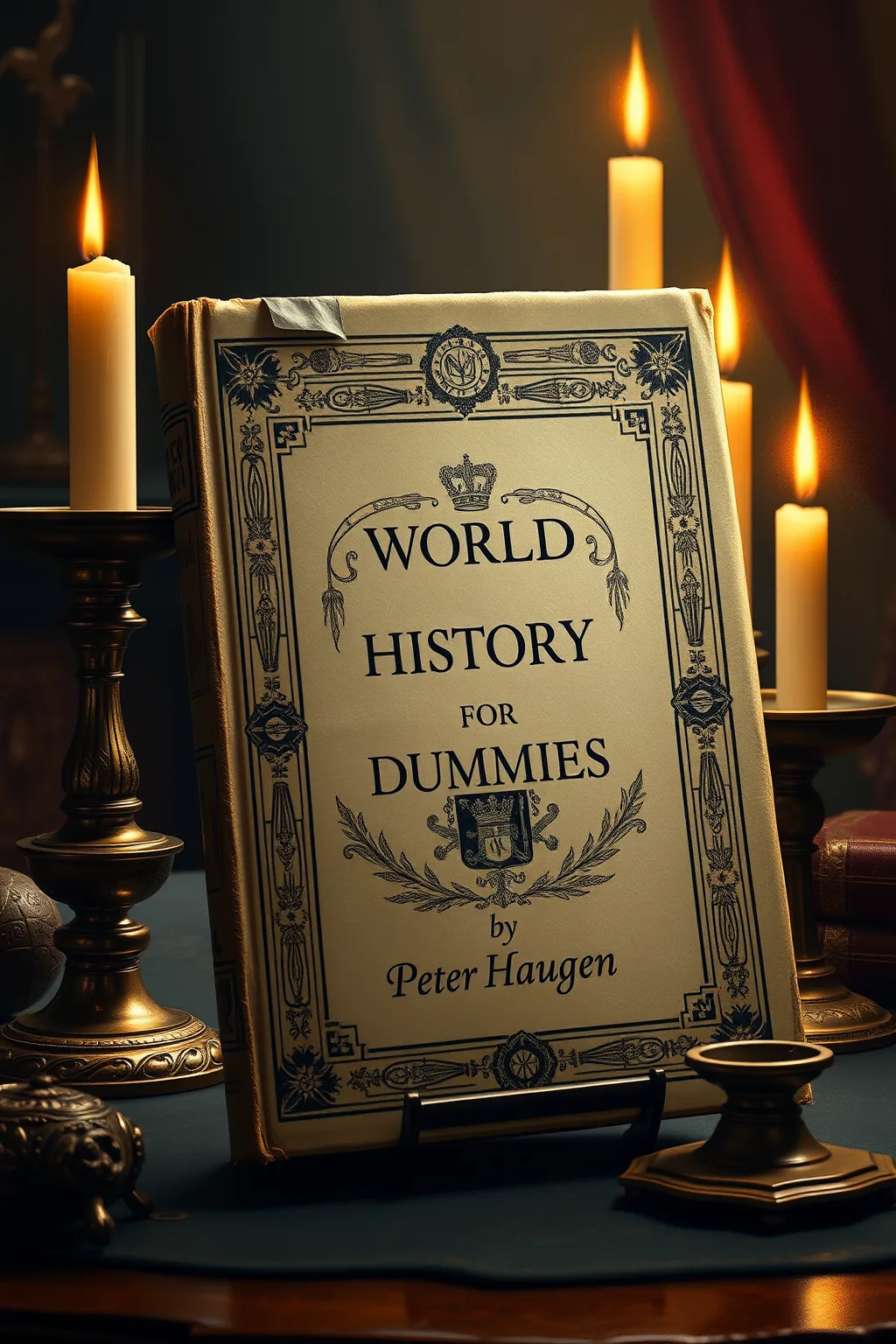
Peter Haugen’s "World History for Dummies" attempts to distill millennia of human endeavor into a manageable text. Its primary strength lies in its straightforward organization, making complex timelines and causal links easier to grasp for the uninitiated. For instance, its clear presentation of the Silk Road’s economic and cultural impact effectively illustrates pre-modern global interconnectedness. However, the book’s pursuit of accessibility sometimes leads to oversimplification, particularly when touching upon the nuanced motivations behind major conflicts or the intricate philosophical underpinnings of various eras. The discussion on the French Revolution, while presenting key events, could benefit from deeper exploration of the Enlightenment’s philosophical currents that fueled it. Ultimately, it serves as a functional primer, but lacks the depth for seasoned historians.
📝 Description
82
Peter Haugen's World History for Dummies, published in 2011, aims to make global history accessible.
This volume presents a broad overview of human events, organized to make history understandable for a general audience. It moves through major civilizations, significant conflicts, and societal changes from ancient times up to the recent past. The book breaks down historical narratives into manageable sections, following a chronological path while also examining cultural, political, and economic developments thematically.
World History for Dummies is written for people who want a basic grasp of history without needing academic experience. It is suitable for students new to the subject, adults who are returning to history, or anyone interested in how the world came to be as it is. The book is intended as a starting point for anyone wanting to learn more about history.
The text places historical events within larger timeframes. It looks at the growth and decline of empires, for example, and the effects of periods like the Renaissance. The book shows how different societies were connected through trade and the exchange of ideas, and it stresses the cause and effect that drives historical change.
While categorized as 'esoteric', this book's approach to history is primarily educational rather than focused on hidden traditions or spiritual interpretations. Its aim is to provide a clear, structured understanding of historical progression and recurring patterns within human societies. The 'esoteric' label likely refers to its inclusion in a broader section of the catalog that might feature unconventional or less mainstream historical perspectives, rather than the book itself being esoteric in content. It seeks to make complex historical information accessible, which can be a goal in various fields, including those that explore deeper meanings behind historical events.
⭐ Reader Reviews
Honest opinions from readers who have explored this book.
❓ Frequently Asked Questions
What time period does "World History for Dummies" cover?
The book spans from the earliest human civilizations, including ancient Mesopotamia and Egypt, through to the 21st century, detailing significant events and developments across millennia.
Is "World History for Dummies" suitable for high school students?
Yes, it is an excellent resource for high school students needing a clear, accessible overview of historical periods and key events for study or general knowledge.
Does the book discuss non-Western history?
Absolutely. It includes substantial coverage of major non-Western civilizations such as those in China, India, and the Islamic world, detailing their contributions and interactions.
What makes this history book different from others?
Its 'for Dummies' approach prioritizes clarity and simplicity, breaking down complex historical narratives into understandable sections, unlike more academic or specialized historical texts.
Are there any specific historical figures highlighted in the book?
Yes, the work references numerous figures, including important leaders like Alexander the Great, Genghis Khan, and Queen Elizabeth I, explaining their roles and impact.
Can this book help prepare for history exams?
It can serve as a strong introductory guide for exam preparation, providing a solid framework of major historical periods, themes, and turning points.
🔮 Key Themes & Symbolism
Cycles of Civilization
The work consistently examines the rise and fall of civilizations, from the early Egyptian dynasties to the decline of the Ottoman Empire. It analyzes the factors contributing to their growth, such as strong leadership and economic innovation, and their eventual fragmentation or collapse due to internal strife or external pressures. This theme emphasizes that historical epochs are not static but dynamic processes of creation and dissolution.
Technological Innovation
A recurring thread is the transformative power of technology. The book details inventions like the astrolabe, crucial for navigation, and the gunpowder revolution, which reshaped warfare. It illustrates how advancements, from the agricultural revolution to the printing press, fundamentally alter societies, economies, and human interaction, often accelerating the pace of historical change.
Global Interconnectedness
Despite focusing on distinct regions, the book underscores how societies have always been linked. It traces the routes of trade, such as the spice trade connecting Europe and Asia, and the spread of ideas and religions. This theme highlights that historical events rarely occur in isolation, with cross-cultural exchanges profoundly shaping development worldwide.
The Evolution of Governance
The text chronicles the diverse forms of political organization throughout history, from early city-states and tribal confederations to vast empires and modern nation-states. It explores concepts like feudalism in medieval Europe, the divine right of kings, and the emergence of democratic ideals, showing how humanity has continually experimented with structures of power and authority.
💬 Memorable Quotes
Direct passages from the work, attributed to the author.
“The past is not a foreign country; it is the foundation of our present.”
— This concept highlights the direct lineage between historical events and contemporary society. It suggests that understanding history is essential for comprehending current global dynamics and societal structures.
“Every empire eventually faces its reckoning.”
— This captures the cyclical nature of power discussed in the book, implying that even the mightiest empires are subject to decline and eventual collapse, a pattern observed throughout history.
“Ideas travel faster than armies.”
— This phrase points to the profound influence of intellectual and cultural movements, suggesting that the spread of concepts and beliefs can have a more lasting and widespread impact than military conquest.
“The map of the world was redrawn many times before we arrived at today's.”
— This interpretation emphasizes the constant flux of political boundaries and global influence, illustrating how territorial control and international relations have been perpetually reshaped by conflict and diplomacy.
“Humanity's greatest leaps often follow periods of profound crisis.”
— This concept underscores the idea that significant progress, whether technological, social, or political, frequently emerges from the challenges posed by major historical disruptions and conflicts.
🌙 Esoteric Significance
Tradition
While not explicitly an esoteric text, "World History for Dummies" can be viewed through an esoteric lens as a secular scripture detailing humanity's unfolding consciousness. Its chronological narrative mirrors the Hermetic principle of 'As Above, So Below,' showing how macrocosmic historical patterns manifest in societal structures. The book implicitly charts a course from primal states towards increasing complexity and self-awareness, a journey that speaks to certain Gnostic narratives of spiritual evolution.
Symbolism
The book implicitly uses symbolic representations of historical epochs. The 'Dark Ages' can be seen as a symbolic period of obscured knowledge, awaiting the 'Enlightenment' of the Renaissance and Scientific Revolution. Empires like Rome symbolize the peak of material organization, while their fall represents the transience of earthly power, a common motif in alchemical and Hermetic philosophy regarding the dissolution of the material form.
Modern Relevance
In an age saturated with information, this work serves as a grounding text for those seeking a coherent narrative framework. Contemporary thinkers focused on systems theory or global patterns might find its broad strokes useful for identifying recurring archetypes in human behavior. Its accessible format also makes it a tool for educators aiming to provide a secular, universally understandable context for discussing historical events, bridging gaps between diverse cultural understandings of the past.
👥 Who Should Read This Book
["• Beginners seeking a comprehensive yet accessible introduction to global history, who will gain a foundational understanding of major eras and civilizations.\n• Students requiring a clear chronological framework for studying historical events, who will benefit from the book’s organized presentation of timelines and cause-effect relationships.\n• Lifelong learners curious about the forces that shaped the modern world, who will appreciate the book's straightforward language and broad scope.", '', '']
📜 Historical Context
Published in 2022, Peter Haugen's "World History for Dummies" enters a crowded field of accessible historical overviews. Its creation reflects a continued demand for simplified narratives that can clarify complex subjects for a broad audience. The contemporary intellectual climate, marked by a focus on global interconnectedness and the impact of technology, informs the book's structure and thematic emphasis. Unlike more specialized academic works that might engage deeply with post-colonial theory or specific historiographical debates, Haugen’s text prioritizes breadth and clarity. While specific contemporary reviews or academic citations are not readily available for this introductory text, its genre position suggests it aims to complement, rather than challenge, established historical scholarship, serving as a gateway for readers who might later explore more nuanced perspectives on events like the Industrial Revolution or the Cold War.
📔 Journal Prompts
The Pax Romana's influence on subsequent legal systems.
Technological leaps following the agricultural revolution.
The impact of the printing press on the Reformation.
Symbolism of empire decline in historical cycles.
Interconnectedness demonstrated by the Silk Road trade.
🗂️ Glossary
Renaissance
A period in European history, roughly from the 14th to the 17th century, marked by a revival of classical art, literature, and learning, signaling a transition from the Middle Ages to modernity.
Feudalism
A decentralized political and economic system prevalent in medieval Europe, characterized by reciprocal obligations between lords, vassals, and serfs, based on land ownership and military service.
Industrial Revolution
A period of major industrialization and innovation that took place during the late 18th and 19th centuries, beginning in Great Britain and spreading worldwide, transforming economies from agrarian to industrial.
Colonialism
The practice of acquiring political control over another country, occupying it with settlers, and exploiting it economically. This occurred extensively during the Age of Exploration and beyond.
Enlightenment
An 18th-century intellectual and philosophical movement that dominated the world of ideas in Europe, emphasizing reason, individualism, and skepticism towards traditional authority.
Cold War
A period of geopolitical tension between the United States and the Soviet Union and their respective allies, the Western Bloc and the Eastern Bloc, lasting from the mid-1940s until the early 1990s.
Pax Romana
A long period of relative peace and minimal expansion by military force experienced by the Roman Empire during the 1st and 2nd centuries CE.
🔮 Readers Also Liked
Browse all →








More by Peter Haugen
All books →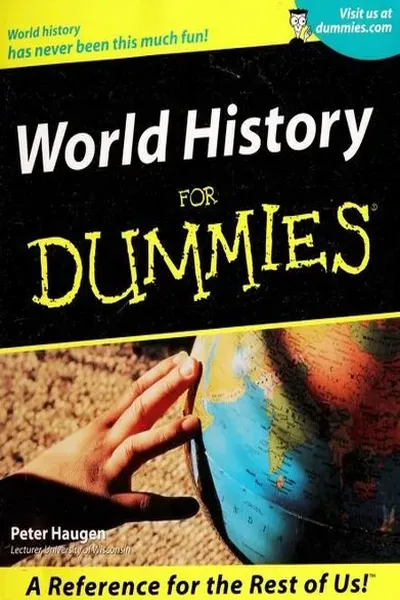
More Free Divination & Tarot Books
View all →