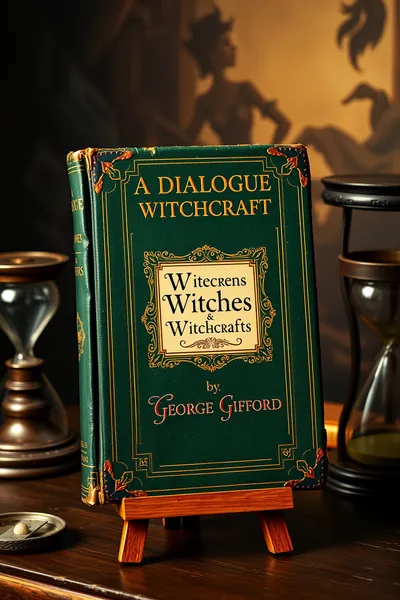
Witchcraft

 74
74

Witchcraft
Hughes's "Witchcraft" is a sober, scholarly dispatch from a time when the academic study of the occult was still finding its footing. Its strength lies in its exhaustive historical sweep, meticulously detailing how the perception and accusation of witchcraft transformed across centuries and continents. The chapter detailing the transition from accusations of nature spirits to diabolical pacts during the peak of the European witch hunts is particularly illuminating. However, its primary limitation is its very academic detachment; it offers little for the practitioner seeking connection to the living traditions of witchcraft. One passage that stands out is its analysis of how social anxieties in 16th-century Europe fueled the mass hysteria surrounding alleged demonic pacts. Hughes's work serves as an essential, if dry, historical reference.
📝 Description
74
Pennethorne Hughes's Witchcraft, published in 1952, examines witchcraft beliefs and practices across cultures.
Pennethorne Hughes's 1952 book, "Witchcraft," is a historical and anthropological survey of beliefs and practices. It is not a practical guide but an academic study that traces the concept of witchcraft from ancient times through medieval sorcery to modern forms. The work focuses on the social, psychological, and historical influences that shaped these beliefs. Hughes analyzes the figure of the witch as a projection of societal fears, separate from actual magical practices. He details the historical shift in witchcraft accusations, moving from nature spirits to diabolical pacts during the European witch hunts. The book also considers the survival of these beliefs.
The study is aimed at readers interested in the sociology of belief, the history of magic, and comparative religion. It helps understand witchcraft as a complex phenomenon tied to societal anxieties, religious doctrines, and cultural contexts. Students of folklore, anthropology, and Western esotericism will find its broad scope useful for building foundational knowledge. Hughes engaged with burgeoning fields of anthropology and religious history, seeking to demystify the subject rather than sensationalize it. His approach contrasts with earlier, more sensationalist accounts, aiming for a balanced, evidence-based perspective.
Published in the post-World War II era, Hughes's "Witchcraft" entered a scholarly environment where occult and folk beliefs were beginning to attract academic attention. The book sits within the tradition of critical historical and anthropological studies of magic and religion. It approaches the subject matter with a desire to understand its historical development and cultural significance, distinct from earlier, often sensationalized, treatments of the topic. Hughes sought to provide a demystified, evidence-based account, placing it within the developing academic study of Western esotericism.
💡 Why Read This Book?
• Gain a clear historical overview of witchcraft accusations from antiquity to the mid-20th century, understanding the societal forces that shaped these beliefs, particularly the shift from nature spirits to diabolical pacts. • Appreciate the anthropological perspective on witchcraft as a social construct, examining how fear and projection have historically defined the figure of the witch. • Understand the academic context of witchcraft studies in the mid-20th century, distinguishing scholarly inquiry from sensationalist accounts, as evidenced by its detailed survey of historical periods.
⭐ Reader Reviews
Honest opinions from readers who have explored this book.
❓ Frequently Asked Questions
When was Pennethorne Hughes's "Witchcraft" first published?
Pennethorne Hughes's "Witchcraft" was first published in 1952, positioning it as a mid-20th-century academic exploration of the subject.
Does "Witchcraft" by Pennethorne Hughes offer practical spells or rituals?
No, the book is primarily a historical and anthropological survey. It focuses on the study of witchcraft beliefs and accusations across cultures, not on providing practical magical instructions.
What historical periods does Hughes cover in his study of witchcraft?
Hughes examines witchcraft across a broad historical spectrum, including ancient fertility cults, medieval European sorcery, the era of the European witch hunts, and its manifestations into the 20th century.
What is the main focus of the book "Witchcraft"?
The book's main focus is on the historical evolution and socio-cultural context of witchcraft beliefs and accusations, analyzing how societies have perceived and defined 'witches' throughout history.
Is "Witchcraft" by Pennethorne Hughes considered an esoteric text itself, or a study of esoteric practices?
It is primarily a scholarly study of the history and anthropology of witchcraft. While it examines esoteric beliefs and practices from a historical distance, it is not a practical esoteric manual.
How does Hughes differentiate between different historical conceptions of witchcraft?
Hughes differentiates by tracing the conceptual shift from early notions of nature spirits and folk magic to the later, more prevalent idea of diabolical pacts and organized heretical cults during the European witch hunts.
🔮 Key Themes & Symbolism
The Social Construction of the Witch
Hughes meticulously documents how the figure of the 'witch' has been a product of societal anxieties and projections rather than an inherent reality. He traces how accusations shifted from individuals believed to control nature spirits to those accused of pacts with the Devil, demonstrating how social fears, religious doctrines, and cultural narratives coalesced to define and persecute perceived witches throughout history, particularly during the 16th and 17th centuries in Europe.
Evolution of Witchcraft Accusations
A central theme is the historical trajectory of witchcraft accusations. Hughes charts a path from ancient beliefs, where individuals might be accused of wielding malevolent natural forces, through the medieval period's demonological focus, culminating in the intense persecution of the European witch hunts. This evolution highlights how theological and legal frameworks influenced, and were influenced by, popular beliefs about magic and malevolence.
Witchcraft vs. Folk Magic
The work distinguishes between formal accusations of 'witchcraft,' often tied to diabolism and heresy in the European context, and broader practices of folk magic or 'wise women/men.' Hughes explores how these distinct categories were often conflated or deliberately blurred by accusers and inquisitors, leading to the persecution of individuals whose practices might have been rooted in traditional healing or protective charms rather than demonic allegiance.
Anthropological and Historical Perspectives
Hughes employs an anthropological lens to analyze witchcraft as a cross-cultural phenomenon and a historical one. By examining beliefs across different eras and geographies, he provides a framework for understanding the underlying human impulses – fear, scapegoating, the desire to explain misfortune – that contribute to the formation and perpetuation of witchcraft beliefs and accusations.
💬 Memorable Quotes
Direct passages from the work, attributed to the author.
“The witch was not an entity, but a name given to the object of fear.”
— This interpretation emphasizes Hughes's view that the 'witch' as a concept was largely a social construct, a label applied by society to embody its anxieties and fears, rather than a reflection of a specific, identifiable group or practice.
“The shift from nature spirits to diabolical pacts fundamentally altered the perception of witchcraft.”
— This highlights a key historical transition Hughes documents: the change in how witchcraft was understood. Initially seen as manipulating natural forces, it later became associated with a formal pact with Satan, leading to more severe persecution during the European witch hunts.
“Folk magic and diabolical witchcraft were often conflated by accusers.”
— This points to the blurring of lines between everyday folk practices, such as healing or protective charms, and the more serious accusations of heresy and demonic allegiance that characterized official witchcraft trials, showing how societal fears could misinterpret common traditions.
“The study of witchcraft reveals much about the persecutors as the persecuted.”
— This interpretation suggests that the historical phenomenon of witchcraft accusations serves as a mirror reflecting the beliefs, fears, and biases of the societies and individuals who made those accusations, offering insights into their worldview.
💡 Key Ideas
Editorial paraphrase of the work's core concepts — not direct quotes.
Understanding witchcraft requires examining the societal conditions that produced the accusations.
This paraphrased concept underscores Hughes's methodology: to comprehend witchcraft, one must analyze the historical, social, and psychological environment in which accusations arose and flourished, rather than focusing solely on alleged magical acts.
🌙 Esoteric Significance
Tradition
While Hughes's "Witchcraft" is primarily a historical and anthropological study, it serves as a crucial secondary source for understanding the historical context of Western esoteric traditions. It doesn't belong to a specific lineage like Hermeticism or Kabbalah but rather analyzes the societal and religious frameworks within which many esoteric practices and accusations occurred, particularly the Christian demonology that heavily influenced the persecution of alleged witches.
Symbolism
Hughes's work focuses less on symbolic interpretation and more on historical categorization. However, the concept of the 'diabolical pact' itself functions as a potent symbol within the historical narrative he constructs, representing the ultimate transgression against Christian order. The association of witches with nature, fertility, and nocturnal gatherings, though often mythologized, also represents a symbolic inversion of societal norms and religious authority.
Modern Relevance
Contemporary neo-pagan and Wiccan practitioners often engage with Hughes's work to understand the historical roots of modern witchcraft and its often-problematic associations. Anthropologists and historians of religion continue to cite Hughes for his detailed historical surveys, particularly concerning the evolution of witchcraft accusations and the social dynamics of persecution. His work provides essential context for understanding the historical trajectory that modern esoteric paths have either reacted against or sought to reclaim.
👥 Who Should Read This Book
• Students of comparative religion and folklore: To gain a comprehensive historical overview of witchcraft beliefs and accusations across diverse cultures and eras. • Anthropologists and sociologists: To analyze witchcraft as a social phenomenon, understanding the roles of fear, scapegoating, and societal anxieties in historical persecutions. • Researchers of Western Esotericism: To contextualize the historical development of magical and occult practices, particularly the impact of demonology and witch trials on these traditions.
📜 Historical Context
Pennethorne Hughes's "Witchcraft" emerged in 1952, a period when academic interest in the history of magic and folklore was solidifying. The mid-20th century saw scholars like Margaret Murray (whose theories Hughes implicitly engages with and sometimes refutes) gaining prominence, while simultaneously, a more critical, anthropological approach was developing. Hughes's work positioned itself against both sensationalist popular accounts and overly simplistic theories, aiming for a balanced historical survey. This era also saw ongoing debates about the nature of religious belief and superstition. While not directly censored, the academic treatment of such subjects was often cautious. Hughes's meticulous referencing and sober tone aimed to legitimize the study within academic discourse, distinguishing it from earlier, more speculative works and contemporary occult revivalism.
📔 Journal Prompts
The societal conditions that produced accusations of witchcraft in 16th-century Europe.
The distinction Hughes draws between folk magic and diabolical witchcraft.
How the concept of the 'witch' has served as a societal projection throughout history.
The historical transition from beliefs in nature spirits to the idea of diabolical pacts.
The role of religious doctrine in shaping witchcraft accusations during the medieval period.
🗂️ Glossary
Diabolical Pact
A formal agreement, often alleged in historical witch trials, between an individual and the Devil, typically involving the exchange of the person's soul for supernatural powers or favors.
European Witch Hunts
A period, primarily from the 15th to the 18th centuries, characterized by widespread accusations, trials, and executions of individuals accused of witchcraft across various European countries.
Folk Magic
A broad category of traditional, often localized, magical practices and beliefs related to healing, protection, divination, and influencing everyday events, distinct from formally recognized religious or ceremonial magic.
Nature Spirits
Entities believed to inhabit and control natural phenomena, such as trees, rivers, or weather, and with whom individuals might allegedly interact or gain power.
Sociology of Belief
An academic field that studies how beliefs, particularly religious or supernatural ones, are formed, maintained, and spread within social groups and societies.
Anthropology
The study of human societies and cultures and their development, often employing comparative methods to understand human behavior and beliefs across different groups.
Heresy
Belief or opinion contrary to orthodox religious doctrine, often leading to persecution by established religious authorities.
🔮 Readers Also Liked
Browse all →








More Free Witchcraft & Paganism Books
View all →





![A Witch of the Hills, v. 2 [of 2]](/img/thumb/a-witch-of-the-hills-v-2-of-2-warden-florence.webp)