Witchcraft in the pews
 72
72

Witchcraft in the pews
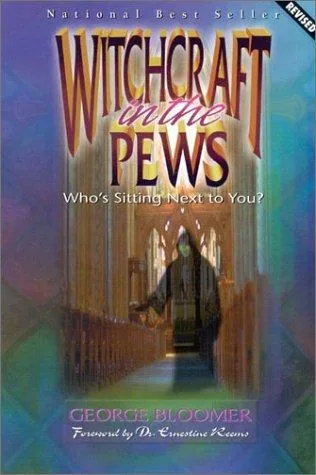
George G. Bloomer's "Witchcraft in the Pews," first published in 2008, offers a compelling, if at times understated, examination of spiritual practices that blur the lines between conventional religious adherence and occult engagement. The book's strength lies in its direct confrontation of the stereotype that witchcraft exists only outside established ecclesiastical structures. Bloomer avoids sensationalism, instead opting for a more analytical approach that considers how folk magic and ritual might permeate seemingly orthodox settings. A limitation is the lack of deep dives into specific case studies; the work tends to remain at a conceptual level. For instance, the discussion on how certain communal prayer practices could be interpreted through a lens of sympathetic magic is intriguing but could benefit from more concrete examples. The book serves as a valuable primer for understanding the multifaceted nature of belief and practice in the modern spiritual landscape. It’s a sober look at an often sensationalized topic.
📝 Description
72
George G. Bloomer's 2017 book examines witchcraft's presence within established religious communities.
This study moves past the idea of witchcraft as only an independent or counter-cultural practice. It investigates how elements of pagan or folk magic appear or are integrated into seemingly Christian or mainstream settings. The book appeals to readers interested in the intersection of religious studies and occult practices, particularly those curious about the fluid boundaries of belief systems. It considers the historical and sociological roots of spiritual practices that defy easy categorization. Scholars and practitioners looking for a more complete view of witchcraft's past and present forms will find this work valuable.
The core idea is 'witchcraft in the pews,' which questions the separation between mainstream religion and occultism. Bloomer looks at how ritual, belief, and personal spiritual power can exist and be shown in contexts not usually called 'witchcraft.' The text also addresses the social dynamics of shared belief and practice, and how people might change or understand their faith using magical perspectives.
Bloomer's work engages with the history of witchcraft studies, moving beyond earlier focuses on persecution or the mid-20th century emergence of Wicca. It acknowledges the academic interest in varied witchcraft expressions but argues for looking beyond more publicized forms. The book challenges the common dichotomy between organized religion and occultism, suggesting that magical beliefs and practices can coexist within ostensibly mainstream spiritual frameworks. This approach expands the understanding of witchcraft's historical and contemporary manifestations by considering its presence in less obvious settings.
💡 Why Read This Book?
• Gain a nuanced understanding of how witchcraft concepts might manifest within mainstream religious settings, challenging preconceived notions about occultism's boundaries, as explored through the book's central theme of 'witchcraft in the pews.' • Appreciate the historical context of witchcraft studies beyond the mid-20th century Wiccan revival, recognizing earlier and potentially less visible forms of practice that Bloomer's work implicitly addresses. • Learn to critically analyze religious and spiritual expressions by considering the potential for magical thinking and ritualistic action within diverse belief systems, a perspective advanced by the book's examination of syncretic practices.
⭐ Reader Reviews
Honest opinions from readers who have explored this book.
❓ Frequently Asked Questions
When was George G. Bloomer's 'Witchcraft in the Pews' first published?
George G. Bloomer's 'Witchcraft in the Pews' was first published in 2008, offering a contemporary perspective on the subject.
Does 'Witchcraft in the Pews' focus on historical persecution of witches?
No, the book primarily examines the presence and practice of witchcraft within established religious communities, moving beyond narratives of persecution or distinct pagan revivals.
What is the main argument of 'Witchcraft in the Pews'?
The central argument is that witchcraft elements can exist and be practiced within ostensibly Christian or other mainstream settings, challenging the idea that it is solely an independent or counter-cultural phenomenon.
Is 'Witchcraft in the Pews' a practical guide to performing witchcraft?
This work is more analytical and sociological, exploring the concept of witchcraft within existing religious structures, rather than providing practical instructions for magical practice.
Who would benefit most from reading 'Witchcraft in the Pews'?
Readers interested in religious studies, sociology of religion, and the nuanced expressions of occultism and folk magic, particularly those curious about the fluid boundaries of belief systems.
Does the book discuss specific denominations where witchcraft might be found?
While the book addresses witchcraft within 'established religious communities' and 'ostensibly Christian' settings, it tends to focus on conceptual exploration rather than naming specific denominations or case studies.
🔮 Key Themes & Symbolism
Syncretic Spiritual Practices
This theme explores how individuals and communities integrate elements from disparate spiritual traditions. Bloomer explores the subtle ways that practices associated with witchcraft, such as sympathetic magic or ritualistic intention, might be incorporated into the framework of more conventional religious observances. It challenges the rigid categorization of beliefs, suggesting that spiritual expression is often fluid and adaptive, allowing for the coexistence of seemingly contradictory elements within a single belief system or practice.
The Sociology of Belief
The book examines the social dimensions of how beliefs and practices are formed, maintained, and transmitted within groups. It considers the dynamics that lead individuals to adopt or adapt certain spiritual or magical understandings, even when seemingly within a mainstream religious context. This includes looking at how group identity and communal rituals can shape individual spiritual experiences and interpretations, potentially incorporating elements not officially sanctioned by the larger religious body.
Defining Witchcraft
A core theme is the re-evaluation of what constitutes 'witchcraft.' Bloomer implicitly argues against narrow definitions that confine witchcraft solely to neo-paganism or historical persecution narratives. Instead, the work encourages a broader understanding that includes folk magic, personal spiritual power, and ritualistic action, regardless of the overt religious affiliation of the practitioner. This reframing opens possibilities for recognizing witchcraft in unexpected places.
Boundaries of Religious Expression
This theme investigates the often porous boundaries between 'orthodox' religion and 'heterodox' or occult practices. The book questions where the line is drawn and how it is maintained, or indeed, how it becomes blurred. It explores how individuals might navigate these boundaries, holding beliefs or engaging in practices that exist in a liminal space between established religious doctrine and more esoteric or magical worldviews.
💬 Memorable Quotes
Direct passages from the work, attributed to the author.
“The notion of witchcraft existing solely in opposition to established religious structures is a limited perspective.”
— This statement challenges the common dichotomy between paganism/witchcraft and mainstream religions. It suggests that the author's work aims to demonstrate that these categories are not mutually exclusive and that elements of witchcraft can indeed be found within conventional religious frameworks.
“Ritualistic intention can manifest in communal prayer.”
— This interpretation highlights how the book might explore the concept of focused intent within group prayer sessions. It implies that the shared energy and directed will in a prayer circle could be viewed through a lens similar to magical ritual, blurring the lines between devotional practice and magical working.
“The perception of witchcraft has evolved beyond the persecution era.”
— This highlights the book's engagement with the historical trajectory of witchcraft perception. It implies an acknowledgment that contemporary understandings of witchcraft differ significantly from those prevalent during periods of intense persecution, and that the 2008 publication date allows for examination of more recent scholarly and popular views.
“Spiritual power can be cultivated within diverse community settings.”
💡 Key Ideas
Editorial paraphrase of the work's core concepts — not direct quotes.
Folk magic often adapts and integrates into dominant cultural beliefs.
This paraphrase suggests that the book examines how less formalized magical traditions are not necessarily eradicated by dominant religions but may instead be absorbed or subtly incorporated into their practices and belief systems over time.
🌙 Esoteric Significance
Tradition
While not explicitly aligning with a single esoteric lineage, "Witchcraft in the Pews" engages with themes relevant to folk magic traditions and broader discussions within the sociology of religion that intersect with esoteric studies. It touches upon the practical application of belief systems, a common thread in many esoteric paths, by examining how individuals might enact personal power or utilize ritualistic principles within contexts not traditionally defined as esoteric.
Symbolism
The 'pew' itself serves as a potent symbol, representing the seemingly mundane and orthodox setting of established religion, contrasting sharply with typical esoteric locales. The act of 'witchcraft' within this space symbolizes the subversion or integration of hidden practices into overt societal structures. The work implicitly discusses ritualistic intention, a core esoteric concept, suggesting its potential presence in otherwise conventional communal activities like prayer.
Modern Relevance
Contemporary thinkers and practitioners exploring the permeability of religious boundaries and the evolution of spiritual practices find resonance in Bloomer's work. It informs discussions in fields like comparative religion, religious sociology, and even modern witchcraft studies that seek to understand the diverse and often unexpected ways spiritual power and ritual manifest in the 21st century, influencing how one views syncretic spirituality.
👥 Who Should Read This Book
• Students of comparative religion seeking to understand the intersection of folk magic and established faiths, offering a framework to analyze practices beyond traditional categorization. • Practitioners of witchcraft or esoteric arts interested in the sociological underpinnings of belief and how magical concepts might be expressed or perceived in diverse cultural contexts. • Skeptics and open-minded individuals curious about the fluid nature of spirituality and how individuals reconcile seemingly contradictory belief systems within their lives.
📜 Historical Context
Published in 2008, George G. Bloomer's "Witchcraft in the Pews" emerged during a period of sustained academic and popular interest in witchcraft studies, following the academic legitimization of witchcraft as a field of inquiry in the late 20th century. This era saw numerous works exploring Neo-Paganism, Wicca, and historical witchcraft trials. Bloomer’s contribution distinguishes itself by looking *within* established religious structures, rather than solely at counter-cultural movements or historical events. While scholars like Ronald Hutton were examining the historical roots and evolution of witchcraft beliefs, and figures like Margot Adler were documenting contemporary paganism, Bloomer’s work implicitly engages with these broader currents by proposing a less visible, perhaps more insidious, form of witchcraft operating in plain sight within churches and congregations. The book's focus on syncretism and the adaptation of folk practices within dominant religious frameworks offers a counterpoint to narratives emphasizing clear-cut distinctions between magical and orthodox religious systems.
📔 Journal Prompts
The concept of 'witchcraft in the pews' and its potential manifestations.
Communal prayer as a form of ritualistic intention.
Interpreting the symbolism of orthodox settings hosting heterodox practices.
How folk magic integrates into dominant belief systems.
Personal experiences with spiritual syncretism or blurred religious boundaries.
🗂️ Glossary
Witchcraft in the Pews
A concept suggesting the presence and practice of elements associated with witchcraft or folk magic within the context of established, mainstream religious communities, rather than solely in independent or counter-cultural settings.
Folk Magic
Traditional or customary magical practices, often passed down orally or through community, which may not be formalized into codified systems like ceremonial magic or Wicca.
Ritualistic Intention
The focused mental and emotional energy directed towards a specific outcome during a ritual or practice. This concept is central to many magical and esoteric traditions.
Syncretism
The merging or blending of different, often seemingly contradictory, religious beliefs, myths, or practices, resulting in a new or hybrid form of religious expression.
Orthodox Religion
Relating to or adhering to the established or traditional beliefs and practices of a religion, often contrasted with heterodox or unconventional spiritual expressions.
Heterodox Practices
Beliefs or practices that deviate from or contradict established or orthodox religious doctrine or norms.
Sociology of Religion
The academic study of religion using the methods and theories of sociology, examining religious institutions, behavior, and the role of religion in society.
🔮 Readers Also Liked
Browse all →







More Free Witchcraft & Paganism Books
View all →