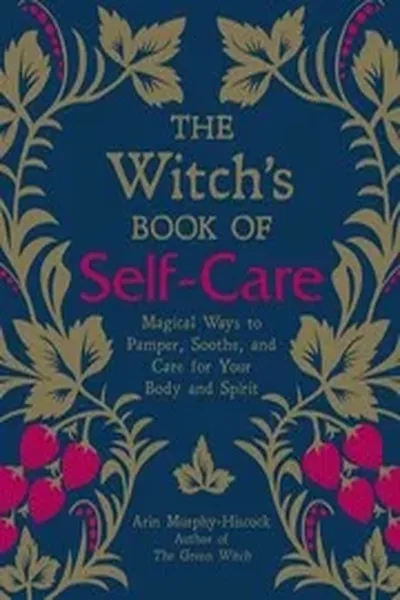
The witches' god

 71
71

The witches' god
Janet Farrar’s "The Witches' God" attempts to codify the archetypal masculine divine in contemporary witchcraft, moving past the singular image of the "Horned God" to explore its complex permutations. Its strength lies in its comparative approach, drawing connections between ancient horned deities and their modern Wiccan manifestations. However, the work occasionally feels constrained by its 1995 publication date, sometimes presenting interpretations that have since been subject to further scholarly debate and revision within Pagan studies. The section detailing the god's association with Cernunnos, for instance, provides a solid overview but lacks the benefit of more recent archaeological and textual analyses. Despite this, Farrar’s diligent research offers a valuable, if sometimes dated, exploration of a crucial aspect of neo-pagan theology.
📝 Description
71
Janet Farrar published "The Witches' God" in 1995, examining the masculine divine in modern witchcraft.
Janet Farrar's "The Witches' God," released in 1995, investigates the Horned God as a central figure in Wicca and contemporary paganism. The book moves past simple representations to look at the deity's complex nature. It traces the god's historical background and how interpretations have changed across different cultures and spiritual paths. Farrar's work aimed to balance the theological conversation, which had previously concentrated more on the feminine divine. This volume, a companion to "The Witches' Goddess," engages with academic discussions about older European beliefs and folklore. It offers a detailed study for those interested in comparative mythology, religious history, and the growth of neo-paganism.
Farrar explores the symbolic images linked to the Horned God, such as his associations with the natural world, reproduction, endings, and renewal. The text analyzes how these characteristics are combined and shown within the structure of modern witchcraft. It also considers the impact of earlier writers and folklore collectors on how this deity is understood today. The book is a resource for students and practitioners of Wicca and paganism who want a more thorough grasp of their theology.
Published in 1995, "The Witches' God" arrived during a period of increased visibility and academic attention for the Pagan and Wiccan revival. As a follow-up to her earlier work on the goddess, Farrar addressed what she saw as an imbalance in theological study, which often gave more attention to the feminine divine. Her book contributed to a more thorough examination of divinity within these developing spiritual traditions. It connected with ongoing academic conversations about pre-Christian European religious ideas and folk tales.
💡 Why Read This Book?
• Gain a nuanced understanding of the Horned God archetype, moving beyond simplistic representations, as explored through Farrar's detailed examination of his various historical and mythological facets. • Discover the theological underpinnings of modern witchcraft's masculine divine, learning how concepts from figures like Cernunnos have been integrated and adapted since the 1995 publication. • Understand the historical placement of this work within the broader Pagan and Wiccan revival, appreciating its contribution to theological discourse during a key period of growth in neo-paganism.
⭐ Reader Reviews
Honest opinions from readers who have explored this book.
❓ Frequently Asked Questions
What is the primary focus of Janet Farrar's "The Witches' God"?
The book's primary focus is an in-depth exploration of the masculine divine within modern witchcraft and Wicca, examining the archetype of the Horned God and its historical, mythological, and theological dimensions.
When was "The Witches' God" by Janet Farrar first published?
"The Witches' God" was first published in 1995 by Janet and Stewart Farrar, following their earlier work on the feminine divine.
Does "The Witches' God" discuss specific ancient deities?
Yes, the book discusses various ancient deities and figures associated with horned imagery, such as Cernunnos from Celtic mythology, and explores how these figures inform the modern concept of the Witches' God.
Is this book suitable for beginners in witchcraft?
It is suitable for beginners who are seriously interested in understanding the theological and historical background of witchcraft deities. It provides foundational knowledge beyond basic ritual practices.
How does "The Witches' God" relate to "The Witches' Goddess"?
"The Witches' God" is a companion volume to "The Witches' Goddess," both aiming to provide a comprehensive theological framework for modern witchcraft, addressing the masculine and feminine aspects of deity.
What historical periods does the book draw upon for its research?
The book draws upon a wide range of historical periods, including ancient European mythologies, folklore, and the development of neo-paganism and modern witchcraft in the 20th century.
🔮 Key Themes & Symbolism
The Horned God Archetype
This theme examines the complex nature of the Horned God, a central figure in Wicca and other neo-pagan paths. Farrar examines his ancient roots, tracing connections to deities like Cernunnos, and explores his symbolism related to fertility, the wild, death, and rebirth. The work emphasizes that this deity is not monolithic but encompasses various aspects, serving as a potent representation of the masculine divine in nature and the cycle of life. It provides a framework for understanding his presence in modern magical practice.
Deity in Modern Witchcraft
The book addresses how modern witchcraft conceptualizes and works with deities. It highlights the development of the Horned God as a distinct figure within the Wiccan pantheon, often seen as a partner to the Goddess. Farrar's research contextualizes this within the broader neo-pagan movement, showing how ancient mythologies and folkloric figures are reinterpreted and integrated into contemporary spiritual systems. This theme is crucial for understanding the theological evolution of witchcraft beyond its early 20th-century origins.
Comparative Mythology and Folklore
Farrar utilizes comparative mythology and folklore to illuminate the origins and expressions of the Horned God. By examining horned figures across various cultures, from prehistoric cave paintings to classical deities and medieval folklore, the book builds a case for a persistent archetype. This approach helps practitioners connect with deeper layers of meaning and understand the cross-cultural resonance of the divine masculine as it appears in nature and human consciousness.
Theology of the Pagan Revival
As a key text from the 1990s Pagan revival, "The Witches' God" contributes significantly to the theological discourse of the era. It addresses the need for a balanced understanding of divinity, complementing earlier focus on the Goddess. The work reflects the growing academic and popular interest in neo-paganism, offering a structured theological perspective that informed many practitioners and scholars during a critical period of the movement's development.
💬 Memorable Quotes
Direct passages from the work, attributed to the author.
“The Horned God is the god of the wild, of fertility, of the hunt, and of the underworld.”
— This statement captures the core attributes of the deity as presented in the book, highlighting his dominion over natural cycles, life-giving forces, and the liminal spaces between life and death.
“Cernunnos, the Celtic god with antlers, is often seen as a precursor to the modern Witches' God.”
— This highlights a specific historical connection explored in the text, linking a recognizable ancient deity to the contemporary archetype and demonstrating the lineage of horned divine imagery.
“The divine masculine is not a singular entity but a spectrum of energies and manifestations.”
— This interpretation points to Farrar's emphasis on the complexity and diversity of the masculine divine, moving beyond a monolithic portrayal to embrace its complex nature within witchcraft.
“Understanding the God requires looking at his relationship with the Goddess and the natural world.”
— This suggests that the book frames the Horned God not in isolation but within a relational context, emphasizing his role in the divine couple and his deep connection to the cycles of nature.
“The imagery of the stag and the goat are potent symbols for the Horned God's power.”
— This points to the use of specific animal symbolism within the text to represent the attributes and power of the Horned God, illustrating how animal totems connect to the divine.
🌙 Esoteric Significance
Tradition
The work is situated within the Western Esoteric Tradition, specifically the Wiccan and broader neo-pagan movements. It draws upon Hermetic principles of correspondence and the exploration of archetypes, while integrating elements of comparative mythology and folklore. It departs from strictly Kabbalistic or Gnostic frameworks to focus on a synthesis of pre-Christian European deities and modern magical practice, offering a distinct theological perspective within the esoteric landscape.
Symbolism
Key symbols explored include the Horned God himself, representing fertility, the wild, and the cycle of life and death. Antlers and horns are prominent motifs, signifying power, connection to the earth, and the divine masculine. The imagery of the stag and the goat are analyzed for their specific associations with virility, nature, and the untamed aspects of existence, connecting these animal forms to the deity's complex nature.
Modern Relevance
Contemporary practitioners of Wicca, Druidry, and various forms of polytheistic reconstructionism continue to draw upon Farrar's work for its foundational exploration of the masculine divine. Modern theological discussions within Paganism often reference or build upon the concepts laid out in "The Witches' God." Thinkers and groups focused on Jungian archetypes and the resurgence of pre-Christian European deities find its analysis relevant to understanding contemporary spiritual expressions.
👥 Who Should Read This Book
• Practitioners of Wicca and modern witchcraft seeking to deepen their understanding of the Horned God archetype and its theological significance. • Students of comparative mythology and religious studies interested in the evolution of deity concepts within neo-paganism and Western Esotericism. • Individuals exploring the masculine divine in spiritual contexts, looking for a comprehensive overview that bridges ancient symbolism with contemporary practice.
📜 Historical Context
Published in 1995, "The Witches' God" emerged during a vibrant phase of the modern Pagan and Wiccan revival. This period saw increased academic attention and public curiosity regarding neo-pagan religions, following foundational texts and the growth of coven structures. Farrar's work addressed a perceived theological gap, complementing the earlier emphasis on the Goddess by exploring the masculine divine. It engaged with contemporary discussions in comparative religion and folklore studies, drawing from scholarship on figures like Cernunnos. The book appeared in a landscape where authors like Doreen Valiente and Alex Sanders had already shaped perceptions of Wiccan theology, and it offered a more detailed, systematic exploration of the Horned God, contributing to the ongoing articulation of neo-pagan belief systems amidst emerging academic scholarship and burgeoning practitioner communities.
📔 Journal Prompts
The role of Cernunnos in the Horned God archetype.
Manifestations of the God's power in natural cycles.
Personal connection to the imagery of antlers or horns.
The balance between the Witches' God and the Witches' Goddess.
How the concept of the wild is represented by the Horned God.
🗂️ Glossary
Horned God
A central deity in many forms of modern witchcraft and neo-paganism, often depicted with animal horns, embodying aspects of fertility, nature, wildness, death, and rebirth.
Cernunnos
An ancient Celtic deity known from the Gundestrup Cauldron and other artifacts, often depicted with antlers, associated with wild animals, fertility, and possibly the underworld.
Archetype
In Jungian psychology and esoteric thought, a primal, universal symbol or theme that recurs in the human psyche and mythology, representing fundamental patterns of experience.
Neo-paganism
A contemporary religious movement that seeks to revive or create religions inspired by pre-Christian European traditions, often emphasizing polytheism, nature worship, and magic.
Wicca
A modern, earth-centered religion with roots in British folk magic and esoteric traditions, typically characterized by reverence for a Goddess and a Horned God.
Divine Masculine
The concept of the masculine aspect of divinity as understood within various spiritual and religious traditions, often explored in contrast or complement to the divine feminine.
Liminality
The quality of being in a transitional or in-between state or place, often associated with sacred times, thresholds, and the boundaries between worlds.
🔮 Readers Also Liked
Browse all →







More by Janet Farrar
All books →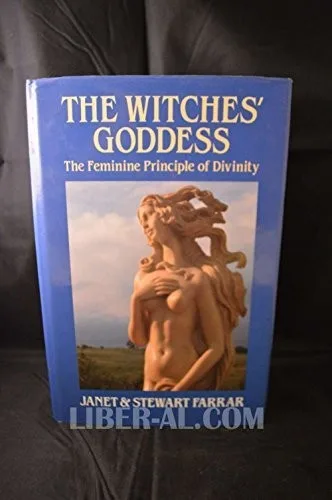





More Free Witchcraft & Paganism Books
View all →